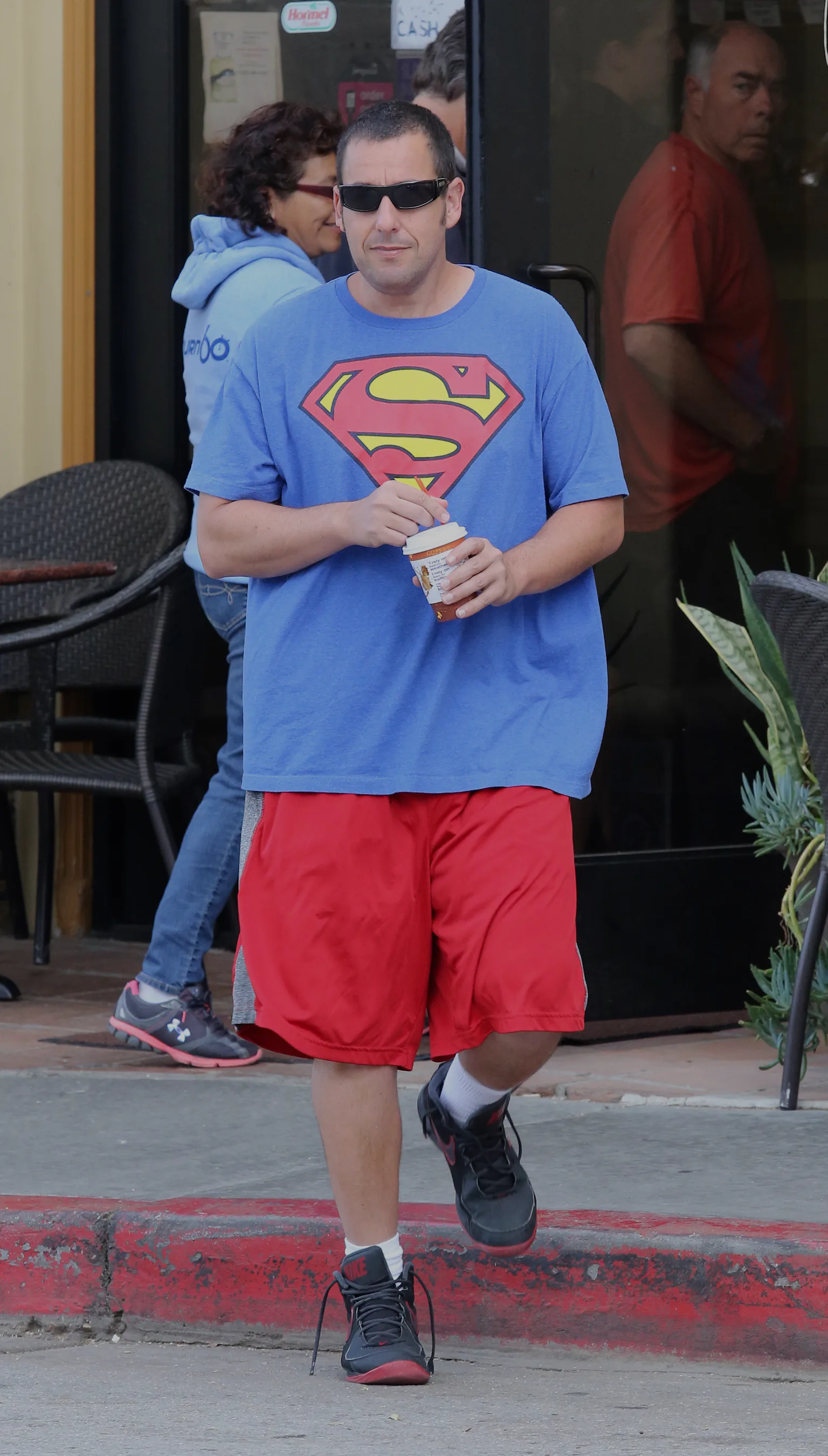
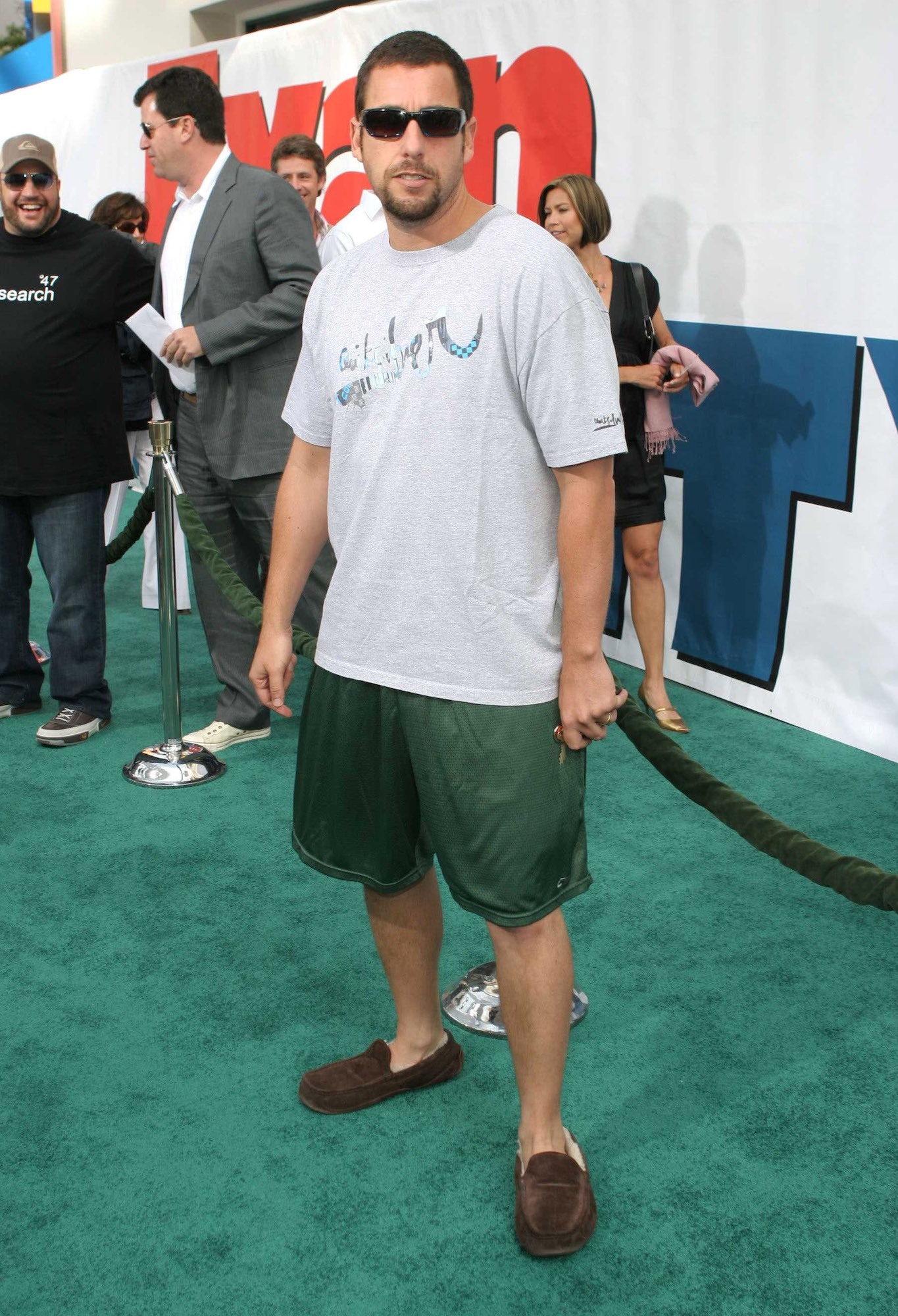
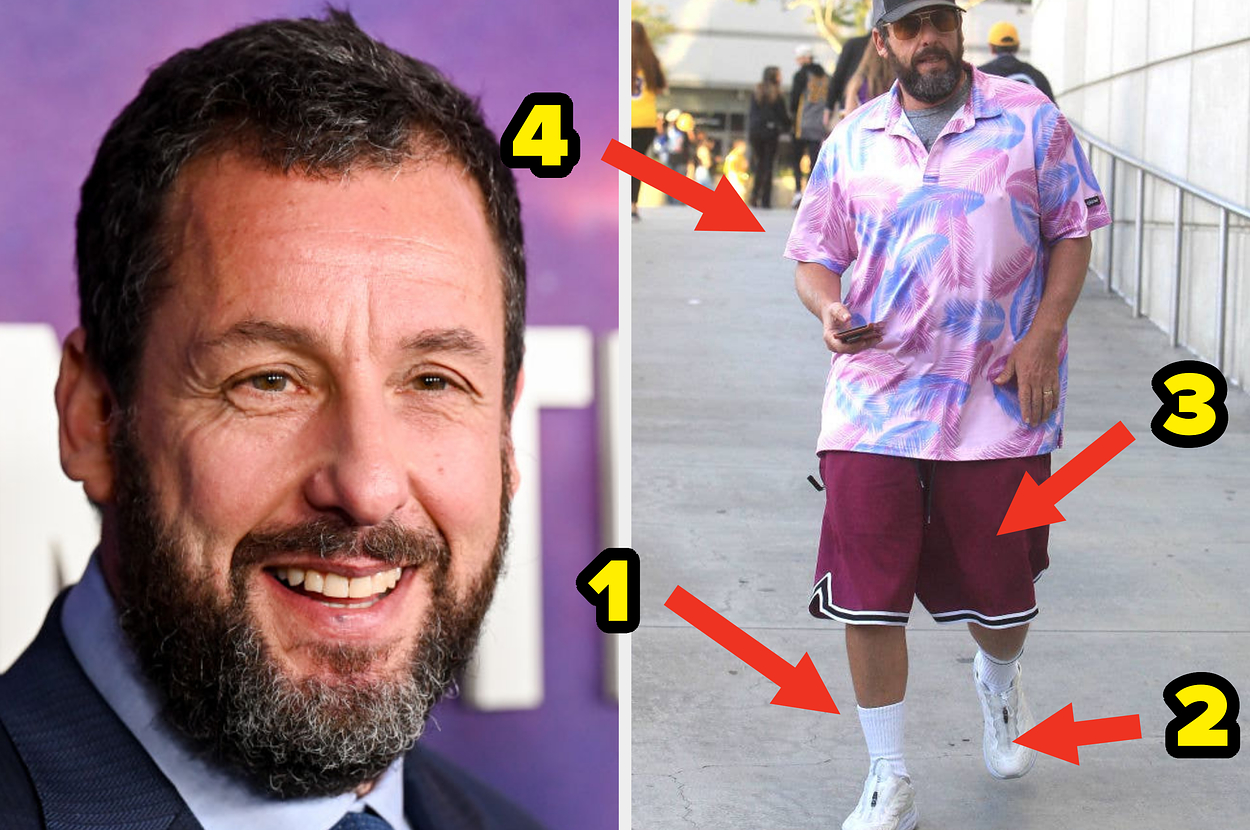
Adam Sandler in his normal clothes represents a singular cultural phenomenon in 2026, where the boundary between intentional high-fashion "normcore" and genuine, unbothered personal comfort has entirely dissolved. Often captured by paparazzi or seen in candid public sightings, Sandler’s signature look—oversized basketball shorts, loose-fitting graphic tees, zip-up hoodies, and occasionally mismatched athletic sneakers—has moved beyond simple casual wear to become a blueprint for modern relaxed aesthetics. Far from being a calculated style choice, his wardrobe reflects a prioritization of utility and comfort that has inadvertently influenced streetwear trends globally.
The Evolution of the Sandler Silhouette
To understand why Adam Sandler’s approach to clothing garners so much attention, one must first look at the trajectory of his public image. Throughout the 1990s and early 2000s, Sandler adhered to the standard Hollywood press-tour aesthetic: baggy suits, sometimes ill-fitting button-downs, and sensible loafers. However, as his career shifted into a more established, producer-heavy phase, his personal style underwent a "demotion" into extreme comfort.
In the mid-2010s, this transition solidified into the look most recognize today. The silhouette is defined by a lack of structure. Where modern tailoring often focuses on slim cuts or technical athleisure, Sandler’s aesthetic is built on volume. Extra-large shorts that fall past the knee, hoodies that drape loosely over the frame, and a consistent rejection of layered, "styled" accessories create a look that prioritizes immediate physical comfort over social signaling.
Anatomy of the Look
- The Oversized Short: Almost exclusively athletic, often branded with team logos or neutral tones.
- The Layered Hoodie: Frequently worn open or zipped, often in muted colors like navy, grey, or black.
- The Graphic/Vintage Tee: Often featuring worn-in fabric, band logos, or faded promotional art from his own production company, Happy Madison.
- The Footwear: Typically Nike or similar athletic brands, chosen for longevity and support rather than color coordination or limited-edition status.
Why This Aesthetic Resonated in 2026
By 2026, the global fashion landscape has moved through several iterations of "streetwear," from logo-heavy luxury to minimalist high-concept gear. Adam Sandler’s "normal clothes" act as the ultimate counter-trend. He has become a unintentional icon for those experiencing "aesthetic fatigue"—the exhaustion of needing to curate an image for social media or professional environments.
His clothing choices represent a form of anti-fashion. By consistently choosing comfort in high-profile settings, he communicates a form of authenticity that is rare in celebrity culture. For the general public, this is aspirational not because it is luxurious, but because it is permission-giving. It signals that one does not need to adhere to rigid dress codes to be successful or respected. This has led to the proliferation of "Sandler-core" on social media platforms, where fans document sightings of him in everyday locations—Coffee Bean & Tea Leaf, grocery stores, or basketball courts—analyzing the specific "un-styling" of his outfits.
Comparison: Conscious Normcore vs. Sandler Comfort
It is essential to distinguish between "normcore" as a fashion movement and Adam Sandler’s genuine, utilitarian approach. Normcore, which rose to prominence in the mid-2010s, was a performative style—a deliberate choice to dress in "unfashionable" clothing to signal a rejection of trend-chasing. Sandler’s style, by contrast, is not performative; it is a manifestation of lifestyle.
| Feature | Performative Normcore | The Sandler Approach |
|---|---|---|
| Intent | Designed to look unremarkable | Designed to feel comfortable |
| Sourcing | Curated thrift or "dad-wear" shops | Functional, long-lasting basics |
| Consistency | Often seasonal or trend-dependent | Persistent across all public outings |
| Social Signal | "I am choosing to dress down" | "I am not thinking about my clothes" |
The primary difference lies in the level of curation. When someone dresses for the "normcore" aesthetic, they often select pieces that, while plain, are chosen for their specific fit or archival quality. Sandler’s approach is defined by the absence of selection. He wears what is available and functional for the task at hand, whether that is a movie premiere or a casual walk through a city street.
Technical Considerations of "Comfort-First" Dressing
For those looking to adopt a similar approach to their own wardrobes, there are several technical aspects to consider regarding material and utility. Sandler’s wardrobe is heavily reliant on cotton blends and moisture-wicking synthetic fabrics, which are durable and machine-washable.
- Material Longevity: The key to this aesthetic is the "lived-in" quality. Fabrics must withstand frequent washing. High-quality cotton hoodies and thick-knit athletic shorts are necessary to achieve the drape that Sandler’s clothes display.
- Sizing Strategy: The oversized look requires careful balancing. To replicate the comfort without looking unkempt, the volume should remain consistent across the top and bottom. If the shorts are wide, the tee should be long and loose; if the hoodie is bulky, the shorts should be structured enough to hold their shape.
- Color Palette: The palette is almost exclusively neutral or primary-focused. Deviating into neon colors or complex patterns would break the "normal" aesthetic. Navy blue, charcoal grey, white, and black provide the baseline for this look.
Common Misconceptions Regarding the "Sandler Look"
One of the most frequent errors in discussing this subject is the assumption that Sandler’s style is a calculated marketing ploy. While his image has certainly been utilized in marketing for his films (often highlighting his relatability), his personal wardrobe remains largely independent of brand partnerships or stylists’ interventions.
Another misconception is that the style is inherently "lazy." In reality, this approach requires a high degree of confidence. To show up to a high-end restaurant or a film set in clothes that do not follow traditional "business casual" or "red carpet" norms requires a disregard for external judgment that many people find difficult to emulate. It is not an absence of effort, but a shift of effort away from personal presentation and toward personal comfort.
Frequently Asked Questions
1. Is there a specific brand Adam Sandler prefers for his clothes? No, there is no single brand associated with his look. He is frequently seen in standard, widely available athletic wear from brands like Nike, Adidas, and various department store labels. The focus is on functionality and availability rather than luxury labels.
2. How do I maintain this look without appearing messy? The secret is keeping the clothes clean and well-maintained. The "Sandler" aesthetic relies on the item being in good condition—free of stains or excessive rips—even if it is aged. The fit is loose, but it is not disheveled. Ensure that your items are laundered correctly and that they retain their shape.
3. Is this style appropriate for a professional setting? While the "Sandler" aesthetic is highly influential, it is generally not suitable for traditional corporate environments. It is best reserved for casual workplaces, creative fields, or personal time. In more formal settings, the aesthetic can be adapted by choosing "elevated basics"—higher-quality fabrics in the same loose silhouettes.
4. Why do people find his clothing choices so fascinating? The fascination stems from the contrast between his massive success as a Hollywood figure and his refusal to engage with the expectations of fame. In an era of highly curated celebrity profiles, his lack of focus on his physical presentation is seen as a refreshing, authentic, and humanizing trait.
5. How has his style changed over the decades? His style has evolved from the standard fashion of the 1990s and 2000s—which included loose-fit suits and button-downs—into the current comfort-driven, athletic-based wardrobe. The transition reflects both a change in his personal priorities and the broader cultural shift toward casualization.
Conclusion and Recommendations
The Adam Sandler "normal clothes" phenomenon is a reminder that personal style does not have to be a source of stress. The most practical takeaway is to prioritize items that allow for movement and comfort without sacrificing basic maintenance. If you choose to adopt this approach, start by auditing your current wardrobe for items that truly provide comfort. Remove pieces that require constant adjustment or are made of restrictive, uncomfortable materials. Invest in high-quality, long-lasting basics that can be worn in any situation, and focus on the utility of the fabric rather than the prestige of the brand. Ultimately, the confidence to prioritize one's own comfort is the most important element of the look.