To achieve a high ACT score in 2026, you must master time management, understand the specific question patterns of the revised 2-hour core test, and utilize the process of elimination. Success requires a balance of content knowledge in English, Math, and Reading, alongside strategic guessing and rigorous practice with official materials.
The landscape of standardized testing has shifted significantly by 2026. With the ACT now offering a shorter core experience and an optional Science section, students must be more surgical in their preparation. Whether you are taking the digital version or the traditional paper-and-pencil format, the goal remains the same: to demonstrate college readiness through precision and speed. The following guide provides an in-depth analysis of the most effective ACT test taking tips to help you navigate the 2026 testing cycle.
Understanding the 2026 ACT Format and Structure
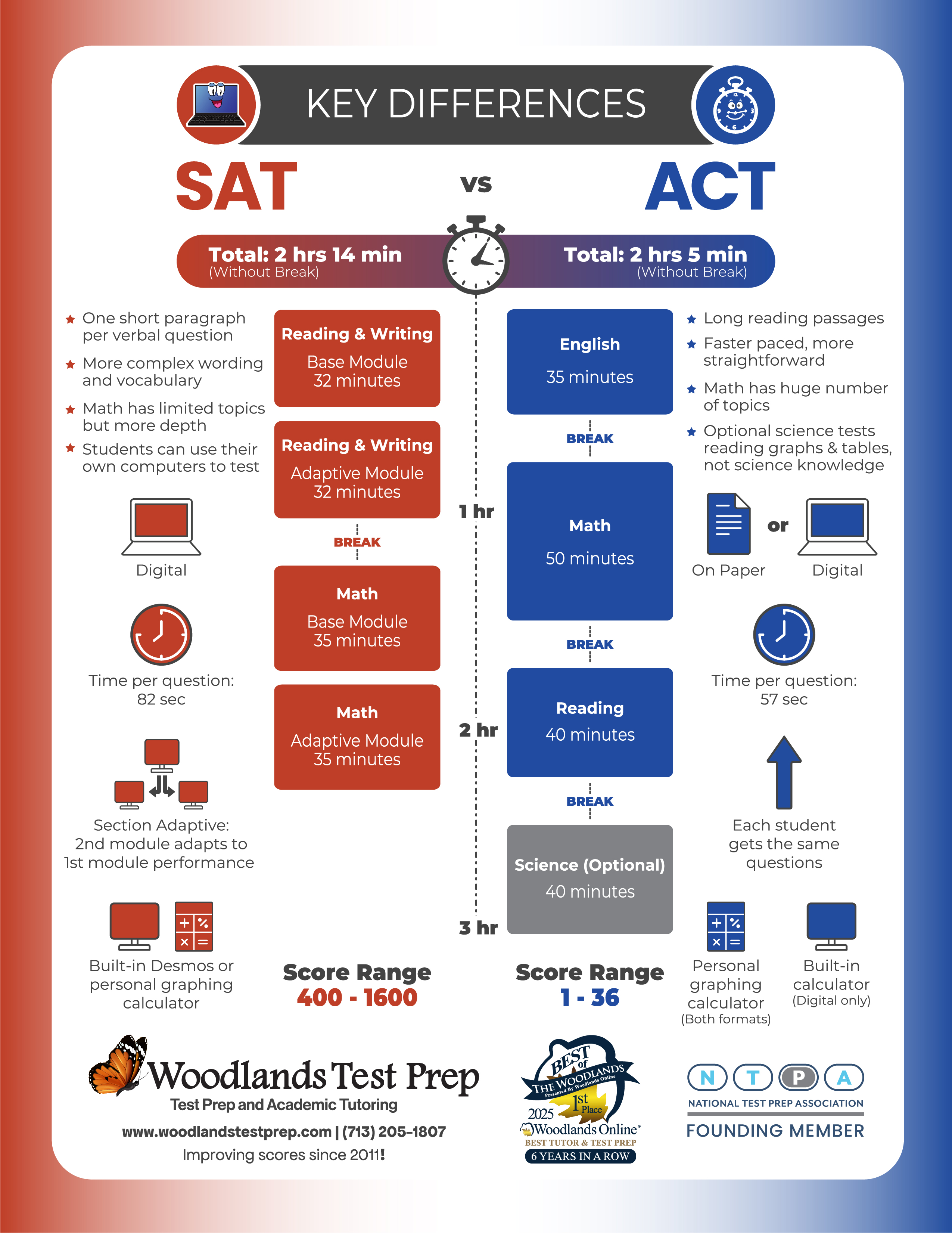
Before diving into specific tactics, it is essential to recognize the structural changes that define the ACT in 2026. The core test now consists of English, Reading, and Mathematics, totaling approximately two hours of testing time. The Science and Writing sections are optional, allowing students to customize their testing experience based on the requirements of their target universities.
The English section continues to focus on language mechanics and rhetorical skills, while the Reading section emphasizes comprehension across diverse text types. The Mathematics section remains a comprehensive survey of high school math through Algebra II and Trigonometry. Despite the shortened total time, the density of the questions remains high, meaning that "pacing" is no longer just a suggestion—it is a survival mechanism.
The Shift to Digital Testing
By 2026, the digital ACT has become the standard for many national and international testing centers. This format introduces new tools, such as an on-screen highlighter, a line reader, and a built-in calculator for the math section. Familiarizing yourself with the digital interface is a prerequisite for success. If you are taking the digital version, your practice should occur primarily on a screen to build the visual stamina required to read long passages without losing focus.
Universal ACT Test Taking Tips for All Sections
Regardless of which section you are working on, certain macro-strategies apply to the entire exam. These "evergreen" tips are designed to maximize your points by minimizing unforced errors and managing the psychological pressure of the timed environment.
The "No Penalty" Guessing Strategy
The ACT does not penalize for incorrect answers. This is a fundamental difference from some other standardized tests of the past. In 2026, leaving a bubble blank is a tactical mistake. If you find yourself running out of time, or if you encounter a question that is entirely outside your wheelhouse, you must guess.
To make the most of your guesses, use a "Letter of the Day." Pick one vertical column (e.g., all "A"s or all "F"s) and stick with it for every question you cannot solve. Statistically, this increases your chances of picking up a few extra points compared to random bubbling. However, always attempt to eliminate at least one or two obviously wrong answers before guessing to shift the odds in your favor.
The Two-Pass System
Time is your most scarce resource. To manage it effectively, use the "Two-Pass System." On the first pass, answer every question that you find easy or moderately difficult. If a question requires more than 30 seconds of "puzzling," mark it in your test booklet (or flag it in the digital interface) and move on.
The goal of the first pass is to secure all "low-hanging fruit." Once you have reached the end of the section, go back for a second pass to tackle the more complex problems. This ensures that you never run out of time while leaving easy questions unanswered at the end of a section.
Advanced Strategies for the English Section
The ACT English section is essentially a test of editing skills. You are tasked with correcting passages for grammar, punctuation, and style. In 2026, the exam places a heavy emphasis on "conciseness" and "clarity."
Prioritizing Conciseness
A frequent rule of thumb on the ACT English section is that the shortest answer is often correct, provided it is grammatically sound. The ACT test-makers dislike redundancy. If one answer choice says "the large, giant building" and another says "the large building," the latter is preferred because "large" and "giant" are redundant. When you are stuck between two options that both seem correct, look for the one that expresses the idea most efficiently.
Mastering Punctuation and Sentence Structure
You must be an expert in the use of commas, semicolons, and dashes. Specifically, understand how to join independent clauses. You can use a period, a semicolon, or a comma plus a coordinating conjunction (FANBOYS: For, And, Nor, But, Or, Yet, So). If you see two independent clauses joined only by a comma, it is a comma splice—a classic ACT error trap. Additionally, learn the "Non-Essential Phrase" rule: if a phrase can be removed from a sentence without changing its core meaning, it should be surrounded by commas or dashes.
Mathematics: Precision and Tool Management
The 2026 ACT Mathematics section covers a broad range of topics, including pre-algebra, elementary and intermediate algebra, coordinate geometry, plane geometry, and trigonometry. Because the questions generally progress from easiest to hardest, your strategy must adjust as you move through the 60-minute block.
Calculator Efficiency
While you are permitted to use a calculator (such as the TI-84 Plus CE), you should not rely on it for every problem. Over-reliance on a calculator can actually slow you down. Use it for complex arithmetic or graphing, but rely on mental math for basic operations. Ensure your calculator is fully charged and that you are familiar with its functions—specifically how to handle fractions, exponents, and trigonometric ratios—well before test day.
Modeling and Word Problems
A significant portion of the ACT Math section involves translating word problems into mathematical equations. When faced with a long prompt, immediately identify what the question is asking for (the "goal") and what information is provided. Drawing a quick sketch or diagram can often clarify a problem more effectively than staring at the text. If you are stuck on an algebra problem, consider "plugging in" the answer choices. Start with the middle value (usually choice C or H) to see if you need to go higher or lower.
Reading: Speed and Evidence-Based Reasoning
The Reading section is often the most challenging for students regarding time. With four passages and only 35 minutes, you have roughly 8 minutes and 45 seconds per passage, including reading and answering 10 questions.
Active Reading and Mapping
Do not read the passage like a novel. Read for the "Big Picture"—the author’s main argument and the tone. As you read, create a "mental map" of the passage so you know where specific details are located. For example, note that "Paragraph 3 discusses the volcanic eruption," and "Paragraph 5 discusses the aftermath." This allows you to jump back to the text quickly when a question asks about a specific detail.
Every Word Matters
In ACT Reading, an answer choice is 100% right or 100% wrong. If an answer choice is mostly correct but contains one word that is not supported by the text, the entire choice is incorrect. Be wary of "extreme" language like always, never, or completely. The correct answer is usually a paraphrase of information directly stated in the text. If you cannot find evidence for it in the passage, it is not the right answer.
Strategies for the Optional Science Section
If you choose to take the Science section in 2026, remember that it is less about scientific knowledge and more about "technical reading." You do not need to be an expert in biology or physics; you need to be an expert in reading charts, graphs, and experimental summaries.
Go Straight to the Questions
For Data Representation and Research Summary passages, do not spend time reading the introductory text. Go straight to the questions and the figures (graphs and tables). Most questions will ask you to identify a value on a graph or a trend in a table. Only read the text if a question asks about a specific experimental detail that isn't visible in the data visuals.
Conflicting Viewpoints
One passage in the Science section will feature "Conflicting Viewpoints," where two or more scientists or students debate a topic. This passage is different because it is text-heavy. For this passage, read the first scientist’s perspective and answer the questions related only to them, then read the second and answer its specific questions, and finally answer the questions that compare the two. This "modular" approach prevents you from confusing the two viewpoints.
Comparison of ACT Sections (2026 Core Test)
| Section | Number of Questions | Time Allotted | Primary Skills Tested |
|---|---|---|---|
| English | 75 Questions | 45 Minutes | Grammar, Punctuation, Sentence Structure, Strategy |
| Mathematics | 60 Questions | 60 Minutes | Algebra, Geometry, Trigonometry, Modeling |
| Reading | 40 Questions | 35 Minutes | Main Idea, Detail, Vocabulary-in-Context, Inference |
| Science (Opt.) | 40 Questions | 35 Minutes | Data Analysis, Logic, Experimental Design |
Psychological and Physiological Preparation
Your physical state on test day is just as important as your knowledge of semicolons. Standardized tests are marathons of focus.
- Sleep Hygiene: In the week leading up to the test, aim for 8 hours of sleep per night. Sleep is when your brain consolidates information and repairs the neural pathways needed for quick thinking.
- Nutrition: Eat a breakfast rich in complex carbohydrates and protein (like oatmeal and eggs) to ensure a steady release of energy. Avoid sugary cereals that lead to a mid-morning "crash."
- Anxiety Management: If you feel panic rising during the test, take three "box breaths" (inhale for four seconds, hold for four, exhale for four, hold for four). This resets your nervous system and brings your "logical brain" back online.
The Role of Practice Tests and Analytics
In 2026, high-quality practice is defined by "simulation." You must take full-length practice tests under timed conditions. Use official ACT.org prep materials to ensure the questions you are practicing match the difficulty and style of the actual exam.
After each practice test, perform a "Wrong Answer Analysis." Do not just check your score and move on. For every question you missed, identify why you missed it. Was it a "silly mistake" (misreading the question), a "content gap" (not knowing a math formula), or a "timing issue"? Categorizing your errors allows you to focus your study time on your highest-growth areas.
FAQs About ACT Test Taking Tips
Should I take the optional Science section in 2026?
Whether you should take the Science section depends on your intended college major and the specific requirements of the universities to which you are applying. Many STEM-focused programs (Science, Technology, Engineering, and Math) still prefer or require a Science score to evaluate your data literacy. Check the admissions pages of your target schools before registering.
How has the ACT changed since 2024?
The most significant changes implemented by 2026 include the transition to a shorter "core" test (English, Math, Reading) and making the Science section optional. The test has also become more accessible via digital formats, offering students integrated tools like digital highlighters and calculators.
Is the "shortest answer" rule always true in English?
While the shortest answer is often correct because the ACT prizes conciseness, it must still be grammatically correct. If the shortest answer creates a sentence fragment or changes the intended meaning of the passage, it is incorrect. Always verify that the shortest option maintains the logical integrity of the sentence.
Can I use a calculator on the entire Math section?
Yes, you are permitted to use a "permitted" calculator on the entire Mathematics section. However, the ACT is designed so that every question can be solved without one. Use your calculator strategically to save time on arithmetic, but do not let it replace your understanding of the underlying mathematical concepts.
How many times should I take the ACT?
Most students see their peak scores on their second or third attempt. Beyond the third attempt, scores tend to plateau unless significant new learning has occurred. Taking the test multiple times allows you to benefit from "Superscoring," where colleges take your best section scores from different dates to create a higher composite score.
Final Recommendation
To maximize your performance, start your preparation at least three months before your 2026 test date. Focus first on mastering the "Rules of the Road" for the English and Math sections, then pivot to intensive timed practice for Reading. If you are aiming for a top-tier university, opt-in for the Science and Writing sections to provide a complete academic profile. Consistency in practice and a disciplined approach to analyzing your mistakes are the most reliable paths to a 30+ score.