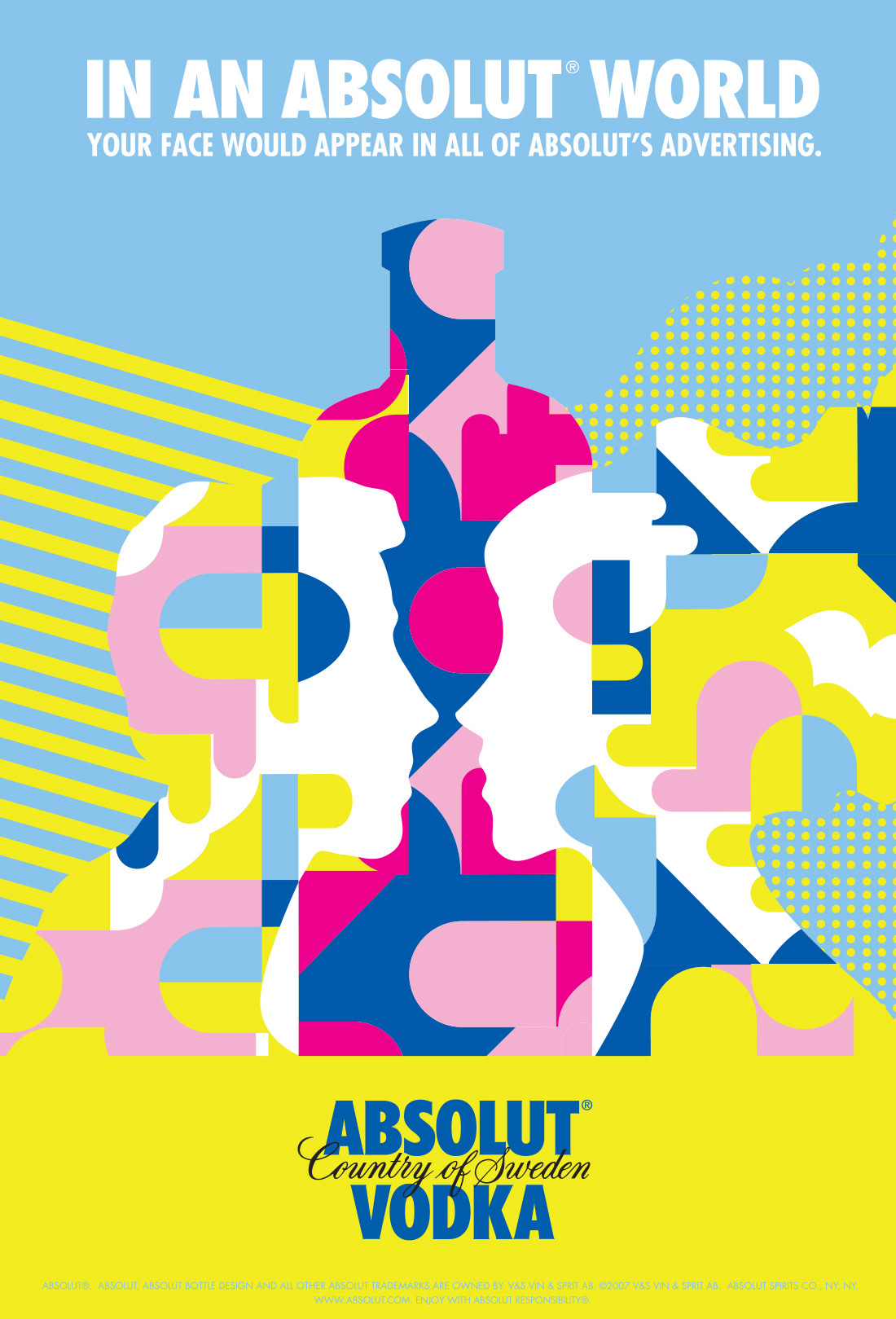
Absolut vodka transformed contemporary advertising through a decades-long campaign that married minimalist product design with high art, fashion, and pop culture. By treating its distinctive bottle silhouette as a blank canvas, the brand pioneered conceptual print marketing, secured deep associations with the global art and LGBTQ+ communities, and established a template for modern lifestyle branding.
The Genesis of a Visual Icon: The Absolute Bottle
When the Swedish state-owned spirits company Vin & Sprit prepared to launch its premium vodka in the United States through importer Carillon Importers under the leadership of Michel Roux, the product faced a formidable hurdle. The bottle looked unlike traditional vodka packaging; it resembled an 18th-century medicine flask found in an antique store in Stockholm. Lacking a traditional paper label, the transparent vessel left the crystal-clear liquid exposed, making the bottle shape itself the primary branding asset.
Rather than concealing this unorthodox design, marketing strategist Geoff Hayes and copywriter Tom McManus at TBWA Worldwide leaned into it. The breakthrough came in 1980 with the first print advertisement featuring the bottle: "Absolut Perfection." The ad displayed the bottle with a halo hovering above the cap, rendered in a clean, high-fashion editorial style. This simple typographic and visual pun established a rigid structural framework that would persist for decades: a centrally positioned bottle of Absolut, accompanied by a short, two-word declarative headline set in bold serif type, all anchored by a white background.
This structural constraint paradoxically unlocked boundless creative freedom. The bottle served as a constant anchor while the surrounding environment shifted infinitely. Consumers began to look at magazines not just for editorial content, but to see how the latest Absolut advertisement would playfully interpret the brand name. The campaign shifted advertising from a medium of hard-sell product features into a form of visual art and cultural commentary.
Art, Design, and the Collaboration Paradigm
Following the early success of the initial typography-driven ads, Roux and TBWA expanded the canvas by inviting contemporary artists to interpret the Absolut bottle through their distinct mediums. This strategy began in 1985 when Andy Warhol was commissioned to paint an original portrait of the bottle. Warhol, a master of commercial art and consumer culture commentary, enthusiastically agreed, creating a vibrant, silkscreened canvas that positioned the brand within the upper echelons of the contemporary art world.
The Warhol collaboration proved to be a watershed moment. It established a cultural bridge between mass-market consumer goods and elite fine art. Following Warhol's contribution, the Absolut Art Collection expanded to include works by thousands of creators across painting, sculpture, photography, and fashion, featuring luminaries such as:
- Keith Haring
- Kenny Scharf
- Ed Ruscha
- Louise Bourgeois
- Takashi Murakami
- Damien Hirst
The Mechanics of Creative Partnerships
| Collaboration Era | Primary Medium / Focus | Cultural Objectives | Key Creative Milestone |
|---|---|---|---|
| 1980s (Fine Art) | Painting, Pop Art, Silkscreen | Elevate brand status; associate with high culture and avant-garde galleries. | Andy Warhol’s 1985 canvas commission. |
| 1990s (Geography & Cities) | Photography, Graphic Design, Illustration | Localize global marketing; celebrate urban identities and regional milestones. | The "Absolut Cities" series, beginning with Absolut L.A. (1988). |
| 2000s (Fashion & Music) | Couture, Photography, Electronic Music | Capture youth culture trends; integrate with nightlife and lifestyle aesthetics. | Partnerships with designers like Jean Paul Gaultier and Versace. |
| 2010s–Present (Experiential) | Digital Installations, Immersive Art, Activism | Engage digital-native audiences; champion social causes and inclusivity. | The "Absolut Nights" and global pride initiatives. |
The geographic adaptation of this strategy manifested in the celebrated "Absolut Cities" and "Absolut States" campaigns. Beginning with Absolut L.A. in 1988 and Absolut Boston in 1989, the brand transformed local geography, architecture, and cultural touchstones into visual puns centered on the bottle. A palm-lined Los Angeles street, a Boston baked bean theme, or the skyline of Manhattan were cleverly integrated into the silhouette. This localization made consumers feel seen and celebrated, turning a Swedish import into a localized cultural staple across dozens of major metropolitan areas worldwide.
Pioneering LGBTQ+ Advocacy and Inclusive Marketing
Long before corporate allyship became a standard marketing playbook during Pride Month, Absolut was actively and structurally embedding itself within the LGBTQ+ community. Beginning in the early 1980s—an era marked by intense social stigma and the devastating onset of the AIDS epidemic—the brand made a deliberate commercial and ethical choice to advertise in emerging gay publications such as The Advocate and Out, as well as sponsoring community theater, pride parades, and HIV/AIDS research organizations.
This wasn't opportunistic visibility; it was built on authentic community integration. Absolut recognized that urban, culturally progressive gay consumers were early adopters of fashion, art, and premium spirits. By providing financial support and respectful representation when mainstream brands actively avoided association with the community, Absolut built profound brand loyalty.
Over the decades, this advocacy evolved into bold, large-scale public statements. Campaigns like "Absolut Pink" and limited-edition rainbow bottles (such as the Absolut Colors and Absolut Mix editions) translated this solidarity into physical retail products, with portions of proceeds frequently directed toward organizations advocating for equality and LGBTQ+ rights. This sustained commitment redefined corporate social responsibility, demonstrating that inclusive marketing could be both ethically sound and commercially robust.
Cultural Impact and the Shift to Experiential Branding
The cumulative cultural footprint of thousands of distinct print advertisements, art collaborations, and advocacy initiatives altered consumer expectations of marketing. Absolut proved that a commodity product could achieve luxury status through consistent aesthetic storytelling rather than functional differentiation.
As the media landscape shifted from print magazines to digital platforms in the 21st century, the brand adapted its methodology from static visual puns to immersive, experiential environments. Initiatives like Absolut Blank and large-scale interactive music festivals extended the ethos of the original art collaborations into live, participatory events. Consumers were no longer merely observers of a clever magazine ad; they became active participants in a curated cultural ecosystem.
Common Misconceptions Regarding the Campaign
- Misconception: The bottle design was created specifically for the 1980 US launch.
- Fact: The apothecary-style bottle was modeled after 18th-century Swedish medicine containers discovered by entrepreneur Lars Olsson Smith long before the international export strategy was formulated.
- Misconception: Andy Warhol approached the brand to paint the bottle.
- Fact: Michel Roux actively pursued Warhol, convincing the artist by explaining that he loved the bottle's design, which prompted Warhol to declare that he loved the bottle too and would paint it.
- Misconception: The print campaign relied on a rotating team of unrelated advertising agencies.
- Fact: The foundational vision and execution were maintained through a remarkably stable, decades-long partnership with TBWA Worldwide, ensuring absolute creative consistency.
Frequently Asked Questions
What was the very first Absolut print advertisement?
The first ad, published in 1980 in the United States, featured the bottle centered against a stark white background with the headline "Absolut Perfection" and a subtle halo hovering above the cap. Created by TBWA, this ad established the minimalist visual formula that defined the brand's marketing for decades.
How many artists collaborated with Absolut during its peak art campaign?
Over the course of the campaign, which spanned more than three decades, Absolut commissioned works from upwards of 400 contemporary artists, resulting in an extensive corporate art collection that included pieces by Andy Warhol, Keith Haring, and Damien Hirst.
Why did Absolut choose to advertise in LGBTQ+ publications in the 1980s?
The brand recognized the cultural influence, trendsetting nature, and purchasing power of the urban LGBTQ+ community during a time when major corporations routinely avoided association with minority groups. This early support was rooted in both commercial foresight and a commitment to progressive social values.
Did the Absolut bottle design change over the years?
While the core silhouette of the 18th-century medicine flask remained unchanged, the brand introduced numerous limited-edition artistic packaging designs, flavored variations, and thematic iterations (such as colored glass and patterned wraps) while preserving the iconic shape.
How did the advertising strategy transition into the digital era?
As traditional print media declined, Absolut shifted its focus toward experiential marketing, digital art installations, music sponsorships, and interactive social media campaigns that maintained the core philosophy of creative collaboration in virtual and physical spaces.
Next Actions for Brand Strategists and Marketers
Analyzing the trajectory of Absolut's marketing offers clear lessons for contemporary brand builders. To replicate this level of cultural resonance, marketing teams should prioritize long-term asset consistency over short-term stylistic pivots, anchor their storytelling in genuine community engagement rather than superficial trend-chasing, and treat creative collaborations as true artistic partnerships rather than transactional product placements. By maintaining a recognizable anchor while allowing external culture to shape the details, brands can transcend traditional advertising and become enduring cultural artifacts.