Finding reliable vehicle coverage in Central Florida requires an understanding of both state-mandated legal thresholds and the specific local options available to drivers. AA Auto Insurance of Greater Orlando serves as a localized reference point for motorists seeking policies tailored to the unique traffic, population density, and weather patterns of the Orlando metropolitan area. Whether you are registering a new vehicle, replacing an existing policy, or shopping for better rates, understanding how regional insurance agencies operate helps secure adequate protection while maintaining compliance with Florida laws.
Understanding the Orlando Auto Insurance Landscape
The Greater Orlando area—encompassing Orange, Seminole, Osceola, and parts of Lake counties—presents unique challenges for auto insurers. High traffic volumes along major corridors like Interstate 4, the Beachline Expressway, and the GreeneWay, combined with a significant volume of tourism-related and rental vehicle traffic, contribute to distinct risk profiles. Local insurance agencies must structure policies that account for these regional factors while keeping premiums manageable for drivers.
When evaluating insurance options associated with the Greater Orlando market, policyholders generally encounter a mix of regional independent agencies, national carrier networks, and specialized local brokerages. An independent agency structure allows consumers to compare quotes across multiple carriers rather than being locked into a single proprietary rate. This flexibility is particularly valuable in Florida, where premium costs fluctuate based on legislative updates, uninsured motorist rates, and regional litigation trends.
The Role of Independent Agencies and Local Brokerages
Independent insurance operations in Central Florida function as intermediaries between drivers and a portfolio of national or regional insurance underwriters. Unlike captive agents who represent only one brand, local agencies can evaluate quotes from dozens of carriers. This structural advantage helps drivers navigate market conditions where rate adjustments can vary dramatically between companies.
Working with a localized office also provides the benefit of familiarity with regional registration offices, local lienholders, and specific municipal requirements. For example, insuring a vehicle garaged in downtown Orlando versus a suburban community like Winter Garden or Lake Mary can yield different rating tiers based on local zip code risk assessments.
Mandatory Coverage Requirements in Florida
Before selecting an auto insurance policy in Greater Orlando, every driver must understand the baseline legal requirements mandated by the state of Florida. Unlike many other states that require high liability limits, Florida operates under a unique no-fault system centered around Personal Injury Protection (PIP) and Property Damage Liability (PDL).
Personal Injury Protection (PIP)
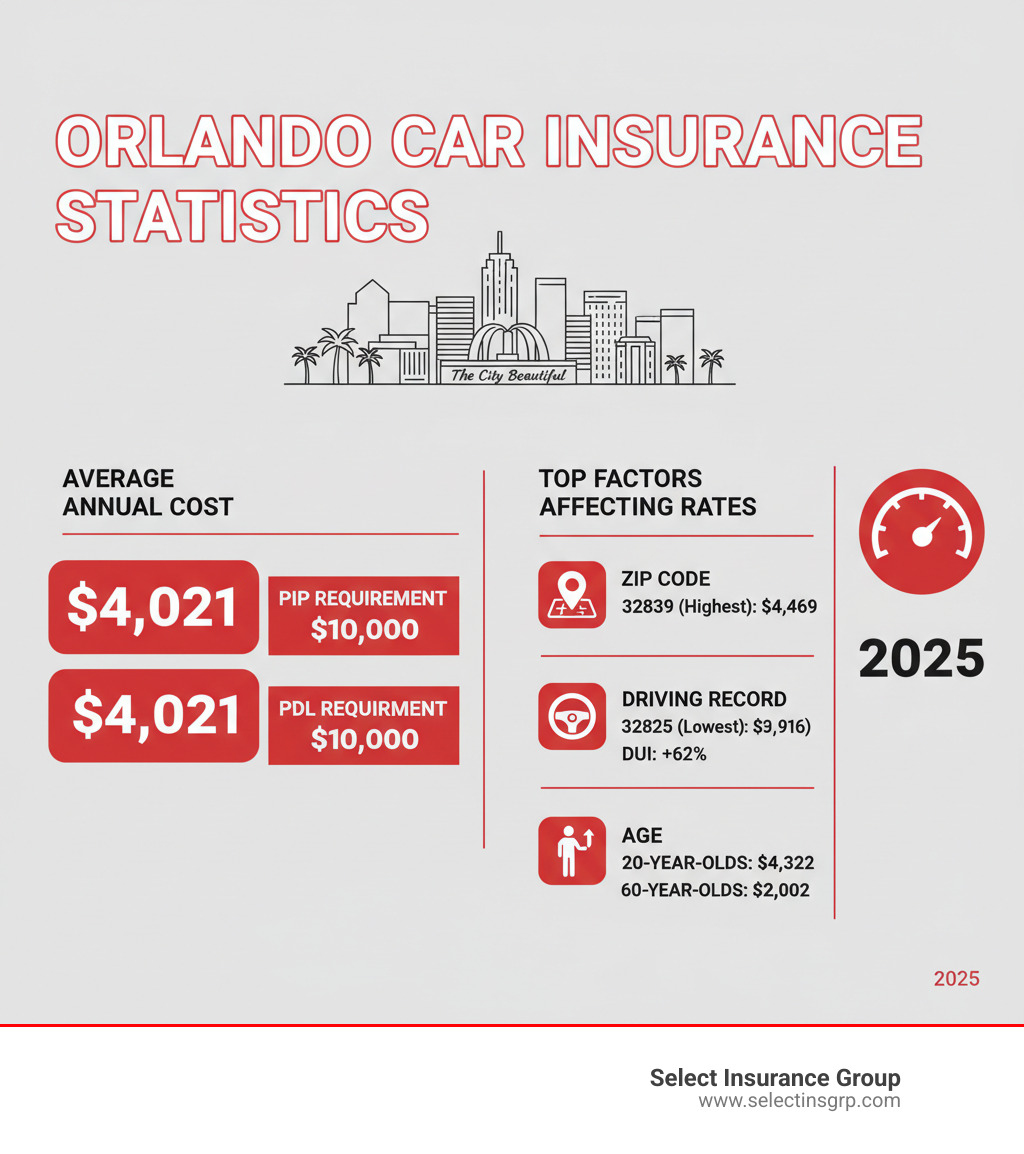
Florida Statutes § 627.736 require every owner of a motor vehicle registered in the state to maintain a minimum of $10,000 in Personal Injury Protection coverage. PIP is designed to pay for medical expenses, lost wages, and related costs resulting from a covered motor vehicle accident, regardless of who caused the collision.
- Medical Benefits: Typically covers 80% of necessary medical expenses up to the $10,000 limit, provided treatment is sought within 14 days of the incident from an approved medical provider.
- Disability Benefits: Covers 60% of work loss and loss of earning capacity.
- Death Benefits: Provides $5,000 in death benefits in addition to the medical and disability limits.
Property Damage Liability (PDL)
In addition to PIP, Florida law requires drivers to carry a minimum of $10,000 in Property Damage Liability. This coverage pays for damage your vehicle causes to another person’s property, such as another car, guardrails, utility poles, or buildings.
It is important to note that while PIP and PDL satisfy the bare minimum legal requirements to register a vehicle in Florida, they do not cover damage to your own vehicle. Drivers financing or leasing a vehicle will almost universally be required by their lenders to carry additional coverages.
| Coverage Type | Mandatory Minimum in Florida | What It Protects |
|---|---|---|
| Personal Injury Protection (PIP) | $10,000 | Your medical bills and lost wages, regardless of fault. |
| Property Damage Liability (PDL) | $10,000 | Damage your vehicle causes to other people's property. |
| Bodily Injury Liability (BIL) | Not strictly mandatory for all drivers* | Injuries you cause to others in an at-fault accident. |
| Collision Coverage | Optional (Required by Lenders) | Damage to your own vehicle from a crash with another car or object. |
| Comprehensive Coverage | Optional (Required by Lenders) | Non-collision damage (theft, weather, vandalism, animal strikes). |
*Note: Bodily Injury Liability is not universally mandated for all private passenger vehicles in Florida, but it is frequently required under certain conditions, such as following certain traffic violations or DUI convictions, and is strongly recommended by all insurance professionals.
Standard Optional Coverages for Greater Orlando Drivers
Relying solely on Florida’s statutory minimums exposes motorists to significant financial vulnerability. Given the high percentage of uninsured or underinsured drivers operating in the state, local insurance experts strongly recommend expanding coverage limits and adding specialized protections.
Uninsured and Underinsured Motorist (UM/UIM) Coverage
Statistics from insurance industry groups consistently rank Florida among the states with the highest percentages of uninsured drivers. If you are hit by a motorist who carries no insurance or insufficient liability limits, Uninsured Motorist coverage steps in to pay for your medical bills, pain and suffering, and lost wages. Securing UM/UIM coverage is one of the most practical steps a Greater Orlando driver can take to protect their personal finances.
Comprehensive and Collision Protection
- Collision Coverage: Pays to repair or replace your vehicle if it collides with another car or object, such as a fence or tree.
- Comprehensive Coverage: Protects against perils outside of traffic collisions. In Central Florida, this is particularly vital due to seasonal severe weather, including heavy tropical storms, localized flooding, flying debris during high winds, and frequent wildlife encounters.
Factors Influencing Auto Insurance Rates in Orlando
Insurance premiums are calculated using actuarial risk models that evaluate multiple personal and environmental variables. Understanding these factors can help policyholders manage their insurance costs effectively.
Driving Record and History
An individual's driving history remains one of the heaviest weight factors in determining insurance premiums. Speeding tickets, at-fault accidents, and driving under the influence (DUI) convictions result in significant surcharges. In Florida, points assessed against a driver's license by the Florida Department of Highway Safety and Motor Vehicles (FLHSMV) directly impact insurance pricing for a period typically spanning three to five years.
Vehicle Make, Model, and Safety Features
The type of vehicle you drive directly affects your insurance costs. Vehicles with high repair costs, expensive electronic safety sensors embedded in windshields or bumpers, or high theft rates command higher premiums. Conversely, vehicles equipped with advanced driver-assistance systems (ADAS), anti-theft tracking, and high crash-test ratings often qualify for policy discounts.
Coverage Limits and Deductibles
Adjusting your policy structure allows you to directly influence your premium. Selecting higher deductibles—such as raising your comprehensive or collision deductible from $500 to $1,000—lowers your monthly or semi-annual premium, provided you can afford the out-of-pocket cost in the event of a claim. Conversely, lower deductibles increase your premium but reduce immediate out-of-pocket expenses after an incident.
Frequently Asked Questions
What are the minimum auto insurance requirements to register a car in Orlando, Florida?
To register a motor vehicle in Florida, drivers must maintain a minimum of $10,000 in Personal Injury Protection (PIP) and $10,000 in Property Damage Liability (PDL). Proof of this coverage must be provided to the county tax collector or FLHSMV when obtaining a license plate.
Is Bodily Injury Liability (BIL) required in Florida?
Bodily Injury Liability is not legally required for all private passenger vehicle owners in Florida, but it is mandatory if you have been convicted of certain major traffic offenses, such as a DUI. Even when not legally required, carrying BIL is essential to protect personal assets from lawsuits resulting from at-fault accidents.
Why are auto insurance rates generally higher in the Greater Orlando area?
Rates in Orlando are influenced by high population density, heavy tourist traffic, heavy congestion on major roadways like Interstate 4, elevated rates of uninsured motorists, and regional litigation trends that increase claim settlement costs for insurers.
How can I lower my auto insurance premium in Central Florida?
You can reduce your premiums by maintaining a clean driving record, bundling your auto policy with homeowners or renters insurance, raising your deductibles, driving a vehicle with advanced safety features, and inquiring about defensive driving course discounts.
What should I do immediately after a minor car accident in Orlando?
First, ensure everyone is safe and move vehicles to the shoulder if they are obstructing traffic. Call local law enforcement to file an official crash report. Exchange insurance and contact information with the other drivers, document the scene with photographs, and notify your insurance agency as soon as possible to report the incident.
Next Steps for Securing Policy Coverage
Securing the right auto insurance policy in Greater Orlando begins with assessing your personal risk tolerance and financial obligations. Gather your current policy declarations page, driver's license numbers, and vehicle identification numbers (VINs). Contact a licensed independent insurance professional or regional agency to compare multiple carrier quotes, ensuring your policy covers both mandatory state minimums and essential protections like Uninsured Motorist and Comprehensive coverage.