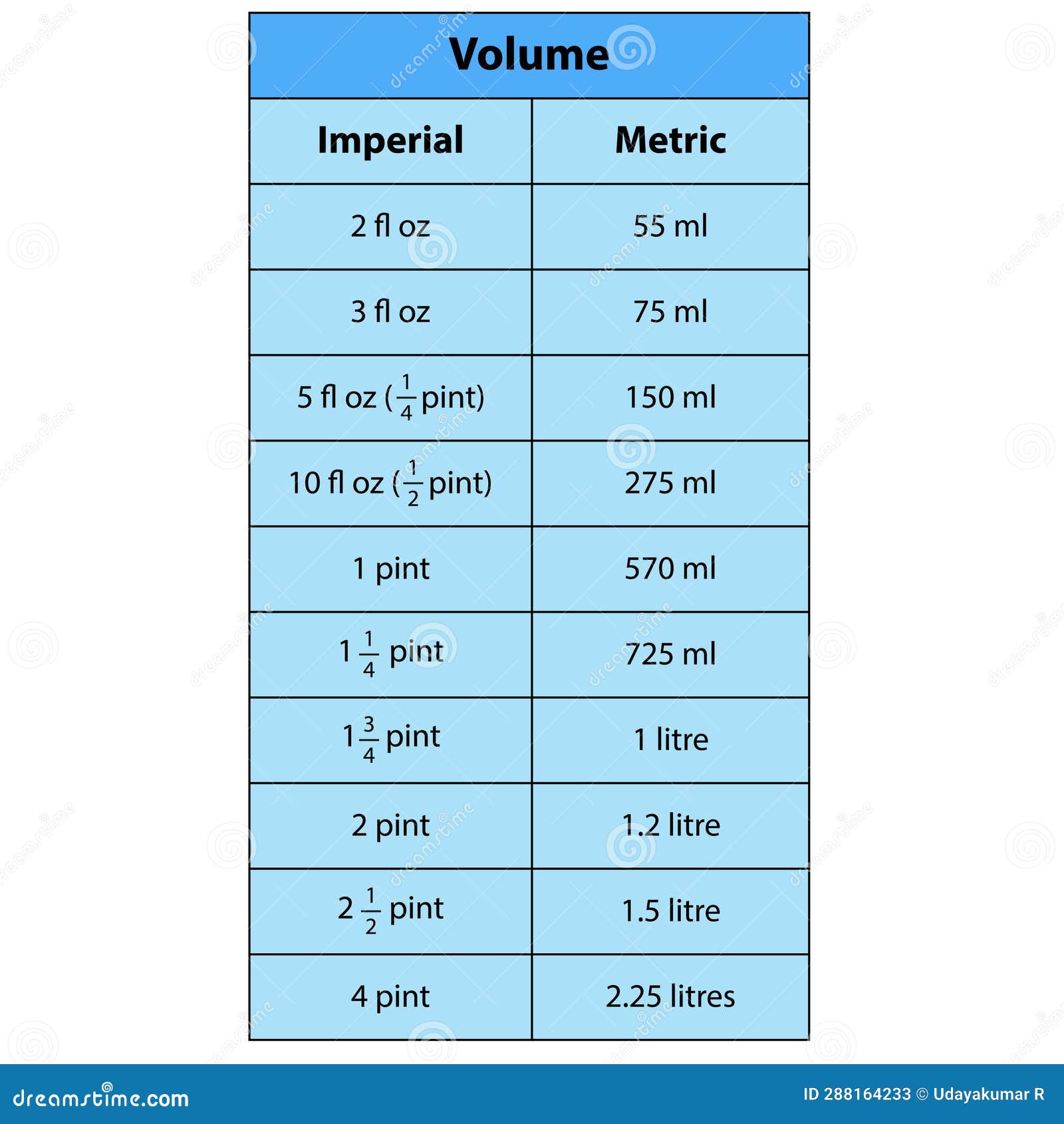
To convert 8 US fluid ounces (fl oz) to milliliters (ml), the precise value is 236.588 ml. In most everyday practical applications, such as cooking or hydration tracking, this figure is commonly rounded to 237 ml for convenience, or 240 ml when following US nutritional labeling standards.
The conversion between the US Customary System and the Metric System is a fundamental necessity for international trade, culinary arts, and scientific accuracy. While the number 236.588 may seem straightforward, the context in which you use this measurement—whether you are baking a delicate soufflé, administering medication, or following a fitness hydration plan in 2026—determines whether you should use the exact mathematical figure or a standardized rounded version.
Defining the Fluid Ounce: A Tale of Two Systems
Before diving into the mathematics of milliliters, it is essential to understand that the "fluid ounce" is not a universal unit. Historically, the fluid ounce has seen various definitions based on regional standards. Today, we primarily distinguish between the US Customary fluid ounce and the British Imperial fluid ounce.
The US Customary Fluid Ounce
In the United States, the fluid ounce is defined as 1/128th of a US gallon. The US gallon is based on the "Queen Anne wine gallon," which was established in 1707 and occupies exactly 231 cubic inches. When we calculate 8 fl oz in the US system, we are looking at 1/16th of a US liquid pint.
Because the US system is defined by its relationship to the inch (a unit of length), the conversion to the metric system involves a specific mathematical constant. Since 1959, the international inch has been defined as exactly 25.4 millimeters. This definition anchors the entire US Customary System to the metric system, ensuring that 1 US fluid ounce equals exactly 29.5735295625 milliliters.
The British Imperial Fluid Ounce
If you are using a recipe from the United Kingdom, Canada, or Australia that dates back to traditional standards, you might be dealing with the Imperial fluid ounce. The Imperial system, defined by the British Weights and Measures Act of 1824, is based on the volume of 10 pounds of distilled water at a specific temperature and pressure.
One Imperial fluid ounce is approximately 28.413 milliliters. Consequently, 8 Imperial fluid ounces equal roughly 227.3 ml. This is significantly different from the US version. In 2026, most modern digital scales and smart kitchen appliances allow you to toggle between "US" and "Imp" to account for this 4% discrepancy, which can make or break a sensitive recipe.
The Exact Mathematical Conversion
For technical documentation, laboratory work, or high-precision engineering, rounding is often discouraged until the final calculation. When converting 8 US fl oz to ml, the calculation is as follows:
1 US fl oz = 29.5735295625 ml8 US fl oz × 29.5735295625 = 236.5882365 ml
In most professional contexts, we truncate this to three decimal places: 236.588 ml.
Precision at this level is rarely required for "everyday use," but it serves as the baseline for all other rounded conventions. If you are using a high-precision graduated cylinder or a 2026-era smart liquid dispenser, this is the figure the software uses in its backend logic.
Why Nutrition Labels Use 240 ml
If you look at the back of a soda can or a milk carton in the United States, you will notice a discrepancy. The "Serving Size" might be listed as 8 fl oz, followed by (240 ml) in parentheses. If the math says 236.588, why does the FDA (Food and Drug Administration) use 240?
This is known as the US Federal Legal Unit. For the purpose of nutrition labeling, the FDA simplified the conversion to make it easier for consumers to calculate their intake. Under 21 CFR 101.9(b)(5)(viii), the FDA mandates that for labeling purposes, 1 fluid ounce is rounded to 30 milliliters.
- 1 fl oz (Legal) = 30 ml
- 8 fl oz (Legal) = 240 ml
This 240 ml standard is also used in the manufacturing of many "single-cup" coffee pods and water bottles. If you are tracking your macros or calorie intake in a fitness app, using 240 ml as the 8 oz standard is the most consistent method, as it aligns with the data provided by food manufacturers.
Practical Applications in the Kitchen
For home cooks and professional chefs, the goal of conversion is usually to ensure the ratio of ingredients remains constant. In most culinary applications, the difference between 236.5 ml and 240 ml is negligible—about three-quarters of a teaspoon. However, understanding how to apply these numbers is key to consistent results.
Baking Precision
Baking is a science where chemical reactions depend on specific ratios. If a recipe calls for 8 fl oz of milk, and you are using a metric measuring jug, should you aim for 236 or 240?
Most modern recipes developed in the US assume the standard US Customary cup, which is 8 fl oz. If you are measuring by volume, aim for the 237 ml mark (the closest whole-number approximation of 236.588). If you are using a scale—which is highly recommended for accuracy in 2026—remember that 236.588 ml of water weighs almost exactly 236.588 grams at room temperature.
Reading the Meniscus
When using a liquid measuring cup to hit that 8 oz / 237 ml mark, accuracy is often lost to poor technique. To get a precise 8 fl oz measurement:
- Place the measuring cup on a flat, level surface.
- Pour the liquid until it is close to the line.
- Crouch down so your eyes are level with the measurement mark.
- Ensure the bottom of the meniscus (the curve of the liquid) sits exactly on the line.
Hydration and Health: The 8-Ounce Glass
The common health advice to "drink eight 8-ounce glasses of water a day" (the 8x8 rule) has long been a staple of wellness guidance. When translated to the metric system, this equates to roughly 1.9 liters per day (8 x 236.588 ml = 1,892.7 ml).
In 2026, health practitioners and smart-bottle manufacturers often round this to an even 2 liters to account for the FDA 240 ml rounding (8 x 240 ml = 1,920 ml) and to encourage a slight buffer. If you are using a metric-only water bottle, filling it to the 500 ml mark four times will give you slightly more than 64 fl oz, providing a safe and easy target for daily hydration.
Common Conversion Errors to Avoid
The most frequent mistake in volume conversion is the confusion between fluid ounces (volume) and dry ounces (weight/mass).
- Fluid Ounces (fl oz): Measures how much space a liquid takes up. 8 fl oz of lead and 8 fl oz of feathers take up the same amount of space (about one cup).
- Dry Ounces (oz): Measures how much something weighs. 8 ounces of lead is very small, while 8 ounces of feathers would fill a large bag.
When you see "8 oz" in a recipe for a liquid (like water, milk, or oil), it almost always refers to fluid ounces. However, if a recipe asks for "8 oz of flour," it refers to weight. Because flour is less dense than water, 8 ounces of flour by weight actually occupies about 1.5 to 2 cups of volume (roughly 350-470 ml). Always verify if your recipe is asking for weight or volume before applying the 236.588 ml conversion.
Quick Reference Conversion Table
The following table provides the 8 fl oz conversion alongside other common increments using the three most frequent standards: the Precise US Customary, the FDA Food Labeling standard, and the British Imperial standard.
| US Fluid Ounces | Precise Metric (ml) | FDA Labeling (ml) | British Imperial (ml) |
|---|---|---|---|
| 1 fl oz | 29.57 ml | 30 ml | 28.41 ml |
| 2 fl oz | 59.15 ml | 60 ml | 56.83 ml |
| 4 fl oz | 118.29 ml | 120 ml | 113.65 ml |
| 8 fl oz (1 Cup) | 236.59 ml | 240 ml | 227.30 ml |
| 12 fl oz | 354.88 ml | 360 ml | 340.96 ml |
| 16 fl oz (1 Pint) | 473.18 ml | 480 ml | 454.61 ml |
| 32 fl oz (1 Quart) | 946.35 ml | 960 ml | 909.22 ml |
Technical Accuracy in 2026 Tools
As of 2026, many digital kitchen tools have integrated the NIST (National Institute of Standards and Technology) guidelines to provide users with multi-standard options. If you are using a smart scale or an automated liquid dispenser, check the settings menu. Higher-end models now distinguish between "US Customary," "US Legal (FDA)," and "Metric Cup" (which is exactly 250 ml).
If you are a developer or an engineer working on software that involves these conversions, always use the factor 29.5735295625 for US fluid ounces to milliliters to maintain compliance with international metrology standards.
FAQ: Frequently Asked Questions
Is 8 fl oz the same as 250 ml?
No, 8 fl oz is not exactly 250 ml. While many people use 250 ml as a "shorthand" cup measurement (especially in Australia and New Zealand where a "metric cup" is defined as 250 ml), 8 US fl oz is actually about 236.59 ml. Using 250 ml instead of 8 fl oz results in an excess of approximately 13.4 ml, or nearly a tablespoon.
Why do some measuring cups show 8 oz and 250 ml at the same level?
This is usually a result of manufacturing simplification. Inexpensive kitchenware often aligns the 8 oz mark with the 250 ml mark to save space on the printing mold, even though it is technically inaccurate. For precision tasks, look for a measuring cup with distinct, offset lines for ounces and milliliters.
How many ml is 8 oz of water in the UK?
In the UK, if you are using the Imperial system, 8 fluid ounces is approximately 227 ml. However, since the UK officially transitioned to the metric system for most regulated purposes, many modern UK recipes simply use milliliters (ml) directly. Always check if the recipe source is British or American to determine which "ounce" is being used.
Should I use 237 ml or 240 ml for medication?
When dealing with medication, you should never rely on "cup" conversions. Always use the specific measuring device (syringe or dosage cup) provided with the medication. If a doctor prescribes a dose equivalent to 8 fl oz (rare for a single dose but common for rehydration fluids), they will typically specify the exact milliliter count. When in doubt, consult a pharmacist.
Does the temperature of the liquid change the ml count?
Technically, yes. Liquids expand and contract with temperature changes. A volume of 8 fl oz of water at 4°C (its densest point) will occupy slightly less space than at 90°C. However, for everyday kitchen and household use, this thermal expansion is so minute that it does not affect the conversion of 8 fl oz to 236.588 ml.
Practical Recommendation
For the highest level of accuracy in your daily life, use 237 ml as your standard conversion for 8 fl oz. This rounding is precise enough for cooking, baking, and general household tasks without the complexity of decimal points.
If you are tracking nutrition or reading US food labels, switch to 240 ml to stay consistent with the manufacturer's data. For those who prioritize absolute precision, especially in scientific or professional settings, stick to the exact figure of 236.588 ml. Investing in a high-quality digital scale that measures in both grams and milliliters will eliminate the guesswork and ensure your measurements are perfect every time.