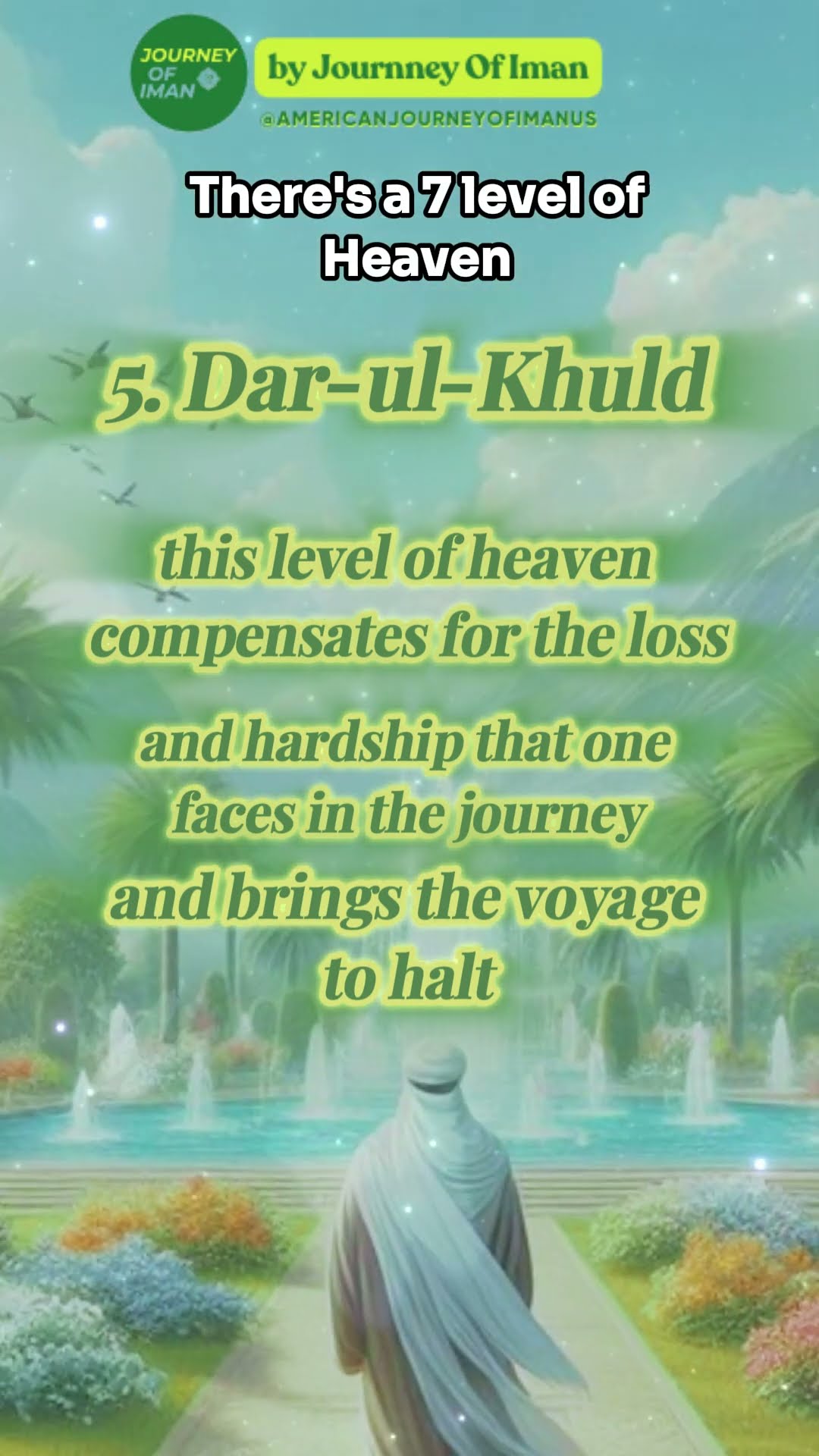
In Islamic theology, the "7 levels of heaven" generally refer to the hierarchical degrees of Paradise, known as Jannah, where believers are rewarded based on their faith and righteous deeds. While the Quran mentions seven physical "skies" (Samaawat), it also describes various names and ranks for the eternal gardens of Paradise, with Jannat al-Firdaus being the highest and most prestigious level.
Islamic eschatology, or the study of the end times and the afterlife (Akhirah), posits that human existence does not end at death. Instead, life in this world serves as a trial or a "planting ground" for the harvest of the hereafter. As of 2026, contemporary Islamic scholarship continues to emphasize that the rewards of Jannah are not uniform; rather, they are perfectly calibrated to the sincerity, struggle, and spiritual excellence (Ihsan) achieved by an individual during their earthly life. Understanding these levels provides a roadmap for spiritual aspiration and a deeper appreciation of Divine Justice.
The Linguistic and Theological Distinction: Samaawat vs. Jannah
Before exploring the specific levels of Paradise, it is essential to resolve a common ambiguity in the English term "heaven." In Islamic Arabic terminology, there is a clear distinction between the Samaawat and Jannah.
The Seven Skies (As-Samaawat as-Sab' )
The Quran frequently mentions "seven heavens" or "seven skies" (e.g., Surah Al-Mulk 67:3). These refer to the layers of the created universe or the celestial atmosphere. During the Isra and Mi'raj (the Night Journey and Ascension), the Prophet Muhammad (peace be upon him) ascended through these seven physical/spiritual skies, meeting different prophets at each level—such as Adam in the first, Jesus and John in the second, and Abraham in the seventh.
The Gardens of Paradise (Jannah)
Conversely, Jannah refers to the final abode of the righteous after the Day of Judgment. While the term "7 levels" is a popular way to categorize the descriptions found in the Quran, many scholars, citing various Hadith (prophetic traditions), argue that the levels of Jannah are far more numerous. A famous narration in Sahih Bukhari states that there are one hundred levels in Paradise, and the distance between each level is like the distance between the earth and the heavens.
The Names and Ranks of the Levels of Jannah
The Quran and Sunnah use several specific names for Paradise. Scholars often interpret these names as either synonymous descriptions of the whole of Jannah or as distinct regions or levels reserved for specific groups of believers. Below are the seven most prominent names identified as the "levels" of heaven.
1. Jannat al-Firdaus (The Highest Paradise)
Jannat al-Firdaus is widely recognized as the most superior and central part of Jannah. The Prophet Muhammad (PBUH) instructed his followers: "When you ask Allah, ask Him for al-Firdaus, for it is the middle of Paradise and the highest part of Paradise" (Sahih Bukhari).
It is situated directly beneath the Throne of the Most Merciful ('Arsh al-Rahman), and from it, the four main rivers of Paradise flow. This level is reserved for those who achieved the highest levels of faith, including those who were humble in prayer, avoided vain talk, were active in charity, and guarded their chastity (Surah Al-Mu'minun 23:1-11).
2. Jannat al-Adn (The Gardens of Eternity/Eden)
"Adn" signifies a place of permanent residence. This level is described in the Quran as a place where the inhabitants will be adorned with gold bracelets and pearls. It is the destination for those who have achieved "the great success." According to Islamic teachings, the angels will enter upon the residents of 'Adn from every gate, saying, "Peace be upon you for what you patiently endured."
3. Jannat al-Na'im (The Gardens of Delight)
This level emphasizes the physical and spiritual bliss of Paradise. The term "Na'im" encompasses everything that provides pleasure, comfort, and luxury. It is mentioned in Surah Al-Ma'idah and Surah Luqman as a reward for those who believe and do righteous deeds. In this level, the focus is on the total absence of stress, pain, and exhaustion, replaced by eternal contentment.
4. Jannat al-Ma’wa (The Garden of Abode)
The term "Ma'wa" implies a place of refuge or a final sanctuary. This level is mentioned in Surah An-Najm (53:15) in relation to the Sidrat al-Muntaha (the Lote Tree of the Utmost Boundary). It is the place where the souls of the martyrs are said to reside or where those who feared the standing before their Lord will find their home (Surah An-Nazi'at 79:40-41).
5. Darus-Salam (The Home of Peace)
Allah Himself calls the believers to this abode: "And Allah invites to the Home of Peace..." (Surah Yunus 10:25). It is a realm where no harm, conflict, or negative speech exists. The primary characteristic of this level is the absolute serenity and the "Salam" (peace) that is exchanged between the inhabitants and the Almighty.
6. Darul-Muqamah (The Home of Settlement)
This name highlights the concept of permanence. After the hardships of the worldly life, the inhabitants of this level will express gratitude that Allah has removed all grief from them. It is mentioned in Surah Fatir (35:34-35), where the residents say, "Praise be to Allah, who has removed from us [all] sorrow... who has settled us in the Home of Settlement out of His bounty."
7. Al-Maqam al-Amin (The Place of Security)
Mentioned in Surah Ad-Dukhan (44:51), this level is reserved for the "Muttaqin" (those conscious of Allah). The emphasis here is on safety and security. In a world characterized by uncertainty, this level offers a guarantee that no blessing will ever be taken away and no fear will ever touch the soul again.
Comparison Table: Key Attributes of the Levels of Jannah
| Level Name | Meaning | Primary Beneficiaries | Key Quranic Reference |
|---|---|---|---|
| Jannat al-Firdaus | The Highest Paradise | The foremost in faith, the humble in prayer. | Surah Al-Kahf (18:107) |
| Jannat al-Adn | Gardens of Eternity | The patient and those who fulfill covenants. | Surah Ar-Ra'd (13:23) |
| Jannat al-Na'im | Gardens of Delight | Those who believe and perform righteous acts. | Surah Luqman (31:8) |
| Jannat al-Ma'wa | Garden of Abode | The God-fearing and those near the Lote Tree. | Surah An-Najm (53:15) |
| Darus-Salam | Home of Peace | Those who followed the straight path. | Surah Yunus (10:25) |
| Darul-Muqamah | Home of Settlement | Those who were thankful and stayed steadfast. | Surah Fatir (35:35) |
| Al-Maqam al-Amin | Place of Security | The Muttaqin (those with Taqwa/piety). | Surah Ad-Dukhan (44:51) |
The 8 Gates of Jannah
While the levels represent the destination, the 8 Gates represent the entry points. According to the Sunnah, Jannah has eight gates, and individuals will be called through specific gates based on their most prominent virtue.
- Baab As-Salah: For those who were punctual and sincere in their prayers.
- Baab Al-Jihad: For those who strove in the cause of Allah.
- Baab As-Sadaqah: For those who were frequent in charity.
- Baab Ar-Rayyan: Specifically reserved for those who fasted (Sawm) frequently.
- Baab Al-Hajj: For those who performed the pilgrimage.
- Baab Al-Iman: For those who had deep, sincere faith and trust in Allah.
- Baab Al-Kazimeen al-Ghaiz: For those who suppressed their anger and forgave others.
- Baab Al-Dhikr: For those who constantly remembered Allah.
Individuals of exceptional character, such as Abu Bakr as-Siddiq, are said to be invited to enter through any of the eight gates they choose.
Criteria for Ascending the Levels
The distribution of levels in Jannah is a manifestation of Divine Justice. Islam teaches that while the mercy of Allah is the primary reason anyone enters Paradise, their specific rank within it is determined by their "Amal" (deeds).
1. Strength of Iman (Faith)
The core requirement is the belief in the Oneness of Allah (Tawhid). However, the depth of this conviction—how much it influences one's private and public life—directly correlates to their rank in the hereafter.
2. Consistency in Worship
It is not merely the quantity of worship but the Ikhlas (sincerity) and consistency. The Prophet (PBUH) noted that the deeds most beloved to Allah are those done regularly, even if they are small.
3. Character and Ethics (Akhlaq)
Good character is one of the heaviest items on the scales on the Day of Judgment. Helping the poor, maintaining family ties, honesty in business, and kindness to animals are all pathways to higher levels of Jannah.
4. Knowledge and Teaching
Those who seek religious knowledge and teach others are granted high ranks. The Quran states, "Allah will raise those who have believed among you and those who were given knowledge, by degrees" (Surah Al-Mujadila 58:11).
Life in Jannah: What the Levels Share
Regardless of the level, Islamic scripture describes several universal features of Jannah that apply to all inhabitants:
- Eternal Youth: Residents will remain in a state of youthful vigor, typically described as being around the age of 33, and will never age or become ill.
- Ultimate Fulfillment: Any desire, whether for specific foods, companionship, or experiences, is granted instantaneously.
- Absence of Negativity: There is no envy, hatred, fatigue, or biological waste (toilets are not needed; waste is excreted as a fragrant musk-scented perspiration).
- The Vision of Allah: The greatest reward, which transcends all physical delights of the levels, is the "Ru'yah"—the ability for the believers to see their Creator. Scholarly tradition suggests the frequency and clarity of this vision may vary based on one's level in Jannah.
Frequently Asked Questions
Is the "7 levels" the same as the "100 levels"?
The number "seven" is often used in the Quran to signify "many" or to identify specific named regions. However, authentic Hadith mention that there are at least 100 levels between which the distance is vast. The "7 levels" usually refers to the seven distinct names mentioned in the Quranic text, whereas the "100 levels" refers to the granular degrees of reward within those regions.
Can someone move from a lower level to a higher level?
Generally, the level one is assigned on the Day of Judgment is their permanent residence. However, Islamic tradition mentions the "raising of ranks" due to the intercession (Shafa'ah) of the Prophet Muhammad (PBUH), or the prayers and charity (Sadaqah Jariyah) performed by one's righteous children after one's death.
Who is the first person to enter Jannah?
According to Islamic tradition, the Prophet Muhammad (PBUH) will be the first human to knock on the gates of Paradise and the first to enter.
What is the lowest level of Jannah like?
The "lowest" person in Jannah is described in a famous Hadith as having a kingdom ten times the size of the entire world and everything in it. This illustrates that even the "lowest" rank in Paradise is an inconceivable reward compared to earthly standards.
Are there levels in Hell (Jahannam) too?
Yes, Islamic theology also describes levels (often called "ranks" or "pits") in Hell, known as Darakât. Just as Paradise has levels of reward, Hell has levels of punishment based on the severity of the sins and disbelief.
Practical Next Steps for the Believer
To aspire to the higher levels of Jannah, such as Jannat al-Firdaus, scholars recommend a focused spiritual strategy:
- Purify Intentions: Ensure that every good deed is done solely for the sake of Allah.
- Increase Voluntary Prayers: Beyond the five daily prayers, Nawafil (voluntary) prayers like Tahajjud (night prayer) are keys to spiritual elevation.
- Memorize and Act on the Quran: There is a narration stating that a person will be told to "Recite and ascend" in Jannah, and their level will be at the last verse they recited.
- Supplicate Constantly: Regularly ask for Al-Firdaus by name, as encouraged by the Prophet (PBUH).