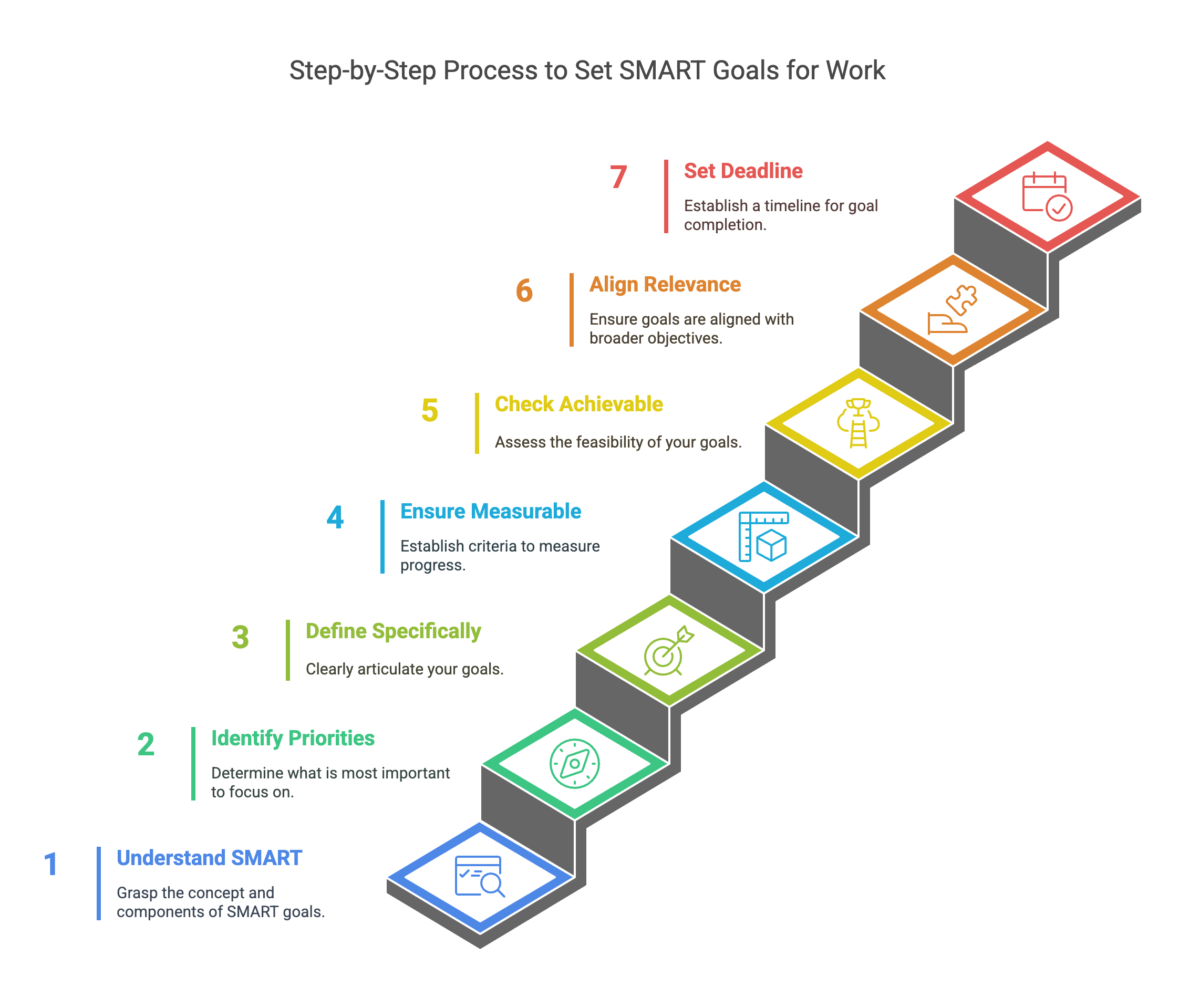
Process goals are the specific, controllable actions and repetitive behaviors that form the foundation of any successful system. Unlike outcome goals, which focus on a final result often influenced by external factors, process goals emphasize the daily or weekly activities that lead to that result. By shifting focus to the "how" rather than the "what," you build sustainable habits and maintain consistent motivation.
In the landscape of 2026, the distinction between "what we want" and "what we do" has never been more critical. As automation and high-level strategy become the norm, the ability to execute on granular, repeatable processes is what separates high-performers from those who are merely busy. An outcome goal might be "to write a bestselling book," but that goal is often paralyzed by its own scale. A process goal, conversely, is "to write 500 words every morning at 7:00 AM." One is a wish; the other is a schedule.
To truly understand how to implement these effectively, we must look at the mechanics of goal setting, the psychological advantages of process-oriented thinking, and specific, high-impact examples that can be applied across various sectors of life and business.
The Psychology and Mechanics of Process Goals
The primary reason process goals "work" better than outcome goals lies in the concept of the locus of control. Outcome goals (e.g., "getting a promotion" or "winning a marathon") are often subject to the whims of third-party judges, market conditions, or even the performance of others. This lack of total control creates "outcome anxiety," which can lead to procrastination or burnout.
Process goals reside entirely within your internal locus of control. You can decide to show up, you can decide to make the calls, and you can decide to follow the protocol. When you complete a process goal, your brain receives a hit of dopamine, reinforcing the habit loop. This creates a "win state" every single day, rather than forcing you to wait months or years for a single moment of satisfaction that may or may not arrive.
Leading vs. Lagging Indicators
In technical terms, process goals are leading indicators. They are the predictive measures that tell you whether you are on track to hit your targets. Outcome goals are lagging indicators; by the time you measure them, the effort has already been expended, and you cannot change the result. By managing the leading indicators (the process), you exert maximum influence over the lagging indicators (the results).
5 Process Goals Examples That Actually Work
The following examples are designed to be "plug-and-play" but should be adapted to your specific environment and requirements. They cover the most common areas where people struggle with traditional goal setting: health, career, creativity, learning, and finance.
1. The "Activity-First" Sales Process Goal
Outcome Goal: Generate $500,000 in new contract value this year. Process Goal: Conduct 10 discovery calls and send 15 personalized follow-up emails every week.
In a professional sales or business development environment, the final revenue number is influenced by budget cycles, economic shifts, and competitor pricing. However, the number of discovery calls conducted is a direct reflection of effort and system efficiency.
By setting a process goal around "discovery calls," the professional focuses on the top of the funnel. This goal works because it is measurable and actionable. If the $500,000 target is missed but the 10 calls per week were completed, the problem isn't "effort"—it is likely "strategy" or "conversion rate." This allows for technical troubleshooting rather than a generic feeling of failure.
2. The "Consistency-Based" Health Process Goal
Outcome Goal: Reach 12% body fat or lose 20 pounds. Process Goal: Track 100% of nutritional intake in a verified database and complete 45 minutes of resistance training every Monday, Wednesday, and Friday.
Weight loss is notoriously non-linear. Water retention, muscle gain, and metabolic adaptation mean the scale is often a "liar" in the short term. Focusing on the scale (the outcome) leads many to quit when progress appears to stall.
A process goal focused on tracking and specific training days removes the emotional weight of the scale. In 2026, with the integration of AI-driven nutritional tracking and biometric wearables, the "process" of health is more data-rich than ever. If you hit your tracking and training goals, the biological reality of a caloric deficit or progressive overload ensures that the outcome goal will eventually follow.
3. The "Output-Metric" Creative Process Goal
Outcome Goal: Finish a 75,000-word manuscript. Process Goal: Sit at the desk and write for 60 uninterrupted minutes every weekday morning, regardless of word quality.
Creativity is often hampered by the "perfectionist's trap." When the goal is "a great book," the pressure of the outcome prevents the start of the process. This process goal works because it lowers the barrier to entry.
By making the goal about time spent in the chair rather than quality of the prose, you bypass the amygdala's fear response. Over time, the sheer volume of work produced through this consistent process provides the raw material needed for a high-quality finished product. This is often referred to as the "Quantity Leads to Quality" principle, supported by research in various artistic disciplines.
4. The "Spaced-Repetition" Skill Acquisition Goal
Outcome Goal: Achieve professional fluency in a second language. Process Goal: Complete 20 minutes of active recall practice and listen to one 15-minute native-language podcast daily.
"Fluency" is a vague and intimidating outcome. It is difficult to define and even harder to measure progress toward on a daily basis. Most people fail at language learning because they "cram" for three hours once a week and then lose the information through decay.
The process goal here relies on the Spacing Effect. By committing to small, daily increments of active recall (testing yourself rather than just reading), you leverage how the human brain actually encodes long-term memory. This process works because it turns a monumental task into a manageable daily chore that is almost impossible to fail if the time is carved out.
5. The "Automation-First" Financial Process Goal
Outcome Goal: Build a $100,000 emergency fund/investment portfolio. Process Goal: Allocate 20% of every paycheck to a high-yield brokerage account via automated transfer on the day of deposit.
Many people set a goal to "save more money," which is an outcome goal with no process. They wait until the end of the month to see what is left over—which is usually nothing.
This process goal works because it removes human willpower from the equation. By focusing on the action of the transfer (or the setup of the automation), the outcome becomes a mathematical certainty over time. In the financial world of 2026, where micro-investing and automated "round-ups" are standard, the process is the only thing the user needs to manage; the compound interest takes care of the result.
Comparing Outcome Goals vs. Process Goals
The table below illustrates how to translate common outcome-based desires into actionable process-based systems.
| Category | Outcome Goal (The Lagging Result) | Process Goal (The Leading Action) | Why It Works |
|---|---|---|---|
| Business | Acquire 50 new clients | Pitch 5 prospective clients every Tuesday | Maintains a consistent pipeline regardless of "closes." |
| Education | Graduate with a 4.0 GPA | Review lecture notes for 30 mins after every class | Uses immediate reinforcement to ensure long-term retention. |
| Social | Make 10 new professional connections | Attend two industry networking events per month | Increases "surface area for luck" through regular exposure. |
| Fitness | Run a sub-4-hour marathon | Follow the specific daily mileage in the training plan | Ensures physical adaptation without overtraining or injury. |
| Coding | Build a SaaS application | Commit at least 10 lines of functional code to GitHub daily | Prevents "tutorial purgatory" by forcing active building. |
How to Construct Your Own Process Goals
To build a process goal that actually sticks, you need to follow a specific structural framework. A common mistake is making a process goal too vague, such as "work harder on my project." To be effective, a process goal must meet three technical criteria:
- Total Controllability: If the goal requires someone else to say "yes," it is an outcome goal. A process goal should be something you can do even if the rest of the world is uncooperative.
- Binary Success Metric: You should be able to answer "Yes" or "No" at the end of the day to the question: "Did I complete the process?" There is no "I kind of did it."
- Specific Frequency and Trigger: A process goal needs a "when" and a "where." Use Implementation Intentions: "I will [Action] at [Time] in [Location]."
Step-by-Step Implementation
- Identify the Lagging Indicator: Determine what result you actually want (e.g., "I want to be debt-free").
- Reverse Engineer the Actions: What are the repetitive actions that must happen for that result to occur? (e.g., checking the budget, reducing discretionary spend, making extra payments).
- Isolate the Highest Leverage Action: Pick the one action that has the biggest impact. (e.g., "Reviewing all transactions every Sunday evening").
- Define the Minimum Viable Process (MVP): Make the process so small it’s hard to fail. If "Reviewing all transactions" feels too big, start with "Log into the banking app every morning at breakfast."
- Track the Streak: Use a simple calendar or a digital tracker. The goal is to "not break the chain."
Common Pitfalls and Troubleshooting
Even with the best intentions, process goals can fail if not managed correctly. Here are the most frequent issues encountered in 2026 productivity workflows:
- The "All or Nothing" Fallacy: If you miss one day of your process, the temptation is to abandon the system entirely. The "Never Miss Twice" rule is the technical solution here. Missing once is an accident; missing twice is the start of a new, bad habit.
- Process Decay: Sometimes, the process you chose isn't actually linked to the outcome you want. If you are writing 500 words a day but your goal is to become a better public speaker, there is a mismatch. Periodically (every 30-90 days), audit your process goals to ensure they are still high-leverage for your current objectives.
- Over-complication: If your process goal has five different sub-steps, you will likely skip it when you are tired or stressed. Keep the process goal as a single, discrete action.
Frequently Asked Questions
Can I have both outcome goals and process goals?
Yes. In fact, it is recommended. The outcome goal provides the direction (the North Star), while the process goal provides the traction (the engine). Use the outcome goal to decide which mountain to climb, then look down at your feet and focus entirely on the next step (the process).
How many process goals should I track at once?
Research into cognitive load suggests that attempting more than 3 to 5 new habits or process goals simultaneously leads to a high failure rate. It is better to master one process until it becomes an unconscious habit before adding the next.
What if my process isn't yielding results?
This is the benefit of process goals: they provide data. If you have followed a process with 90% consistency for three months and have seen zero movement in your outcome goal, you have verified that the strategy is the problem, not your discipline. You can then pivot to a different process with confidence.
How do I stay motivated when the process is boring?
Motivation is a feeling that fluctuates; systems are reliable. Process goals are designed to replace motivation with routine. To make boring processes easier, use "Habit Stacking"—attach the new process goal to an existing habit (e.g., "While the coffee is brewing, I will do 20 pushups").
Should I share my process goals with others?
While sharing outcome goals can sometimes provide social accountability, it can also lead to "identity premature gratification," where the praise for saying you will do something tricks your brain into thinking you've already done it. It is often more effective to keep the process quiet and let the results speak for themselves.
Final Recommendation
To begin, choose one area of your life where you feel stuck. Identify the outcome you’ve been chasing and put it on a shelf. Instead, define a single, daily process that takes less than 15 minutes and is 100% within your control. Commit to this process for the next 30 days without worrying about the result. By the end of the month, the progress you've made through sheer consistency will likely outweigh what you achieved through months of sporadic, outcome-focused effort.