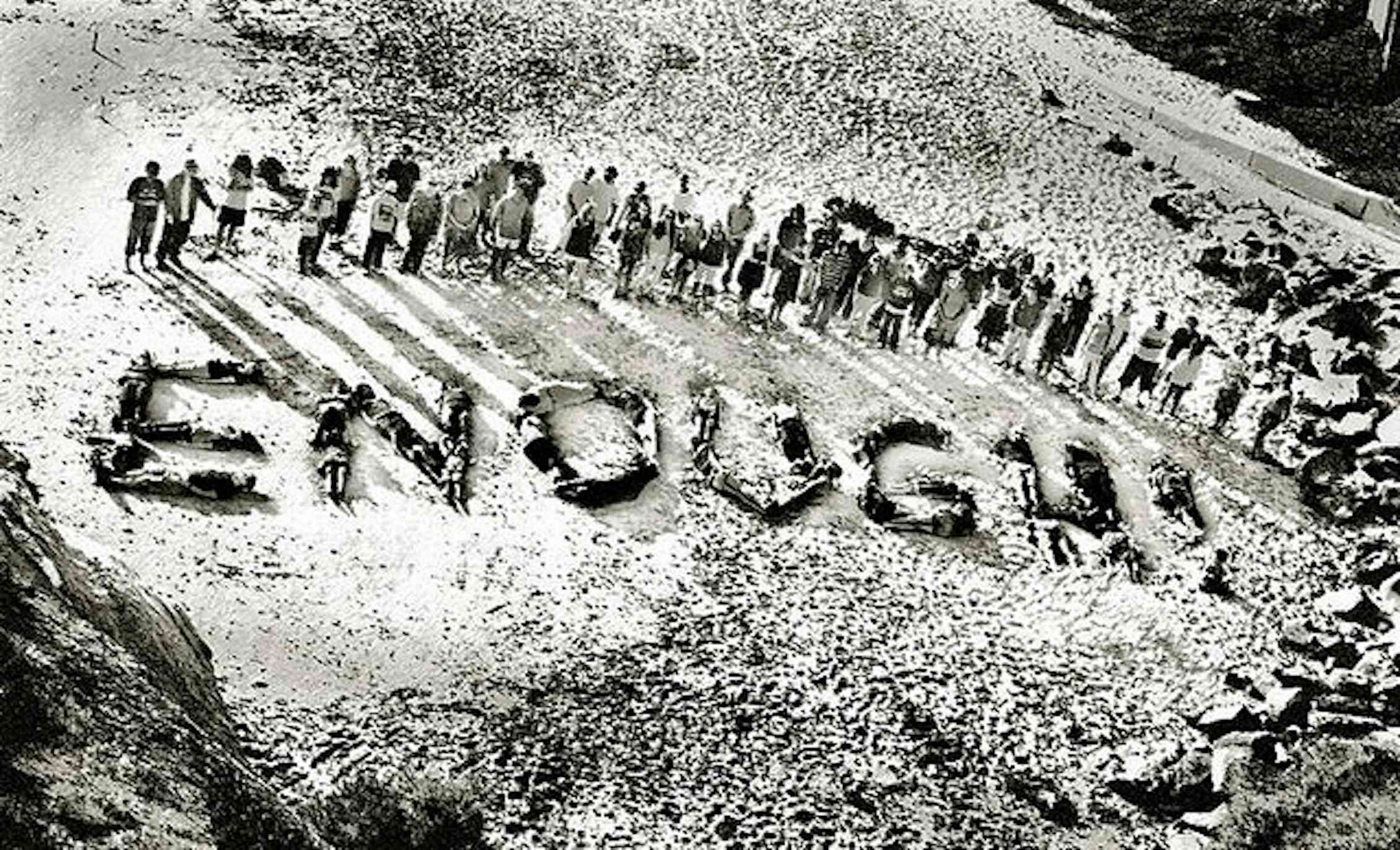
Genocide is the intentional and systematic destruction of a racial, political, or cultural group, characterized by a series of planned actions aimed at the total or partial annihilation of that group. Notable historical examples include the Holocaust, the Armenian Genocide, the Rwandan Genocide, the Cambodian Genocide, and the Bosnian Genocide, each leaving an indelible mark on international law and human rights.
The term "genocide" did not exist before 1944. It was coined by Polish-Jewish lawyer Raphael Lemkin, who combined the Greek word genos (race or tribe) with the Latin cide (killing). Lemkin’s efforts led the United Nations to adopt the Convention on the Prevention and Punishment of the Crime of Genocide in 1948. This legal framework defines genocide as acts committed with the "intent to destroy, in whole or in part, a national, ethnical, racial or religious group." As of 2026, these historical events remain essential case studies for human rights advocates, legal scholars, and international bodies working to identify early warning signs of mass atrocities.
1. The Armenian Genocide (1915–1917)
The Armenian Genocide is often cited by historians as the first modern genocide of the 20th century. It occurred within the Ottoman Empire during the height of World War I. The Young Turk government, under the leadership of the Committee of Union and Progress (CUP), initiated a campaign to "Turkify" the empire, which meant removing the Armenian Christian minority that had lived in the region for centuries.
Historical Context and Execution
The genocide began on April 24, 1915, with the arrest and subsequent execution of several hundred Armenian intellectuals and community leaders in Constantinople (modern-day Istanbul). Following this, the Ottoman government enacted the Tehcir Law, authorizing the mass deportation of Armenians. These deportations were not mere relocations; they were "death marches" into the Syrian Desert.
Participants in these marches were deprived of food and water, subjected to robbery, and frequently massacred by "Special Organization" units and local tribes. Those who survived the march were often forced into concentration camps where disease and starvation were rampant. Scholars estimate that between 600,000 and 1.5 million Armenians perished during this period.
International Recognition and Legacy
For decades, the Armenian Genocide was a "forgotten" atrocity. However, as of 2026, a majority of Western nations and international organizations have officially recognized these events as genocide. Turkey, the successor state to the Ottoman Empire, continues to dispute the term, acknowledging that many Armenians died but arguing that the deaths were a result of civil war and famine rather than a systemic government policy of extermination. This ongoing diplomatic tension highlights how historical interpretation remains a volatile element of modern international relations.
2. The Holocaust (1941–1945)
The Holocaust, or the Shoah, stands as the most extensively documented and industrially organized genocide in human history. Perpetrated by Nazi Germany and its collaborators during World War II, it was the state-sponsored, systematic murder of approximately six million Jews, alongside millions of others deemed "undesirable" by the Nazi regime, including Roma, people with disabilities, Soviet prisoners of war, and political dissidents.
The Ideology of the "Final Solution"
Nazi ideology was rooted in a virulent form of antisemitism and the concept of "Racial Hygiene." Adolf Hitler and the Nazi Party viewed Jews as a parasitic race that threatened German "Aryan" purity. Initially, the regime used discriminatory laws (the Nuremberg Laws) to strip Jews of their rights and livelihoods.
The transition to mass murder was solidified at the Wannsee Conference in 1942, where senior Nazi officials coordinated the "Final Solution to the Jewish Question." This plan involved the creation of extermination camps, such as Auschwitz-Birkenau, Treblinka, and Belzec, designed specifically for efficient, high-volume killing via gas chambers.
The Impact on International Law
The sheer scale and methodology of the Holocaust forced the world to reconsider the limits of national sovereignty. The Nuremberg Trials established that "crimes against humanity" could be prosecuted even if they were legal under the laws of the country where they were committed. This precedent eventually led to the creation of the Universal Declaration of Human Rights and the aforementioned 1948 Genocide Convention.
3. The Cambodian Genocide (1975–1979)
The Cambodian Genocide was unique in that it was perpetrated by a government against its own people based on social class and perceived political loyalty rather than ethnicity alone. Under the leadership of Pol Pot, the Khmer Rouge sought to transform Cambodia (renamed Democratic Kampuchea) into a classless, agrarian socialist utopia.
"Year Zero" and the Killing Fields
Upon taking power in 1975, the Khmer Rouge declared "Year Zero." They abolished money, private property, and religion. Cities were forcibly evacuated, and the entire population was moved to rural labor camps to work as peasant farmers. Intellectuals, doctors, teachers, and anyone perceived to have "Western" influence—including those who wore glasses or spoke a foreign language—were targeted for execution.
Starvation, overwork, and lack of medical care became the primary causes of death. Those suspected of treason were sent to prisons like S-21 (Tuol Sleng), where they were tortured into signing false confessions before being taken to the "Killing Fields" for execution. By 1979, an estimated 1.7 to 2 million people—roughly 25% of Cambodia's population—had died.
Transitional Justice
The Khmer Rouge were ousted in 1979 by Vietnamese forces, but it took decades for justice to be pursued. The Extraordinary Chambers in the Courts of Cambodia (ECCC), a joint UN-Cambodian tribunal, was established in the early 2000s to prosecute senior leaders. These trials have provided a crucial historical record, though many leaders died before facing judgment.
4. The Rwandan Genocide (1994)
The Rwandan Genocide is remembered for its terrifying speed and the failure of the international community to intervene. In just 100 days, between April and July 1994, approximately 800,000 members of the Tutsi minority and moderate Hutus were slaughtered by Hutu extremist militias, primarily the Interahamwe.
Roots of the Conflict
The tension between the Hutu majority and Tutsi minority was exacerbated by colonial-era policies (under Belgium) that solidified ethnic identities and favored the Tutsis. Following independence, power shifted to the Hutus, leading to decades of sporadic violence and the eventual formation of the Rwandan Patriotic Front (RPF) by Tutsi exiles.
The catalyst for the 1994 genocide was the assassination of President Juvénal Habyarimana, whose plane was shot down over Kigali. Hutu extremists immediately blamed the RPF and launched a pre-planned extermination campaign. State-run radio stations, such as RTLM, broadcasted hate speech, calling Tutsis "cockroaches" and instructing ordinary citizens to "go to work"—a euphemism for killing their neighbors.
The Failure of "Never Again"
Despite clear warnings and the presence of a small UN peacekeeping force (UNAMIR), the UN Security Council refused to authorize a robust intervention. The genocide only ended when the RPF, led by Paul Kagame, seized control of the country. This failure remains a primary reason for the development of the "Responsibility to Protect" (R2P) doctrine in international diplomacy.
5. The Bosnian Genocide (1992–1995)
The Bosnian Genocide occurred during the breakup of Yugoslavia and is most notoriously associated with the Srebrenica Massacre of July 1995. This conflict was characterized by "ethnic cleansing," a term used to describe the forced removal of ethnic groups to create ethnically homogeneous territories.
The Siege of Sarajevo and Srebrenica
Following Bosnia and Herzegovina’s declaration of independence in 1992, Bosnian Serb forces, backed by the Yugoslav army, besieged the capital of Sarajevo and launched campaigns against Bosnian Muslims (Bosniaks) and Croats. The goal of the Serbian leadership, including Slobodan Milošević and Radovan Karadžić, was the creation of a "Greater Serbia."
In July 1995, Bosnian Serb forces led by General Ratko Mladić overran Srebrenica, a town that had been designated a "safe area" by the United Nations. Despite the presence of Dutch peacekeepers, the Serbian forces separated Bosniak men and boys from the women and systematically executed more than 8,000 of them.
Legal Significance
The International Criminal Tribunal for the former Yugoslavia (ICTY) was the first international court since Nuremberg to prosecute genocide. In 2007, the International Court of Justice (ICJ) legally ruled that the events at Srebrenica constituted genocide. This distinction was critical in reinforcing that genocide can occur on a localized scale (intent to destroy a group "in part") and does not require millions of victims to meet the legal threshold.
Comparison of Notable Genocides
The following table provides a summary of these five events, highlighting the specific groups targeted and the estimated mortality rates.
| Genocide Event | Primary Timeframe | Location | Target Group(s) | Estimated Deaths |
|---|---|---|---|---|
| Armenian Genocide | 1915–1917 | Ottoman Empire | Armenians (Christian minority) | 600,000 – 1.5 Million |
| The Holocaust | 1941–1945 | Europe (Nazi-occupied) | Jews, Roma, Dissidents | 6 Million (Jews only) |
| Cambodian Genocide | 1975–1979 | Cambodia | Intellectuals, "Class Enemies" | 1.7 – 2 Million |
| Rwandan Genocide | 1994 | Rwanda | Tutsis, Moderate Hutus | 800,000 |
| Bosnian Genocide | 1992–1995 | Bosnia and Herzegovina | Bosniaks (Muslims) | 8,000+ (at Srebrenica) |
The Mechanics of Genocide Prevention
Understanding these five examples is not merely a historical exercise; it is a vital part of modern security and human rights policy. Experts in 2026 often utilize the "Ten Stages of Genocide" framework developed by Gregory Stanton to monitor rising tensions in volatile regions. These stages include:
- Classification: Distinguishing people into "us" and "them."
- Symbolization: Giving names or symbols to the classifications (e.g., the Yellow Star).
- Dehumanization: One group denies the humanity of the other, equating them to animals or diseases.
- Organization: Genocides are always organized, usually by the state or militias.
- Polarization: Extremists drive groups apart; laws may forbid intermarriage or social interaction.
- Preparation: Leaders plan the "Final Solution" and use euphemisms to cloak their intentions.
- Persecution: Victims are identified and separated; death lists are drawn up.
- Extermination: The mass killing begins.
- Denial: Perpetrators dig up mass graves, burn bodies, and try to cover up evidence.
- Justice (Added Stage): The pursuit of legal accountability through international or domestic courts.
Frequently Asked Questions
What is the legal difference between "ethnic cleansing" and "genocide"?
While the terms are often used interchangeably in casual conversation, they have distinct legal meanings. Genocide requires the "intent to destroy" a group. Ethnic cleansing refers to the forced removal of a group from a specific territory through intimidation, deportation, or violence. While ethnic cleansing often involves genocidal acts, its primary goal is displacement rather than total physical destruction.
Why is the Armenian Genocide still a matter of political debate?
The debate is primarily diplomatic. Turkey acknowledges that many Armenians died during WWI but argues the deaths were not part of a state-sanctioned plan of extermination. However, the vast majority of independent historians and an increasing number of world governments have concluded that the evidence of systematic intent meets the UN definition of genocide.
Has the United Nations successfully stopped any genocides?
The UN’s record is mixed. While the UN failed to stop the genocides in Rwanda and Srebrenica, these failures led to the "Responsibility to Protect" (R2P) initiative. R2P allows for international intervention if a state fails to protect its population from mass atrocities. The success of this doctrine is still debated, but it has changed how the UN Security Council approaches humanitarian crises.
Can individuals be prosecuted for genocide even if their country is not at war?
Yes. Under the statutes of the International Criminal Court (ICC), genocide can be prosecuted regardless of whether it occurred during an international war, a civil war, or a period of "peace." The crime of genocide is considered a jus cogens norm, meaning it is a fundamental principle of international law that is binding on all states.
How does propaganda contribute to genocide?
Propaganda is a prerequisite for most genocides. It facilitates the "dehumanization" stage by using media to portray the target group as a threat to national security or a "biological infection." In Rwanda, radio was the primary tool; in more recent years, social media platforms have been scrutinized for their role in spreading hate speech that can lead to mass violence.
Moving Toward Awareness and Prevention
The study of history's most notable genocides reveals a chillingly consistent pattern of state-sponsored hatred, dehumanization, and international apathy. To prevent future atrocities, it is essential for citizens and policymakers to support robust international legal institutions and remain vigilant against early warning signs of systemic discrimination.
For those looking to engage further, visiting national museums—such as the United States Holocaust Memorial Museum or the Kigali Genocide Memorial—provides a deeper understanding of the human cost of these events. Educational programs and the support of human rights NGOs remain the most effective tools for ensuring that "Never Again" becomes a reality rather than a slogan.