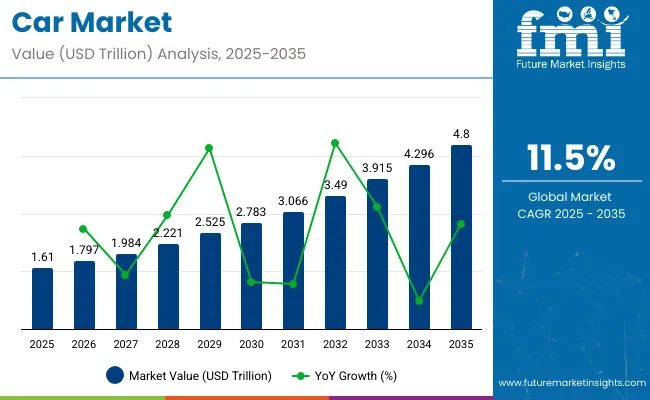
The 3 wheels car market represents a dynamic intersection of low-cost commercial transport, high-efficiency urban micro-mobility, and high-performance recreational vehicles. Driven by rapid fleet electrification in emerging economies, evolving autocycle regulations in Western nations, and structural aerodynamic advantages, three-wheeled vehicles are reshaping modern transportation architecture and urban logistics worldwide.
Navigating the Evolution of the Three-Wheeled Vehicle Landscape
The global three-wheeled vehicle industry—encompassing autocycles, commercial e-rickshaws, cargo trikes, and tilt-capable micro-EVs—has evolved from a regional niche into a significant segment of international mobility. Historically dominated by low-cost internal combustion engine (ICE) tuk-tuks in Asia and South America, the market is undergoing a structural transformation. This shift is driven by severe urban congestion, strict emissions targets, and the rapid maturation of electric vehicle (EV) powertrains.
Understanding this sector requires looking beyond simple vehicle geometry. Three-wheelers occupy a unique regulatory and physical space between two-wheeled motorcycles and traditional four-wheeled passenger cars. By eliminating the weight, cost, and complexity of a fourth wheel and its associated suspension assembly, manufacturers achieve lower rolling resistance, improved energy efficiency, and reduced manufacturing bill-of-materials (BOM) costs.
As urban density increases and logistics operators seek to lower their total cost of ownership (TCO), five structural insights explain the current trajectory and future potential of the 3 wheels car market.
Insight 1: Commercial Fleet Electrification Is Fueling High-Volume Growth
The largest volume driver in the 3 wheels car market is the commercial transport sector across developing markets, particularly in South Asia, Southeast Asia, and parts of Africa and Latin America. In these regions, three-wheelers serve as the backbone of passenger taxi services and last-mile cargo delivery networks.
Commercial 3-Wheeler Electrification
- High Daily Mileage (>80 km/day)
- Rapid TCO Parity (6-12 Months Payback vs. Petrol/CNG)
- Integration with Battery Swapping Infrastructure
- Low Maintenance (Hub Motors / Simple Direct Drive)
Total Cost of Ownership (TCO) Parity
Unlike personal passenger cars, where buyers may prioritize range, brand image, or acceleration, commercial fleet operators make purchasing decisions based almost entirely on economics. Electric three-wheelers (often categorized as L5N cargo or L5M passenger vehicles in regional standards) reached TCO parity with internal combustion engine counterparts ahead of four-wheeled light commercial vehicles.
- Fuel Costs: Operating an electric three-wheeler costs a fraction per kilometer compared to gasoline, diesel, or Compressed Natural Gas (CNG).
- Maintenance Overhead: The mechanical simplicity of direct-drive or hub-motor electric setups removes oil changes, clutch replacements, and complex transmission overhauls, reducing maintenance downtime.
- Capital Cost Recovery: Fleet operators typically recoup the initial purchase price premium of an electric 3-wheeler within 6 to 12 months of high-mileage daily operation.
Infrastructure Synergy via Battery Swapping
A primary operational challenge for commercial three-wheelers is downtime during charging. To address this, market leaders have deployed localized battery-swapping networks. Instead of waiting hours for a conventional plug-in charge, drivers can exchange a depleted battery pack for a fully charged one in under two minutes at automated swapping kiosks. This model decoupling the cost of the battery from the vehicle frame lowers the initial purchase price while ensuring maximum daily operational uptime.
Insight 2: Regulatory Disambiguation—The Autocycle Standard Divide
A persistent hurdle for three-wheeled passenger vehicles in Western markets has been regulatory classification. Historically, vehicle safety standard authorities classified any motorized vehicle with fewer than four wheels as a motorcycle. This forced three-wheeler occupants to adhere to motorcycle safety rules, including mandatory helmet usage and specialized motorcycle driver's license endorsements.
Global Regulatory Framework Overview
- North America (NHTSA / States):
- "Autocycle" definition: Steering wheel, pedals, enclosed/semi
- Standard driver's license (in most jurisdictions)
- Exempt from full FMVSS crash test requirements
- European Union (UNECE L-Category):
- L5e-A (Passenger Trike) / L5e-B (Commercial Cargo Trike)
- L7e Heavy Quadricycle overlap
- Strict power, weight, and speed limits
The Rise of the "Autocycle" Classification in North America
To accommodate modern enclosed and semi-enclosed three-wheelers, regulatory frameworks across North America established the autocycle classification. Under the National Highway Traffic Safety Administration (NHTSA) guidelines and state-level legislation, an autocycle is generally defined as a three-wheeled motor vehicle equipped with:
- A steering wheel or handlebar with conventional control inputs.
- Acceleration and braking foot pedals.
- Seating that does not require the operator to straddle the frame.
- Structural rollover protection or an enclosed cabin.
This legal distinction allows drivers in most jurisdictions to operate an autocycle using a standard Class D driver's license without needing a motorcycle endorsement. However, because autocycles are technically classified under motorcycle safety standards, manufacturers are not bound by the full suite of Federal Motor Vehicle Safety Standards (FMVSS) mandated for four-wheeled passenger cars—such as multi-stage airbag systems, rigid offset crash barriers, and automated emergency braking mandates. This regulatory middle ground significantly reduces development costs for niche automotive startups while requiring consumers to understand the distinct safety profiles involved.
European Union L-Category Framework
In the European Union, three-wheelers fall under the UNECE L-category regulations:
- L5e-A (Trike Passenger): Vehicles designed primarily for the carriage of passengers.
- L5e-B (Trike Commercial): Three-wheeled goods vehicles designed for payload transport.
European standards impose explicit limits on maximum vehicle mass, engine displacement, or continuous electric motor output (typically capped at 15 kW for standard L5e vehicles unless certified under broader vehicle homologation frameworks). These strict weight and power boundaries require engineers to prioritize lightweight composite materials and chassis efficiency.
Insight 3: Architectural Dynamics—Tadpole vs. Delta and Active Tilting
Vehicle dynamic stability is a foundational engineering consideration in the 3 wheels car market. The geometric arrangement of the three wheels fundamentally dictates handling capabilities, rollover limits, and directional control during emergency evasive maneuvers.
- Tadpole Configuration (Two Front, One Rear)
- High Lateral Stability
- Resistant to Rollover
- Delta Configuration (One Front, Two Rear)
- Simple Steering Axis
- Lower Rollover Threshold
The Stability Advantage of the Tadpole Configuration
Three-wheeled vehicle designs fall into two architectural topologies:
- Tadpole Layout (Reverse Trike): Two wheels positioned at the front axle for steering and track width stability, and one wheel at the rear responsible for propulsion (or trailing tracking).
- Delta Layout (Traditional Trike): One wheel positioned at the front for steering, and two wheels positioned at the rear.
From a vehicle dynamics perspective, the tadpole layout offers vastly superior rollover stability under cornering forces. When a vehicle undergoes lateral acceleration during a turn, the dynamic center of mass transfers force toward the outer wheel path.
In a tadpole setup, the wide front track provides a broad base to absorb the transfer of lateral load, maintaining the vehicle's center of gravity safely within its stability triangle.
Conversely, a delta configuration suffers from a narrowing stability base at the front. Under heavy braking paired with sharp steering inputs, the vector of momentum easily shifts outside the narrow dynamic boundary, increasing rollover susceptibility unless velocity and center-of-gravity height are strictly controlled.
Active Tilting Systems (ATS)
To counteract roll moment instability and allow for narrower vehicle footprints, engineers use Active Tilting Systems (ATS). Tilting micro-EVs use mechanical linkages, hydraulic actuators, or computerized electric tilt motors to lean the vehicle chassis into a turn, similar to a two-wheeled motorcycle.
$$F_{\text{lateral}} = m \cdot \frac{v^2}{r}$$
By dynamically matching the tilt angle to the vehicle's speed ($v$) and cornering radius ($r$), the resultant force vector passes directly through the central longitudinal axis of the vehicle frame. This neutralizes net lateral rollover torque, allowing narrow-track urban vehicles to navigate urban corners safely at speed while maintaining a footprint half the width of a standard compact car.
Insight 4: Market Bifurcation—High-Performance Recreation vs. Urban Micro-Utility
The modern 3 wheels car market has diverged into two distinct product categories, each serving entirely different customer segments, price brackets, and operational requirements.
| High-Performance Recreational Autocycles | Urban Micro-Utility & Commuter EVs |
|---|---|
| Open-air or sports cockpit design | Enclosed cabin with climate control |
| High horsepower-to-weight ratios | Extremely small parking footprint |
| Purchased as weekend/lifestyle vehicles | Target replacement for urban cars |
| Examples: Polaris Slingshot, Morgan | Focus on efficiency (kWh per 100 km) |
High-Performance Recreational Autocycles
In North America and Western Europe, a significant portion of three-wheeler sales consists of open-cockpit sports autocycles. Manufacturers in this space target enthusiasts seeking a open-air driving experience with high acceleration dynamics.
Because these vehicles weigh significantly less than full-sized passenger cars (often between 500 kg and 800 kg), even modest engine outputs yield high horsepower-to-weight ratios. The appeal in this segment centers on dynamic engagement, mechanical responsiveness, and low barrier to entry compared to traditional high-end sports cars.
Enclosed Urban Micro-Mobility Vehicles
At the opposite end of the spectrum is the emerging urban commuter micro-EV category. Designed to solve urban gridlock and reduce single-occupancy commuter emissions, these vehicles feature fully enclosed cabins, heating, ventilation, and air conditioning (HVAC) systems, side-impact door structures, and integrated safety belts.
Urban micro-utility three-wheelers address key pain points of modern city driving:
- Parking Efficiency: Up to three micro-three-wheelers can park within a single standard parallel parking bay for a conventional sedan.
- Energy Intensity: With minimal unladen vehicle weight and optimized aerodynamics, micro-EVs consume between 5 to 8 kWh of electricity per 100 kilometers, compared to 15 to 22 kWh per 100 kilometers for a typical four-wheeled passenger EV.
Insight 5: Supply Chain Economics and Structural BOM Savings
Manufacturing economics provide three-wheeled vehicles with structural cost advantages over four-wheeled alternatives. These savings allow startups and established OEMs to enter urban and commercial markets with attractive price points.
Structural Bill of Materials (BOM) Savings
- Elimination of 4th Wheel, Tire, Brake Assembly, & Hub
- Removal of Complex Mechanical Differential (in Rear Drive)
- Reduced Suspension Components & Mounting Points
- Lighter Overall Structural Chassis Frame
- Smaller Battery Capacity Required for Equivalent Urban Range
Reduction in Component Complexity
Manufacturing a four-wheeled motor vehicle requires dual suspension assemblies per axle, complex steering linkages, dynamic differential gearing, and multi-channel anti-lock braking systems (ABS). A three-wheeler eliminates an entire wheel assembly ecosystem.
If designed with single-wheel drive or direct wheel-hub motor propulsion, the requirement for a heavy mechanical differential and drive axles is eliminated entirely. This structural simplification leads to:
- Lower Tooling Costs: Fewer stamped metal components and chassis mounting points reduce initial factory tooling expenditures.
- Streamlined Assembly: Reduced part counts shorten overall assembly line cycle times and simplify quality control procedures.
- Reduced Battery Pack Size: Lower vehicle curb mass means a smaller kilowatt-hour (kWh) battery pack can achieve the operational daily range required by urban users, substantially reducing the single most expensive component in an electric vehicle powertrain.
Shared Supply Chains with Two-Wheeler Systems
In high-volume manufacturing hubs like India and East Asia, 3-wheeler producers leverage existing supply chains built for the high-volume two-wheeler industry. Standardized components—such as low-voltage traction motors, motor controllers, battery management systems (BMS), switches, and lighting assemblies—are produced at massive economies of scale. This supply-chain overlap allows 3-wheel vehicle manufacturers to source reliable, mass-produced components at costs far lower than specialized automobile hardware.
Technical Comparison of 3-Wheeled Vehicle Categories
To evaluate the broader market landscape, the following matrix compares the core technical parameters, regulatory profiles, and functional applications across major three-wheeled vehicle categories.
| Parameter / Feature | Commercial E-Rickshaws (L5M / L5N) | Tilting Urban Micro-EVs | High-Performance Autocycles | Traditional Delta Passenger Trikes |
|---|---|---|---|---|
| Architectural Layout | Delta or Tadpole | Tadpole (Reverse Trike) | Tadpole (Reverse Trike) | Delta (One Front, Two Rear) |
| Primary Markets | India, Southeast Asia, Africa | Western Europe, East Asia | North America, Europe | Global Emerging Markets |
| Typical Powertrain | Low-Voltage EV (48V–72V) | Mid-Voltage EV (72V–100V) | ICE / High-Output EV | Small ICE (150cc–500cc) / Low-Voltage EV |
| Top Speed Range | 25 – 50 km/h | 70 – 90 km/h | 130 – 210 km/h | 40 – 70 km/h |
| Regulatory Category | UNECE L5e / ARAI L5 | UNECE L5e / Autocycle | Autocycle / UNECE L5e | UNECE L5e / Regional Class |
| Driver License Standard | Commercial / Standard | Standard Car (Class D) | Standard Car (Class D) | Standard / Motorcycle |
| Rollover Resistance | Moderate to Low | High (via Dynamic Tilt) | High (Wide Front Track) | Low under sharp maneuvers |
| Primary Use Case | Urban Taxi & Last-Mile Cargo | City Commuting & Delivery | Recreational & Lifestyle | Rural / Semi-Urban Transport |
Practical Recommendations for Buyers, Fleet Managers, and Municipalities
Navigating the 3 wheels car market requires assessing regulatory compliance, operational safety, and total economic impact.
For Commercial Fleet Operators
- Analyze Daily Range vs. Charging Downtime: Evaluate whether depot overnight charging (AC plug-in) matches your daily operational delivery loops, or if joining a battery-swapping ecosystem is required to maintain 24-7 vehicle utilization.
- Verify Load Capacity Homologation: Ensure commercial L5N cargo vehicles carry certified gross vehicle weight (GVW) ratings that match your payload requirements without exceeding structural axle limits.
- Audit Local Licensing Requirements: Confirm whether commercial drivers require specific commercial vehicle permits or standard operator licenses within your municipality.
For Urban Commuters and Individual Buyers
- Confirm Autocycle Insurance and Licensing: Verify local state or national legislation regarding driver's license exemptions, helmet mandates, and insurance underwriting categories for autocycles.
- Prioritize Tadpole Configurations: If high-speed driving or highway use is anticipated, select a tadpole configuration (two wheels in front) to ensure proper cornering stability and rollover prevention.
- Assess Safety Infrastructure: Look for enclosed micro-EVs built with reinforced tubular rollover frames, three-point seatbelts, and crumple zones designed for urban impact mitigation.
For Municipal Planning Authorities
- Designate Micro-Vehicle Infrastructure: Integrate narrow micro-EVs and commercial e-trikes into existing low-speed lanes and logistics loading zones to alleviate congestion caused by full-sized delivery vans.
- Deploy Standardized Charging & Swapping Protocols: Support open-standard battery-swapping and low-power charging stations at transportation hubs to facilitate low-carbon last-mile logistics.
Frequently Asked Questions
Are three-wheeled cars classified as motorcycles or passenger cars for driver licensing?
In most jurisdictions, three-wheeled vehicles are legally classified under motorcycle standards or specialized autocycle frameworks. In the United States and many European countries, vehicles with a steering wheel, foot pedals, and bucket seats (autocycles) can be legally operated with a standard Class D driver's license without requiring a motorcycle endorsement or helmet in enclosed cabins.
Why are tadpole configurations considered safer than delta configurations?
A tadpole configuration features two wheels in the front and one in the rear. This design provides a wide front track base that resists the lateral rollover forces generated during high-speed cornering or evasive steering maneuvers. A delta configuration (one wheel in the front) has a narrower front stability footprint, making it more susceptible to tipping if turned sharply under heavy braking.
How does the Total Cost of Ownership (TCO) of an electric 3-wheeler compare to a traditional 4-wheeled van?
Electric three-wheelers typically offer a substantially lower TCO for light urban logistics. They require smaller battery capacities, consume significantly less energy per kilometer, carry lower purchase prices, and incur lower maintenance costs due to mechanical simplicity. In high-density urban environments with daily routes under 100 kilometers, an electric 3-wheeler can achieve operational cost savings of 40% to 60% compared to a conventional light commercial four-wheeled van.
What is active tilting technology, and why is it used in 3-wheeled cars?
Active tilting technology uses mechanical systems or electronic sensors and actuators to lean the vehicle chassis into a turn. By tilting the cabin into the corner, the centrifugal forces are aligned with the vertical axis of the vehicle frame. This neutralizes rollover risk and allows narrow three-wheeled vehicles to negotiate turns safely while maintaining a narrow physical footprint.
Do 3-wheeled autocycles have to pass standard automobile crash testing?
Because autocycles are categorized under motorcycle safety regulations rather than full passenger car standards, they are generally exempt from standard Federal Motor Vehicle Safety Standards (FMVSS) or crash tests mandated for four-wheeled automobiles (such as full-velocity frontal barrier or side-impact pole tests). Many individual manufacturers incorporate voluntary structural roll cages, seatbelts, and side-impact protection into their vehicle designs.
Strategic Takeaway
The 3 wheels car market offers practical solutions for two major automotive challenges: urban traffic congestion and the need for zero-emission commercial transport. By capitalizing on structural cost savings, optimized energy efficiency, and modern chassis engineering, three-wheeled vehicles are established as efficient tools for modern urban transport and last-mile delivery operations.