Deciding whether to outsource 3D printing tasks involves evaluating production volume, material specifications, equipment investment costs, required lead times, and internal engineering expertise. Organizations weigh these factors against capital expenditure limits and quality control standards to determine whether in-house manufacturing or external service bureaus provide the optimal balance of efficiency and economic return.
Selecting an appropriate production strategy for additive manufacturing is a critical operational crossroads for modern product development teams, engineering firms, and industrial enterprises. While desktop and professional-grade 3D printers have become increasingly accessible, owning and operating an internal additive manufacturing farm is not always the most economical or practical path. Organizations frequently find themselves evaluating whether to invest in proprietary machinery or to leverage external service bureaus, specialized print farms, and contract manufacturers.
Navigating this choice requires a structured approach. Rather than relying on intuition or legacy manufacturing habits, decision-makers must dissect the total cost of ownership, technical capabilities, delivery timelines, and long-term business scalability. Below is a comprehensive breakdown of the five primary factors that shape 3D printing outsourcing decisions, designed to help engineering managers and procurement specialists build a resilient manufacturing pipeline.
1. Production Volume and Scalability Requirements
The volume of parts required—ranging from a single functional prototype to hundreds of end-use production components—heavily influences the financial viability of outsourcing. Understanding how scale shifts the balance between in-house production and external partnership is essential for optimizing unit costs.
Low-Volume Prototyping vs. High-Volume Production Runs
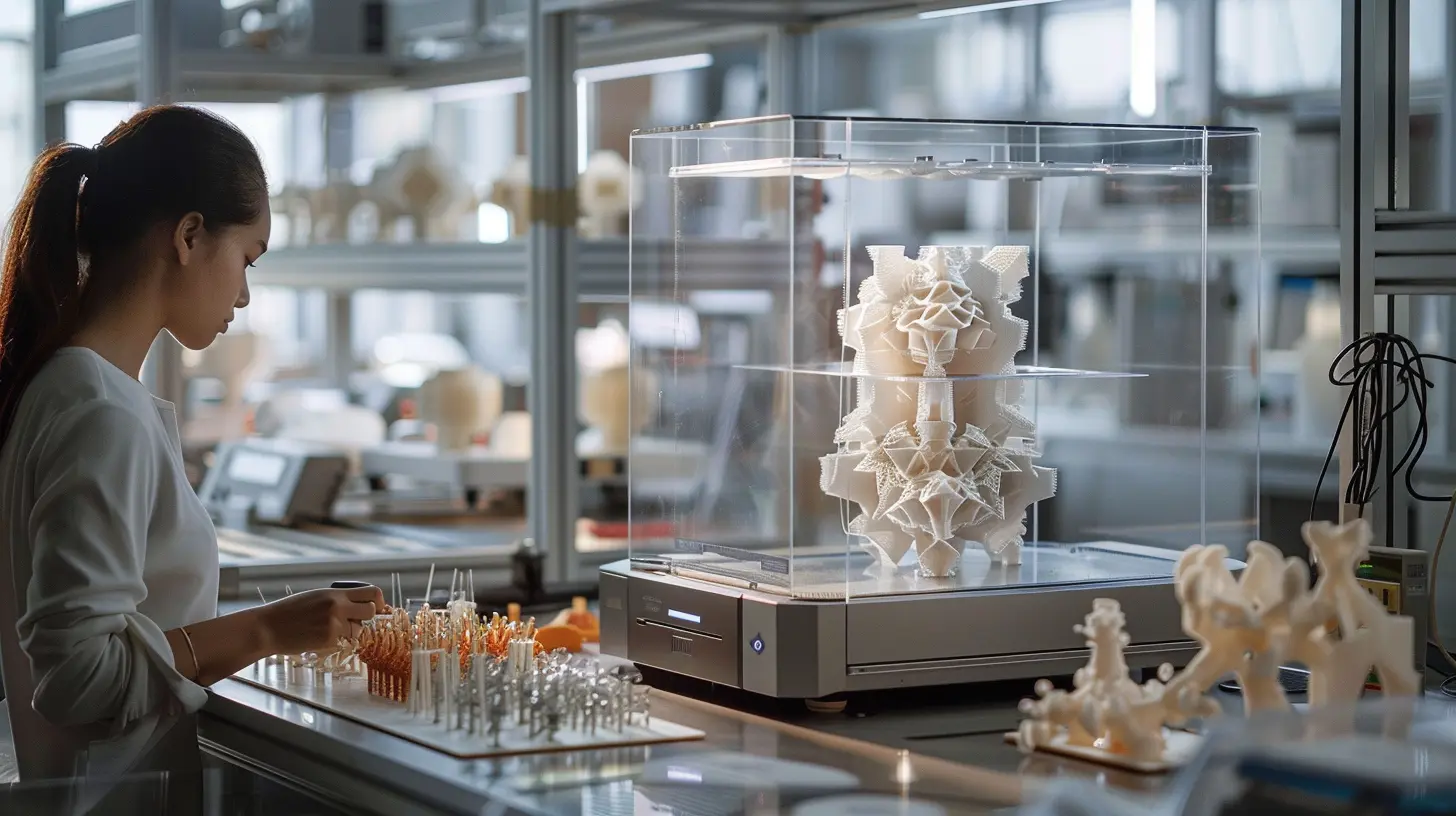
For organizations engaged in iterative product development, demand is often sporadic and low-volume. Printing one-off design iterations or small batches of custom fixtures locally in an R&D lab minimizes feedback loops. Engineers can modify a computer-aided design (CAD) file, send it to an in-house machine, and inspect the physical part within hours.
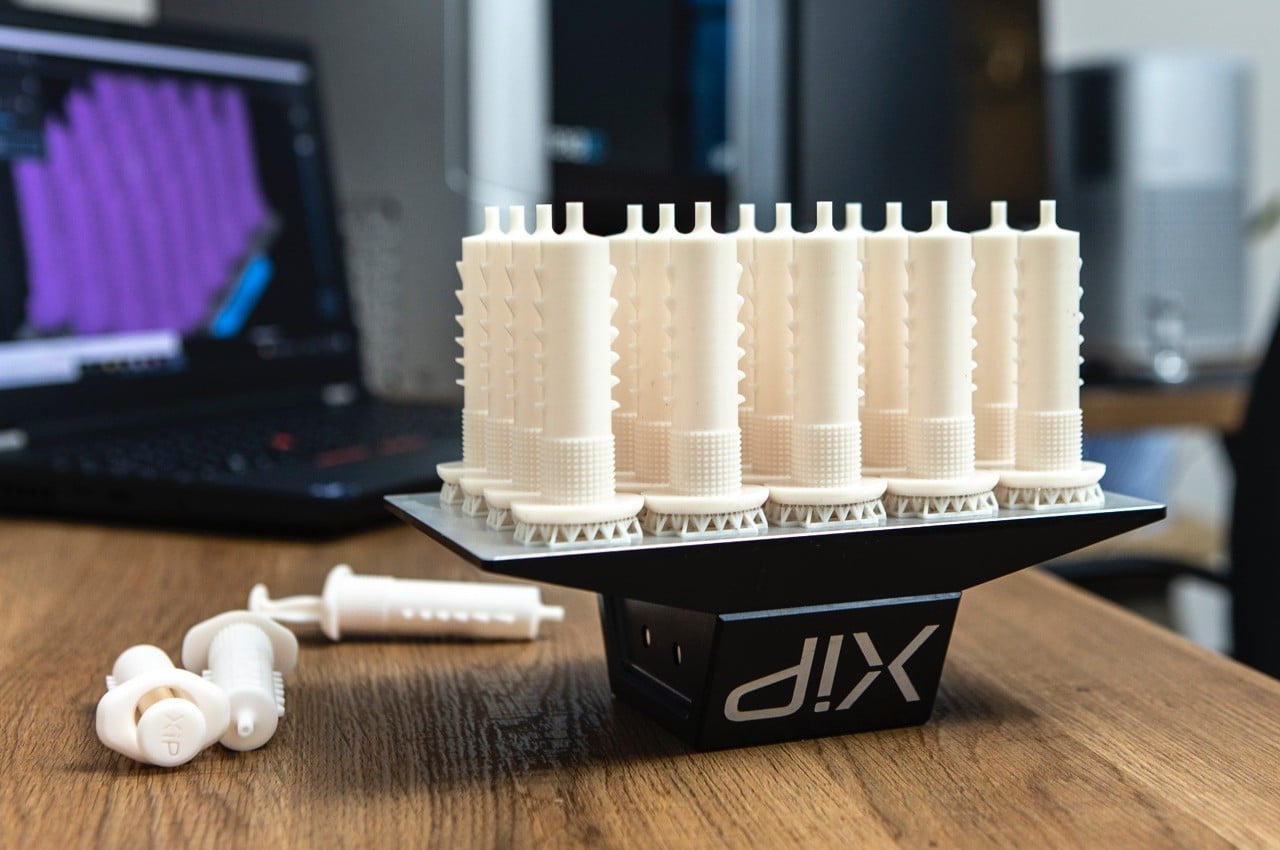
Conversely, when production scales into hundreds or thousands of identical parts, the economics shift. Maintaining an internal fleet of industrial machines to handle sporadic mass production introduces high idle-capacity costs. Outsourcing high-volume runs allows companies to tap into industrial print farms equipped with multi-laser Selective Laser Sintering (SLS) or Multi Jet Fusion (MJF) systems. These external providers can parallelize production, lowering the per-part cost without requiring the client to absorb the capital depreciation of multiple high-throughput machines.
Managing Demand Fluctuation and Peak Loads
Market demand is rarely static. Seasonal spikes, unexpected product launches, or sudden shifts in supply chain requirements can overwhelm an internal 3D printing setup. Building an in-house facility sized to handle absolute peak demand results in underutilized equipment during standard operational periods.
Outsourcing acts as an elastic capacity buffer. By partnering with external service providers, businesses can scale production up or down dynamically. This flexibility eliminates the risk of internal bottlenecks and protects project delivery timelines without requiring permanent capital expansion or hiring additional specialized operators.
2. Material Versatility and Advanced Technical Specifications
Additive manufacturing is no longer limited to basic rapid prototyping plastics like Polylactic Acid (PLA) or Acrylonitrile Butadiene Styrene (ABS). Modern engineering applications demand high-performance polymers, engineering-grade composites, and specialized industrial metals.
Access to Specialized and Exotic Materials
Processing advanced materials often requires specialized equipment environments, strict safety protocols, and rigorous post-processing procedures. For example, printing high-temperature thermoplastics like Polyetheretherketone (PEEK) or Polyetherimide (PEI/Ultem) demands high-temperature build chambers and heated print beds that standard desktop or mid-tier professional printers cannot achieve.
Similarly, Direct Metal Laser Sintering (DMLS) or Selective Laser Melting (SLM) for titanium, inconel, or stainless steel requires inert gas atmospheres, explosive-dust management systems, and specialized powder handling facilities. For most product design firms, investing in the infrastructure required to safely handle and print these advanced materials is cost-prohibitive. Outsourcing grants immediate access to a vast library of certified materials and industrial-grade chemistries without the corresponding facility overhead.
Regulatory, Aerospace, and Medical Standards
Industries such as medical devices, aerospace, and defense operate under stringent regulatory frameworks. Parts must meet exact material traceability, biocompatibility, or structural load-bearing standards. Established external service bureaus frequently maintain ISO certifications, ITAR compliance, and material test reports (MTRs) that validate the mechanical properties of printed components. Building equivalent quality management systems and validation pipelines internally demands significant time, documentation, and continuous auditing expenses.
3. Total Cost of Ownership (TCO) and Capital Expenditure
Evaluating the financial impact of 3D printing extends far beyond the initial purchase price of the hardware. A comprehensive Total Cost of Ownership (TCO) analysis is vital for determining whether outsourcing yields superior economic value.
Hidden Costs of In-House Machine Ownership
Purchasing an industrial 3D printer represents only a fraction of the total investment. Decision-makers must account for a wide array of ongoing operational expenses:
- Maintenance and Calibration: Industrial machines require regular preventive maintenance, optical alignments, laser replacements, and manufacturer-certified service contracts.
- Software Licenses: Advanced slicing, build-preparation, topology optimization, and simulation software often involve expensive recurring subscription fees.
- Facility Modifications: Heavy industrial printers may require dedicated ventilation, three-phase electrical power, fire suppression systems, or climate-controlled environments.
- Consumables and Waste: Materials degrade over time, support structures must be discarded, and failed prints result in direct material write-offs.
Labor, Training, and Operator Expertise
Operating professional-grade additive manufacturing equipment is a specialized skill. In-house production requires trained technicians to manage job scheduling, file repair, machine setup, powder sieving, part extraction, support removal, and post-processing finishing.
Labor costs scale with the complexity of the operation. When outsourcing, these labor overheads are absorbed by the service bureau, which spreads specialized operational expertise across a massive volume of diverse client projects. Companies pay strictly for the delivered, finished part, converting fixed capital expenditures into predictable variable operating expenses.
4. Lead Times, Logistics, and Time-to-Market
In competitive industries, speed is a primary market differentiator. The time elapsed from final CAD freeze to physical part delivery dictates how quickly an engineering team can iterate, test, and ship.
Internal Agility vs. Shipping and Communication Latency
In-house manufacturing offers unbeatable immediate responsiveness for urgent, single-part needs. If an engineer discovers a design flaw at 2:00 PM, printing a corrected revision overnight keeps the development schedule on track.
Outsourcing introduces external dependencies, including quotation turnaround times, order queue placement, packaging, and shipping logistics. However, global service bureaus have streamlined digital quoting portals, automated Design for Manufacturability (DFM) feedback tools, and expedited shipping tiers that often mitigate these delays. For many organizations, a reliable external partner can deliver finished industrial parts faster than an overburdened internal team struggling with machine downtime or backlogged queue jobs.
Risk Mitigation and Redundancy
Relying solely on a single in-house printer creates a single point of failure. If the machine experiences a critical hardware failure or requires scarce replacement parts, internal prototyping halts entirely. Established outsourcing networks offer multi-facility redundancy, ensuring that production can be rerouted seamlessly if a localized disruption occurs at a specific service bureau plant.
5. Internal Engineering Expertise and Core Competencies
An organization’s internal human capital heavily dictates the success and efficiency of its manufacturing operations. Aligning 3D printing decisions with core business strengths prevents resource misallocation.
Defining Strategic Core Competencies
For a company specializing in software development, medical diagnostics, or consumer electronics design, additive manufacturing is a supporting tool rather than the core business model. Diverting internal engineering talent away from product innovation to troubleshoot print failures, calibrate lasers, or manage post-processing chemistry represents an inefficient use of human resources.
Outsourcing allows internal teams to focus entirely on their core strengths: product design, market validation, and functional engineering. By leveraging the deep process knowledge of external additive manufacturing specialists, companies benefit from expert engineering review, orientation optimization, and post-processing mastery without building those competencies from scratch.
Hybrid Models: The Pragmatic Middle Ground
Many organizations adopt a hybrid strategy rather than choosing a strictly binary approach. Under this model, the company maintains a fleet of accessible desktop or professional printers in-house for rapid daily prototyping, early concept validation, and immediate iterative testing.
Simultaneously, the same organization outsources high-volume production runs, complex metal components, and parts requiring exotic high-performance polymers to specialized service bureaus. This hybrid framework captures the immediate agility of in-house printing while utilizing external partners for specialized, capital-intensive manufacturing needs.
Comparative Analysis of In-House vs. Outsourced 3D Printing
To assist in evaluating these five factors, the following comparison matrix outlines how in-house production and outsourcing stack up across key operational metrics.
| Evaluation Metric | In-House 3D Printing | Outsourced 3D Printing |
|---|---|---|
| Initial Capital Expenditure | High (Machine purchase, facility setup, safety equipment) | Low to None (Pay-per-part model) |
| Material Flexibility | Limited by owned hardware and proprietary ecosystems | Extremely High (Access to hundreds of industrial polymers and metals) |
| Turnaround for Single Parts | Immediate (Minutes to hours for local queue placement) | Moderate (Requires order processing, printing, and shipping) |
| Scalability for High Volume | Poor (Limited by machine count and operator availability) | High (Elastic access to large industrial print farms) |
| Maintenance and Overhead | Managed internally (Requires dedicated technicians and service contracts) | Managed externally (Absorbed by the service provider) |
| Regulatory & Quality Compliance | Requires internal certification audits and quality management systems | Often pre-certified (ISO, ITAR, medical-grade compliance available) |
Frequently Asked Questions
How do I calculate whether outsourcing or in-house 3D printing is more cost-effective?
Calculate the Total Cost of Ownership (TCO) for an in-house machine—including hardware amortization, maintenance contracts, software licenses, material waste, facility upgrades, and operator labor—and divide by your projected annual part volume. Compare this per-part figure against quotes from multiple industrial service bureaus. If your internal volume is too low to amortize the fixed capital and operational expenses efficiently, outsourcing remains the more economical choice.
What types of 3D printing technologies are most commonly outsourced?
Industrial metal printing processes, such as Direct Metal Laser Sintering (DMLS) and Selective Laser Melting (SLM), along with high-end industrial polymer systems like Multi Jet Fusion (MJF) and high-temperature Selective Laser Sintering (SLS), are most frequently outsourced. These technologies require stringent safety controls, costly equipment, and specialized post-processing that make internal installation impractical for non-manufacturing specialists.
How does outsourcing impact intellectual property (IP) security?
Reputable 3D printing service bureaus maintain strict confidentiality policies, secure data transfer protocols, and non-disclosure agreements (NDAs) to protect client CAD files and proprietary designs. Before uploading sensitive files, verify that the provider utilizes encrypted file transfer systems, restricts internal access to authorized personnel, and complies with relevant data security frameworks or defense regulations if applicable.
Can outsourcing support rapid product iteration during early prototyping?
Yes, provided you partner with a service bureau that offers digital quoting, automated DFM checks, and expedited production tiers. While shipping introduces a minor delay compared to an office desktop printer, many bureaus offer next-day delivery services for standard polymer prototypes, bridging the gap between digital design and physical evaluation effectively.
Strategic Recommendation
Evaluate your current project pipeline by auditing your annual part volume, material requirements, and internal labor capacity. If your engineering team spends more time troubleshooting equipment maintenance and post-processing finishes than designing innovative products, transition your complex, high-volume, and exotic material production to qualified external service bureaus while retaining entry-level machines strictly for rapid concept validation.