Finding the right footwear is essential for managing heel pain, as the ideal running and walking shoes for plantar fasciitis combine rigid arch support, deep heel cups, and responsive cushioning to reduce tension on the plantar fascia ligament during every step.
Plantar fasciitis is one of the most common causes of heel pain, characterized by a sharp, stabbing sensation near the heel that is usually most severe during the first steps in the morning or after long periods of rest. For runners, walkers, and anyone who spends hours on their feet, choosing the correct footwear is a cornerstone of recovery and daily comfort. When the plantar fascia—the thick band of tissue running across the bottom of your foot—becomes inflamed due to excessive strain, repetitive impact, or lack of structural support, everyday activities can become painful.
Navigating the overwhelming market of athletic footwear requires understanding how specific design elements interact with foot biomechanics. The ideal shoe does not merely cushion the foot; it actively controls motion, limits excessive pronation, and reduces mechanical stress on the arch and heel. This comprehensive guide examines five of the top-performing running and walking shoes engineered to alleviate plantar fasciitis symptoms, detailing their structural technologies, benefits, and trade-offs to help you make an informed decision for your foot health.
Understanding Plantar Fasciitis and Footwear Mechanics
Before evaluating specific shoe models, it is vital to understand how footwear influences the mechanics of the foot. The plantar fascia acts like a shock-absorbing spring, supporting the arch as your foot bears weight and propels you forward. When you walk or run, your foot naturally goes through a gait cycle consisting of heel strike, midfoot stance, and toe-off. During the midfoot stance, the arch flattens slightly to absorb impact—a normal process known as pronation.
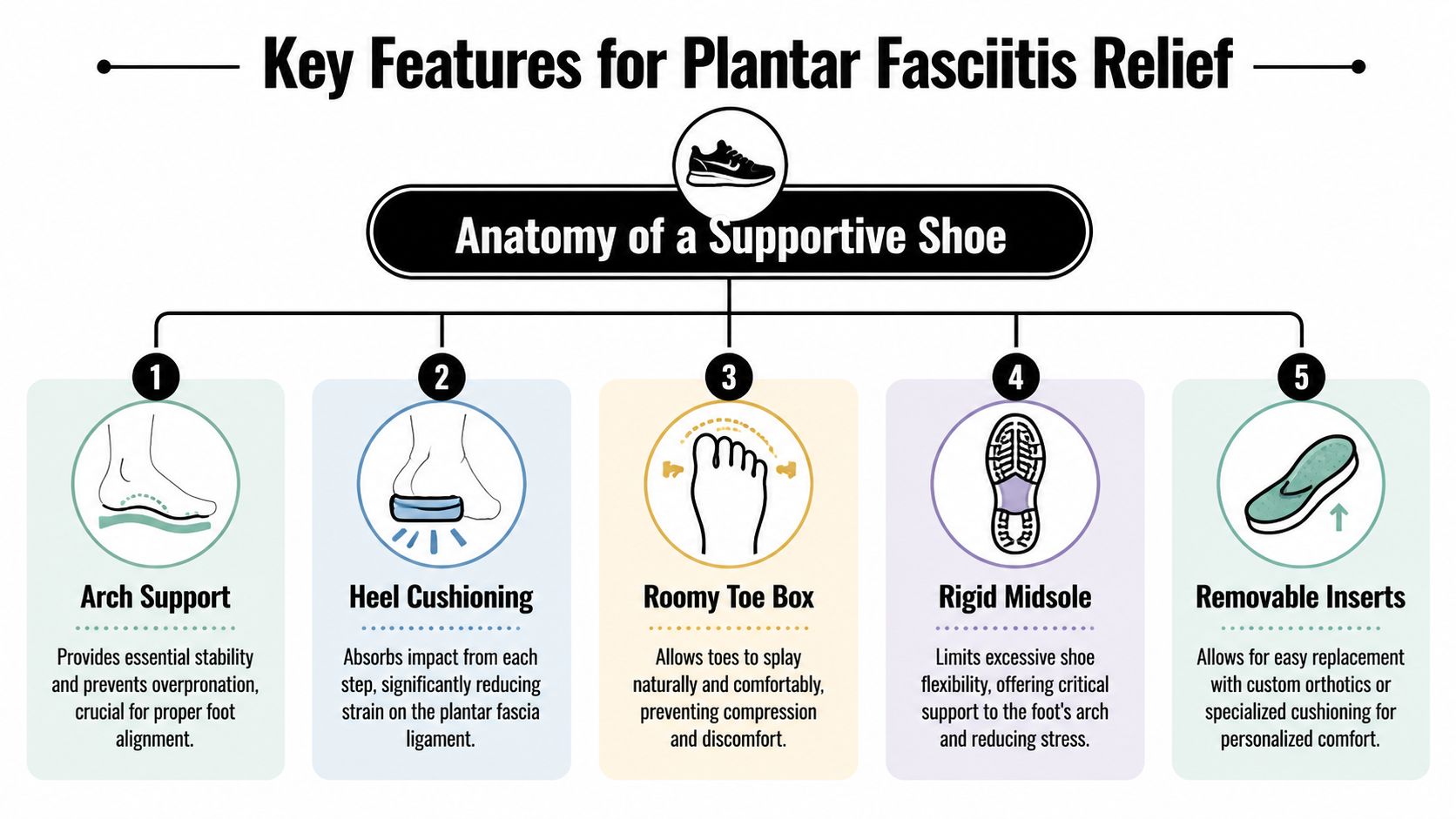
However, overpronation (where the foot rolls inward excessively) or lack of structural support forces the plantar fascia to stretch beyond its normal capacity, creating micro-tears and inflammation. Therefore, shoes designed for plantar fasciitis must feature specific architectural components:
- Rigid or Semi-Rigid Arch Support: Prevents the arch from collapsing excessively during the gait cycle, reducing mechanical strain on the ligament.
- Deep Heel Cups: Stabilize the heel fat pad and help absorb initial impact shock while keeping the heel properly aligned.
- Torsional Stability: A stiff midfoot shank prevents the shoe from twisting too easily, mimicking the natural support of a healthy arch.
- Balanced Cushioning: While plush cushioning feels comfortable, overly soft shoes without structural support can worsen plantar fasciitis by allowing the foot to sink and destabilize. A balance of firmness and shock absorption is required.
1. HOKA One One Bondi 8
The HOKA Bondi 8 is widely recognized as a powerhouse for maximum cushioning, making it a favorite among walkers and runners suffering from chronic foot pain.
Design and Technology
Known for its signature oversized midsole, the Bondi 8 utilizes lightweight, resilient foam that delivers exceptional shock absorption. Unlike earlier versions, the Bondi 8 features an extended heel geometry and a rear crash pad that promotes a smooth, balanced transition from heel strike to toe-off. The Meta-Rocker technology—a curved sole profile—encourages forward momentum, reducing the effort required by the foot and ankle joints during movement.
Performance for Plantar Fasciitis
For individuals experiencing acute heel pain, the thick foam platform acts as a buffer against hard pavement and treadmill decks. The internal heel counter locks the heel securely in place, minimizing lateral shifting. While heavily cushioned, the shoe maintains a surprisingly stable base due to its wide platform footprint, preventing the foot from rolling inward uncontrollably.
Pros and Cons
- Pros: Outstanding maximum cushioning; wide platform offers inherent stability; excellent for long-duration standing and walking.
- Cons: Bulky aesthetic; high stack height may feel too soft or unstable for trail running or dynamic agility movements.
2. Brooks Ghost 16
The Brooks Ghost 16 is a legendary daily trainer that balances plush comfort with reliable structural support, making it an adaptable choice for both neutral runners and walkers dealing with mild-to-moderate plantar fasciitis.
Design and Technology
The Ghost 16 incorporates DNA Loft v3 cushioning, an infused-nitrogen foam that provides a soft, responsive ride without packing out prematurely. The Engineered Air Mesh upper offers structured breathability, wrapping the midfoot securely to prevent slipping. Additionally, the Segmented Crash Pad—an integrated system of shock absorbers—cushions every footfall and creates an effortless heel-to-toe transition.
Performance for Plantar Fasciitis
While the Ghost 16 is technically a neutral shoe rather than a strict motion-control model, its firm structural integrity under the midfoot provides dependable arch support. The heel-to-toe drop (typically around 12mm) places less immediate stress on the Achilles tendon and calf muscles, which is beneficial because tight calves frequently contribute to plantar fasciitis tension.
Pros and Cons
- Pros: Highly durable outsole rubber; comfortable traditional fit; excellent balance of softness and responsiveness.
- Cons: May require dedicated orthotic inserts for runners needing aggressive overpronation control.
3. Asics Gel-Kayano 31
When maximum stability and motion control are required to combat severe overpronation and plantar fasciitis, the Asics Gel-Kayano 31 stands out as an industry benchmark.
Design and Technology
The Kayano series has long been celebrated for stability engineering. The 31st iteration introduces the 4D Guidance System, an adaptive stability technology that works in harmony with the body's movement to provide real-time arch adaptation and integrated midfoot stability. Combined with FF Blast Plus Eco cushioning and rearfoot PureGEL technology, the shoe delivers plush impact attenuation while locking the foot into proper alignment.
Performance for Plantar Fasciitis
If your plantar fasciitis is directly linked to severe overpronation or flat feet, the Gel-Kayano 31 provides the exact structural correction needed. The medial post and guided midsole geometry prevent the arch from collapsing, directly relieving tension on the plantar fascia. The heel fit is snug and secure, eliminating friction and heel slippage during long walking or running sessions.
Pros and Cons
- Pros: Superior stability and arch support; premium shock absorption; excellent durability for high-mileage users.
- Cons: Heavier than neutral daily trainers; firmer feel underfoot may not appeal to runners who prefer marshmallow-soft cushioning.
4. Saucony Omni 22
The Saucony Omni 22 is engineered specifically as a stability powerhouse, designed to guide the foot through a natural, pain-free gait cycle.
Design and Technology
The Omni 22 features a medial TPU guidance frame that corrects excessive inward rolling without feeling overly rigid or intrusive. It pairs this stability architecture with a PWRRUN foam midsole, offering a softer step-in feel than previous iterations while retaining the necessary firmness for arch support. The FormFit design ensures that the upper molds securely to the contours of the foot.
Performance for Plantar Fasciitis
For walkers and runners who need a dedicated stability shoe that accommodates custom orthotics, the Saucony Omni 22 is an exceptional vehicle. The spacious toe box and secure midfoot wrap relieve pressure points, while the supportive arch structure prevents the sudden flattening of the foot that triggers sharp heel pain.
Pros and Cons
- Pros: Dedicated stability features; accommodates custom medical orthotics well; supportive midfoot wrap.
- Cons: Limited colorway options; stiffer ride compared to neutral cushioning shoes.
5. New Balance Fresh Foam X 860v13
The New Balance Fresh Foam X 860v13 bridges the gap between high-mileage running comfort and structured daily stability, utilizing advanced foam technology to protect sore heels.
Design and Technology
Equipped with a dual-density Fresh Foam X midsole, the 860v13 delivers plush cushioning layered over a firmer medial posting system. A structured post on the inner edge of the shoe resists inward pronation, while a molded heel counter secures the rearfoot to prevent unwanted movement.
Performance for Plantar Fasciitis
The Fresh Foam X compound provides a forgiving platform that absorbs high-impact forces during running and long walks. By controlling pronation and providing robust midfoot support, it reduces the cyclic stretching of the plantar fascia ligament. The breathable engineered mesh upper also ensures comfort during extended wear.
Pros and Cons
- Pros: Comfortable plush foam combined with firm stability; secure heel lockdown; reliable durability.
- Cons: Snug fit through the midfoot may feel tight for users with very wide feet unless ordered in wide widths.
Comparison of Top Running and Walking Shoes for Plantar Fasciitis
| Shoe Model | Primary Category | Key Support Feature | Best Suited For |
|---|---|---|---|
| HOKA Bondi 8 | Max Cushioning | Oversized Meta-Rocker Midsole | Maximum shock absorption and long-duration walking |
| Brooks Ghost 16 | Neutral Daily Trainer | Segmented Crash Pad & DNA Loft v3 | Versatile road running and neutral walkers |
| Asics Gel-Kayano 31 | Maximum Stability | 4D Guidance System & PureGEL | Severe overpronation and flat feet |
| Saucony Omni 22 | Structured Stability | Medial TPU Guidance Frame | Orthotic wearers and mild-to-moderate pronation |
| New Balance 860v13 | Stability / Cushioning | Dual-Density Fresh Foam X | Combining plush comfort with targeted arch control |
Important Considerations for Managing Plantar Fasciitis
Selecting the right shoe is a major step toward recovery, but footwear alone is rarely a standalone cure. To maximize the effectiveness of your running and walking shoes, consider implementing the following practices:
- Incorporate Stretching Routines: Tight calf muscles and Achilles tendons pull on the heel bone, indirectly worsening plantar fascia strain. Regular calf stretches and rolling your foot over a frozen water bottle can reduce morning pain.
- Use Custom or Over-the-Counter Orthotics: If your chosen shoe lacks sufficient arch height, medical-grade orthotic inserts can provide tailored structural support.
- Replace Shoes Consistently: Athletic shoes lose their structural integrity and cushioning properties after approximately 300 to 500 miles of use. Worn-out midsoles fail to support the arch, causing symptoms to return.
- Avoid Walking Barefoot: Walking barefoot on hard indoor flooring places direct, unmitigated stress on the heel. Use supportive recovery sandals or house slippers with built-in arches inside your home.
Medical Disclaimer: The information provided in this article is for educational purposes only and does not constitute medical advice. If you experience persistent, severe, or worsening heel pain, consult a qualified podiatrist or orthopedic specialist for an accurate diagnosis and personalized treatment plan.
Frequently Asked Questions
Should I choose running shoes or walking shoes for plantar fasciitis?
Running shoes generally offer superior shock absorption, advanced midsole foams, and more sophisticated engineering than standard walking shoes. Because runners experience impact forces up to three times their body weight, running shoes are frequently recommended by podiatrists for individuals with plantar fasciitis, even if the user only intends to walk.
Are zero-drop shoes or minimalist shoes safe for plantar fasciitis?
Generally, zero-drop and minimalist shoes are not recommended during an active flare-up of plantar fasciitis. These shoes lack elevated heels and structured arch support, which forces the plantar fascia and calf muscles to stretch further and absorb higher impact loads, potentially worsening inflammation.
How do I know if my shoes have worn out and are worsening my heel pain?
Signs of a worn-out athletic shoe include visible creasing or compression lines in the midsole foam, uneven outsole tread wear, and a noticeable return of dull foot fatigue or sharp heel pain after short walks. If the shoe twists easily or lacks resistance when you attempt to bend it in half, its structural support has degraded.
Can custom orthotics fit inside these running shoes?
Yes, models like the Brooks Ghost 16, Saucony Omni 22, and Asics Gel-Kayano feature removable insoles designed to accommodate custom medical orthotics. When shopping for orthotics, ensure you remove the factory sockliner to maintain proper volume and fit inside the shoe.
How long does it take for plantar fasciitis to heal with proper footwear?
Healing timelines vary significantly depending on the severity of the inflammation, ranging from several weeks to several months. Consistently wearing supportive footwear, avoiding barefoot walking, performing daily stretches, and modifying high-impact activities are critical factors in accelerating recovery.