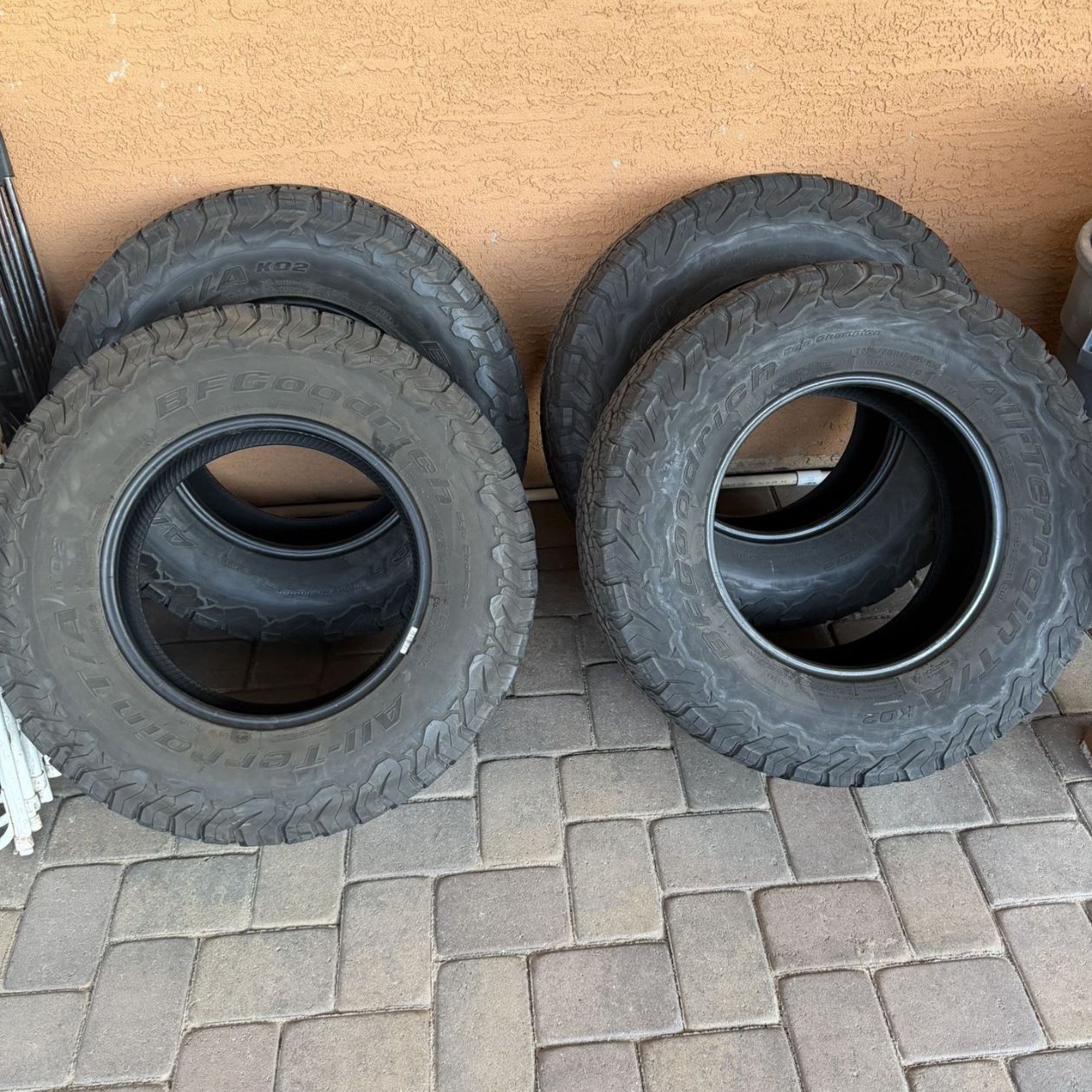
A 33-inch tire is a nominal size designation used primarily for light trucks, SUVs, and off-road vehicles, representing an outer diameter of approximately 33 inches. While often referred to as the "sweet spot" for overlanding and daily driving, achieving a true 33-inch setup requires understanding the difference between flotation and metric sizing, the necessity of suspension modifications, and the resulting changes to vehicle drivetrain physics.
In the world of automotive modification, 33-inch tires serve as the primary gateway from stock performance to dedicated off-road capability. For many enthusiasts, this size provides the ideal balance: it is large enough to offer significant ground clearance for moderate trails but small enough that it often does not require the massive, expensive drivetrain overhauls associated with 35-inch or 37-inch tires. However, "33 inches" is rarely an exact measurement, and the path to installing them involves more than just a trip to the tire shop.
Understanding the Math: Nominal vs. Actual Size
When you shop for 33-inch tires, you will encounter two primary sizing systems: Flotation and Metric. Understanding the translation between these two is critical for ensuring the tire actually fits within your wheel wells.
Flotation Sizing (Standard)
Flotation sizes are expressed in inches and are common for dedicated off-road tires (e.g., 33x12.50R15). In this string:
- 33: The nominal diameter of the tire in inches.
- 12.50: The width of the tire in inches.
- R: Radial construction.
- 15: The wheel diameter in inches.
It is a common industry reality that a tire labeled "33" is rarely exactly 33.0 inches. Depending on the manufacturer and the tread depth, a new 33-inch tire typically measures between 32.4 and 32.8 inches.
Metric Sizing
Most modern trucks and SUVs use metric sizing (e.g., 285/70R17). To determine the height of a metric tire in inches, you must use a specific formula:
- Multiply the width (285mm) by the aspect ratio (0.70). This gives the sidewall height in millimeters (199.5mm).
- Multiply that number by 2 (for the top and bottom sidewall) to get 399mm.
- Convert millimeters to inches by dividing by 25.4 (15.71 inches).
- Add the wheel diameter (17 inches).
- Total: 32.71 inches.
In the 2026 market, the 285/70R17 and the 275/70R18 are the two most common "metric 33s" used on vehicles like the Jeep Wrangler, Toyota Tacoma, and Ford F-150.
Fitment Requirements and Suspension Modifications
One of the most frequent questions regarding 33-inch tires is whether they can fit on a stock vehicle. The answer depends heavily on the specific vehicle's wheel-well geometry and factory ride height.
The Need for a Leveling Kit
Most modern half-ton trucks are designed with "rake," meaning the rear sits 2–3 inches higher than the front to compensate for towing loads. Because the front wheel wells are lower, 33-inch tires will often rub against the inner fender liner or the bumper during full-lock turns. A leveling kit, which raises the front suspension by 1.5 to 2.5 inches, is the most common prerequisite for fitting 33s without significant metal trimming.
Backspacing and Offset
Fitting a 33-inch tire isn't just about height; it is also about width. A 12.50-inch wide tire on a factory wheel often sits too deep in the wheel well, causing the inner sidewall to rub against the upper control arms (UCA) or the sway bar. To remedy this, owners often move to aftermarket wheels with a "negative offset" or "less backspacing." This pushes the tire outward, providing clearance for suspension components but potentially requiring more aggressive trimming of the outer plastic valance or bumper.
The "Body Mount Chop" and Trimming
On certain platforms, such as the Toyota 4Runner or Lexus GX, the frame includes a body mount located directly behind the front tire. When moving to a 33-inch tire with an aggressive offset, the tire will strike this steel mount when the steering wheel is turned. In these cases, a "body mount chop" (cutting a portion of the mount and welding a flat plate in its place) is a standard technical solution to ensure safe operation.
Impact on Vehicle Performance and Gearing
Increasing tire size is not a "free" upgrade. There are significant mechanical consequences to increasing the rolling diameter and the unsprung weight of a vehicle’s corners.
Effective Gear Ratio Changes
When you install larger tires, you are effectively lengthening your vehicle's gear ratio. If your truck has 3.73 gears and you move from a 30-inch tire to a 33-inch tire, your "effective" gear ratio drops. This means the engine must work harder to turn the wheels.
- The Result: The vehicle will feel "sluggish" off the line.
- Transmission Behavior: Modern 8-speed and 10-speed transmissions may "hunt" for gears, shifting frequently to stay in the power band, especially when driving up slight inclines or against the wind.
- The Solution: Many owners choose to "re-gear" the differentials to a higher numerical ratio (such as 4.56) to restore factory-like acceleration and towing performance.
Unsprung Weight and Rotational Mass
A standard passenger tire may weigh 40 lbs. An E-rated (10-ply) 33-inch Mud-Terrain tire can easily weigh 60 to 65 lbs. This increase in unsprung weight—weight not supported by the suspension—has a direct impact on ride quality. Heavier tires are harder for shocks to control, leading to a stiffer, more jittery ride over small bumps. Furthermore, because it takes more energy to start and stop a heavier spinning mass, braking distances will increase and fuel economy (MPG) will typically drop by 1–3 miles per gallon.
Comparing Tire Sizes: 31" vs. 33" vs. 35"
To understand why the 33-inch tire is so popular in 2026, it is helpful to see how it sits between the "daily driver" 31s and the "hardcore" 35s.
| Feature | 31-inch (Stock/Near-Stock) | 33-inch (Intermediate) | 35-inch (Advanced) |
|---|---|---|---|
| Ground Clearance | Base reference | +1 inch gain | +2 inch gain |
| Lift Required | None | 0–2.5 inches | 3–6 inches |
| Fuel Economy | Factory Standard | -1 to -3 MPG | -3 to -6 MPG |
| Re-gearing | Not required | Recommended for hills/towing | Highly Recommended/Required |
| Braking Power | Optimal | Noticeable decrease | Significant decrease (Upgrade suggested) |
| Off-Road Capability | Low (Fire roads) | Medium (Rock crawling, deep mud) | High (Extreme obstacles) |
Technical Considerations: Load Ratings and PSI
Not all 33-inch tires are built the same. When selecting a tire, you must consider the Load Range, which dictates the tire's ply rating and air pressure capacity.
- Load Range C (6-ply): Ideal for lighter SUVs like the Jeep Wrangler. These offer a softer ride and better "sidewall flex" when aired down for traction on rocks.
- Load Range E (10-ply): Necessary for heavy-duty trucks (F-250, RAM 2500). While extremely puncture-resistant, they are very stiff. If installed on a light vehicle, they will result in a harsh ride unless air pressure is carefully managed.
The Chalk Test for Proper Inflation
Because 33-inch tires are often wider than factory tires, the vehicle's door-jamb PSI recommendation is no longer accurate. To find the correct pressure, enthusiasts perform a "Chalk Test."
- Draw a thick line of chalk across the tire tread.
- Drive the vehicle in a straight line for 50 feet.
- Observe the wear pattern:
- If the chalk is gone in the middle but remains on the edges, the tire is over-inflated.
- If the chalk is gone on the edges but remains in the middle, it is under-inflated.
- Even wear across the chalk line indicates the "sweet spot" for that specific vehicle's weight.
Safety and Electronic Systems
In 2026, vehicles are more reliant on electronic sensors than ever before. Changing tire diameter affects more than just the speedometer.
- Speedometer Accuracy: Since a 33-inch tire travels further in one revolution than a stock tire, your speedometer will read lower than your actual speed (e.g., showing 60 mph when you are actually doing 65 mph). This can be corrected using an OBD-II programmer or a "speedo-calibrator."
- Anti-lock Braking (ABS) and ESC: Electronic Stability Control systems use wheel speed sensors to determine if a vehicle is sliding. Significant changes in tire size can occasionally confuse these systems, leading to premature intervention. Most modern vehicles can handle a move to 33s, but recalibrating the vehicle's computer to recognize the new tire height is considered a best practice for safety.
- Braking Systems: The increased leverage of a larger tire makes the factory brakes work harder. While usually not a problem for 33s on half-ton trucks, those who tow heavy loads with 33s should consider upgrading to high-friction brake pads or slotted rotors.
Frequently Asked Questions
Do I need a lift kit to run 33-inch tires?
Not always, but it is highly recommended. Many modern trucks (like the Ford F-150 or Chevy Silverado) can fit 33s with just a 2-inch leveling kit. However, without a lift, you may experience "rubbing" when the suspension is compressed or when the steering wheel is turned to its maximum extent. Some heavy-duty trucks (2500/3500 series) can often fit 33s at stock height because they have larger factory wheel wells.
How much will 33-inch tires affect my gas mileage?
On average, you can expect a loss of 1 to 2 MPG. This loss is caused by two factors: the increased aerodynamic drag of a taller vehicle and the increased rotational mass (weight) of the larger tires. If you choose a heavy Mud-Terrain (M/T) tire instead of a lighter All-Terrain (A/T) tire, the fuel economy penalty will be on the higher end of that scale.
Will 33-inch tires void my vehicle warranty?
Generally, a tire upgrade alone will not void your entire warranty. Under the Magnuson-Moss Warranty Act, a manufacturer cannot deny a warranty claim unless they can prove the aftermarket part caused the failure. However, if you install 33s and your wheel bearings or ball joints fail prematurely, the dealership may argue the increased weight and offset of the tires caused the failure and refuse to cover those specific parts.
What is the difference between a 33-inch A/T and M/T tire?
An All-Terrain (A/T) tire is designed for 70% street and 30% dirt use, offering a quieter ride and better wet-pavement traction. A Mud-Terrain (M/T) tire has large "lugs" and wide gaps designed to eject mud and grip rocks. M/T tires are significantly louder on the highway, wear out faster, and are typically heavier than A/T tires in the same 33-inch size.
Do I need to re-gear my truck for 33s?
For most modern vehicles with 3.73 or 4.10 factory gears, re-gearing is not strictly necessary for 33s. You will notice a slight loss in "pep," but it is usually manageable. However, if your vehicle came with "economy" gears (like 3.21 or 3.42), re-gearing to 4.10 or 4.56 will significantly improve the driving experience and reduce strain on the transmission.
Final Recommendations
If you are considering a move to 33-inch tires, the most practical next step is to verify your rim width and offset. A 33x12.50 tire typically requires a rim between 8.5 and 10 inches wide; mounting it on a narrow factory 7-inch rim can lead to "crowning," where the center of the tire wears out prematurely regardless of air pressure.
For those seeking the benefits of 33s without the headaches of heavy modification, look for a "skinny 33" such as a 255/80R17. These tires provide the height and ground clearance of a 33 but maintain a narrower profile, which often eliminates the need for aggressive trimming or high-offset wheels while performing exceptionally well in snow and mud. Regardless of the width, always pair a tire upgrade with a speedometer recalibration to ensure your vehicle's safety systems and odometer remain accurate.