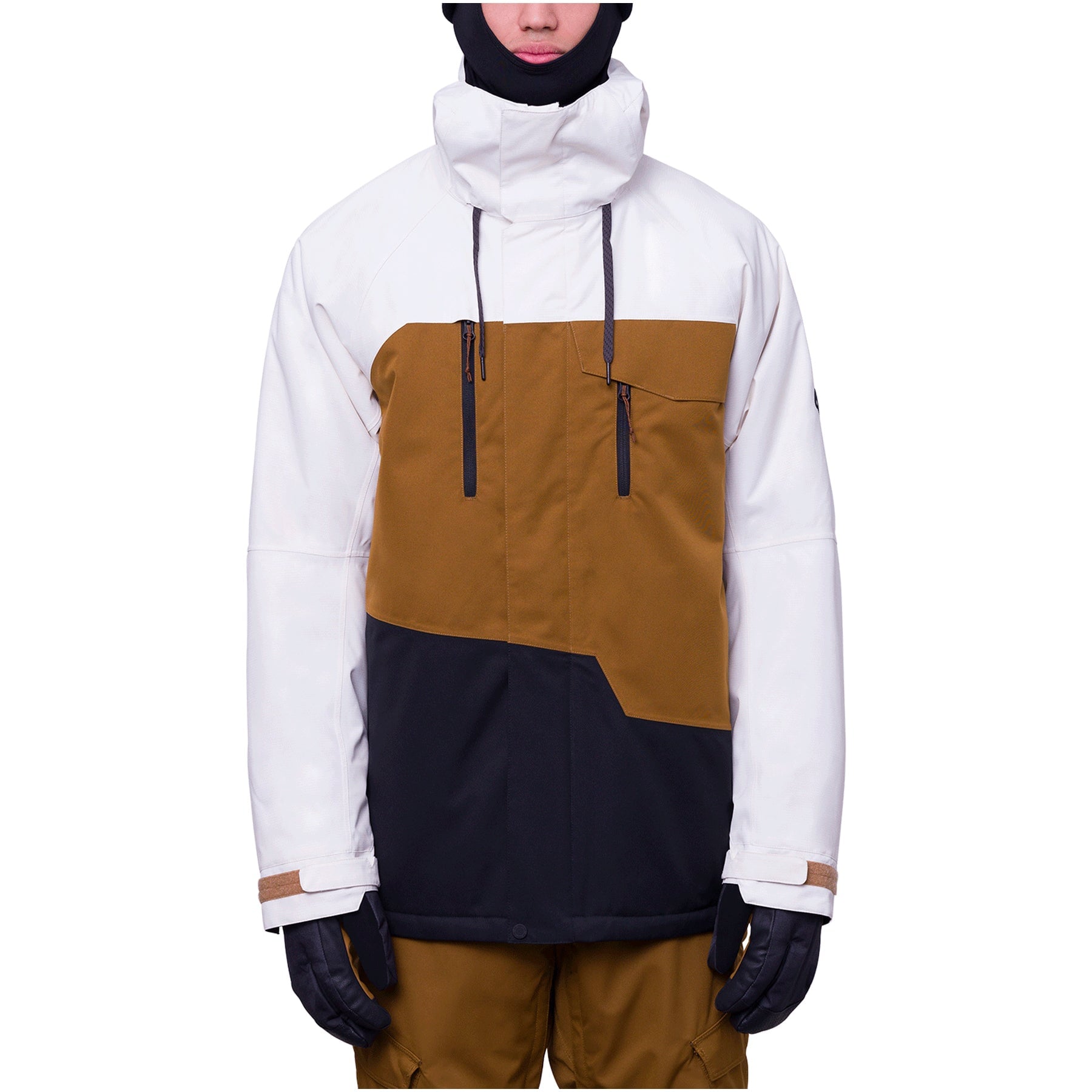
The three top picks for the best men’s snow jacket in 2024 were the Arc’teryx Sabre Jacket for its unrivaled freeride versatility, the Helly Hansen Alpha 4.0 for its superior resort insulation and comfort, and the Burton [ak] Cyclic GORE-TEX for its robust waterproofing and rider-focused ergonomics. These jackets continue to set the standard for high-altitude performance.
Looking back from the perspective of 2026, the 2024 winter season represented a significant leap in textile technology and sustainable manufacturing. The shift toward PFC-free (perfluorinated chemicals) durable water repellent (DWR) treatments and the refinement of three-layer hardshell constructions created a crop of outerwear that has proven exceptionally durable. Whether you are navigating the backcountry or sticking to the groomed trails of a resort, understanding why these three specific models dominated the 2024 market is essential for making an informed gear choice today.
1. The Best All-Mountain Shell: Arc’teryx Sabre Jacket
The Arc’teryx Sabre Jacket solidified its position in 2024 as the premier choice for skiers and snowboarders who require a "do-it-all" shell. While many jackets are specialized for either the resort or the backcountry, the Sabre bridged the gap with a refined fit and a robust material choice that could withstand both abrasive trees and high-speed wind chill.
Technical Construction and Material Depth
The Sabre utilizes N80p-X 3L GORE-TEX fabric. To understand why this matters, we have to look at the "N80p" designation. The "N" stands for nylon, and "80" refers to the denier—the weight and thickness of the individual fibers. An 80-denier face fabric is significantly more durable than the 40 or 50-denier fabrics found in ultralight touring shells, making the Sabre highly resistant to punctures and tears.
The "3L" indicates a three-layer construction where the GORE-TEX membrane is sandwiched between a durable outer face fabric and a soft inner backer. In the 2024 Sabre, Arc’teryx used a thin flannel backer. This does not provide significant insulation, but it does offer a "brushed" feel that adds a touch of warmth and, more importantly, manages moisture by wicking sweat away from your mid-layers more effectively than a standard tricot backer.
Fit and Ergonomics
Arc’teryx is renowned for its articulated patterning. In the Sabre, this means the sleeves and torso are cut to mimic the natural movements of a skier. When you reach forward for a pole plant or bend your knees for a deep carve, the hem of the jacket doesn’t ride up, and the sleeves don't pull back from your gloves. The 2024 model featured a "Relaxed Fit," which was intentionally designed to accommodate thicker mid-layers like an Atom Hoody or a Cerium down jacket without restricting movement.
Key Features for the Snow
- StormHood™: This helmet-compatible hood features a single-pull adjustment system that allows for full peripheral vision even when cinched tight.
- Integrated Powder Skirt: The skirt features "Slide 'n Loc™" attachments that secure the jacket to compatible Arc’teryx pants, creating a unified barrier against deep powder.
- WaterTight™ Pit Zips: Large underarm vents allow for rapid heat dumping during high-exertion climbs or warm spring afternoons.
2. The Best Insulated Resort Jacket: Helly Hansen Alpha 4.0
For the skier who spends 90% of their time within the resort boundaries and demands warmth without the bulk of a traditional puffer, the Helly Hansen Alpha 4.0 was the definitive 2024 winner. Helly Hansen has long been the choice of professional ski patrols and mountain guides, and the Alpha 4.0 distilled that professional-grade protection into a consumer-friendly package.
HELLY TECH® Professional and Stretch Performance
Unlike the hardshell feel of the Arc'teryx, the Alpha 4.0 uses HELLY TECH® Professional fabric, which offers a 4-way stretch. This is a game-changer for resort comfort. The jacket moves with you rather than against you, providing a "soft" feel that still maintains a minimum 20,000mm waterproof rating. In 2024, Helly Hansen refined the seam sealing on this model to ensure that even under the pressure of a chairlift seat in a rain-snow mix, moisture would not penetrate.
Intelligent Insulation: PrimaLoft® Black Eco
The Alpha 4.0 is an insulated jacket, meaning you don't necessarily need a separate puffy layer underneath. It utilizes PrimaLoft® Black Eco insulation, which is mapped throughout the body. The mapping is strategic: more insulation in the core to keep your vital organs warm, and less in the arms to maintain mobility. Because it is synthetic, it continues to provide warmth even if it becomes damp from sweat or external moisture.
The Life Pocket+™ Innovation
One of the most practical features introduced and refined by Helly Hansen is the Life Pocket+™. Cold temperatures are the enemy of lithium-ion batteries. This pocket is engineered with Aerogel insulation—developed by NASA—to keep your smartphone significantly warmer than a standard pocket. In 2024 testing, this feature was shown to preserve battery life up to three times longer in sub-zero temperatures, a critical safety and convenience factor for long days on the mountain.
H2Flow™ Ventilation System
Insulated jackets can often lead to overheating. The Alpha 4.0 addresses this with the H2Flow™ system. This involves a combination of air pockets and vents that allow you to regulate your temperature. By opening the mechanical ventilation zippers, you release hot air while the insulation continues to trap a thin layer of warmth against your body, preventing the "flash-chill" effect often felt when opening vents in a non-insulated shell.
3. The Best Snowboard-Specific Performance: Burton [ak] Cyclic GORE-TEX
While skiers often prioritize vertical mobility, snowboarders have different ergonomic needs—longer torsos, more room in the shoulders for rotational movement, and extreme durability in the seat and cuffs. The Burton [ak] Cyclic GORE-TEX has been a staple for years, but the 2024 iteration was arguably the most refined version of this workhorse.
2L GORE-TEX and the Living Lining®
The [ak] Cyclic utilizes a 2-layer (2L) GORE-TEX construction. While 3L is often touted as "better," 2L has distinct advantages for riders. It is generally softer and more pliable, providing a more "skate-like" feel that many snowboarders prefer.
To compensate for the lack of a third layer, Burton employs its proprietary Living Lining®. This is a smart-fiber technology: when you are warm, the pores of the lining expand to release heat and moisture. When you cool down, the pores contract to trap heat. This creates a more consistent internal microclimate, reducing the need to constantly adjust layers during a day of varied intensity.
Durability for the Rider
Snowboarding involves a lot of contact with the ground—strapping into bindings, sitting on the snow to wait for friends, or hiking side-country ridges. The 2024 Cyclic was built with GORE-SEAM® tape and reinforced stitching in high-stress areas. The YKK® water-resistant zippers were also updated for 2024 to be more "clog-resistant" against ice and frozen slush.
Functional Rider Features
- StormForm Contour Hood: Designed specifically to fit over a helmet without pulling the rest of the jacket upward, maintaining a full range of motion for your neck.
- Ergonomic Water-Repellent Zip-Out Waist Gaiter: A powder skirt that can be removed for spring riding or town use, providing versatility that the more rigid Arc'teryx Sabre lacks.
- Zippered Bicep Pass Pocket: A small but essential detail for modern RFID lift gates, positioned perfectly for scanners without requiring awkward body contortions.
Comparison of Technical Specifications
The following table summarizes the key metrics for these three top-tier jackets based on their 2024 release specifications.
| Feature | Arc’teryx Sabre | Helly Hansen Alpha 4.0 | Burton [ak] Cyclic |
|---|---|---|---|
| Primary Material | 3L GORE-TEX (N80p-X) | HELLY TECH® Professional | 2L GORE-TEX |
| Insulation Type | Brushed Flannel Backer | PrimaLoft® Black Eco | Living Lining® (Mapped) |
| Waterproof Rating | 28,000mm+ | 20,000mm+ | 28,000mm+ |
| Breathability | High (RET < 9) | High (20,000g/m²) | Very High |
| Best For | Freeride / All-Mountain | Resort / Cold Weather | Snowboarding / Freestyle |
| Fit Profile | Relaxed / Articulated | Slim / Athletic | Regular / Rider-Driven |
| Special Feature | Slide 'n Loc™ Attachment | Life Pocket+™ (Aerogel) | Living Lining® Tech |
Why the 2024 Models Still Matter in 2026
In 2026, the gear market has shifted even further toward recycled materials, but the 2024 "Big Three" remain relevant for several reasons. First, the durability of the GORE-TEX membranes used in that year was exceptional. Many 2024 jackets are currently hitting the second-hand market in near-perfect condition, offering a high-performance alternative to more expensive 2026 models.
Furthermore, 2024 was a peak year for "mechanical" durability. Manufacturers were focusing on rugged face fabrics like the N80p nylon, which have proven to outlast some of the lighter, more eco-conscious "bio-fabrics" that followed. If you are a high-use rider who spends 50+ days on the snow per year, these 2024 models offer a level of longevity that is hard to match.
Understanding Technical Ratings: A Guide for Buyers
When evaluating these jackets, it is important to understand the terminology used by manufacturers to describe their performance.
Waterproofing (The Water Column)
Waterproofing is measured in millimeters (mm). This represents how much water pressure a fabric can withstand before it leaks. A 20,000mm rating (like on the Alpha 4.0) means you can withstand heavy rain and wet snow for extended periods. A 28,000mm rating (GORE-TEX standard) is effectively "waterproof" under almost any real-world mountain condition, including sitting on wet chairlifts or kneeling in slush.
Breathability (MVTR and RET)
Breathability is just as important as waterproofing. If a jacket doesn't breathe, you will get wet from your own sweat, leading to rapid cooling.
- MVTR (Moisture Vapor Transmission Rate): Measured in grams (g/m²/24h). Higher is better. 20,000g is the standard for high-performance gear.
- RET (Resistance to Evaporative Heat Transfer): Used primarily by GORE-TEX. Lower is better. A RET of <6 is ultra-breathable, while <9 is excellent for high-exertion activities.
DWR (Durable Water Repellent)
This is the chemical coating on the outside of the jacket that causes water to bead up and roll off. In 2024, the transition to C0 DWR (PFC-free) was in full swing. These treatments are more environmentally friendly but require more frequent maintenance (re-washing and heat-drying) to maintain their effectiveness compared to the older, more toxic C6 or C8 treatments.
Maintenance: Keeping Your 2024 Jacket High-Performing
To ensure a jacket from the 2024 season continues to perform in 2026 and beyond, regular maintenance is required. One of the most common mistakes users make is failing to wash their technical outerwear.
- Wash Regularly: Dirt, oils from your skin, and smoke can clog the pores of a GORE-TEX or HELLY TECH® membrane, significantly reducing breathability. Use a dedicated technical wash like Nikwax Tech Wash or Grangers Performance Wash.
- Avoid Detergents: Never use standard laundry detergents or fabric softeners. These contain surfactants that attract water, "wetting out" your jacket and ruining the DWR performance.
- Reactivate the DWR: After washing, most 2024 jackets benefit from being placed in a dryer on medium heat for 20 minutes. This heat "resets" the DWR molecules, helping them stand up and shed water effectively.
- Re-Apply if Necessary: If water stops beading on the surface even after washing and drying, it is time to apply a spray-on DWR treatment.
Frequently Asked Questions
Is a shell better than an insulated jacket for skiing?
It depends on your activity level and local climate. A shell like the Arc’teryx Sabre offers more versatility; you can wear a thin base layer on warm days or a heavy down layer on frigid days. An insulated jacket like the Helly Hansen Alpha 4.0 is simpler and often more comfortable for resort skiing where you aren't generating as much body heat as you would while hiking.
What is the difference between 2L and 3L GORE-TEX?
A 3L (three-layer) construction bonds the membrane between the outer fabric and an inner lining, making it more durable and "crisper." A 2L (two-layer) construction bonds the membrane only to the outer fabric and uses a separate, loose lining (like Burton's Living Lining®). 2L is generally softer and more affordable, while 3L is more durable and better at managing moisture in extreme conditions.
Does the 2024 Arc'teryx Sabre fit true to size?
The 2024 Sabre features a "Relaxed Fit." This means it runs slightly large to allow for layering. If you prefer a trim, athletic look and don't plan on wearing heavy mid-layers, you may want to size down. However, for its intended use as a freeride jacket, the extra room is beneficial for mobility.
Why is the Helly Hansen Life Pocket+™ important?
Modern smartphones are essential for navigation and emergency communication, but their batteries fail rapidly in the cold. By using Aerogel, the Life Pocket+™ keeps the battery at a functional temperature without requiring an external heat source. It is a passive, lightweight solution to a very common mountain problem.
Can I use my snow jacket for everyday winter wear?
Yes, particularly the Helly Hansen Alpha 4.0 and Burton [ak] Cyclic, which have more "lifestyle" friendly aesthetics. However, technical snow jackets are often shorter in the front and longer in the back (to accommodate harnesses or sitting on snow), which may feel different from a standard parka.
Recommendation for 2026 Buyers
If you are looking for the absolute best performance-to-value ratio in 2026, hunting for a 2024 Burton [ak] Cyclic is your best bet. It offers legendary GORE-TEX protection at a price point that is often $300 less than a new Arc’teryx. However, if you demand the pinnacle of durability and technical design, the Arc’teryx Sabre remains the industry gold standard. For those who prioritize warmth and "all-day" comfort at the resort without worrying about complex layering systems, the Helly Hansen Alpha 4.0 is the superior choice. Choose the tool that matches your specific mountain environment, and remember that regular maintenance is the key to making these high-end investments last for a decade.