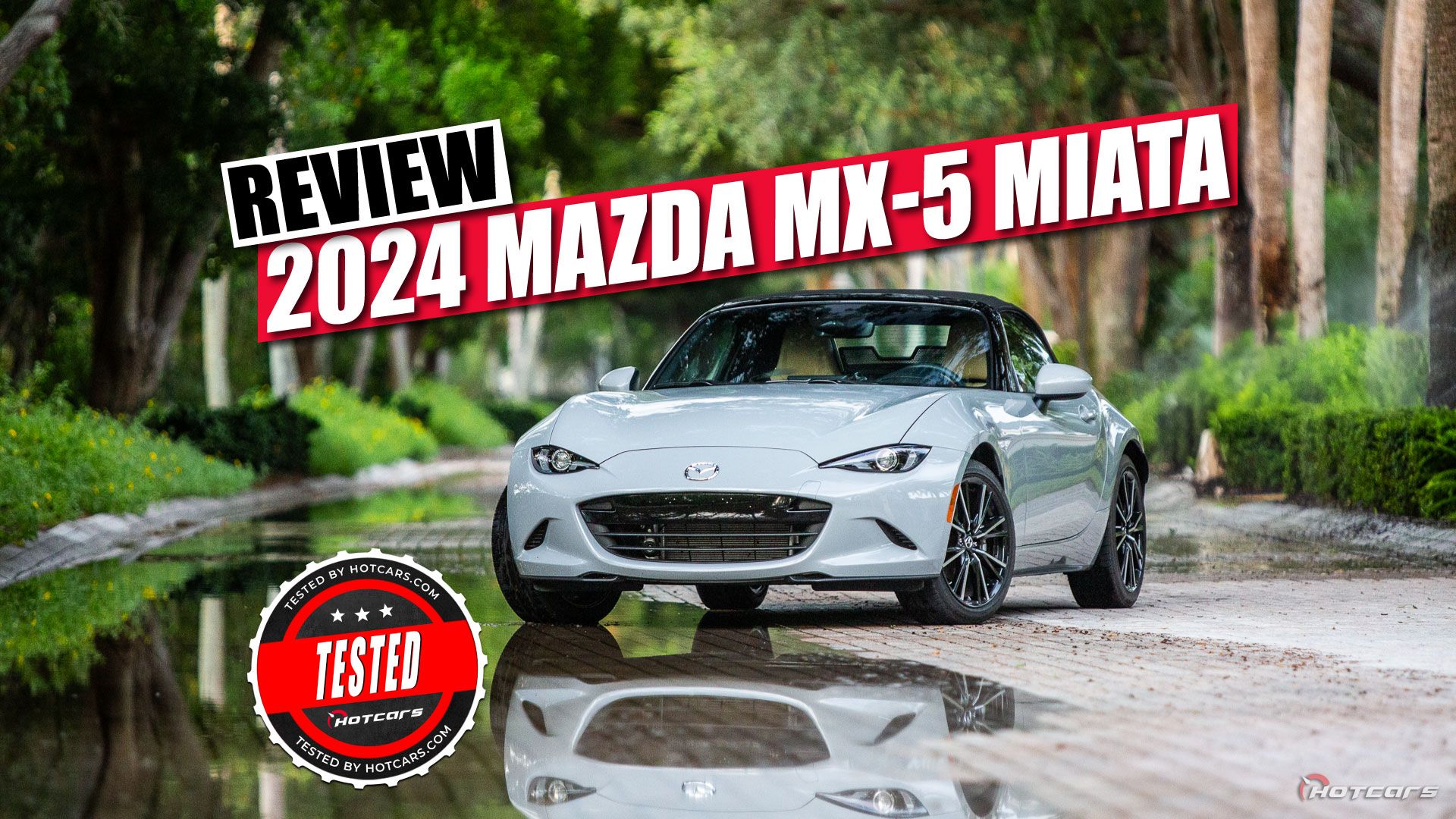
While the term "ND1" is frequently used by enthusiasts to describe the early years of the fourth-generation Mazda MX-5, the 2023 model year actually represents the pinnacle of the ND2 series. Specifically, ND1 refers to models produced between 2016 and 2018, whereas the 2023 Miata features the significant powertrain and ergonomic upgrades introduced in 2019.
The Mazda MX-5 Miata, currently in its fourth generation (chassis code ND), has undergone several internal revisions since its debut in late 2015. As we look back from 2026, the 2023 model year occupies a unique position as the final full production year before the "ND3" facelift arrived in 2024. To understand why a 2023 model is often mislabeled as an ND1—and why its actual ND2 status is superior—one must analyze the mechanical evolution of the Skyactiv-G engine, the refinement of the transmission, and the introduction of electronic handling aids like Kinematic Posture Control.
Defining the ND Generations: ND1 vs. ND2 vs. ND3
In the Miata community, "ND1" and "ND2" are not official Mazda marketing terms but are universally accepted designations for specific technical milestones. The "ND" refers to the fourth-generation chassis, while the number indicates the iteration of the powertrain and interior features.
The ND1 Era (2016–2018)
The ND1 was the launch version of the fourth-generation car. It focused on "Gram Strategy," a weight-saving philosophy that made the ND significantly lighter than its predecessor, the NC. It utilized a 2.0-liter Skyactiv-G engine tuned for low-end torque, producing 155 horsepower. While beloved for its purity, the ND1 faced criticism for its relatively low 6,800 RPM redline and early reliability concerns regarding its manual transmission.
The ND2 Revolution (2019–2023)
The 2023 model year falls squarely into the ND2 category. Starting in 2019, Mazda overhauled the engine to create the "ND2." This wasn't a simple ECU tune; it involved lighter pistons, larger valves, and a stiffer crankshaft, raising the redline to 7,500 RPM and boosting output to 181 horsepower. The 2023 model represents the most refined version of this hardware.
The ND3 Facelift (2024–Present)
As of 2026, we now recognize the 2024 and newer models as the "ND3." These vehicles introduced a new 8.8-inch infotainment system, revised LED lighting signatures, and an asymmetrical limited-slip differential (LSD). While the engine remains largely the same as the 2023 model, the ND3 represents a digital and aesthetic shift.
The Heart of the Change: Why 2023 is Not an ND1
The primary reason a 2023 Miata is technically distinct from an ND1 lies under the hood. The 2023 model uses the ND2-spec Skyactiv-G 2.0L engine. To appreciate the difference, one must look at the internal engineering changes Mazda implemented to transform the driving experience from the earlier 2016–2018 cars.
Engine Internals and Airflow
The ND1 engine (2016–2018) was essentially a modified version of the engine found in the Mazda3 of that era. For the ND2 (including the 2023 model), Mazda re-engineered the engine for high-RPM performance. They increased the size of the intake and exhaust valves and optimized the port shapes to improve airflow. The 2023 engine also features lighter pistons and connecting rods, which reduced internal reciprocating mass, allowing the engine to rev more freely and safely to its 7,500 RPM limit.
Fuel System and Combustion
The 2023 ND2 engine utilizes a higher-pressure fuel injection system compared to the ND1. This allows for better atomization of the fuel, resulting in a more efficient and powerful combustion cycle. Combined with a new intake manifold with shortened runners, the 2023 model provides a much more linear power delivery that continues to build until the redline, unlike the ND1, which felt as though it ran out of breath after 6,000 RPM.
The Exhaust Note
Mazda also revised the exhaust manifold and internal muffler baffling for the ND2 series. The 2023 Miata has a deeper, more resonant exhaust note than the 2016–2018 ND1 models. This was achieved by smoothing the internal flow and tuning the frequency to match the higher RPM range of the updated engine.
Mechanical and Interior Refinements of the 2023 Model
Beyond the engine, the 2023 Miata (ND2) solved several "quality of life" issues that persisted in the ND1 years. These changes make the 2023 model one of the most desirable years for enthusiasts who want the classic analog feel without the early-generation compromises.
The Telescoping Steering Wheel
One of the most significant changes introduced in the transition from ND1 to ND2 was the addition of a telescoping steering column. ND1 models (2016–2018) only offered tilt adjustment. For taller drivers or those with specific ergonomic preferences, the ability to pull the wheel closer in the 2023 model significantly improves the driving position and long-distance comfort.
Kinematic Posture Control (KPC)
Introduced in 2022 and standard on the 2023 model, Kinematic Posture Control (KPC) is a software-based suspension logic. When the car senses high-G cornering, it applies a very slight amount of braking force to the inner rear wheel. This suppresses "body lift" and pulls the car down toward the pavement, making the 2023 model feel more stable and planted mid-corner than an ND1 without requiring stiffer, less comfortable aftermarket springs.
Transmission Stability
Early ND1 models (specifically 2016 and 2017) were known for "Version 1" and "Version 2" gearbox failures, where the second and third gears could strip under high load. By 2023, Mazda had iterated the manual transmission through several versions (up to Version 5 and beyond), significantly strengthening the internal components. The 2023 gearbox is widely considered the most robust manual transmission of the ND generation.
Comparing Specifications: ND1 vs. ND2 (2023 Standard)
The following table highlights the technical divergence between the ND1 (often confused with the 2023) and the actual 2023 ND2 specifications.
| Feature | ND1 (2016–2018) | ND2 (2023 Model) | ND3 (2024–2026) |
|---|---|---|---|
| Horsepower | 155 hp @ 6,000 RPM | 181 hp @ 7,000 RPM | 181 hp @ 7,000 RPM |
| Torque | 148 lb-ft @ 4,600 RPM | 151 lb-ft @ 4,000 RPM | 151 lb-ft @ 4,000 RPM |
| Redline | 6,800 RPM | 7,500 RPM | 7,500 RPM |
| Steering Column | Tilt Only | Tilt & Telescopic | Tilt & Telescopic |
| Infotainment | 7-inch MZD Connect | 7-inch MZD Connect | 8.8-inch New Mazda Connect |
| Handling Aid | Standard DSC | Kinematic Posture Control | DSC-Track Mode |
| Flywheel | Single-mass | Dual-mass | Dual-mass |
Trim Levels and Options for the 2023 Year
When exploring 2023 Miata years explained, it is vital to distinguish between the three primary trim levels available in North America, as they dictate the mechanical hardware (like the LSD) included with the car.
Sport Trim
The Sport was the entry-level 2023 model. It included the 181 hp engine but lacked the performance hardware found in higher trims. It came with a 6-speed manual transmission, a black cloth soft top, and 16-inch wheels. It is the lightest configuration of the 2023 model, appealing to those who plan to swap in aftermarket suspension and wheels.
Club Trim
The Club trim is the enthusiast's choice. In 2023, the Club trim (when equipped with the manual transmission) came standard with a Bilstein sport-tuned suspension, a front strut tower brace, and a limited-slip differential. It also offered the optional BBS/Brembo/Recaro package, which added forged 17-inch BBS wheels, Brembo front brakes with red calipers, and heated Recaro sport seats.
Grand Touring Trim
The Grand Touring (GT) was the luxury-oriented version. In 2023, the GT combined the performance hardware of the Club (LSD and Bilsteins) with more premium touches like leather seating, automatic climate control, and adaptive front lighting. For the 2023 year, the GT was the only trim that offered a Terracotta Nappa leather interior option, making it a "mini-exotic" in terms of cabin feel.
Common Maintenance and Reliability Concerns
Even though the 2023 Miata is highly refined, owners in 2026 should be aware of specific maintenance patterns associated with the ND2 platform.
- Drain Hole Cleaning: Like all Miatas, the ND2 has top-drain holes located behind the seats. If these become clogged with debris (leaves, pine needles), water can back up into the cabin and damage the Bose amplifier or electrical components. Regular cleaning is mandatory.
- Infotainment Delamination: Some 2023 models have shown early signs of "ghost touching" or screen delamination, where the layers of the 7-inch screen begin to separate. This was a known issue with the older MZD Connect hardware, which was eventually replaced by the 8.8-inch unit in 2024.
- Battery Health: The ND Miata uses a relatively small, lightweight battery to save weight. If the car is stored for several weeks without a tender, the battery is prone to going flat, which can cause numerous sensor errors upon jump-starting.
- Paint Thinness: Mazda's Soul Red Crystal and Machine Gray finishes are beautiful but notoriously thin. By 2026, many 2023 models without Paint Protection Film (PPF) may show significant stone chipping on the front fascia and hood.
Buying Guide: Should You Choose a 2023 or a Newer ND3?
As of 2026, the used market for 2023 Miatas is robust. Buyers often weigh the 2023 model against the newer ND3 (2024+).
Choose the 2023 Model If:
- You prefer the analog gauge cluster. The 2023 features a physical tachometer and a classic feel that some enthusiasts prefer over the more digitized displays in newer models.
- You want the best value. The 2023 model has the same 181 hp engine as the 2026 models but at a significantly lower price point on the pre-owned market.
- You like the 7-inch screen. While smaller, it is less intrusive on the dashboard than the larger 8.8-inch screen found in the ND3.
Choose the 2024+ (ND3) Model If:
- You want the latest safety tech. The ND3 introduced more sophisticated radar and lane-keep assist systems.
- You track the car. The ND3’s "DSC-Track" mode and revised limited-slip differential provide a slight edge in competitive environments.
- You value modern infotainment. The 8.8-inch screen is significantly faster and higher resolution than the unit in the 2023 model.
FAQ
Is a 2023 Miata an ND1 or ND2?
The 2023 Miata is an ND2. The ND1 designation only applies to models from 2016 to 2018. The 2023 model features the higher-output 181 hp engine and telescoping steering wheel characteristic of the ND2 generation.
What are the main differences between a 2017 ND1 and a 2023 ND2?
The 2023 model has 26 more horsepower, a higher redline (7,500 vs 6,800 RPM), a telescoping steering wheel, a standard backup camera (which became mandatory in 2018), and Kinematic Posture Control (KPC) for better cornering stability.
Does the 2023 Miata have transmission problems?
No, the 2023 model uses the latest iteration of Mazda's 6-speed manual gearbox. The failures associated with the "ND1" years were largely addressed by the 2019 model year and were fully resolved by the time the 2023 model was produced.
Can I upgrade an ND1 to 2023 specs?
While possible, it is not cost-effective. Upgrading an ND1 engine to ND2 specs requires changing the pistons, rods, crankshaft, valves, and intake manifold. It is generally cheaper to sell an ND1 and purchase a 2023 ND2 if you want the extra performance and features.
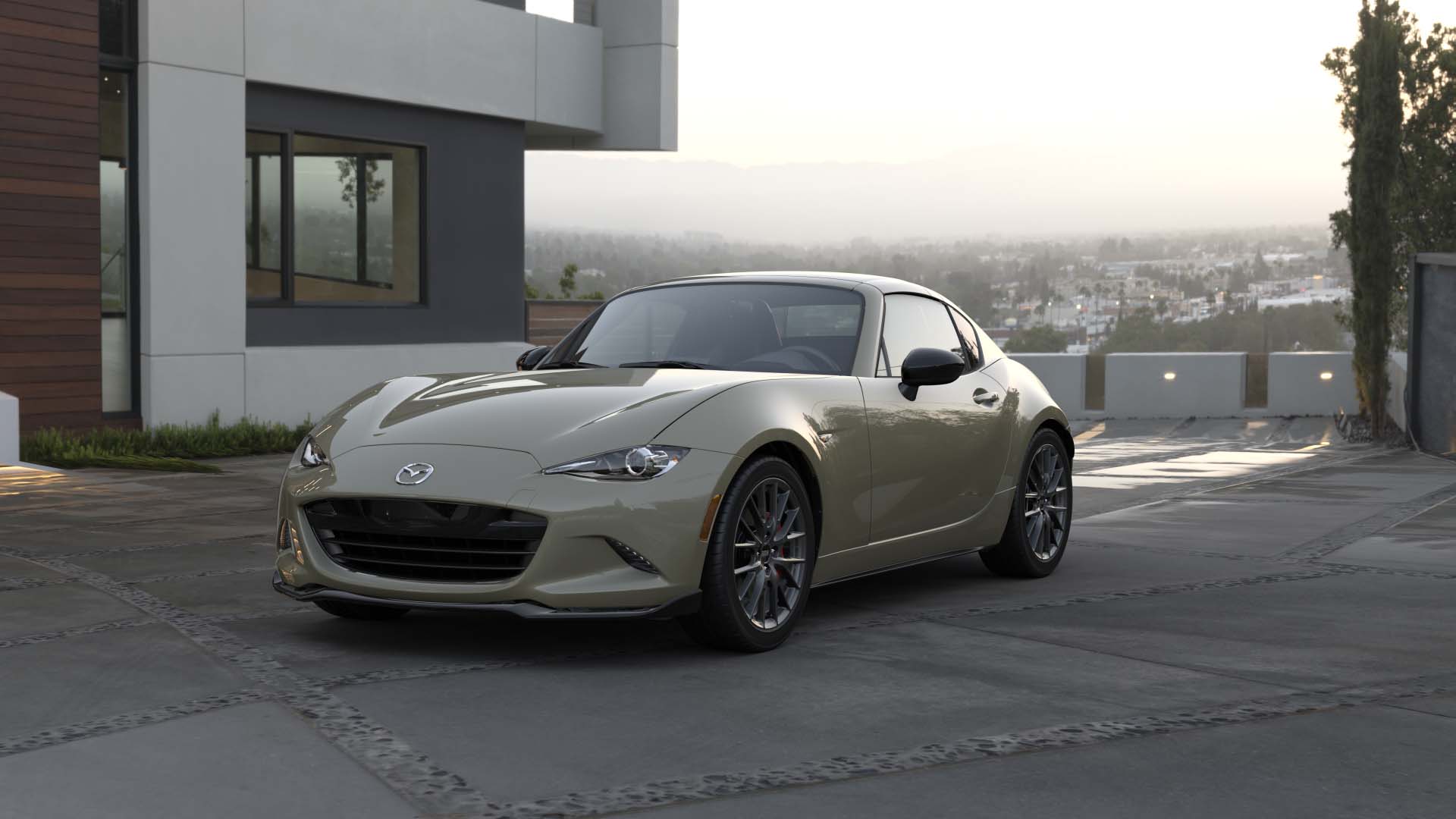
Is the 2023 Miata RF different from the Soft Top?
Mechanically, they are identical. However, the RF (Retractable Fastback) is roughly 113 pounds heavier due to the power-folding hardtop mechanism. The 2023 RF was only available in Club and Grand Touring trims, whereas the Soft Top was available in all three.
Final Recommendation for 2023 Miata Owners
If you are looking at a "2023 ND1," remember that the car is actually an ND2, which is widely considered the "sweet spot" of the entire fourth generation. It offers the high-revving 181 hp engine without the increased complexity and higher price of the 2024+ facelift models. For the best driving experience, seek out a 2023 Club with the BBS/Brembo/Recaro package, as it represents the most track-capable and holds its value better than any other trim from that production year.