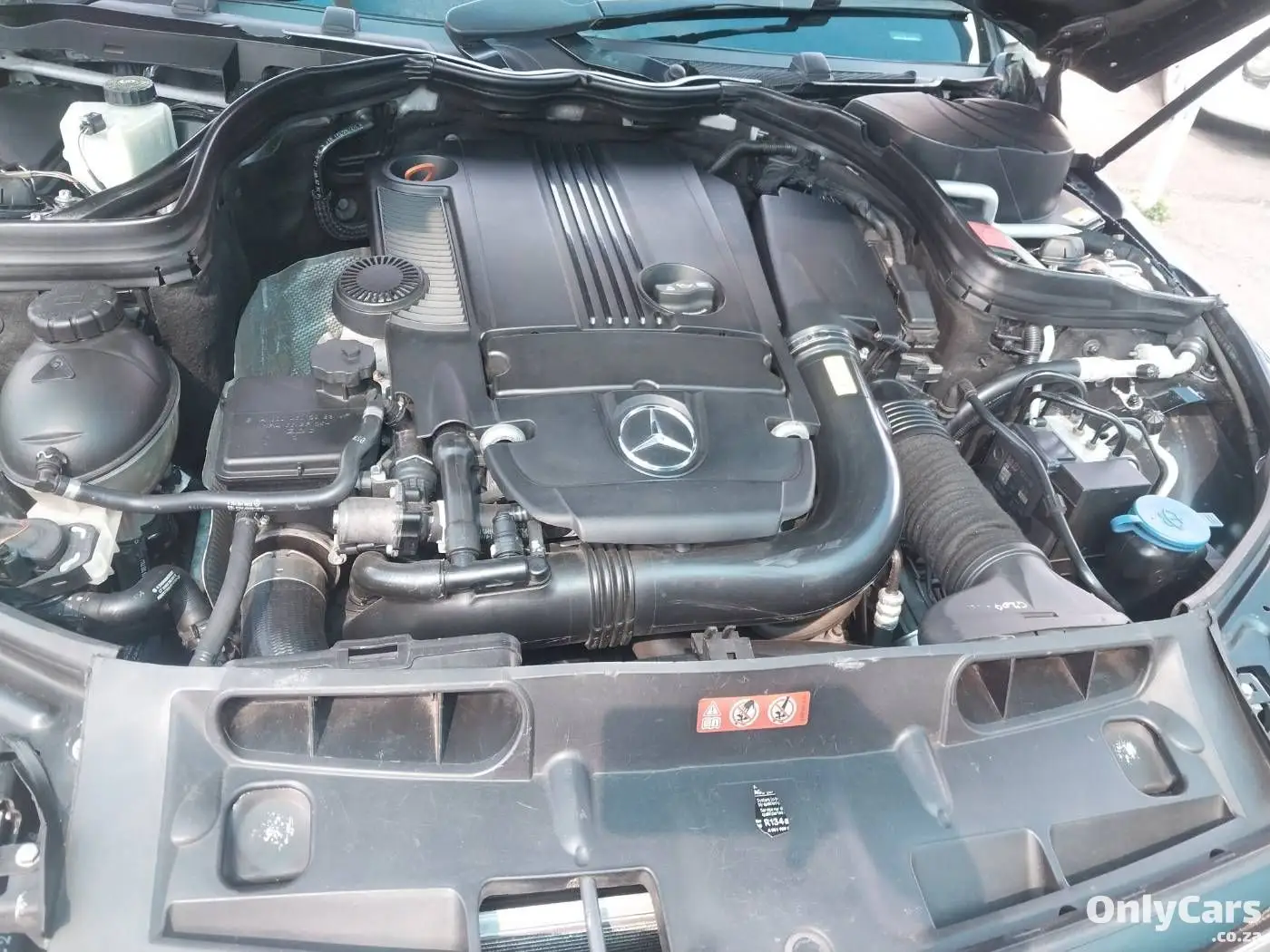
The 2014 Mercedes-Benz C250 is powered by the M271 DE18EVO engine, a 1.8-liter turbocharged, direct-injected inline four-cylinder powerplant generating 201 horsepower and 229 lb-ft of torque. Paired with the 7G-TRONIC PLUS 7-speed automatic transmission, this engine balances efficient daily driving with responsive mid-range output, though long-term ownership requires preventative oversight of the timing chain and variable valve timing systems.
Technical Specifications and Architecture of the M271 Engine
The 2014 C250 (W204 chassis generation) represents the final iteration of the M271 engine family, designated internally as the M271 DE 18 EVO (or M271.860). Mercedes-Benz engineered this version to replace earlier supercharged M271 engine variants ("Kompressor" models), shifting to exhaust-gas turbocharging and direct gasoline injection to meet tighter emissions standards and deliver smoother power delivery.
- Air and Fuel Induction
- Intake Manifold
- Direct Fuel Injectors (CGI)
- BorgWarner Turbocharger
- Combustion Chamber
- Exhaust System
- Exhaust Manifold
- Variable VVT Exhaust
Engine Structural Design
The foundation of the M271 DE18EVO engine is a lightweight die-cast aluminum alloy cylinder block fitted with cast-iron cylinder liners for thermal stability and bore durability.
- Cylinder Head: Double overhead camshaft (DOHC) arrangement constructed from aluminum alloy, utilizing four valves per cylinder (16 valves total).
- Bore and Stroke: 82.0 mm bore by 85.0 mm stroke, creating an under-square cylinder geometry that favors torque development at low and mid-range engine speeds.
- Compression Ratio: Set at 9.3:1, allowing high boost pressures from the turbocharger while controlling detonation when combined with direct fuel injection.
- Valvetrain Mechanics: Hydro-pivot roller rocker arms actuate the valves, minimizing internal friction compared to traditional bucket tappets.
Turbocharging and Stratified Direct Fuel Injection
Unlike its supercharged predecessors, the 2014 C250 utilizes a single-scroll BorgWarner turbocharger integrated directly into the exhaust manifold assembly. This design reduces thermal mass and minimizes exhaust gas heat loss, enabling faster spool-up times and reducing turbo lag.
The air charge is cooled through a front-mounted air-to-air intercooler before entering the intake plenum.
Fuel delivery relies on Mercedes-Benz's Charged Gasoline Injection (CGI) direct-injection system. High-pressure mechanical fuel pumps push gasoline directly into the combustion chambers at pressures up to 200 bar (2,900 psi).
Multi-hole solenoid fuel injectors deliver precise, multi-stage fuel sprays per combustion cycle. This precise metering allows the engine to alternate between homogeneous and stratified-charge combustion modes, optimizing fuel economy under partial load while maintaining performance during hard acceleration.
2014 Mercedes-Benz C250 Engine Specifications Summary
| Feature / Metric | Factory Specification |
|---|---|
| Engine Code | M271 DE 18 EVO / M271.860 |
| Configuration | Inline-4 (I4), DOHC, 16-Valve |
| Displacement | 1.8 Liters (1,796 cc / 109.6 cu in) |
| Bore x Stroke | 82.0 mm × 85.0 mm |
| Compression Ratio | 9.3:1 |
| Horsepower Output | 201 hp @ 5,500 RPM |
| Torque Output | 229 lb-ft (310 Nm) @ 2,000–4,300 RPM |
| Induction Type | Single-Scroll Turbocharger (Intercooled) |
| Fuel System | High-Pressure Direct Gasoline Injection (CGI) |
| Valvetrain Control | Variable Valve Timing (VVT) on Intake and Exhaust |
| Oil Capacity | 5.5 Liters (5.8 Quarts) |
| Recommended Fuel | 91 Octane Premium Unleaded |
Common Issues and Mechanical Vulnerabilities
While the M271 DE18EVO produces broad torque and solid fuel economy, specific components in the valvetrain, cooling, and fuel systems demand mechanical attention as vehicle mileage accrues.
1. Camshaft Adjuster Sprocket Wear and Timing Chain Stretch
The most notable vulnerability on the M271 engine family concerns the continuous camshaft adjusters (variable valve timing sprockets) and the single-row (simplex) timing chain.
Over time, internal locking pins within the camshaft adjusters fail, and the teeth on the adjuster sprockets wear down prematurely. Concurrently, the single-row timing chain can stretch due to friction and extended oil change intervals.
- Primary Symptoms: Metallic rattling or clicking sounds lasting 2 to 5 seconds upon cold engine start, rough idling during warm-up, and illuminated Check Engine Lights.
- Diagnostic Trouble Codes (DTCs): Common codes stored in the Engine Control Module (ECM) include P0016 (Crankshaft Position - Camshaft Position Correlation Bank 1 Sensor A) and P0017 (Crankshaft Position - Camshaft Position Correlation Bank 1 Sensor B).
- Consequences of Neglect: If an adjuster slips or the timing chain jumps teeth, piston-to-valve contact can occur, leading to bent valves, damaged cylinder heads, and complete engine destruction.
2. Thermostat Failure (DTC P0128)
The electronic thermostat assembly on the 2014 C250 features a composite plastic housing with an integrated heating element controlled by the engine computer. Mechanical components or seal rings within the thermostat frequently fail in an open position.
- Primary Symptoms: The engine takes an unusually long time to reach its optimal operating temperature (around 80°C–90°C), heater performance in the cabin becomes weak, and fuel consumption increases because the engine remains in a cold-start enrichment loop.
- Diagnostic Trouble Code: P0128 (Coolant Temperature Below Thermostat Regulating Temperature).
- Resolution: Replacement of the entire thermostat assembly, accompanied by a fresh cooling system flush.
3. High-Pressure Fuel Pump (HPFP) Failure
Driven mechanically by the rear of the intake camshaft, the high-pressure fuel pump generates the elevated pressures necessary for direct fuel injection. Internal mechanical wear or internal seal breaches can cause output pressure to drop below specified operating parameters.
- Primary Symptoms: Extended crank times when starting the vehicle, hesitation under moderate to heavy acceleration, misfires under load, and engine switching into "Limp-Home" mode.
- Diagnostic Trouble Codes: Codes reflecting low fuel rail pressure, such as P0087 (Fuel Rail/System Pressure - Too Low).
4. Oil Filter Housing and Oil Cooler Gasket Leaks
The oil filter housing and oil cooler assembly on the M271 engine are mounted on the driver side of the engine block. Over time, heat cycles degrade the rubber profile gaskets separating oil and coolant passages.
- Primary Symptoms: Dripping engine oil beneath the front left side of the vehicle, oil burning odor from hot exhaust components, or visible oil pooling near the housing base.
- Critical Risk: Severe gasket failure can allow internal cross-contamination between engine oil and coolant. Owners should inspect the coolant expansion tank for a milky oil-coolant emulsion ("mayonnaise" texture).
5. Crankcase Breather Valve and Hose Degradation
The Positive Crankcase Ventilation (PCV) system utilizes rubber and plastic vacuum hoses running under the intake manifold to handle blow-by gases. Heat exposure causes these hoses to harden, crack, or split open.
- Primary Symptoms: Unmetered air entering the engine, causing rough idle, unsteadiness at stoplights, and poor throttle response.
- Diagnostic Trouble Codes: P0171 (System Too Lean Bank 1).
Maintenance Guidelines and Service Protocols
Preventative maintenance is essential for preserving the reliability of the 2014 C250 engine and preventing premature wear of high-cost components like the timing assembly.
- Regular Service Schedule
- Engine Oil: Every 5,000-7,500 mi (MB 229.5 Synthetic)
- Spark Plugs: Every 45,000 mi / 4 yrs (OE Fine-Wire)
- Coolant Service: Every 100,000 mi / 10 yrs (MB 325.0 / 326.0)
Oil Specification and Change Intervals
Although factory service guidelines initially recommended 10,000-mile change intervals, practical engineering experience shows that long intervals accelerate timing chain wear and camshaft adjuster pin degradation.
- Recommended Oil Viscosity: SAE 0W-40 or 5W-40 full synthetic engine oil.
- Required Approval Standard: Oil must explicitly carry MB-Approval 229.5. Standard oils lacking this specification degrade rapidly under high turbocharger operating temperatures.
- Practical Change Interval: Perform oil and filter changes every 5,000 to 7,500 miles (or once per year), using high-efficiency fleece oil filter elements.
Ignition System Maintenance
Direct-injection turbo engines create high combustion pressures that demand consistent voltage from the ignition system.
- Spark Plugs: Replace spark plugs every 45,000 miles or 4 years. Use double-platinum or iridium fine-wire plugs torqued strictly to manufacturer specifications (typically 23 Nm / 17 lb-ft). Proper torque ensures correct electrode positioning relative to the direct injector spray pattern.
- Ignition Coils: Inspect coil boots for oil contamination during spark plug replacement. Replace individual ignition coils if misfire codes appear under heavy load.
Cooling System Service
Maintaining proper thermal regulation protects the engine's aluminum cylinder head and composite intake components.
- Coolant Specification: Use genuine Mercedes-Benz engine coolant or equivalent formulations meeting MB 325.0 (concentrate) or MB 326.0 (pre-mixed) standards.
- Service Interval: Drain and flush the cooling system every 100,000 miles or 10 years.
- Inspection Points: Inspect upper and lower radiator hoses, expansion tank caps, and plastic coolant fittings at the back of the cylinder head for micro-cracks or white residue.
Buying and Inspection Guide for the 2014 C250 Engine
When inspecting a prospective 2014 Mercedes-Benz C250 on the used market, perform the following targeted checks to assess engine condition before purchase:
- Cold Start Sound Check: Allow the engine to cool down completely (overnight is ideal). Have an assistant start the engine while listening directly over the front upper valve cover. Any loud, metallic rattle lasting several seconds indicates worn camshaft adjusters or a stretched timing chain.
- OBD-II System Scan: Use a diagnostic scanner to check for pending or stored fault codes. Pay close attention to correlation codes (P0016, P0017) and thermostat efficiency codes (P0128).
- Oil and Coolant Inspection: Remove the oil cap and check for sludge or moisture. Inspect the coolant reservoir cap for milky oil-water emulsion, which points to a blown oil filter housing gasket or head gasket breach.
- Intake Hose Verification: Inspect the rubber charge-air hoses connecting the turbocharger, intercooler, and throttle body. Check for oil soaking or splitting near connection clamps.
- Service History Documentation: Confirm the vehicle has a documented history of oil changes at or under 10,000-mile intervals using MB 229.5 approved synthetic oils.
Frequently Asked Questions
What exact engine code is in the 2014 Mercedes-Benz C250?
The 2014 C250 utilizes the Mercedes-Benz M271 DE 18 EVO engine (specifically variant M271.860 in North American vehicles). It is a 1.8-liter turbocharged inline-4 engine featuring direct gasoline injection and dual variable valve timing.
Does the 2014 C250 engine use a timing chain or a timing belt?
The 2014 C250 engine uses a timing chain. It relies on a single-row (simplex) chain driven off the crankshaft to operate the intake and exhaust camshafts. The chain is tensioned hydraulically using engine oil pressure.
How much oil does the 2014 C250 engine take, and what type is required?
The M271 engine takes 5.5 liters (5.8 quarts) of full synthetic engine oil. The oil must meet the MB-Approval 229.5 specification. Recommended viscosities are 5W-40 or 0W-40.
What causes the cold start rattle in the 2014 C250 engine?
Cold start rattling is typically caused by worn internal locking pins inside the camshaft adjusters or excessive slack in a stretched timing chain. When the engine sits, oil drains out of the adjusters; if the locking mechanisms are worn, the internal components rattle against each other until oil pressure builds up.
How often should the spark plugs be replaced on the 2014 C250?
Spark plugs on the 2014 C250 should be replaced every 45,000 miles or 4 years, whichever comes first. Due to the high-pressure environment of direct injection and turbocharging, worn plugs can lead to ignition misfires, reduced fuel efficiency, and uneven combustion loading.
What is the average repair cost for camshaft adjusters on the M271 engine?
Replacing the camshaft adjusters, timing chain, tensioner, and guide rails on an M271 engine typically costs between $2,500 and $4,000 at an independent specialist shop or franchise dealer. The cost includes OEM replacement sprockets, specialized timing tools, and substantial labor time to access the front of the cylinder head.
Summary Action Plan for Owners
To maintain the performance and longevity of a 2014 Mercedes-Benz C250 engine, prioritize the following actions:
- Shorten Oil Intervals: Transition from 10,000-mile change cycles down to 5,000–7,500 miles using MB 229.5 certified synthetic oil to preserve timing components.
- Listen at Startup: Treat any cold-start metallic rattle as an urgent issue. Replacing worn timing adjusters early prevents timing chain jumps and engine-destroying valve contact.
- Address Codes Promptly: Resolve Check Engine Light alerts for code P0128 (thermostat) immediately; running an engine below operating temperature causes fuel diluting in engine oil and accelerated cylinder wear.