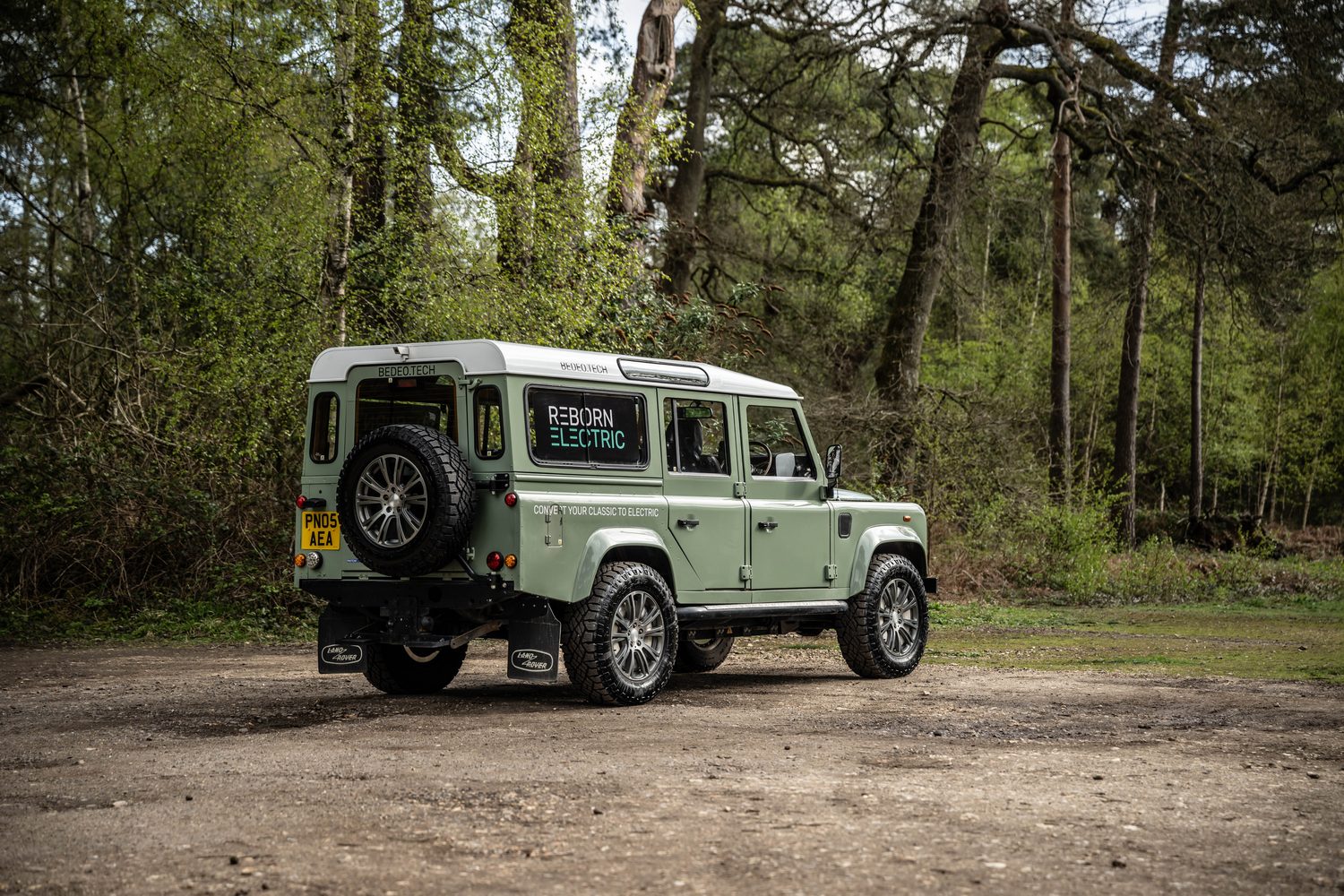
The 2005 Land Rover Defender represents a pivotal era for the iconic British utility vehicle, bridging decades of rugged military and agricultural ancestry with late-classic automotive engineering. Powered primarily by the Td5 2.5-liter five-cylinder diesel engine, this model year retains the timeless aluminum-body architecture and heavy-duty ladder-frame chassis while offering modest creature comforts and mechanical refinements that define modern classic ownership.
Introduction to the 2005 Land Rover Defender
The Land Rover Defender lineage is one of the most recognizable in automotive history, tracing its direct lineage back to the original 1948 Series I. By 2005, the vehicle had reached a mature stage of its long production run, incorporating years of evolutionary updates designed to keep it compliant with changing safety and emissions standards while preserving its legendary off-road capability.
Ambiguity regarding the "Defender" name often arises between older Series vehicles, the 2005 utility models (available in 90, 110, and 130 wheelbases), and the modern luxury-oriented L663 generation introduced in 2020. This overview focuses entirely on the classic utility Defender of the 2005 model year. For enthusiasts, collectors, and commercial operators, the 2005 model is frequently sought after because it features the later refinements of the Td5 engine era before the introduction of the Ford-sourced Duratorq TDCi engine in 2007, which altered the dashboard layout and interior packaging.
Historical Context and Lineage by 2005
By 2005, the Land Rover brand had undergone significant corporate restructuring, passing from BMW ownership to Ford under the Premier Automotive Group. Despite these corporate shifts, the Solihull manufacturing plant in the United Kingdom continued to hand-build the Defender with traditional craftsmanship methods.
The year 2005 did not introduce a radical redesign—the Defender’s appeal has always relied on architectural continuity—but it benefited from steady incremental updates. Electrical systems had transitioned to more robust multiplexed setups in previous years, and braking systems featured vacuum-assisted discs all around, occasionally paired with basic electronic traction control options on higher trim levels. Understanding this historical placement helps buyers and historians evaluate the vehicle's blend of mechanical simplicity and late-model enhancements.
Powertrain and Mechanical Specifications
At the heart of the 2005 Land Rover Defender is the Td5 engine, a powerplant developed entirely by Rover before the BMW acquisition. This 2.495-liter inline-five turbo-diesel engine utilizes unit injector technology and is managed by an Electronic Control Unit (ECU).
- Engine Type: 2.5L Td5 Inline-5 Turbo Diesel
- Power Output: Approximately 122 horsepower (91 kW) at 4,850 rpm
- Torque: 300 Nm (221 lb-ft) at 1,950 rpm
- Transmission: 5-speed manual (R380 gearbox)
- Drivetrain: Permanent four-wheel drive with a lockable center differential
The Td5 is widely regarded by enthusiasts as one of the best diesel engines fitted to the Defender, balancing mechanical tractability with sufficient low-end torque for heavy towing and technical crawling. Power is sent through the robust R380 manual transmission to a two-speed transfer box, enabling high and low ranges for varied terrain conditions.
Body Styles and Configurations
The 2005 Defender lineup was structured around three primary wheelbase designations, catering to distinct commercial, military, and recreational applications.
Defender 90
The short-wheelbase (SWB) variant, known as the 90, features a 93-inch wheelbase. It is highly maneuverable in tight spaces, making it popular for recreational off-roading and agricultural work. Body configurations for the 90 include Station Wagon, Hard Top, Soft Top, and Pick-up variants.
Defender 110
The long-wheelbase (LWB) 110 model features a 110-inch wheelbase and serves as the workhorse of the lineup. Available as a Station Wagon (seating up to nine occupants with rear jump seats), Crew Cab, Double Cab, and High Capacity Pick Up (HCPU), the 110 provides exceptional cargo capacity and load stability.
Defender 130
The extra-long wheelbase 130 model sits on a 127-inch chassis and is typically supplied as a chassis-cab or double-cab utility vehicle. It is engineered for heavy-duty commercial deployment, emergency services, and expedition vehicle conversions.
Chassis, Suspension, and Off-Road Geometry
The foundation of the 2005 Defender is a box-section ladder frame protected by hot-dip galvanizing or heavy paint coatings, though rust inspection remains a critical maintenance task for vehicles exposed to road salt or moisture.
| Specification Feature | Defender 90 | Defender 110 | Defender 130 |
|---|---|---|---|
| Wheelbase | 92.9 in (2,360 mm) | 110.0 in (2,794 mm) | 127.0 in (3,226 mm) |
| Overall Length | 160.5 in (4,077 mm) | 180.5 in (4,599 mm) | 200.8 in (5,100 mm) |
| Ground Clearance | ~8.5 in (215 mm) | ~8.5 in (215 mm) | ~8.5 in (215 mm) |
| Approach Angle | 49 degrees | 49 degrees | 49 degrees |
| Departure Angle | 35 degrees (varies by body) | 35 degrees | 35 degrees |
Suspension duties are handled by live axles front and rear, suspended by coil springs and located by leading/trailing arms and a Panhard rod. This setup provides exceptional wheel articulation and durability under heavy loads. Steering is managed by a power-assisted recirculating ball system, which requires a deliberate driving style compared to modern rack-and-pinion setups.
Interior Comfort and Practicality
By modern automotive standards, the 2005 Defender interior is utilitarian and sparse. However, for its era, late-model Defenders featured notable improvements over their predecessors, including more ergonomic dashboard layouts, improved ventilation, and optional cloth-trimmed seats.
- Seating Configurations: Ranging from basic two-seat commercial layouts to side-facing rear bench seats or forward-facing individual seats in the Station Wagon.
- Noise, Vibration, and Harshness (NVH): Cabin insulation is minimal. Engine noise from the Td5 and wind noise around the aluminum panel joints are prominent at highway speeds.
- HVAC Systems: Heating and ventilation performance was modernized compared to older Series models, though demisting large glass areas in winter requires patience.
Common Mechanical Considerations and Maintenance
Operating or acquiring a 2005 Defender requires awareness of specific mechanical tendencies associated with the Td5 engine and late-classic Land Rover architecture.
- Chassis Corrosion: While the aluminum body panels (alloy of magnesium and aluminum known as Birmabright) do not rust, the steel chassis frame is prone to internal and external corrosion, particularly around the rear crossmember and spring mounts.
- Td5 Wiring Harness: Engine oil can migrate via capillary action from the injector harness into the main ECU red plug, causing rough running or starting issues. Inspecting and replacing the injector harness is a standard preventative maintenance item.
- Clutch and Drivetrain Play: High mileage vehicles often exhibit drivetrain lash, which manifests as clunking when taking up power due to wear in the transfer box, propeller shaft splines, or differential teeth.
- Water Ingress: Due to flat glass panels, rubber door seals, and bolted-together aluminum body construction, water leaks during heavy rain are a common characteristic requiring regular seal replacements.
Frequently Asked Questions
What engine is in the 2005 Land Rover Defender?
The 2005 model is powered by the Td5 2.5-liter five-cylinder turbo-diesel engine. It combines direct injection with electronic management, producing 122 horsepower and 300 Nm of torque, paired with a five-speed manual R380 transmission.
Is the 2005 Land Rover Defender legal to import into the United States?
Under United States federal law (specifically the 25-year import rule enforced by NHTSA and CBP), foreign-market vehicles become eligible for unrestricted import once they reach 25 years of age from their exact month and year of manufacture. Therefore, 2005 models approach full federal legality starting in 2030, though some North American Specification (NAS) models or previously cleared vehicles exist under specific exemptions.
How does the 2005 model differ from the 2007 model?
The 2007 model year introduced a major refresh for the Defender, featuring the Ford-sourced 2.4-liter TDCi four-cylinder engine, a six-speed transmission, a completely redesigned dashboard with modern heating and ventilation controls, and forward-facing rear seats, replacing the Td5 engine and traditional dashboard used in 2005.
What is the towing capacity of a 2005 Defender 110?
The factory-rated towing capacity for the Defender 110 with a braked trailer is up to 3,500 kilograms (7,716 lbs) on public roads, supported by the vehicle's permanent four-wheel drive and robust chassis architecture.
How do you check for hidden chassis rust on a Defender?
Inspect the rear crossmember, outriggers, and the upper shock absorber mounts using a specialist chassis hammer or probe. Because the chassis is boxed, rust often begins internally where mud and moisture accumulate, making endoscopies or professional inspections essential before purchase.
Conclusion and Next Actions
The 2005 Land Rover Defender stands as a highly desirable bridge between vintage utility and late-model mechanical refinement. Whether evaluating one for commercial deployment, overland expeditions, or long-term collection, verifying the structural integrity of the steel chassis and checking for Td5 electrical health are the most critical initial steps. Prospective owners should review local vehicle import regulations, inspect maintenance records for evidence of preventative engine care, and prepare for a driving experience rooted in mechanical purity and timeless capability.