As of 2026, the title of the oldest living WWII veteran represents a vanishing link to global history, held by individuals who have surpassed the rare 110-year supercentenarian milestone. While John Tinniswood and the late Lawrence Brooks are the most prominent figures associated with reaching age 111, this status symbolizes the final, enduring presence of the "Greatest Generation."
The Significance of the 111-Year Milestone
Reaching the age of 111 is a monumental biological and historical feat. In the context of military history, the "oldest living" title is more than a statistic; it is a living bridge to a conflict that reshaped the modern world. By 2026, the number of World War II veterans has dwindled to a fraction of the 16 million Americans and millions more globally who served. Most surviving veterans are now aged between 98 and 105, making those who reach 111 or beyond—supercentenarians—extraordinary outliers.
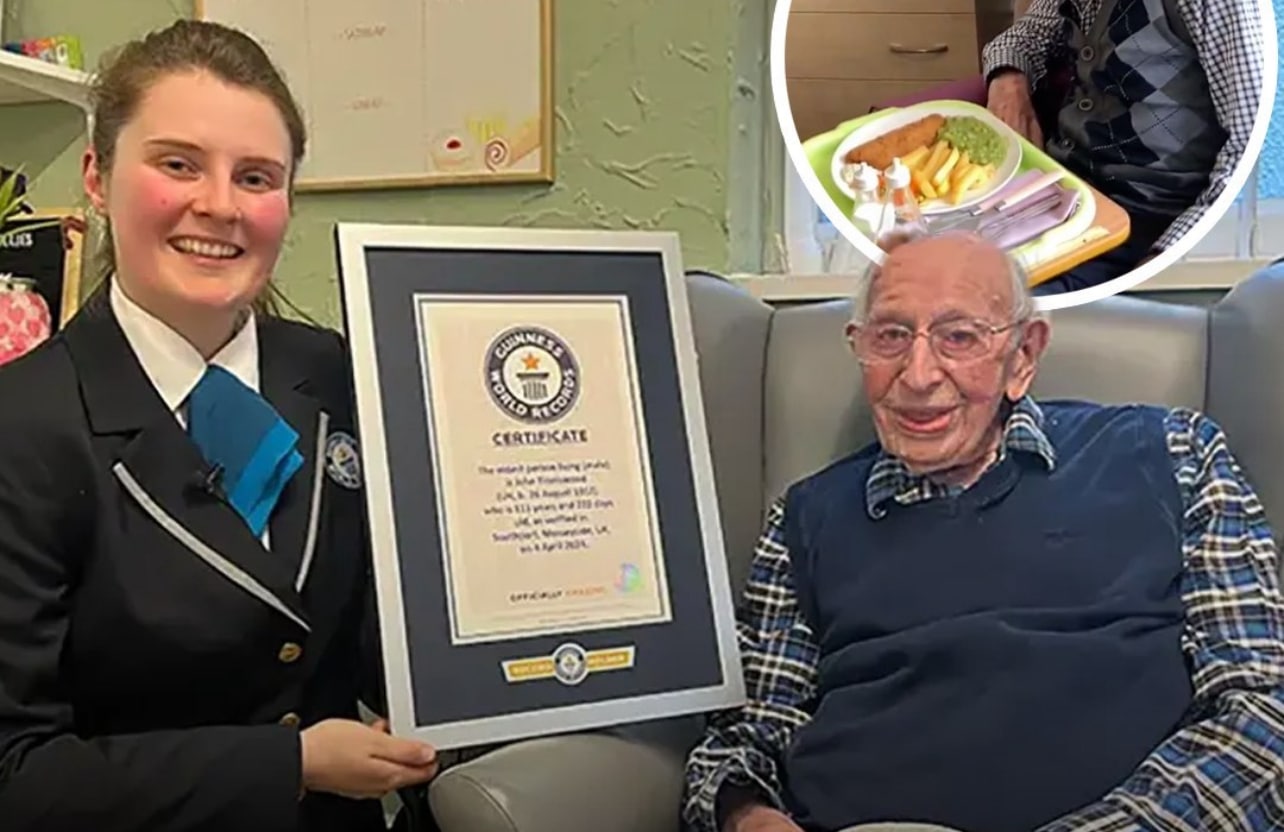
The fascination with the 111-year milestone often stems from the high-profile media coverage of veterans like Lawrence Brooks (USA) and John Tinniswood (UK). Tinniswood, in particular, gained international fame when he was officially recognized as the world's oldest living man in early 2024 at the age of 111. This age represents a point where a human being has survived not just the war itself, but also over a century of subsequent technological, social, and medical revolutions.
Profile of a Record-Breaker: John Alfred Tinniswood
John Alfred Tinniswood, born on August 26, 1912, in Liverpool, England, has become the face of longevity among World War II veterans in recent years. His life spans the sinking of the Titanic, two World Wars, and the coronation of multiple British monarchs. When he reached 111, he became the oldest living man in the world following the passing of Juan Vicente Pérez Mora of Venezuela.
Military Service in the Royal Army Pay Corps
During the Second World War, Tinniswood served in the Royal Army Pay Corps. Unlike front-line infantry, his role was administrative yet critical to the war effort. The Pay Corps was responsible for the financial administration of the British Army, ensuring that soldiers were paid and that the complex logistics of military finance were maintained across various theaters of operation.
His service also involved logistical roles, including organizing food supplies and managing accounts. This "behind-the-scenes" work was essential for maintaining troop morale and operational efficiency. Tinniswood’s perspective on the war is often characterized by a sense of duty and the pragmatic realization that every role, whether in the trenches or in the office, contributed to the final victory.
Secrets to Longevity and Lifestyle
One of the reasons Tinniswood’s story resonated globally at age 111 was his humble and moderate approach to life. He famously stated that he did not follow a specific diet, though he enjoyed a weekly tradition of eating fish and chips every Friday.
He attributes his longevity largely to moderation and luck. "If you drink too much or you eat too much or you walk too much; if you do too much of anything, you’re going to suffer eventually," Tinniswood remarked in several interviews. His cognitive sharpness at 111—manifested in his ability to manage his own finances and stay informed on current events—has made him a subject of interest for geriatric researchers worldwide.
The Legacy of Lawrence Brooks: The 111-Year-Old Icon
Before Tinniswood, the title of the oldest living U.S. World War II veteran was famously held by Lawrence Brooks, who passed away in early 2022 at the age of 111. Brooks was a beloved figure, particularly in New Orleans, where his birthdays were celebrated as major community events hosted by the National WWII Museum.
Service with the 91st Engineer Battalion
Brooks served in the 91st Engineer Battalion, a predominately African American unit, during the war. His service took him to New Guinea and the Philippines. As a soldier in a segregated military, Brooks faced the dual challenge of serving his country while dealing with the systemic racism of the Jim Crow era.
His primary duties involved acting as a support staffer for three white officers, but his experiences were often harrowing. He frequently recalled a flight in a C-47 transport plane where an engine failed over the ocean; he and his fellow soldiers had to throw cargo overboard to keep the plane airborne. His resilience during and after the war became a point of national inspiration.
A National Treasure in New Orleans
The National WWII Museum adopted Brooks as a primary ambassador for the veteran experience. Every year on his birthday, the museum would organize a "Victory Stride" flyover or a performance by the Victory Belles (a 1940s-style vocal trio). Brooks’ 111th birthday was a significant milestone, as he was one of the last remaining links to the specific experiences of Black soldiers in the Pacific Theater. His longevity allowed him to see the military and the nation evolve in ways that were unimaginable when he first donned his uniform in 1941.
The Verification Process: How "Oldest Living" Status is Confirmed
Determining who is truly the "oldest living" veteran requires rigorous evidence. Claims of extreme longevity are frequent, but many fail upon closer inspection due to a lack of documentation or errors in historical record-keeping.
The Role of the Gerontology Research Group (GRG)
The Gerontology Research Group is the primary authority tasked with verifying supercentenarians (people who reach 110 years of age). They work in tandem with Guinness World Records to ensure that birth certificates, census records, and military discharge papers align. For a veteran to be officially recognized, they must provide:
- A valid birth certificate or early-life baptismal record.
- Proof of identity (e.g., a current passport or government ID).
- Military records (e.g., the DD Form 214 in the U.S. or service records from the Ministry of Defence in the UK).
- Mid-life documentation (marriage certificates or census entries) to prove the individual is the same person named in the birth record.
Challenges in Validating Early 20th-Century Records
The main hurdle in verifying 111-year-old veterans is the inconsistency of records from the early 1900s. Many soldiers lied about their age to enlist—some claiming to be older to join the fight, others claiming to be younger. In the case of older veterans, the lack of centralized birth registries in certain rural areas of the U.S. and Europe in 1912–1915 can make verification difficult. For African American veterans like Lawrence Brooks, birth records in the segregated South were often poorly maintained, requiring researchers to dig through school records or family bibles.
The Vanishing Generation: WWII Veteran Statistics in 2026
As we progress through 2026, the "Greatest Generation" is entering its final chapter. According to projections from the U.S. Department of Veterans Affairs, the number of living WWII veterans in the United States has dropped significantly.
| Category | Estimated Number (2026) | Median Age |
|---|---|---|
| Living WWII Veterans (US) | Under 60,000 | 102 |
| Supercentenarian Veterans (110+) | Fewer than 10 | 111–113 |
| Daily Mortality Rate | ~130–150 per day | N/A |
| Last Expected Survivor (Projected) | 2032–2035 | 118–120 |
The rapid decline in numbers emphasizes the urgency of capturing oral histories. While men like John Tinniswood are celebrated for their 111+ years, the vast majority of their peers have already passed. In 2026, a veteran who was just 18 years old in 1945 is now 99 years old. Those who served at the start of the war in 1939 (if they were 18 then) would be 105 today.
Comparison of Notable Long-Lived WWII Veterans
The following table compares some of the most famous veterans who reached the 111-year milestone or beyond.
| Name | Country | Branch of Service | Highest Age Reached | Key Achievement |
|---|---|---|---|---|
| John Tinniswood | UK | Royal Army Pay Corps | 113+ (Active) | World's Oldest Living Man (2024-2026) |
| Lawrence Brooks | USA | 91st Engineer Battalion | 111 | Oldest living US veteran at time of death |
| Richard Overton | USA | 188th Aviation Engineer Batt. | 112 | Famous for lifestyle (cigars/whiskey) |
| Emma Otis | USA | (Civilian Support) | 114 | One of the oldest women with wartime ties |
| Gustav Gerneth | Germany | Wehrmacht | 114 | Oldest German man; captured in 1945 |
The Importance of Oral History and Preservation
With the number of 111-year-old veterans reaching single digits, organizations like the National WWII Museum have shifted their focus from live events to digital preservation. The "Last Mission" of these veterans is to pass on their stories to future generations.
The accounts provided by supercentenarians are unique because they offer a "triple perspective":
- The Pre-War World: They remember the Great Depression and the era before mass aviation and radio.
- The Conflict: They provide firsthand accounts of the logistics, fears, and triumphs of the 1940s.
- The Long Peace: They have lived through the Cold War, the Space Race, and the Digital Age, allowing them to contextualize the war's long-term impact on society.
Preserving these stories involves high-definition video interviews and, in some cases, "interactive AI" projects where veterans’ answers are recorded to allow future museum-goers to "ask" them questions. At age 111, the clarity of these veterans is a gift to historians seeking to understand the human element of military service.
FAQ: Frequently Asked Questions
Who is currently the oldest living WWII veteran in 2026?
As of early 2026, John Tinniswood of the United Kingdom remains one of the oldest verified living veterans, having surpassed 113 years of age. However, the "oldest living" status can shift frequently among several supercentenarians globally. Verification is ongoing through the Gerontology Research Group.
How many WWII veterans are still alive in the United States?
Estimates for 2026 suggest there are fewer than 60,000 living WWII veterans in the U.S. This is a significant decrease from the roughly 119,000 who were alive in 2023. The Department of Veterans Affairs updates these statistics annually based on census and benefits data.
Did any 111-year-old veterans see combat?
While many supercentenarian veterans served in support, logistical, or engineering roles—which arguably contributed to their survival—some did experience direct combat or were stationed in high-risk zones. Richard Overton (who lived to 112) served in the Pacific and was present at Pearl Harbor and Okinawa.
What is the secret to living to 111 as a veteran?
There is no single secret, but common themes among long-lived veterans include moderate habits, strong social or community ties (often through veteran organizations), and a sense of purpose. Genetics also plays a massive role, as supercentenarians often have specific biological markers that protect them against age-related diseases.
Why is 111 considered such a significant age?
In the world of longevity, 110 is the threshold for becoming a "supercentenarian," a status achieved by only 1 in 1,000 centenarians. Reaching 111 is seen as a milestone of continued vitality and is often when Guinness World Records officially recognizes individuals as "Oldest Living" in their respective categories.
Summary of Actionable Steps for Honoring Veterans
To ensure the legacy of the final 111-year-old veterans and their peers is not lost, consider the following actions:
- Support Local Oral History Projects: Volunteer to record the stories of veterans in your community before they pass.
- Donate to Veteran Museums: Support institutions like the National WWII Museum or the Imperial War Museum, which maintain the archives of these individuals.
- Verify Information: When reading about "oldest living" claims, check the Gerontology Research Group or Guinness World Records to ensure the ages are historically verified.
- Engage with Living History: If you are fortunate enough to know a centenarian veteran, take the time to listen. Their perspective on 111 years of change is an irreplaceable educational resource.