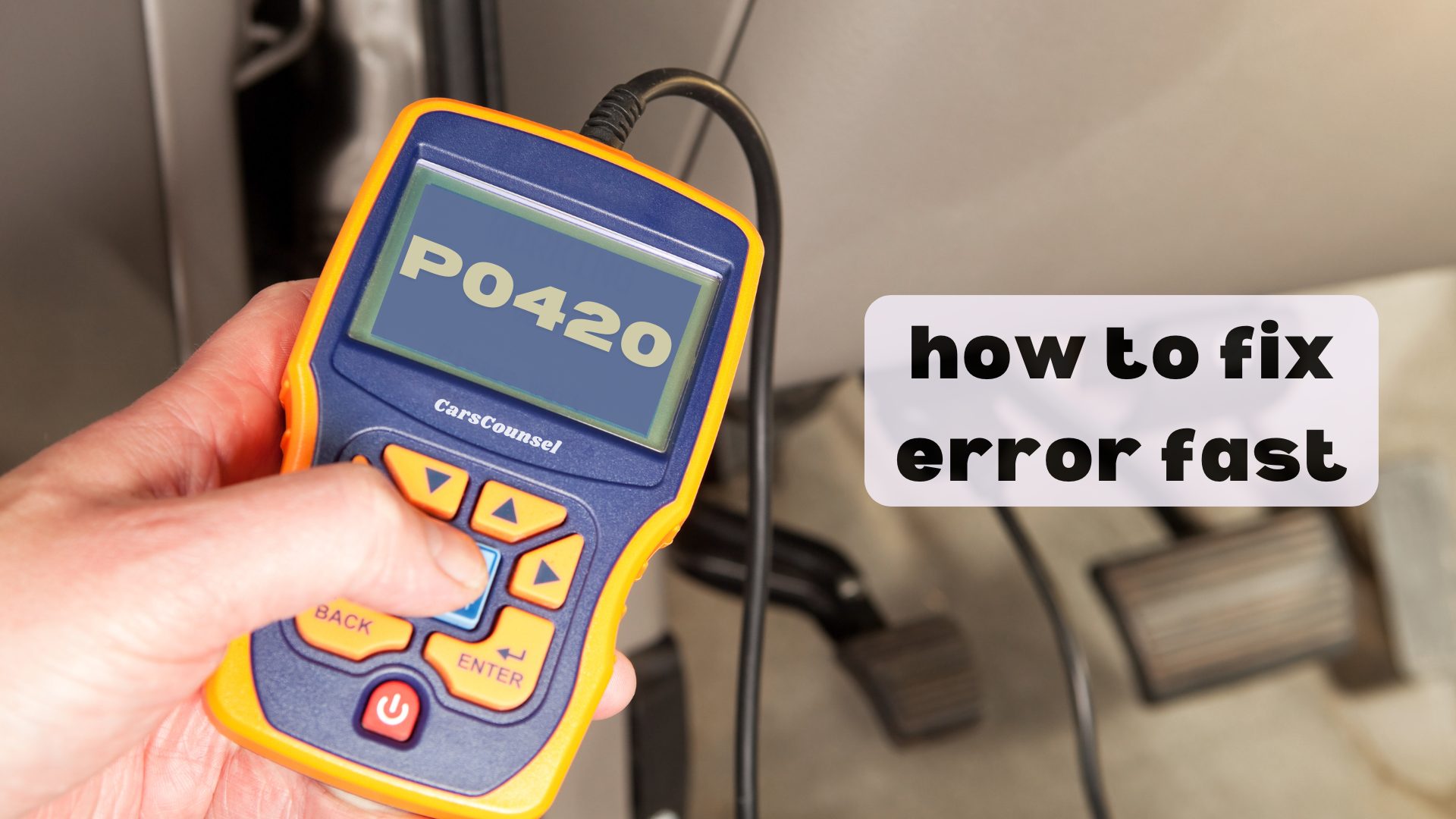
The P0420 code in a Subaru indicates that the catalytic converter's efficiency has fallen below the efficiency threshold set by the engine control module, usually pointing to a degraded catalytic converter, an exhausted oxygen sensor, or an exhaust leak. Resolving it requires methodical diagnostic testing to avoid replacing expensive parts unnecessarily.
Introduction to the Subaru P0420 Diagnostic Trouble Code
Few check engine lights evoke as much anxiety for Subaru owners as the dreaded P0420 diagnostic trouble code (DTC). Defined generically across the automotive industry as "Catalyst System Efficiency Below Threshold (Bank 1)," this code is notoriously common on Subaru models manufactured from the late 1990s through modern iterations. When your Subaru's dashboard lights up—often accompanied by a flashing Cruise Control light and a disabled Traction Control system—it means the car's computer has detected an issue with how effectively your exhaust system is reducing harmful emissions.
Understanding this code requires looking past the generic definition and examining how Subaru’s engine management systems monitor emissions. Subaru uses precise algorithms comparing data from upstream and downstream oxygen sensors. When the correlation between these sensors falls out of acceptable parameters, the powertrain control module (PCM) triggers the P0420 code.
While the immediate reaction for many drivers is to assume the catalytic converter has completely failed, a P0420 code is actually a symptom of several possible root causes. Throwing a brand-new catalytic converter at the problem without proper diagnosis can lead to wasted money, as the underlying issue might simply be a loose exhaust flange gasket, a failing air-fuel ratio sensor, or a tiny crack in an exhaust header. This guide breaks down the technical mechanisms behind the code, outlines systematic troubleshooting steps, evaluates repair costs, and helps you determine the best path forward for your specific Subaru vehicle.
The Technical Anatomy of the P0420 Code
To understand why your Subaru has stored a P0420 code, you must first understand how modern exhaust monitoring works. Every Subaru equipped with OBD-II (On-Board Diagnostics, Generation II) utilizes at least two oxygen sensors per cylinder bank:
- Upstream Sensor (Air-Fuel Ratio or Oxygen Sensor): Located before the catalytic converter, this sensor measures the amount of oxygen in the exhaust gases immediately as they leave the combustion chambers. The PCM uses this data to adjust fuel delivery in real-time, maintaining an ideal stoichiometric air-fuel ratio (approximately 14.7:1 for gasoline engines).
- Downstream Sensor (Oxygen Sensor): Located after the catalytic converter, this sensor monitors the oxygen content after the exhaust has passed through the catalyst material.
The catalytic converter's primary job is to chemically reduce toxic pollutants—such as carbon monoxide (CO), unburned hydrocarbons (HC), and nitrogen oxides (NOx)—into harmless byproducts like carbon dioxide, nitrogen, and water vapor. This chemical reduction process consumes oxygen stored within the catalyst substrate.
Under normal operating conditions, when the catalytic converter is functioning efficiently, the upstream sensor's voltage signal will fluctuate rapidly as the computer cycles the air-fuel mixture rich and lean. Meanwhile, the downstream sensor's voltage signal should remain relatively stable and flat because the catalyst absorbs the oxygen fluctuations.
When the catalytic converter degrades, loses its precious metal coating (platinum, palladium, and rhodium), or becomes contaminated, it can no longer store oxygen effectively. As a result, the downstream oxygen sensor begins to mimic the rapid fluctuations of the upstream sensor. Once the PCM detects that the waveform of the downstream sensor matches the upstream sensor too closely over a specific drive cycle, it flags the system as inefficient and stores the P0420 code in its memory.
Common Symptoms Accompanying a Subaru P0420 Code
Unlike a misfire code (such as P0301 through P0304) or an evaporative emissions leak code, a P0420 code rarely causes severe drivability issues in its early stages. Because the code relates strictly to emissions efficiency rather than engine timing or fuel delivery, your car may drive completely normally. However, Subaru vehicles are uniquely programmed to disable certain driver-aid systems when a powertrain diagnostic trouble code is present.
Typical Dashboard and Operational Indicators
- Illuminated Check Engine Light: The primary and most obvious indicator.
- Flashing Cruise Control Light: Subaru vehicles famously flash the cruise control indicator light when a check engine light is active, serving as a secondary warning to prompt driver attention.
- Disabled Traction Control (VDC): Many Subaru models automatically disable Vehicle Dynamics Control (VDC) and traction control systems when an emissions code is logged.
- Sulfur Smell ("Rotten Eggs"): If the catalytic converter is actively breaking down or melting internally, you may notice a distinct sulfur odor coming from the exhaust, particularly after hard acceleration.
- Sluggish Acceleration or Reduced Fuel Economy: If the cause of the P0420 code is a restricted or clogged catalytic converter restricting exhaust flow, you may experience a noticeable lack of power at highway speeds and reduced fuel efficiency.
Primary Root Causes of the P0420 Code in Subarus
Subaru engines—particularly the naturally aspirated and turbocharged EJ-series and FB-series boxer engines—have specific mechanical tendencies that make them prone to triggering the P0420 code. Identifying the exact root cause requires ruling out peripheral components before condemning the catalytic converter itself.
| Component | Contribution to P0420 |
|---|---|
| Catalytic Converter | Physical degradation, thermal shock, oil contamination from internal engine wear. |
| Oxygen / A/F Sensors | Sluggish response, skewed voltage output, or contaminated sensor tip. |
| Exhaust Leaks | Ambient air drawn into the exhaust stream tricks downstream sensor into reading lean. |
| Engine Misfires | Unburned fuel entering the hot catalyst causes localized overheating and melting. |
| Excessive Oil Consumption | Burning oil coats the catalyst substrate with carbon and ash, blocking chemical sites. |
1. Catalytic Converter Degradation
Over years of thermal expansion, contraction, and exposure to combustion byproducts, the internal ceramic honeycomb structure of the catalytic converter wears out. The washcoat containing precious metals loses its chemical reactivity. Furthermore, older Subaru engines known for consuming oil can coat the catalyst substrate in a layer of carbon ash, permanently insulating it from the exhaust gases.
2. Exhaust Leaks Before or Near the Catalytic Converter
Exhaust leaks are a notorious culprit on Subaru vehicles, particularly at the exhaust manifold gaskets, flexible pipe sections, and slip-joints. If a microscopic crack develops in the header or a gasket fails before or between the oxygen sensors, ambient air will be sucked into the exhaust stream due to the Venturi effect. The downstream oxygen sensor will detect this unmetered oxygen, register a lean condition, and falsely report that the catalytic converter is failing.
3. Faulty or Sluggish Oxygen / Air-Fuel Ratio Sensors
Oxygen sensors degrade over time. If the downstream oxygen sensor becomes "lazy"—meaning its response time slows down—it will fail to report accurate oxygen fluctuations to the PCM. Similarly, if an upstream air-fuel ratio sensor drifts out of calibration, it forces the computer to manage fuel incorrectly, creating conditions that mimic catalyst inefficiency.
4. Ignored Engine Misfires and Ignition Issues
If your Subaru has experienced intermittent misfires (codes P0301, P0302, etc.) due to worn spark plugs, failing ignition coils, or faulty spark plug wires, unburned fuel enters the exhaust system. When this raw fuel hits the extremely hot catalytic converter, it ignites inside the catalyst housing. This thermal overload melts or fractures the internal ceramic matrix, permanently destroying the converter.
Step-by-Step Diagnostic Procedure for DIYers and Technicians
Before spending hundreds or thousands of dollars on replacement exhaust components, you should follow a logical diagnostic workflow to confirm the exact source of the failure.
Step 1: Scan and Freeze Frame Data
Connect an OBD-II scanner capable of reading live data and freeze-frame information. Note the engine RPM, coolant temperature, vehicle speed, and fuel trim values at the exact moment the P0420 code was triggered. This data tells you whether the code set under heavy load, idle, or steady-state cruising. Clear the code and perform a test drive to see how quickly it returns.
Step 2: Inspect the Entire Exhaust System for Leaks
Raise the vehicle safely on jack stands or a lift. Visually and physically inspect every inch of the exhaust system from the cylinder heads back to the catalytic converter.
- Look for black soot trails around exhaust manifold flanges, gaskets, and slip-joints.
- Check the flexible mesh pipe sections for cracks or fraying.
- Listen for a ticking or puffing sound while the engine is cold and idling.
Step 3: Monitor Live Sensor Data with a Scan Tool
Using a live-data OBD-II scanner, graph the outputs of Bank 1 Sensor 1 (upstream) and Bank 1 Sensor 2 (downstream) while the engine is fully warmed up and running at a steady 2,500 RPM.
- Normal Behavior: Sensor 1 should fluctuate rapidly between 0.1V and 0.9V. Sensor 2 should trace a relatively flat line hovering around 0.45V to 0.6V.
- P0420 Indication: If Sensor 2 mirrors the sharp, jagged oscillations of Sensor 1, the catalytic converter is failing to store oxygen, confirming a true P0420 condition (provided no exhaust leaks exist).
Step 4: Check for Exhaust Backpressure
If you suspect a clogged or melted catalytic converter is choking the engine, perform a backpressure test. Remove the upstream oxygen sensor and install a mechanical pressure gauge in its place. At idle, backpressure should not exceed 1.25 psi; at 2,500 RPM, it should generally remain under 3 psi. Higher readings indicate a restricted exhaust path.
Repair Options, Solutions, and Associated Costs
Once you have isolated the root cause of the P0420 code, you must choose an appropriate repair path. The table below outlines common solutions, expected repair complexities, and estimated financial outlays.
| Repair Action | Root Cause Addressed | DIY Feasibility | Estimated Cost (Parts & Labor) |
|---|---|---|---|
| Replace Exhaust Gaskets / Seal Cracks | Exhaust leak before/around catalyst | Moderate | $150 – $400 |
| Replace Downstream Oxygen Sensor | Lazy or failing O2 sensor | High | $100 – $250 |
| Replace Upstream Air-Fuel Ratio Sensor | Skewed fuel management data | High | $150 – $350 |
| Replace Catalytic Converter (OEM) | Failed catalyst substrate | Moderate to Low | $1,200 – $2,500+ |
| Replace Catalytic Converter (Aftermarket) | Failed catalyst substrate | Moderate to Low | $450 – $900 |
Important Considerations for Aftermarket Catalytic Converters
If you opt to replace the catalytic converter, exercise caution when selecting aftermarket units, particularly if you live in a state with strict emissions standards (such as California, New York, or Maine that enforce CARB compliance).
- Federal (EPA) Converters: Generally cheaper, but often constructed with lower precious metal loading. Many Subaru owners report that cheap universal aftermarket converters fail to clear the P0420 code permanently, triggering the check engine light to return within a few thousand miles.
- CARB-Compliant Converters: Engineered to meet California Air Resources Board standards. They contain higher concentrations of precious metals and are built specifically to satisfy sensitive Subaru OBD-II algorithms, but they carry a significantly higher price tag.
Frequently Asked Questions About the Subaru P0420 Code
Can I keep driving my Subaru with a P0420 code?
Yes, in most cases, you can continue driving for a short period because the code relates to emissions efficiency rather than mechanical engine failure. However, you should check to ensure the code is not caused by a clogged converter (which can cause severe power loss and engine damage) or an active misfire. Keep in mind that your cruise control and traction control may remain disabled, and your vehicle will fail state emissions inspections.
Will fuel additives or "catalytic converter cleaner" fix a P0420 code?
Commercial fuel additives marketed as catalytic converter cleaners claim to clean carbon deposits off the catalyst substrate. While these products may help clear minor chemical contamination if the catalyst is only mildly fouled, they cannot repair physical damage, melted ceramic matrices, or severe structural degradation. They should be viewed as a low-cost preventative maintenance attempt rather than a guaranteed mechanical fix.
Why does my Subaru keep throwing a P0420 code even after replacing the catalytic converter?
If a new catalytic converter was installed and the P0420 code returns, the root cause was likely misdiagnosed. Common reasons include using a low-quality aftermarket converter that does not satisfy Subaru's strict computer thresholds, an unresolved exhaust leak near the flanges, a contaminated oxygen sensor, or an underlying engine issue (such as oil consumption or a weak ignition coil) that rapidly re-contaminated the new catalyst.
Is the P0420 code covered under factory warranty?
Under federal emissions regulations in the United States, major emissions control components—including the catalytic converter and engine control module—are mandated to be covered under the Federal Emissions Defect and Performance Warranty for 8 years or 80,000 miles (whichever comes first) on most passenger vehicles. If your Subaru falls within this window, check with your local dealership to see if the repair is fully covered.
Practical Recommendations and Next Actions
Dealing with a P0420 code on a Subaru requires patience and methodical troubleshooting rather than guesswork.
- Verify the diagnosis first: Before ordering a costly catalytic converter, inspect every inch of your exhaust system for leaks and check live sensor data with an OBD-II scanner.
- Address underlying problems: If your Subaru consumes oil or has a history of misfires, resolve those issues first. Installing a new converter on an engine that burns a quart of oil every 1,000 miles will result in a repeat failure.
- Choose quality parts: If replacement is unavoidable, invest in high-quality OEM or CARB-compliant aftermarket components to ensure the engine management computer accepts the new efficiency readings.