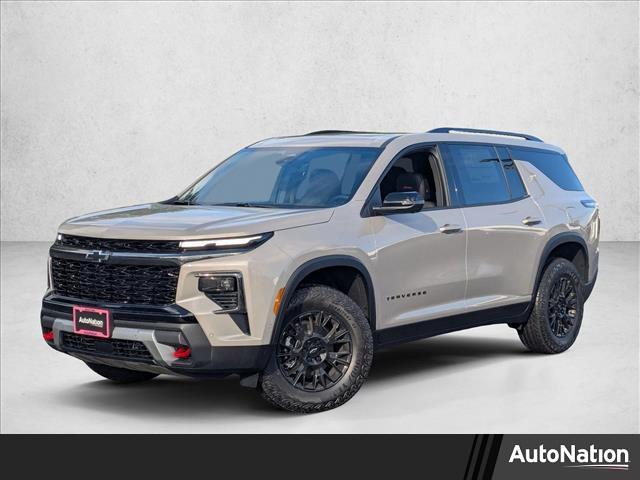
The Chevrolet Traverse utilizes an advanced All-Wheel Drive (AWD) system designed to balance fuel efficiency with multi-surface traction. Unlike traditional truck-based 4WD systems, the Traverse uses a front-biased, electronically controlled system that can disconnect the rear axle for economy or engage it instantly when sensors detect wheel slip or high-demand driving conditions.
For over a decade, the Chevrolet Traverse has served as a cornerstone of the American mid-size SUV market. As we look at the 2026 models and the generations preceding them, the "4-wheel drive" capability—technically an All-Wheel Drive (AWD) configuration—has evolved from a simple slip-and-grip mechanism into a sophisticated, driver-selectable suite of technologies. Understanding how this system functions is critical for owners navigating winter climates, towing trailers, or considering the off-road-oriented Z71 trims.
Defining the Traverse AWD vs. Traditional 4WD
To provide a thorough overview, we must first resolve a common terminology overlap. While many consumers use the terms interchangeably, the Chevrolet Traverse technically employs All-Wheel Drive (AWD) rather than a traditional 4-Wheel Drive (4WD) system found on the Chevrolet Tahoe or Silverado.
A traditional 4WD system usually includes a two-speed transfer case with a "Low Range" gear set for extreme rock crawling and heavy-duty off-roading. In contrast, the Traverse uses a transverse-mounted engine and a Power Transfer Unit (PTU) to send torque to the rear wheels. This setup is lighter, more fuel-efficient, and better suited for the unibody construction of a crossover. In the 2026 lineup, this system is more capable than ever, featuring torque-vectoring capabilities in higher trims that mimic some of the benefits of traditional locking differentials.
Mechanical Components of the Traverse AWD System
The magic of the Traverse's traction lies in three primary mechanical components that work in tandem with the vehicle's StabiliTrak electronic stability control.
The Power Transfer Unit (PTU)
Located at the front of the vehicle, the PTU is bolted directly to the transmission. Its job is to take a portion of the rotational energy from the front transaxle and redirect it 90 degrees toward the rear of the vehicle. In modern Traverse models, the PTU features a disconnect feature that allows the driveshaft to stop spinning when AWD is not needed, significantly reducing mechanical drag and improving highway MPG.
The Propshaft (Driveshaft)
This is the physical link between the front and rear of the car. In the Traverse, it is a multi-piece design designed to minimize vibrations and improve cabin quietness. In "2WD Mode," this shaft may remain stationary or spin freely depending on the specific model year's configuration.
The Rear Drive Module (RDM)
The RDM sits between the rear wheels. In standard AWD models, it contains a single clutch pack that engages to distribute power to the rear wheels. In the more advanced Twin-Clutch AWD system (found on Z71 and certain Premier/High Country trims), the RDM features two clutches. This allows the vehicle to send up to 100% of available rear torque to either the left or right wheel independently, a process known as torque vectoring.
Generational Evolution of Traction
To understand the 2026 Chevrolet Traverse AWD system, one must look at how the technology has matured through three distinct iterations.
First Generation (2009–2017)
The original Traverse used a "full-time" automatic AWD system. There were no buttons for the driver to press; the computer monitored wheel speed 100 times per second. If the front wheels lost grip, an electromagnetic clutch in the rear would engage. It was effective but lacked the driver agency found in newer models.
Second Generation (2018–2023)
This generation introduced the Driver Mode Selector. For the first time, Traverse owners could physically disconnect the rear axle by selecting "2WD" on a center console dial. This was a response to rising fuel prices, as it allowed the vehicle to operate as a pure front-wheel-drive SUV when roads were dry. This generation also saw the introduction of the first twin-clutch systems in the High Country trim, providing superior handling in wet corners.
Third Generation (2024–2026)
The current 2026 models represent the peak of this evolution. With the introduction of the Z71 trim, the Traverse moved closer to "true" 4WD capability. The Z71 features a specialized off-road AWD system with unique dampers, a higher ground clearance, and a terrain-specific calibration that allows for more aggressive wheel spin to help "dig" out of mud or sand.
Traction Mode Select: How to Use the System
The modern Traverse (including 2026 models) provides a dial on the center console that allows the driver to tailor the AWD performance to specific environments.
- 2WD Mode: Disconnects the rear wheels. This is the default mode for dry pavement and long highway trips to maximize fuel economy.
- AWD Mode (Automatic): The system monitors all four wheels. If it detects a slip, it engages the rear axle automatically. It is the "set it and forget it" mode for rainy or unpredictable weather.
- Snow/Ice Mode: This mode adjusts the throttle map and transmission shift points. It encourages the car to start in a higher gear (where possible) to prevent wheel spin on slick surfaces.
- Off-Road Mode: Found on AWD-equipped models, this mode modifies the Anti-lock Braking System (ABS) and Traction Control. It allows the AWD system to stay "primed" with more torque sent to the rear wheels even before a slip occurs.
- Tow/Haul Mode: When a trailer is detected or selected, the AWD system remains engaged more frequently to provide better stability and prevents the "hunting" sensation of the transmission on inclines.
The Z71 Twin-Clutch Advantage
The most robust version of the Traverse 4-wheel drive overview involves the Z71's twin-clutch system. Most AWD vehicles use a differential that sends power to the wheel with the least resistance—which is exactly what you don't want when one wheel is in the air or on ice.
The Twin-Clutch RDM uses one clutch for each rear axle. If the rear-left wheel is on ice and the rear-right wheel is on dry pavement, the system can fully open the left clutch and fully close the right clutch. This sends all the power to the wheel with grip. This level of mechanical intervention is what makes the 2026 Traverse Z71 a legitimate contender for light-to-moderate trail work and heavy snow.
Comparative Specifications Across Trims
| Feature | LS / LT (AWD Optional) | Z71 (AWD Standard) | RS / High Country (AWD Optional) |
|---|---|---|---|
| AWD Type | Single-Clutch Intelligent AWD | Twin-Clutch Off-Road AWD | Twin-Clutch Performance AWD |
| Default Drive | Front-Wheel Drive (2WD Mode) | All-Wheel Drive (Selectable) | All-Wheel Drive (Selectable) |
| Max Towing | Up to 5,000 lbs | Up to 5,000 lbs | Up to 5,000 lbs |
| Terrain Mode | Standard Snow/Ice | Enhanced Off-Road/Terrain | Sport/Performance Calibrated |
| Ground Clearance | ~7.5 Inches | ~8.3 Inches (Approx.) | ~7.5 Inches |
Maintenance and Longevity of the AWD System
Owning an AWD Traverse requires more maintenance than the FWD version. The additional moving parts require fluid changes and specific tire care to ensure the system does not overheat or fail prematurely.
Tire Uniformity
The AWD system relies on sensors reading the rotational speed of each tire. If you have three worn tires and one brand-new tire, the new tire will have a slightly larger circumference. The computer may interpret this difference as wheel slip, causing the AWD system to engage unnecessarily on dry pavement. This leads to heat buildup in the PTU. Always replace Traverse AWD tires in sets of four or ensure the tread depth difference is within 2/32nds of an inch.
PTU and RDM Fluid Service
Chevrolet often lists PTU fluid as "fill-for-life" under normal driving conditions, but most master technicians recommend changing the fluid every 45,000 to 60,000 miles, especially if you tow frequently. The PTU sits near the exhaust manifold and can get quite hot, causing the gear oil to break down. If you hear a "whirring" or "moaning" sound from the front floorboard area, it is often a sign of old or low PTU fluid.
Software Updates
In the 2026 model year, the AWD system is heavily reliant on the Transmission Control Module (TCM). Dealerships occasionally release "calibrations" or software updates that improve how quickly the clutches engage or how the system reacts to cold temperatures.
Common Troubleshooting Points
While the Traverse AWD system is generally reliable, there are a few known issues that owners should monitor:
- AWD Off Message: This dashboard message usually appears if the system detects the PTU is overheating (often from prolonged wheel spin in deep mud) or if a wheel speed sensor has failed.
- Rear Axle Shudder: If the vehicle vibrates during tight turns at low speeds, it may indicate that the clutch packs in the RDM are not releasing properly. This is frequently solved by a specific fluid flush and additive.
- Propeller Shaft Vibration: A damaged center support bearing on the driveshaft can cause a rhythmic thumping or vibration under acceleration.
FAQs About Chevrolet Traverse AWD
Does the Chevrolet Traverse have "True" 4WD?
No, the Traverse uses an All-Wheel Drive (AWD) system. It does not have a low-range transfer case or manual locking hubs. However, the Z71 trim’s twin-clutch system provides traction capabilities that rival many traditional 4WD systems in snowy and muddy conditions.
Can I drive the Traverse in 2WD mode all winter?
While you can, it is not recommended. 2WD mode saves a small amount of fuel (roughly 1–2 MPG), but it leaves you vulnerable to sudden patches of ice. In winter, it is safer to keep the vehicle in "AWD" or "Snow" mode, which allows the computer to react to slip in milliseconds.
Does AWD affect the towing capacity of the Traverse?
Yes, but positively. While both FWD and AWD models can be rated for up to 5,000 lbs when properly equipped with the V92 trailering package, the AWD system provides much better stability when pulling a boat up a slippery ramp or maintaining control during crosswinds on the highway.
Is the AWD system always "on"?
In the 2026 Traverse, the system is only "on" if the driver selects AWD mode or a terrain mode. If the selector is set to 2WD, the rear axle is mechanically disconnected to save fuel, and the car will behave like a standard front-wheel-drive vehicle even if the wheels slip.
How much ground clearance does the AWD Traverse have?
Standard AWD models have roughly 7.5 inches of ground clearance. The Z71 trim, which is specifically designed for more rugged use, increases this to over 8 inches, featuring a redesigned front fascia that improves the "approach angle" for obstacles.
Final Recommendations for Buyers and Owners
If you are considering a Chevrolet Traverse in 2026, the AWD system is a highly recommended upgrade for anyone living north of the Sun Belt. For the average family, the Standard Intelligent AWD on the LT or RS trims provides more than enough security for rain, slush, and gravel roads.
However, if your lifestyle involves frequent trips to trailheads, beach driving, or navigating unplowed rural roads, the Z71 All-Wheel Drive system is the superior choice. Its twin-clutch rear drive module is a significant mechanical upgrade that offers genuine torque vectoring, making the vehicle feel more planted in corners and more capable in the "rough stuff." Regardless of the trim, remember that the AWD system is only as good as the tires it is connected to; equipping your Traverse with high-quality all-weather or winter tires remains the best way to maximize the engineering built into the Chevrolet AWD drivetrain.