On a State Farm auto policy, a "$10k rider" most commonly refers to the Death, Dismemberment, and Loss of Sight (DDL) endorsement or a specific $10,000 limit for Medical Payments (MedPay) or Personal Injury Protection (PIP). These riders provide a fixed financial benefit for severe injuries or accidental death resulting from a motor vehicle accident, regardless of who is at fault.
The term "rider" is frequently used by policyholders to describe what insurance professionals call an endorsement. In the context of State Farm, these $10,000 additions are designed to bridge the gap between standard liability coverage and the immediate financial needs that arise following a catastrophic accident. As of 2026, these riders remain a popular and cost-effective way to add an extra layer of personal security to a standard personal auto policy (PAP).
The Death, Dismemberment, and Loss of Sight (DDL) Rider
The most specific "10k rider" offered by State Farm is the Death, Dismemberment, and Loss of Sight coverage. This is a form of accidental death and dismemberment (AD&D) insurance that is tethered directly to your automobile policy. Unlike standard liability insurance, which pays others for damage you cause, or collision insurance, which pays for your car, the DDL rider is strictly for the "human element" of the policy.
How the $10,000 Benefit Works
The $10,000 figure represents the "principal sum." If an insured person—which usually includes the named insured, their spouse, and resident relatives—sustains injuries in a car accident that lead to death or specific permanent losses, State Farm pays out a percentage of that $10,000.
In 2026, the schedule of benefits typically follows this structure:
- Death: 100% of the principal sum ($10,000).
- Loss of two limbs: 100% of the principal sum ($10,000).
- Loss of sight in both eyes: 100% of the principal sum ($10,000).
- Loss of one limb or sight in one eye: Usually 50% of the principal sum ($5,000).
Why Policyholders Choose the DDL Rider
The primary advantage of this rider is its no-fault nature. You do not have to prove that another driver was negligent to collect this benefit. Furthermore, the payout is generally made in a lump sum, which can be used for any purpose—funeral expenses, medical debt, or replacing lost income. It serves as a micro-life insurance policy that is specifically activated by vehicular accidents, which are a leading cause of accidental death and permanent disability in the United States.
The $10,000 Medical Payments (MedPay) Endorsement
Another common interpretation of a "$10k rider" is the selection of a $10,000 limit for Medical Payments coverage. While many drivers opt for lower limits like $1,000 or $5,000, the $10,000 tier is a common recommendation from State Farm agents to handle rising deductibles in primary health insurance plans.
Coverage Scope
MedPay covers "reasonable and necessary" medical and funeral expenses for the insured and their passengers. This coverage follows you even if you are a pedestrian or a passenger in someone else’s vehicle. In 2026, with the continued escalation of emergency room costs, a $10,000 MedPay rider acts as a critical first-dollar coverage.
It is important to note that MedPay is secondary to Personal Injury Protection (PIP) in "no-fault" states but can be primary in "tort" states. If you have a high-deductible health insurance plan, the $10,000 MedPay rider can be used to pay your health insurance deductible and co-pays, effectively ensuring you have $0 out-of-pocket costs for the first $10,000 of treatment.
Exclusions and Limitations
State Farm’s MedPay rider typically excludes injuries sustained while using a vehicle for business (like delivery services or rideshare) unless a specific business endorsement is present. It also excludes injuries sustained while occupying a vehicle with fewer than four wheels (motorcycles) unless otherwise specified in a separate policy.
$10,000 Personal Injury Protection (PIP) in "No-Fault" States
In several states, such as Florida, a $10,000 PIP limit is not just a "rider" or an option; it is a legal requirement. In these jurisdictions, the "$10k rider" refers to the mandatory coverage that pays for medical bills, lost wages, and death benefits.
The $10,000 Threshold
In 2026, PIP remains the primary source of recovery for minor to moderate injuries in no-fault states. The $10,000 limit is often split:
- Medical Benefits: Usually pays 80% of medical bills up to the limit.
- Disability Benefits: Usually pays 60% of lost wages.
- Death Benefits: A flat payout (often $5,000 of the $10,000 total) to the estate.
If you are a State Farm customer in a state like Florida or New Jersey, the $10,000 PIP endorsement is the foundation of your policy. Understanding how this interacts with your 10k DDL rider is vital, as you may be eligible to collect from both if a catastrophic event occurs.
Comparing $10,000 Auto Insurance Endorsements
To help you distinguish between these options, the following table compares the three most common $10,000 "riders" found on a State Farm auto policy in 2026.
| Feature | Death, Dismemberment & Sight (DDL) | Medical Payments (MedPay) | Personal Injury Protection (PIP) |
|---|---|---|---|
| Primary Purpose | Lump sum for life-altering injury/death | Payment for medical/funeral bills | Comprehensive "No-Fault" medical/wages |
| Trigger | Specific permanent loss or death | Any medical expense from auto accident | Medical or wage loss from auto accident |
| Payment Type | Fixed Lump Sum | Reimbursement/Direct to Provider | Percentage of Loss/Direct to Provider |
| Fault Required? | No | No | No |
| Who is Covered? | Insured and Resident Relatives | Insured and all Passengers | Insured and Resident Relatives |
| 2026 Availability | Optional Endorsement | Optional (most states) | Mandatory (in No-Fault states) |
The Cost of Adding a $10k Rider in 2026
The cost of these riders is remarkably low compared to the potential payout. State Farm’s pricing for endorsements is based on the risk profile of the primary driver and the location of the vehicle.
- DDL Rider: Typically costs between $5 and $15 per year. Because the payout is only triggered by very specific, high-severity events, the actuarial risk is low, making it one of the cheapest additions to an auto policy.
- $10k MedPay: Depending on your state and driving record, this usually ranges from $30 to $80 per year. The price is higher than DDL because it is much more likely to be used for minor injuries like whiplash or ER visits.
- $10k PIP: Pricing for PIP is highly regulated by state laws. In 2026, premiums for $10,000 in PIP coverage can vary significantly, ranging from $100 to $500+ per year in high-litigation states.
Why "10k" is a Strategic Number for Coverage
In the 2026 insurance market, $10,000 has become a "sweet spot" for many consumers. It is large enough to cover most high-deductible health plans and provides a meaningful financial cushion for a family in the event of a death, yet it is small enough that the premiums do not significantly impact the monthly insurance bill.
For many State Farm customers, the 10k DDL rider serves as a "final expense" fund. If the worst should happen, a $10,000 check can be issued relatively quickly—often faster than a standard life insurance policy claim, which may require more extensive investigation. This liquidity is essential during the immediate weeks following a fatal accident.
Common Mistakes and Troubleshooting
When dealing with a $10,000 rider on your State Farm policy, there are several common pitfalls to avoid:
- Confusing MedPay with DDL: Do not assume that having $10,000 in MedPay means you have a $10,000 death benefit. MedPay pays for the cost of the funeral; DDL pays a benefit to the beneficiary regardless of the cost.
- Assuming Coverage for Work: As mentioned previously, if you are using your car for a delivery app (e.g., DoorDash, Uber Eats) in 2026, these riders may be void during the "on-the-clock" period unless you have a specialized commercial or rideshare endorsement.
- Beneficiary Updates: For the DDL rider, the payment usually goes to the surviving spouse or the estate. Ensure your policy information accurately reflects your current family status to avoid probate delays.
- Neglecting the "Stacking" Rules: In some states, you can "stack" coverage if you have multiple vehicles. If you have two cars with a $10k DDL rider, you might expect a $20,000 payout, but State Farm policies generally include "anti-stacking" language for these specific riders. Always verify with your agent.
How to Verify Your 10k Rider
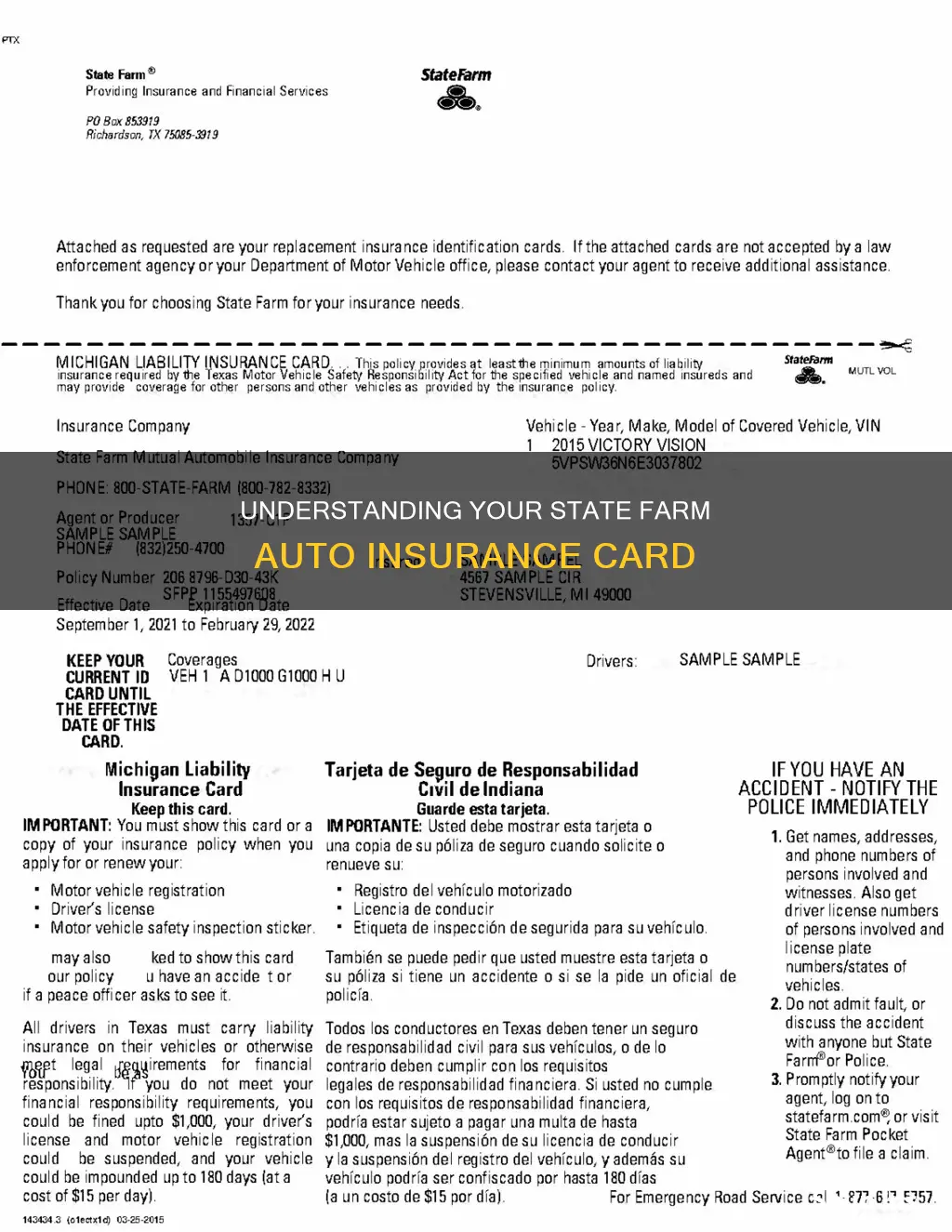
To confirm if you have one of these riders, you should review your State Farm Declarations Page. Look under the "Coverages and Limits" section.
- If you see "Death, Dismemberment and Loss of Sight - $10,000", you have the AD&D-style rider.
- If you see "Medical Payments - $10,000", you have the medical expense coverage.
- If you see "Personal Injury Protection - $10,000", you are likely in a no-fault state with the standard required limit.
In 2026, most State Farm customers can verify this instantly via the State Farm mobile app or the online customer portal. If the rider is not listed, it can usually be added mid-term with a simple phone call to your agent, often taking effect the following day.
Frequently Asked Questions
1. Does the $10,000 DDL rider cover passengers in my car?
Generally, the State Farm DDL rider is designed to cover the Named Insured and resident relatives. Unlike MedPay, which covers everyone inside the vehicle, the DDL benefit is a personal endorsement. If you want to cover your passengers for accidental death, you would typically rely on your Bodily Injury Liability coverage (if you are at fault) or their own personal auto policies.
2. Is the payout from a 10k insurance rider taxable?
Under current 2026 IRS guidelines, insurance payouts for physical injuries or accidental death are generally not considered taxable income. Because the DDL and MedPay riders are compensatory for physical loss and medical expenses, the $10,000 benefit should be received tax-free. However, if any portion of a settlement is designated for interest or punitive damages, that portion may be taxable. Consult a tax professional for specific advice.
3. Will my 10k rider pay out if I am riding a bicycle?
Yes, in many cases. State Farm's MedPay and PIP coverages are often "portable," meaning they cover the insured if they are struck by a motor vehicle while walking or cycling. The DDL rider also typically applies if the insured is a pedestrian or cyclist involved in an accident with a car. This makes these 10k riders excellent value for urban commuters.
4. Can I have more than $10,000 for these riders?
Yes. State Farm offers higher limits for both MedPay and DDL. While $10,000 is a standard and popular level, you can often increase DDL limits up to $25,000 or $50,000, and MedPay limits can sometimes go as high as $100,000 depending on the state and your underlying liability limits.
5. Does the 10k rider cover "Customized Equipment"?
Sometimes there is confusion between a 10k personal rider and a Customized Equipment Endorsement. If you have added $10,000 worth of aftermarket parts (lift kits, high-end audio, custom paint) to your vehicle, you must add a specific rider for that amount. Without it, State Farm typically only covers up to $1,000 or $2,500 of non-factory equipment.
Final Recommendation
If you currently have a State Farm policy, adding the $10,000 Death, Dismemberment, and Loss of Sight (DDL) rider is highly recommended due to its extremely low cost and "no-fault" trigger. It provides immediate liquidity during a crisis that standard liability or collision coverage cannot offer. Additionally, if your health insurance has a deductible of $5,000 or higher, you should ensure your Medical Payments (MedPay) limit is set to at least $10,000 to prevent a car accident from becoming a financial burden on your savings. Review your declarations page today to ensure these specific "10k" protections are active and that your beneficiary information is up to date.