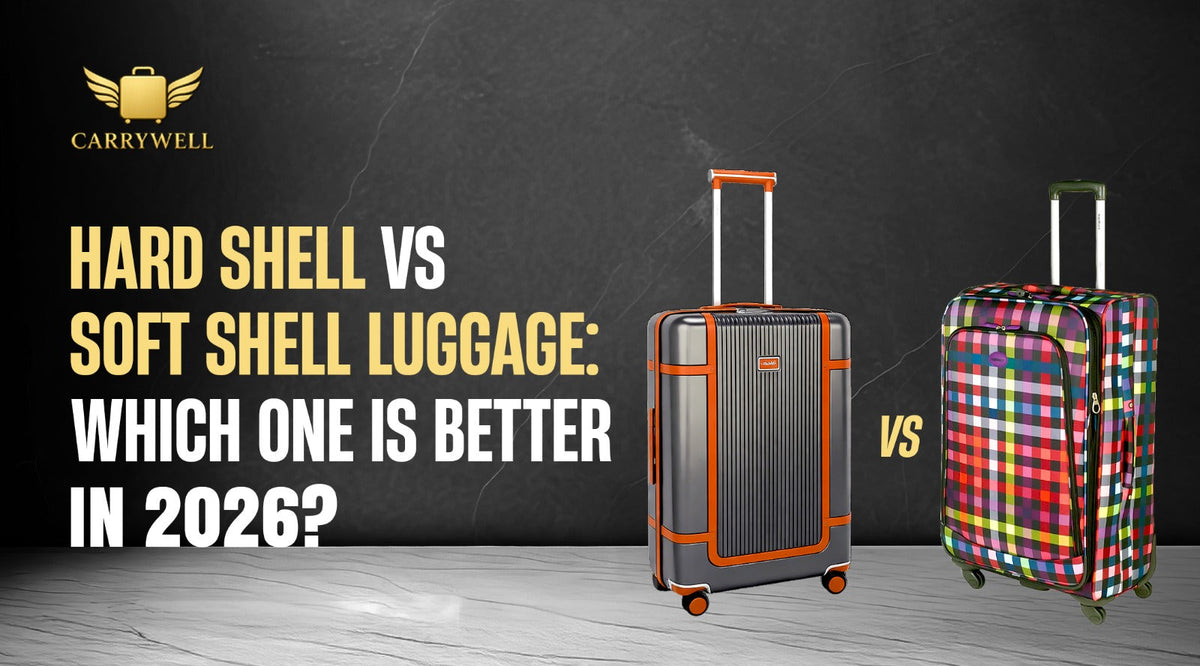
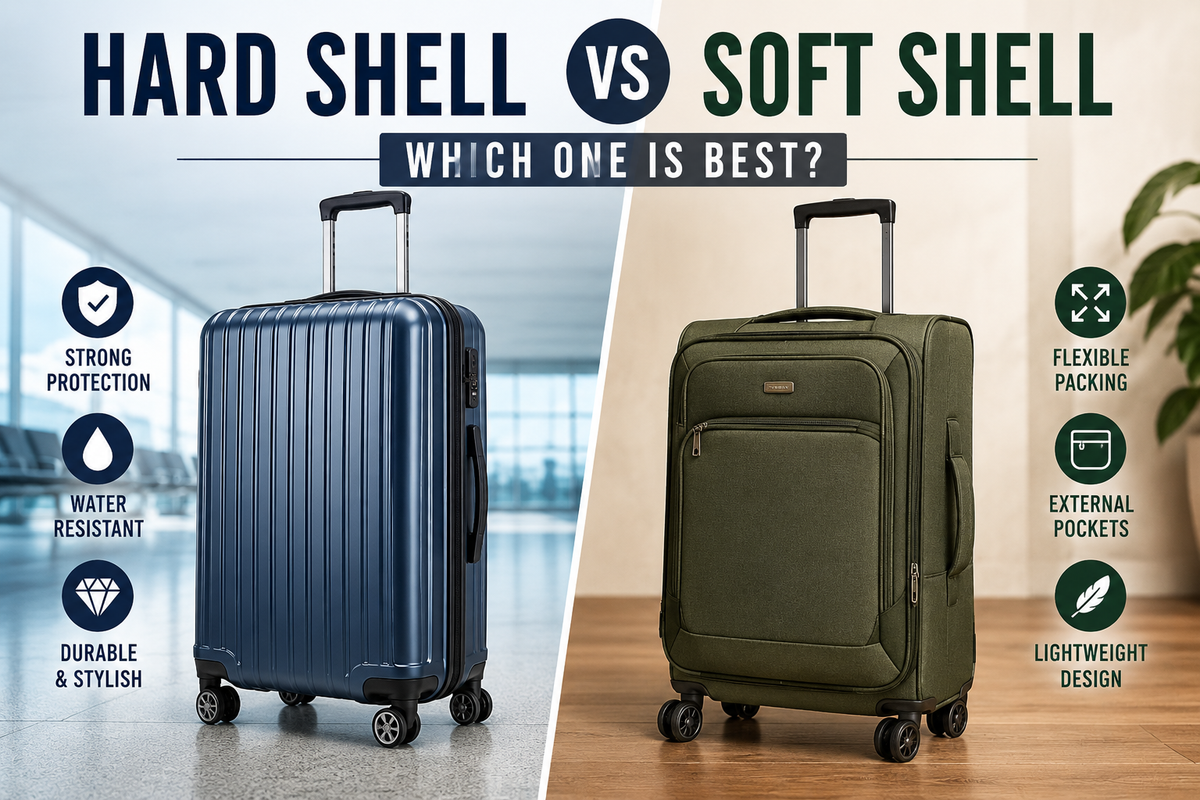
Choosing between a softside and a hardside suitcase depends on whether you prioritize packing flexibility or structural protection. Softside suitcases offer exterior pockets and fabric elasticity for overpacking, while hardside suitcases provide superior impact resistance for fragile items and better security against moisture and theft. Your decision should hinge on your specific destination and transport method.
The evolution of luggage technology has reached a point in 2026 where the gap between soft and hard suitcases is narrower than ever. Modern materials have made hardside cases lighter and softside cases more tear-resistant. However, the fundamental mechanical differences between a fabric-based container and a molded shell still dictate how you pack, how you travel, and how long your gear will last. To make the right choice, you must evaluate the technical specifications of materials, the ergonomics of the opening styles, and the specific demands of your itinerary.
The Engineering of Hardside Suitcases: Protection and Security
Hardside luggage has seen a massive surge in popularity over the last decade, transitioning from heavy, metallic trunks to sleek, high-tech shells. The primary appeal of a hardside suitcase is its structural integrity. When you are checking a bag that contains electronics, glass souvenirs, or delicate equipment, the rigid exterior acts as a shield against the inevitable pressures of a cargo hold.
Materials and Durability
In 2026, hardside suitcases are predominantly manufactured from three materials: ABS, Polycarbonate, and Aluminum.
- ABS (Acrylonitrile Butadiene Styrene): This is the most common material for budget-friendly hardside luggage. It is lightweight but relatively brittle. Under extreme pressure or cold temperatures, ABS is more prone to cracking than more expensive alternatives.
- Polycarbonate: Considered the industry standard for high-quality luggage, polycarbonate is a molded thermoplastic. Its defining characteristic is its flexibility. When subjected to impact, a polycarbonate shell is designed to flex and then pop back into its original shape. This makes it significantly more durable than ABS.
- Aluminum: This is the premium choice for maximum security. Aluminum cases do not use zippers; instead, they utilize reinforced frames and latch systems. While heavy and prone to denting, they are virtually impossible to "poke" open with a ballpoint pen, a common vulnerability in zippered luggage.
The Benefits of Water Resistance
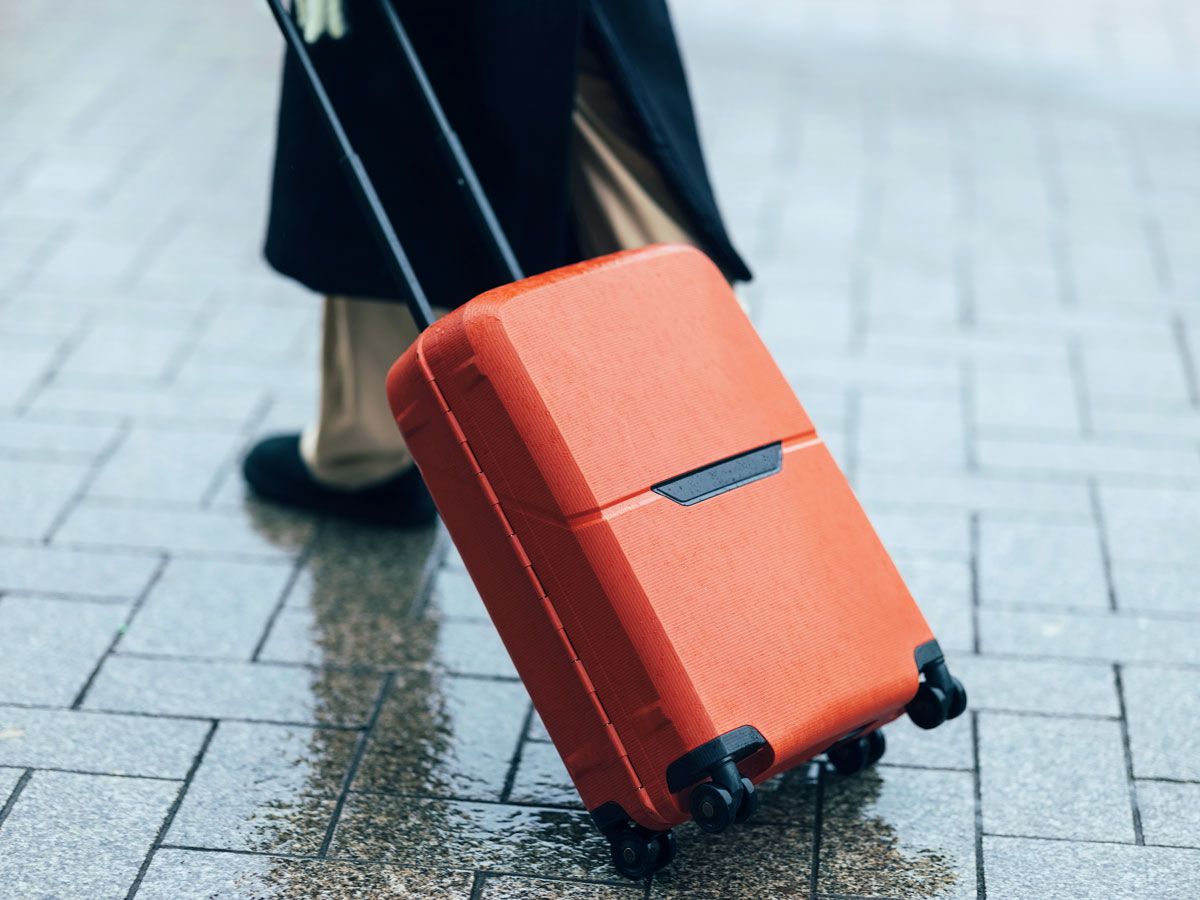
One of the most overlooked advantages of hardside luggage is its performance in inclement weather. If your suitcase is left on a tarmac during a rainstorm or placed on a wet sidewalk while waiting for a shuttle, the non-porous surface of a polycarbonate or aluminum shell ensures that the contents remain dry. Furthermore, hardside cases are much easier to clean. A simple wipe with a damp cloth can remove spills, mud, or grease, whereas softside fabrics often require deep scrubbing to remove stains.
Softside Suitcases: Maximum Flexibility and Accessibility
Softside luggage remains the gold standard for organized travelers and those who frequently use overhead bins. Typically made from woven synthetic fabrics, these suitcases are designed to "give" under pressure, which is a significant advantage in several travel scenarios.
Fabric Strength and Denier Ratings
When evaluating softside luggage, the "Denier" (D) rating is the most critical technical spec. This measures the thickness and weight of the individual fibers used in the weave.
- Ballistic Nylon: Originally developed for military flak jackets, ballistic nylon is the most durable fabric used in luggage. It has a high tear strength and a slick finish that resists abrasion.
- Cordura Nylon: Known for its texture and resistance to scuffs, Cordura is slightly lighter than ballistic nylon but offers comparable durability.
- Polyester: Found in lower-priced softside bags, polyester is functional but lacks the long-term structural resilience of nylon.
The Power of Exterior Pockets
The most significant functional advantage of softside luggage is the inclusion of external compartments. In a hardside suitcase, accessing a single item—like a boarding pass, a laptop, or a light jacket—usually requires laying the bag flat and opening the entire clamshell. Softside bags almost always feature one or two large exterior pockets, allowing you to retrieve essentials quickly while standing in security lines or sitting in a cramped terminal.
Compression and Capacity
Softside suitcases are inherently more forgiving. Because the fabric can stretch, you can often fit "one more outfit" into a soft bag more easily than a hard one. Additionally, most softside luggage includes an expansion zipper that adds 2 to 3 inches of depth. While some hardside bags now offer this feature, the rigid frame of a hard case limits how much the expansion actually benefits the user compared to the pliable nature of fabric.
Comparison of Key Features: Softside vs. Hardside
To help you visualize the trade-offs, the following table compares the two styles across the most relevant performance metrics for 2026 travel standards.
| Feature | Hardside Suitcase | Softside Suitcase |
|---|---|---|
| Primary Material | Polycarbonate, ABS, Aluminum | Nylon (Ballistic/Cordura), Polyester |
| Impact Protection | Excellent (Rigid shell absorbs shock) | Moderate (Relies on internal padding) |
| Weight | Generally heavier (esp. Aluminum) | Generally lighter and more agile |
| Opening Style | Clamshell (50/50 split) | Top-loading (Deep main lid) |
| Exterior Storage | Rare (Mostly sleek exteriors) | Abundant (Pockets for tech/docs) |
| Water Resistance | High (Wipes clean easily) | Low to Moderate (Absorbs moisture) |
| Security | High (Latch systems/Puncture-proof) | Moderate (Zippers are vulnerable) |
| Space Efficiency | Fixed volume (Hard boundaries) | Flexible (Can be compressed/stretched) |
The "Clamshell" vs. "Lid-Opening" Dilemma
Beyond the material, the way a suitcase opens significantly impacts your experience in a hotel room. Most hardside suitcases utilize a clamshell design, meaning the zipper runs through the middle of the bag, splitting it into two equal halves. When you open the bag, you need a footprint twice the size of the suitcase itself. This can be problematic in small European or Japanese hotel rooms where floor space is at a premium.
Softside suitcases typically follow a lid-opening design. This features one deep main compartment and a thin lid. This allows you to pack your bag on a luggage rack without needing to flip both sides open. If you prefer to live out of your suitcase rather than unpacking into a dresser, the deep "well" of a softside bag is often more convenient for organizing packing cubes and bulkier items like boots or coats.
Weight and Airline Compliance
As of 2026, airline weight restrictions have become increasingly stringent, even for domestic flights. In this environment, every pound of the suitcase's "empty weight" matters.
Historically, softside bags were significantly lighter. However, advancements in "virgin polycarbonate" (PC that has not been recycled and thus retains higher strength-to-weight ratios) have allowed hardside manufacturers to produce shells that are nearly as light as fabric.
That said, if you are a chronic "over-packer," the softside bag has a hidden weight advantage: because it can be compressed, it is easier to fit into the sizer bins used by budget airlines. A hardside bag, even if it is technically within the dimensions, cannot be "squished" to fit if it is bulging. This often leads to mandatory gate-checking fees for hardside users that softside users can avoid.
Security and Theft Prevention
Security is a major factor, especially for international travel. Hardside suitcases, particularly those with latch systems instead of zippers, offer the highest level of security. Traditional zippers, even those with TSA-approved locks, can be bypassed in seconds using a simple ballpoint pen to separate the teeth. Once the thief has accessed the bag, they can slide the zipper pulls back over the gap to hide the evidence of the breach.
If you must choose a zippered bag, look for double-layer zippers (often marketed as "puncture-resistant"). These are much more common in 2026 and are standard on high-end softside and hardside models. However, for those carrying high-value items, a hardside case with a magnesium or aluminum frame and dual-latch locks provides a level of tamper-resistance that fabric bags simply cannot match.
Which Should You Choose? Recommendations by Trip Type
Not every trip requires the same gear. Your choice should be influenced by where you are going and how you are getting there.
The Business Traveler (Short Trips)
Recommendation: Softside Carry-on Business travel often requires quick access to laptops and chargers. The exterior pockets of a softside bag are invaluable during security checks. Additionally, the ability to squeeze the bag into a crowded overhead bin on a regional jet makes the softside the superior choice for the frequent flyer.
The International Adventurer (Long Hauls)
Recommendation: Hardside Checked Bag When your bag is going through multiple transfers and being handled by several different ground crews, it will take a beating. A polycarbonate hardside bag will protect your belongings from the rough handling and potential rain on the tarmac during transfers. The security of a hard shell is also a deterrent in busy international transit hubs.
The Road Tripper
Recommendation: Softside If you are traveling by car, softside luggage is nearly always better. Car trunks are rarely perfect rectangles. The flexibility of fabric allows you to shove multiple bags into a trunk, whereas hardside cases are unforgiving and can lead to "trunk Tetris" frustrations.
The Luxury or Photography Traveler
Recommendation: Aluminum Hardside If you are transporting camera bodies, lenses, or expensive watches, the weight penalty of an aluminum hardside case is worth the trade-off. The crush-proof nature of the metal frame ensures that even if other heavy bags are stacked on top of yours, the internal components remain safe.
Frequently Asked Questions
Can hardside suitcases crack in cold weather?
Yes, particularly those made of cheaper ABS plastic. In 2026, most high-end polycarbonate shells are tested to remain flexible at sub-zero temperatures, but budget hardside bags can become brittle when exposed to the extreme cold of a high-altitude cargo hold, leading to cracks if they are dropped or handled roughly.
Are softside suitcases more prone to bed bugs?
There is a common concern that the seams and fabric of softside luggage provide more hiding spots for pests. While it is true that bed bugs can cling to fabric more easily than smooth plastic, they can still hide in the zippers and interior lining of hardside bags. Regardless of the material, always use luggage racks and avoid placing your suitcase directly on hotel carpets or beds.
Which type of suitcase lasts longer?
On average, a high-quality softside bag made of ballistic nylon tends to have a longer aesthetic lifespan. Hardside bags, while structurally sound, show "battle scars" much more quickly. Scratches, scuffs, and dents are permanent on a hard shell, whereas nylon can be cleaned and is naturally resistant to showing wear. If you want a bag that looks "new" for five years, choose softside.
Do hardside suitcases have better wheels?
Wheels are independent of the shell material, but there is a correlation. Most hardside suitcases utilize spinner wheels (four wheels that rotate 360 degrees), which allow the bag to be rolled beside you. Softside bags are available with both spinners and inline skate wheels (two recessed wheels). Inline wheels are actually more durable for city travel over cobblestones or curbs, as they are protected by the bag's housing.
Is there a "hybrid" option?
Yes, some manufacturers produce suitcases with a hardside bottom and a softside top. While these aim to provide "the best of both worlds," they often inherit the weaknesses of both—specifically, the weight of a hard case and the lack of water resistance of a soft case. Most professional travelers recommend choosing one or the other based on your primary need.
Final Practical Steps
Before purchasing your next piece of luggage in 2026, perform these three checks:
- The "Poke" Test: If buying a zippered bag, check if it has a double-layered security zipper to prevent easy break-ins.
- The Weight Check: Lift the bag empty. If a carry-on weighs more than 7 lbs (3.2 kg) empty, it will significantly eat into your airline weight allowance.
- The Warranty Review: Look for brands that offer "functional" warranties. Some companies now cover damage caused by airlines (cracks or broken wheels), which is the most common way a suitcase "dies."
Ultimately, if you value organization and ease of access, buy a softside suitcase. If you value the safety of your fragile items and want a bag that can withstand a rainstorm, choose a hardside suitcase.