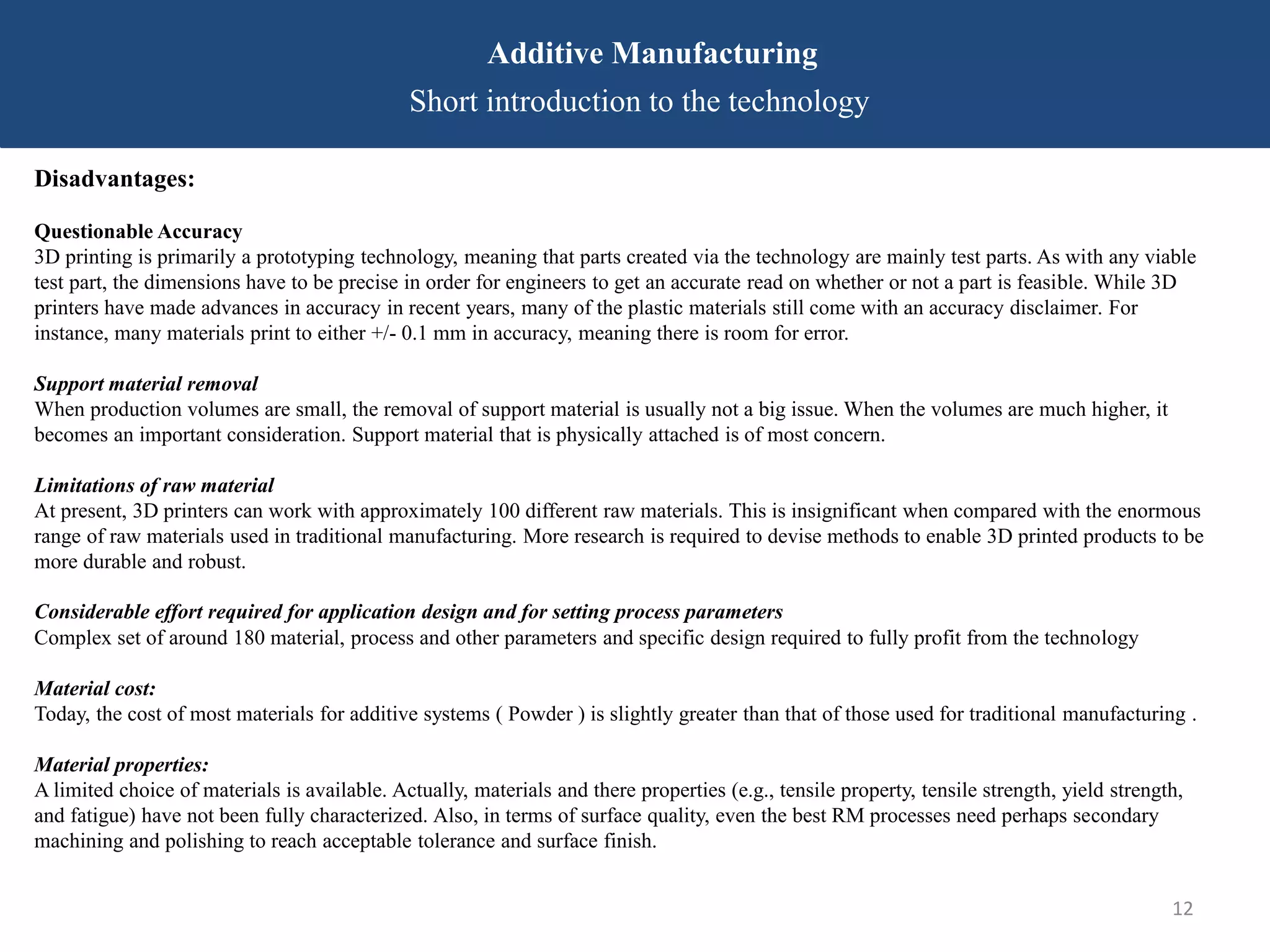
A manufacturing drawback is a specific limitation, inefficiency, or technical disadvantage inherent in a production process, material choice, or system design. These drawbacks manifest as increased costs, reduced output quality, or scalability constraints, necessitating strategic trade-offs to balance engineering requirements with economic viability and market demand in modern industrial environments.
The Fundamental Nature of Manufacturing Drawbacks
In the industrial landscape of 2026, the concept of a "perfect" manufacturing process remains a theoretical ideal rather than a practical reality. Every production method—from traditional CNC machining to advanced generative-design-driven additive manufacturing—carries inherent drawbacks. These are not necessarily errors or failures in management; rather, they are often the logical consequences of the laws of physics, material science, and thermodynamics.
When an organization selects a manufacturing route, they are effectively choosing which set of drawbacks they are most equipped to manage. For instance, a process that offers extreme precision often suffers from the drawback of slow throughput. Conversely, high-speed mass production techniques often require significant upfront capital investment (CapEx), creating a drawback in terms of financial flexibility and initial risk. Understanding these limitations is the first step toward effective process optimization and risk management.
Categorizing Drawbacks by Production Methodology
To solve manufacturing challenges, one must first identify where the bottleneck or limitation originates. Drawbacks generally fall into three technical categories: material-driven, process-driven, and system-driven.
Process-Driven Drawbacks in Additive Manufacturing
While 3D printing (additive manufacturing) has matured significantly by 2026, it still faces several fundamental drawbacks. The most prominent is anisotropy, where the mechanical properties of a part differ depending on the direction of the build layers. Parts are often weaker along the Z-axis (vertical) compared to the X and Y axes.
Furthermore, surface finish remains a persistent drawback. Most additive processes result in a "stair-stepping" effect on curved surfaces, necessitating secondary post-processing steps like bead blasting, chemical vapor smoothing, or CNC finishing. These extra steps add time and cost, partially neutralizing the "complexity for free" advantage often touted by proponents of the technology.
Drawbacks of Subtractive Manufacturing (CNC Machining)
Subtractive manufacturing, primarily CNC milling and turning, is the gold standard for precision and material variety. However, its primary drawback is material waste. In many aerospace applications, the "buy-to-fly" ratio—the mass of the raw material compared to the mass of the final part—can be as high as 10:1. This means 90% of the expensive alloy is turned into scrap shavings (swarf), which, although recyclable, represents a massive energy and procurement inefficiency.
Another drawback is geometric restriction. CNC tools require a "line of sight" to the material they are cutting. Internal cavities, undercut features, and complex organic shapes are either impossible to machine or require expensive multi-axis equipment and complex fixturing, driving up the cost per unit.
Limitations of Formative Manufacturing (Injection Molding and Casting)
Formative processes are unrivaled for high-volume production, but their drawback lies in tooling lead times and rigidity. Designing and fabricating a hardened steel mold for injection molding can take months and cost hundreds of thousands of dollars. If a design flaw is discovered after the mold is cut, the "drawback" is a catastrophic delay and a sunk cost that cannot be easily recovered. This makes formative manufacturing poorly suited for agile development or products with short lifecycles.
Economic and Scalability Drawbacks
Beyond the physical limitations of the factory floor, manufacturing drawbacks often manifest in the balance sheet. These economic hurdles dictate whether a product is a commercial success or a technical marvel that fails in the marketplace.
The Minimum Order Quantity (MOQ) Hurdle
For many specialized manufacturing processes, the setup cost is so high that producing a small batch is economically unfeasible. This creates a drawback for startups and innovators who need to test the market with 500 units but find that the price per unit only becomes sustainable at 50,000 units. This "scaling gap" is a systemic drawback of traditional industrial infrastructure that forces companies into high-risk inventory positions.
Maintenance and Downtime (OEE Limitations)
Overall Equipment Effectiveness (OEE) is a critical metric, but every machine has the drawback of planned and unplanned downtime. In 2026, despite the proliferation of AI-driven predictive maintenance, the physical wear and tear on high-speed robotic assemblies and thermal processing units remains a constant. The more complex the manufacturing system, the higher the probability of a single-point failure, which is a significant drawback for "Just-in-Time" (JIT) supply chains that operate with minimal safety stock.
Technical Trade-offs: Precision vs. Throughput
One of the most common trade-offs in engineering is the relationship between how accurately a part is made and how quickly it can be produced. This is often referred to as the "Manufacturer's Dilemma."
| Manufacturing Method | Primary Drawback | Impact on Production | Mitigation Strategy |
|---|---|---|---|
| High-Pressure Die Casting | Porosity and internal voids | Reduced structural integrity in thin sections | Vacuum-assisted casting or HIP (Hot Isostatic Pressing) |
| Metal 3D Printing (PBF) | Residual thermal stress | Part warping or cracking during cooling | Specialized support structures and heat treatment |
| Automated Assembly | Lack of dexterity/flexibility | Difficulty handling soft or irregular materials | Advanced tactile sensors and soft robotics |
| Chemical Etching | Hazardous waste management | High regulatory and environmental compliance costs | Closed-loop chemical recovery systems |
| Manual Labor | Inconsistency and fatigue | Variable quality and high long-term operational cost | Ergonomic workstations and cobot (collaborative robot) assistance |
Environmental and Regulatory Drawbacks
In 2026, the definition of a "drawback" has expanded to include a product’s carbon footprint and its "Right to Repair" compatibility. Manufacturing processes that were considered efficient a decade ago are now hampered by new drawbacks related to sustainability.
Carbon Intensity as a Competitive Disadvantage
With the implementation of carbon border adjustment mechanisms and stricter ESG (Environmental, Social, and Governance) reporting, high-energy manufacturing processes face a financial drawback. For example, primary aluminum smelting or traditional cement production now carries heavy carbon taxes. This shift forces manufacturers to reconsider their energy sources or face a drawback in price competitiveness against "greener" rivals.
Design for Disassembly (DfD)
A manufacturing drawback often overlooked is the use of permanent joining methods like adhesives or certain types of welding. While these methods are cheap and fast during assembly, they make the product nearly impossible to repair or recycle. In a regulatory environment that increasingly mandates circular economy principles, the inability to disassemble a product is a major long-term manufacturing drawback that can lead to fines or market exclusion.
Identifying Drawbacks Using Analytical Tools
To mitigate these issues, industrial engineers employ several rigorous frameworks. These tools help move from a vague sense that "something is wrong" to a data-driven understanding of the specific manufacturing drawback.
- Failure Mode and Effects Analysis (FMEA): This is a systematic method for evaluating a process to identify where it might fail. By assigning a "Risk Priority Number" (RPN) to different drawbacks, teams can focus their resources on the most damaging limitations first.
- Root Cause Analysis (RCA): When a drawback leads to a defect, RCA (using methods like the "5 Whys" or Ishikawa diagrams) helps determine if the issue is a one-time fluke or an inherent flaw in the manufacturing design.
- Digital Twin Simulation: In 2026, engineers use high-fidelity digital twins to simulate the manufacturing process before a single piece of metal is cut. This allows them to identify drawbacks like thermal deformation or robotic collisions in a virtual environment, saving millions in physical prototyping.
Mitigation and Strategy for 2026
Solving a manufacturing drawback rarely involves eliminating it entirely; instead, it involves managing the impact.
- Hybrid Manufacturing: One of the most effective ways to mitigate the drawbacks of both additive and subtractive methods is to combine them. For instance, using 3D printing to create a "near-net shape" and then using a CNC machine for the final high-precision surfaces.
- Modular Tooling: To address the drawback of high tooling costs, manufacturers are increasingly using modular mold bases with swappable inserts. This reduces the CapEx required for new product iterations.
- AI-Enhanced Quality Control: The drawback of human error in inspection is being mitigated by computer vision systems that can detect microscopic cracks or deviations in real-time, far more consistently than a human operator.
Frequently Asked Questions
Can all manufacturing drawbacks be eliminated through better technology?
No. Many drawbacks are rooted in the physical properties of materials or the laws of thermodynamics. For example, metal will always expand when heated, and cutting tools will always wear down over time. Technology can minimize these effects or make them more predictable, but it cannot eliminate the fundamental constraints of the physical world.
How does the choice of material affect manufacturing drawbacks?
Material choice is often the source of the drawback. High-strength titanium is excellent for performance but is notoriously difficult (and expensive) to machine because it "galls" or sticks to cutting tools. Switching to a different material might solve a manufacturing drawback but could introduce a performance drawback in the final product.
What is the difference between a manufacturing defect and a manufacturing drawback?
A defect is an accidental deviation from the intended design (e.g., a cracked part or a wrong dimension). A drawback is a known, inherent limitation of the process itself (e.g., the slow speed of a specific assembly line or the surface roughness of a cast part). Defects are failures; drawbacks are constraints.
How does "Just-in-Time" manufacturing create drawbacks?
While JIT reduces inventory costs, its primary drawback is a lack of resilience. A minor disruption in the supply chain or a single machine failure can halt the entire production line because there is no "buffer" of parts. In 2026, many firms are moving toward "Just-in-Case" models for critical components to mitigate this specific drawback.
Are environmental regulations considered a manufacturing drawback?
From a purely operational throughput perspective, they can be seen as a drawback because they often require extra steps, specialized equipment, or more expensive materials. However, from a long-term business viability perspective, failing to comply is an even greater drawback that can lead to legal action and loss of brand reputation.
Practical Recommendations
When faced with a significant manufacturing drawback, start by performing a Cost-Benefit Analysis of the potential mitigation. If the drawback is slow production speed, calculate whether the cost of purchasing a second machine is lower than the projected lost revenue from unfulfilled orders.
Secondly, embrace Design for Manufacturing (DfM) principles early in the product development cycle. The most cost-effective way to handle a manufacturing drawback is to design the product so that the limitation doesn't matter. For example, if you know a specific casting process has the drawback of poor dimensional tolerance, design the mating parts with larger clearances or adjustable features to compensate.
Finally, stay updated on material science breakthroughs. In 2026, new "smart" materials and advanced alloys are constantly being released that can perform better under traditional manufacturing constraints, potentially turning a long-standing drawback into a competitive advantage.