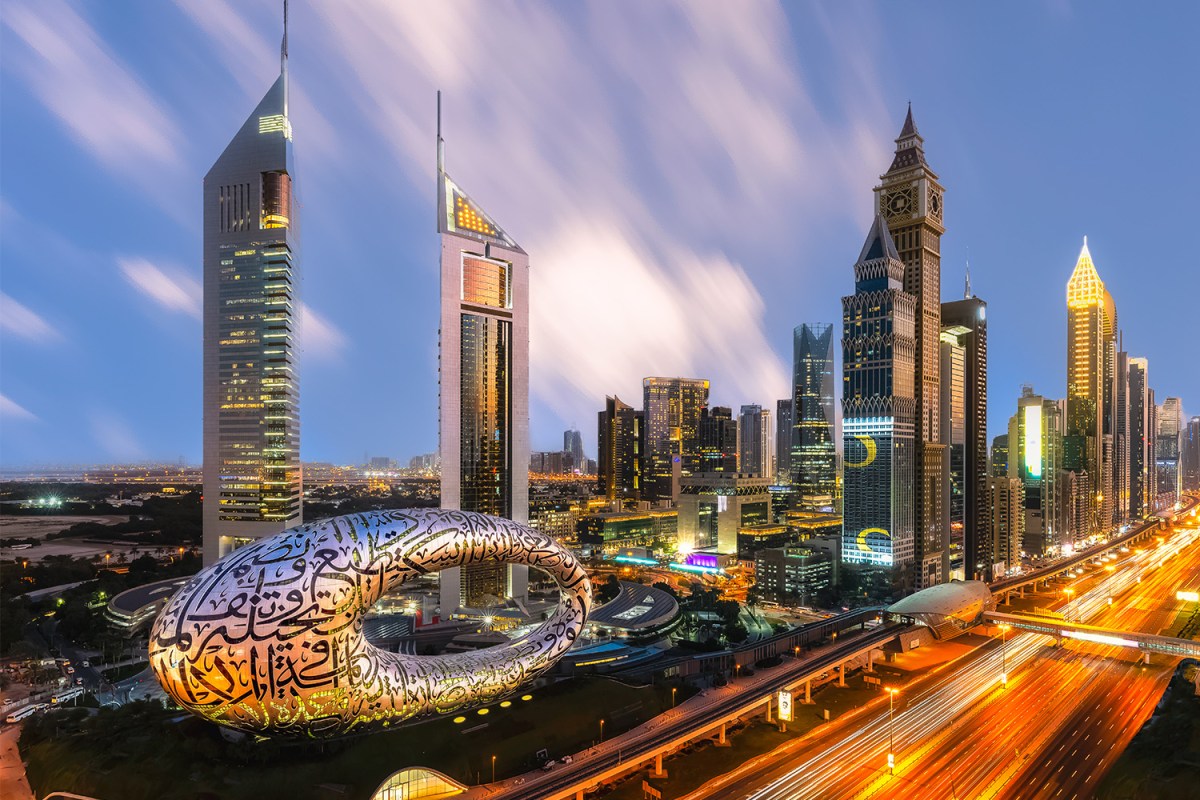
Evaluating whether a futuristic landmark like Dubai’s Museum of the Future is worth the cost depends on your interest in immersive storytelling and architectural innovation. In 2026, the experience remains a premier global attraction, justifying its entry fee through high-production value, unique sensory exhibits, and its status as an engineering marvel.
The Museum of the Future (MOTF) has transitioned from a new curiosity to a cornerstone of global "futurism" tourism. Located prominently on Sheikh Zayed Road, its torus-shaped, stainless-steel exterior covered in Arabic calligraphy is more than just a facade; it is a statement of intent. However, as travel costs and ticket prices evolve in 2026, potential visitors often ask if the experience inside matches the breathtaking exterior. This guide provides a technical and practical breakdown of the landmark’s value proposition to help you decide if it belongs on your itinerary.
Defining the Futuristic Landmark: An Architectural Overview
The Museum of the Future is frequently cited as one of the most beautiful buildings in the world, but its value begins with its structural complexity. Designed by Killa Design and engineered by Buro Happold, the building is a "living" structure that lacks internal columns, a feat achieved through a complex "diagrid" framework.
The facade is composed of 1,024 individual stainless steel panels, a number specifically chosen to represent a kilobyte (1,024 bytes). Each panel is unique, featuring 3D-mapped Arabic calligraphy that functions as the building’s windows. The quotes, written by His Highness Sheikh Mohammed bin Rashid Al Maktoum, translate to messages of hope and innovation, such as: "The future belongs to those who can imagine it, design it, and execute it. It isn’t something you wait for, but rather create."
From a technical standpoint, the building achieved a LEED Platinum certification, making it a model for sustainable futuristic architecture. For enthusiasts of BIM (Building Information Modeling) and parametric design, the mere act of standing before the structure offers significant intellectual value. In 2026, the building’s maintenance remains pristine, utilizing robotic cleaning systems that navigate the complex curves of the exterior—a spectacle in itself.
The Immersive Experience: What Your Ticket Actually Buys
When you purchase a ticket in 2026, you are not paying for a traditional museum experience where artifacts sit behind glass. Instead, you are paying for an immersive, narrative-driven journey through several distinct "chapters" of the future.
OSS Hope: The Journey to 2071
The experience typically begins with a simulated shuttle launch to the OSS Hope, a space station orbiting Earth. The high-resolution screens and haptic feedback of the "elevator" ride provide a convincing illusion of leaving the atmosphere. Once "aboard," visitors interact with digital displays showing how solar energy is harvested in space and transmitted back to Earth. This segment is highly produced, resembling a high-budget science fiction film set.
The HEAL Institute
Descending back to Earth, visitors enter the HEAL Institute, which focuses on ecology and biodiversity. This floor features the "Library of Life," a stunning vault containing 2,400 digital specimens of existing and extinct species. The use of bioluminescent aesthetics and augmented reality allows visitors to explore the genetic makeup of the planet. For families and educators, the depth of research presented here justifies a significant portion of the ticket price.
Al Waha: The Wellness Floor
Recognizing that technology can be overwhelming, the "Al Waha" (The Oasis) floor focuses on the human element. It provides a sensory experience where visitors interact with light, water, and sand. In 2026, this section has been updated with even more advanced haptic floors and ultrasonic soundscapes designed to induce "digital detox." It serves as a vital counterpoint to the high-tech exhibits above, emphasizing that the future must also accommodate human mental health.
Tomorrow Today
This floor acts as an ever-evolving showcase of existing technology. In 2026, this section features the latest in autonomous flight, neural-link interfaces, and sustainable construction materials. Unlike the speculative upper floors, Tomorrow Today highlights products and prototypes that are either in use or nearing production, making it a favorite for tech professionals and investors.
Technical Specifications and Operational Costs
The cost of maintaining such a landmark is reflected in the ticket pricing. In 2026, the operational overhead includes the power requirements for massive high-definition displays, AI-driven interactive exhibits, and the climate control systems required for a large, column-free void.
| Feature | Specification / Detail |
|---|---|
| Total Height | 77 Meters |
| Facade Material | 316L Stainless Steel (Corrosion Resistant) |
| Number of Panels | 1,024 (Parametrically Designed) |
| Interior Volume | 30,548 Square Meters |
| Sustainability Rating | LEED Platinum |
| Primary Structural System | Steel Diagrid (No internal columns) |
| Interactive Tech | AR, VR, Haptics, and AI Guides |
The engineering required to keep the "void" (the center hole of the torus) stable while supporting seven floors of heavy technology is a primary reason the project cost exceeded $136 million USD to construct. When visitors pay for a ticket, they are contributing to the ongoing research and curation that keeps the museum at the cutting edge of global trends.
Practical Visitor Guidance for 2026
To ensure the landmark is "worth the cost," visitors must navigate the logistics of the experience correctly. In 2026, the Museum of the Future remains a high-demand venue, and poor planning can lead to a diminished experience.
Booking Prerequisites
Tickets must be booked well in advance. As of 2026, the museum operates on a strict time-slot basis to prevent overcrowding. Attempting to buy tickets at the door is rarely successful and often leads to disappointment. It is recommended to book at least three to four weeks before your intended visit, especially during the peak winter months (October to March).
Time Management
To truly extract value from the exhibits, plan for a minimum of two to three hours. Rushing through the OSS Hope or skipping the interactive stations in the HEAL Institute reduces the "cost per hour" value of your ticket. Each floor is designed to be a slow-burn experience where reading the digital prompts and engaging with the "guides" (who are often trained in specific scientific or futuristic disciplines) is essential.
Cost Considerations
While the entry fee covers all floors, there are additional costs to consider:
- Parking: While there is an underground lot, it fills up quickly. Using the Dubai Metro (Emirates Towers Station) is more cost-effective and lands you directly at the museum entrance via a covered walkway.
- The Lobby: The lobby is free to enter and features a coffee shop served by a robotic arm and a flying "aerobe" (a robotic penguin or jellyfish). If you are on a strict budget, you can experience the architecture and some minor tech without buying a full ticket.
- Gift Shop: The merchandise is high-quality but expensive. Budget accordingly if you plan on taking home "futuristic" memorabilia.
Comparative Value: MOTF vs. Other Global Landmarks
Is the Museum of the Future more "worth it" than other landmarks? When compared to the Burj Khalifa or The Dubai Frame, the MOTF offers a more intellectual and interactive experience. While the Burj Khalifa offers a view, the MOTF offers a narrative.
In a global context, the MOTF competes with the Sphere in Las Vegas or TeamLab Borderless in Tokyo. While TeamLab focuses on pure digital art, the MOTF integrates science, sociology, and engineering. If your goal is to see the "future of humanity" rather than just "pretty lights," the MOTF holds a higher value for money.
Potential Limitations and Who Should Skip It
Despite its accolades, the Museum of the Future is not for everyone. If you are looking for historical artifacts or a massive collection of physical objects, you will be disappointed.
- Tactile Seekers: Most of the museum is digital or projected. If you prefer physical history (like the Louvre Abu Dhabi), the MOTF may feel too "ethereal."
- Young Children: While there is a dedicated floor called "Future Heroes," the complex themes of the upper floors may not engage children under the age of seven for very long.
- Cost-Sensitive Travelers: If the AED 150+ price point (approx. $40 USD) is a significant portion of your daily budget, you may find that simply viewing the building from the outside satisfies your architectural curiosity without the need for an interior ticket.
Common Mistakes to Avoid
- Arriving Late: If you miss your time slot, you may not be allowed entry, and refunds are notoriously difficult to obtain due to the high demand.
- Ignoring the Guides: The staff are not just security; they are facilitators. Asking them about the specific technologies on display can reveal layers of information not immediately visible on the screens.
- Viewing it as a "One-Time" Museum: Because the "Tomorrow Today" floor updates frequently, it is worth a second visit if you haven't been in more than two years.
FAQ: Maximizing Your Visit in 2026
Is the Museum of the Future worth it for solo travelers? Yes. The experience is deeply personal and contemplative. In 2026, many solo travelers find the "Al Waha" floor particularly rewarding as it offers a quiet space for reflection that is rare in the bustling city of Dubai.
Can I see the whole museum in one hour? No. A one-hour visit would only allow for a surface-level walk-through, causing you to miss the interactive elements and the detailed storytelling. You would essentially be paying full price for half the value.
What is the best time of day to visit? Late afternoon time slots are highly recommended. This allows you to see the building in daylight, enjoy the exhibits, and then witness the stunning exterior calligraphy illuminated at night as you exit.
Is there a dress code for the Museum of the Future? While there is no strict formal dress code, "smart casual" is the norm. The museum is a high-end cultural institution, and the interior can be quite cool due to the air conditioning required for the technology.
Is photography allowed inside? Yes, non-professional photography and videography are encouraged. The "Library of Life" and the "OSS Hope" shuttle are some of the most photographed spots in the UAE. However, tripods and professional rigs usually require prior authorization.
Recommendation for 2026
For most travelers, the Museum of the Future is absolutely worth the cost, provided you approach it as an immersive theater-meets-science-center rather than a traditional museum. The engineering of the building alone is a global landmark of the 21st century. To get the most value, book your tickets at least a month in advance, take the Metro to avoid traffic, and allow yourself at least three hours to engage with the digital specimens and wellness exhibits. If you are a fan of architecture, technology, or sustainable design, this is likely to be the highlight of a trip to the UAE in 2026.