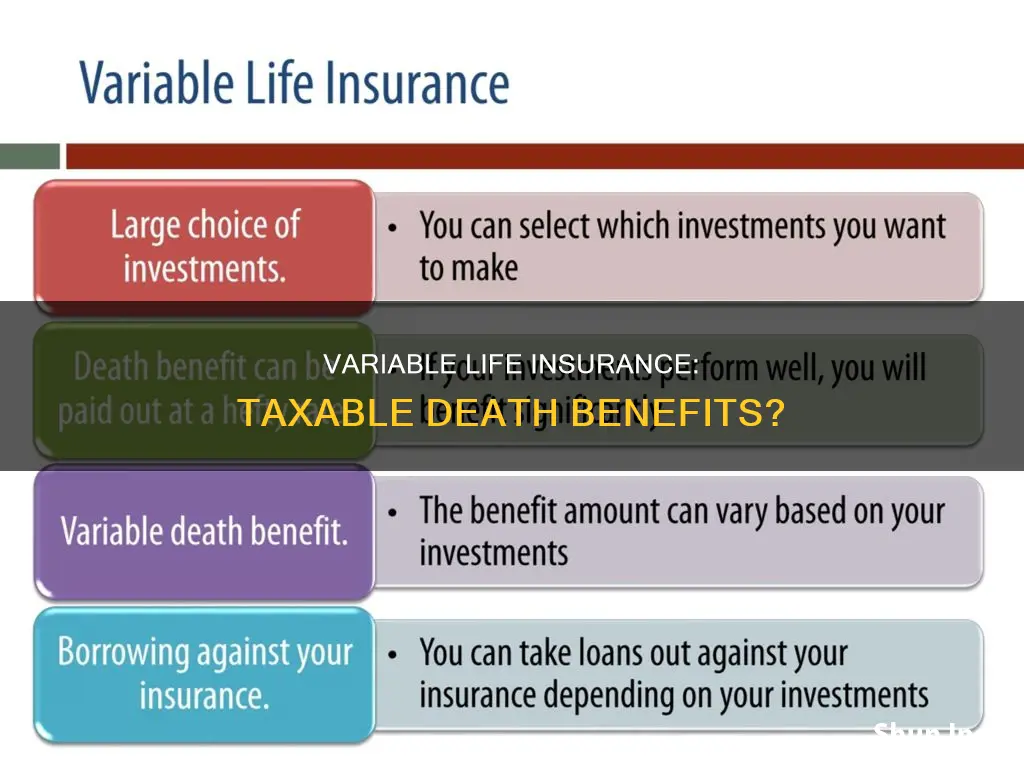
Death payments, known technically as the death benefit, are not inherently guaranteed in the same way they are in a traditional whole life insurance policy. While most variable life insurance contracts provide a guaranteed death benefit provided that premiums are paid and the policy remains in force, the actual value can fluctuate based on the performance of the underlying investment sub-accounts and the policyholder's specific financial decisions.
Understanding the Mechanics of Variable Life Insurance
To understand whether a death benefit is guaranteed, one must first distinguish variable life insurance from other permanent life insurance products. Unlike universal or whole life insurance, where the cash value is tied to a fixed interest rate or a company’s declared dividend, a variable life insurance policy requires the policyowner to direct their cash value into various investment sub-accounts. These sub-accounts function similarly to mutual funds, investing in stocks, bonds, and money market instruments.
Because the cash value is subject to market volatility, the policy’s performance is directly linked to the success or failure of these investments. When the markets perform well, the cash value—and potentially the death benefit—can grow significantly. Conversely, if the sub-accounts underperform, the cash value can drop to zero, which introduces the primary risk to the death benefit guarantee.
The Role of Premium Payments and Policy Lapses
The most significant threat to a "guaranteed" death benefit in a variable life insurance policy is the risk of policy lapse. In a standard permanent life insurance contract, you must pay your premiums to keep the coverage active. In a variable life insurance policy, if the cash value is insufficient to cover the policy’s monthly deductions—which include the cost of insurance (COI), administrative fees, and surrender charges—the insurer may require an additional premium payment.
If the sub-accounts perform poorly and the cash value is depleted, you may be forced to pay significantly higher premiums to prevent the policy from lapsing. If the policy lapses due to non-payment of these necessary premiums, the death benefit is forfeited entirely. Therefore, the guarantee is contingent upon the policyholder’s ability and willingness to maintain the funding levels required by the insurance carrier.
Variable Life Insurance vs. Fixed Permanent Insurance
The difference between fixed and variable products is fundamental to how risk is distributed between the insurer and the policyowner.
| Feature | Whole Life Insurance | Variable Life Insurance |
|---|---|---|
| Death Benefit | Guaranteed (if premiums are paid) | Guaranteed floor (subject to policy status) |
| Cash Value Growth | Fixed/Non-guaranteed Dividends | Market-dependent performance |
| Investment Risk | Borne by the Insurance Company | Borne by the Policyowner |
| Premium Structure | Level and Fixed | Flexible/Market-Sensitive |
| Primary Goal | Asset Protection | Wealth Accumulation and Growth |
As shown in the table, the shift of investment risk from the insurer to the policyowner is the defining characteristic of variable life insurance. While some variable policies offer a "minimum guaranteed death benefit" rider, these are often subject to specific conditions, such as maintaining a certain level of funding, and should be verified in your individual policy contract.
The Impact of Loans and Withdrawals
Policyowners often utilize the cash value of their variable life insurance policy to supplement retirement income or manage short-term liquidity needs. However, taking loans or partial withdrawals from the cash value can jeopardize the death benefit.
When you take a loan from your policy, the borrowed amount is removed from the investment sub-accounts. If the market experiences a downturn while the cash value is reduced by a loan, the policy may not have enough remaining assets to cover the cost of insurance. This can lead to a "forced" liquidation or a policy lapse. Furthermore, if you pass away with an outstanding loan balance, the insurer will deduct that loan amount, plus any accrued interest, from the final death benefit payout. In extreme cases, if the loan balance grows to exceed the cash value, the policy can collapse, resulting in a taxable event and the loss of the death benefit.
How Insurance Carriers Calculate the Death Benefit
There are generally two death benefit options available within variable life insurance contracts, and the choice you make affects whether your benefit is fixed or growing.
- Option A (Level): The death benefit remains a fixed face amount. As your cash value grows, the "amount at risk" for the insurance company decreases. This is generally cheaper in terms of insurance costs but provides less protection against inflation over the long term.
- Option B (Increasing): The death benefit is the face amount plus the current cash value. This means your total payout fluctuates as your cash value rises and falls. If you choose this option, your death benefit is essentially tied to market performance, meaning it is not "guaranteed" in total dollar amount, though the base face amount is usually protected.
Strategies to Protect the Death Benefit
If your primary concern is ensuring that your beneficiaries receive the death benefit, you must adopt a proactive management strategy:
- Review Annual Statements: Monitor the performance of your sub-accounts and the policy's overall health annually.
- Maintain Adequate Funding: Ensure that your premium payments are sufficient to cover rising costs of insurance as you age.
- Understand the "No-Lapse" Guarantee: Some modern variable universal life (VUL) policies offer a secondary guarantee—a "no-lapse guarantee"—that keeps the policy in force regardless of cash value performance, provided specific funding requirements are met. Check your specific contract to see if this feature is included.
- Consult a Financial Advisor: Because variable life insurance is a sophisticated financial instrument, it is rarely a "set it and forget it" product. Professional guidance is essential to rebalance your sub-accounts and manage risk.
Common Misconceptions
A frequent error among policyholders is assuming that variable life insurance behaves exactly like a traditional investment portfolio. While the sub-accounts provide exposure to the markets, they are wrapped inside an insurance contract with significant internal costs. If the internal costs grow faster than your market gains, the death benefit is at risk.
Another misconception is that the "guaranteed" portion applies to the entire projected payout. In reality, any guarantee provided by the insurer is usually only applicable to the base face amount, and even that is often contingent on the policy remaining in force. If you are looking for a guaranteed death benefit that is immune to market volatility, you may find that traditional whole life or guaranteed universal life insurance is better suited to your risk tolerance.
Frequently Asked Questions
Does the death benefit change if the stock market crashes? In many cases, no, provided the policy has enough cash value to pay the insurance costs. If the cash value drops significantly due to a market crash, you may be required to pay additional premiums to keep the policy active. If you fail to pay, the policy could lapse, and the death benefit would be lost.
What happens if I stop paying premiums on my variable life policy? Unless your policy has sufficient accumulated cash value to cover the monthly cost of insurance and administrative fees indefinitely, the policy will lapse. Once it lapses, all coverage ceases, and the death benefit is no longer payable.
Are there different types of death benefit guarantees? Yes. Some policies offer a basic guarantee that the policy will not lapse for a set number of years, provided premiums are paid. Other policies do not have these safeguards. You must review your "Policy Specifications" page to identify the exact nature of your guarantees.
Can I convert my variable life policy to a fixed policy? Many insurance carriers allow you to convert a variable policy to a permanent, fixed-interest policy. This is often done if you find the market risk associated with variable sub-accounts is no longer appropriate for your life stage. Contact your insurer to determine the feasibility and costs associated with such a change.
What is the "Cost of Insurance" (COI)? The COI is a monthly charge deducted from your policy's cash value to pay for the actual insurance protection. This cost generally increases as you get older, which is why older policies often require more cash value to sustain the same death benefit.
Final Recommendation
The death benefit on a variable life insurance policy is only as reliable as your management of the policy. Because these products shift investment risk to the policyholder, they require periodic review of the sub-account performance, premium funding levels, and outstanding loans. Before making significant financial decisions involving your policy, request a "policy illustration" from your insurance agent. This document will show you how your death benefit is projected to perform under various market scenarios, helping you decide if additional premiums are necessary to secure your coverage for the long term.