Accessing cash in Germany through the nationwide network of Geldautomaten (ATMs) requires navigating a landscape defined by bank alliances, varying fee structures, and the unique cultural priority placed on "Bargeld" (physical currency). While digital payments have gained significant ground by 2026, cash remains essential for many small businesses, rural services, and traditional establishments. Understanding the four primary banking networks—Cash Group, CashPool, Sparkassen-Finanzgruppe, and VR-Banken—is the most effective way to avoid high withdrawal fees and ensure constant liquidity during your stay.
The Landscape of Cash in Germany (2026)
As of 2026, Germany maintains one of the highest densities of ATMs per capita in Europe, despite a gradual consolidation of physical bank branches. For the consumer, the system is highly efficient but can be expensive if used without knowledge of the underlying alliances. German banks are generally organized into "networks." If you use an ATM belonging to your own bank's network, the transaction is typically free. If you use an "alien" ATM (one outside your network), you can expect to pay a surcharge ranging from €3.95 to €7.50 per transaction.
For international travelers and expatriates using foreign cards, the situation is slightly different. Most German ATMs accept Visa, Mastercard, and American Express, but they often attempt to apply Dynamic Currency Conversion (DCC), which can result in significant hidden costs.
Primary ATM Networks and Alliances
The German banking sector is divided into three pillars: private commercial banks, public savings banks (Sparkassen), and cooperative banks (Volksbanken und Raiffeisenbanken). Each has its own dedicated ATM infrastructure.
1. The Sparkassen-Finanzgruppe (Red Logo)
The Sparkassen network is the largest in the country, boasting over 21,000 ATMs. These are regional savings banks owned by local municipalities. Because of their public mandate, you will find Sparkasse ATMs in even the smallest villages and at nearly every major transit hub.
- Key Identification: Look for the iconic red "S" logo with a dot above it.
- Usage Detail: If you have an account with any Sparkasse in Germany (e.g., Berliner Sparkasse or Stadtsparkasse München), you can use any other Sparkasse ATM nationwide for free.
2. Volksbanken und Raiffeisenbanken (Blue and Orange Logo)
This is the cooperative banking network, which is nearly as extensive as the Sparkassen. With approximately 14,000 to 16,000 ATMs, they have a massive footprint in rural areas.
- Key Identification: The logo features a stylized "V" and "R" in blue and orange.
- Usage Detail: Similar to the Sparkassen, members of one cooperative bank can usually use the ATMs of any other bank within the VR network without incurring fees.
3. The Cash Group
The Cash Group is an alliance of the major private commercial banks in Germany. While it has fewer physical machines than the Sparkassen, its ATMs are strategically located in high-traffic urban areas, shopping malls, and airports.
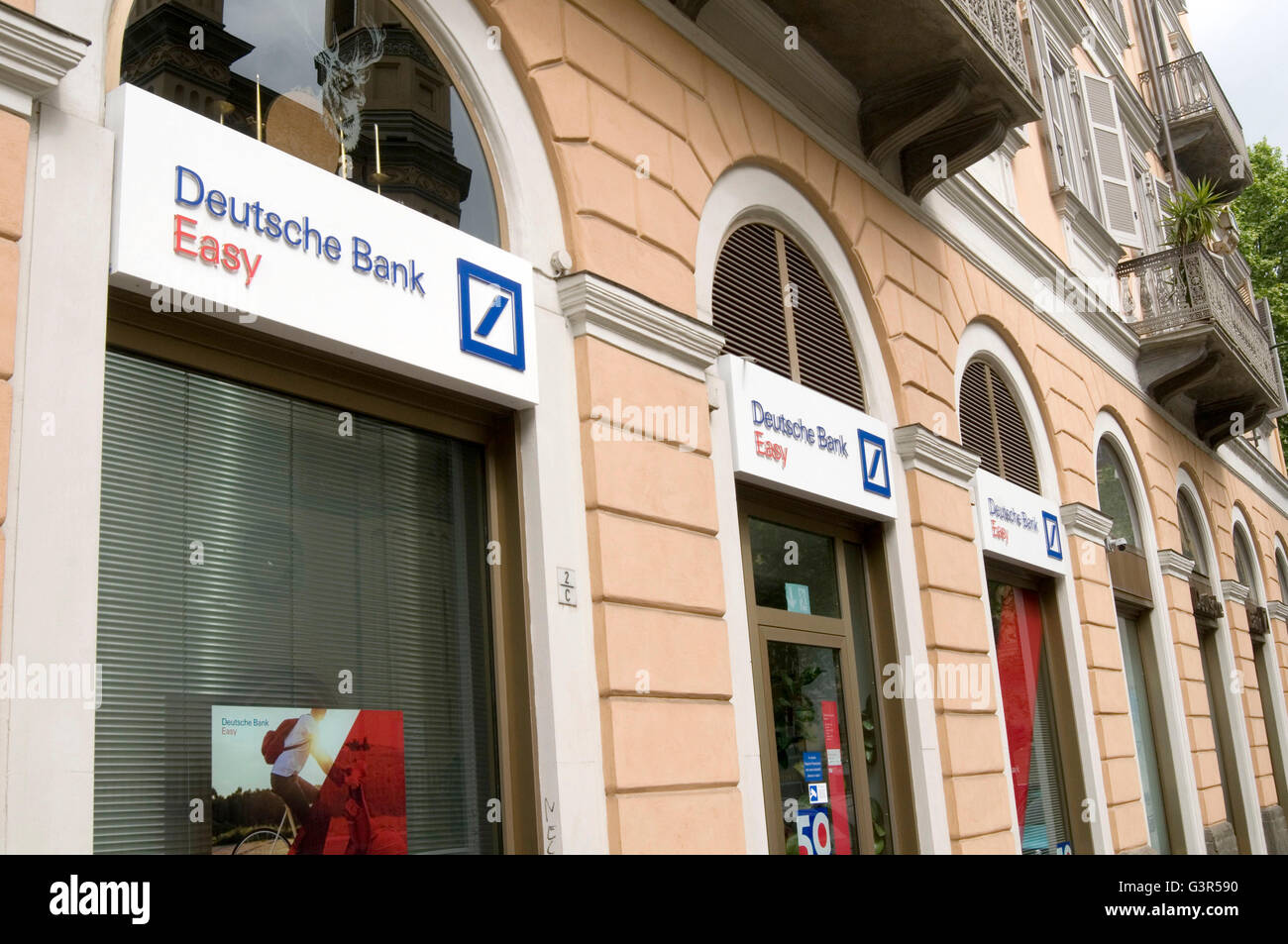
- Member Banks: Deutsche Bank, Commerzbank, Postbank, and HypoVereinsbank.
- Total ATMs: Roughly 6,000 to 7,000.
- Benefit: Customers of any member bank (including their subsidiaries like norisbank or comdirect) can withdraw cash for free from any Cash Group machine.
4. The CashPool
CashPool is a smaller alliance of private banks that joined forces to compete with the larger networks.
- Member Banks: Targobank, Santander, Sparda-Banken, BBBank, and several smaller private institutions.
- Total ATMs: Approximately 2,800.
- Benefit: Free withdrawals for customers of participating banks at any CashPool-branded machine.
Technical Specifications and Card Compatibility
In 2026, the standard German debit card is the Girocard (formerly known as EC-card). Most modern Girocards are "co-badged" with Visa Debit or Mastercard Debit to allow for international use and online shopping.
Withdrawal Limits
Standard withdrawal limits at German ATMs are typically set by the issuing bank, not the ATM provider. For most German accounts, the daily limit is between €500 and €1,000. Weekly limits often hover around €2,000 to €4,000. If you are using a foreign card, the ATM itself might impose a technical limit (often €500 or €1,000 per transaction) regardless of your personal bank's limit.
Language Options
Almost all ATMs in Germany offer a multilingual interface. Upon inserting your card, the machine usually detects the origin of the chip and offers a choice of languages, including English, French, Spanish, Turkish, and Polish. If it does not auto-detect, look for a "Sprache" or "Language" button on the initial screen.
ATM Operating Hours
Unlike some countries where ATMs are located inside bank lobbies that close at night, most German ATMs are accessible 24/7. They are either located on the exterior wall of the bank or in a foyer ("Selbstbedienungs-Zone") that can be accessed by swiping any valid debit or credit card at the door reader.
Understanding Fees and Surcharges
Transparency in ATM pricing is strictly regulated in Germany by the Price Indication Ordinance (Preisangabenverordnung).
The "Direktes Kundenentgelt" (Direct Customer Fee)
When you use an ATM outside your network, the machine must display the fee on the screen before you authorize the transaction. You have the right to cancel the transaction at this point without being charged. In 2026, these fees usually range from:
- Sparkasse/VR-Banken: €3.95 – €5.95
- Private Banks (Cash Group/CashPool): €4.00 – €7.50
- Independent Operators (e.g., Euronet): €4.95 – €8.00 + potential percentage-based fees.
Dynamic Currency Conversion (DCC) Warning
For users with non-Euro accounts (USD, GBP, CHF, etc.), the ATM may offer to "lock in" a guaranteed exchange rate. Always decline this. This is Dynamic Currency Conversion. The "guaranteed rate" is almost always 5% to 10% worse than the mid-market rate your own bank would provide.
- Action: Always select "Withdraw in EUR" or "Without Conversion." Let your home bank handle the currency exchange.
Independent ATM Operators
In tourist-heavy areas (such as Berlin’s Alexanderplatz, Munich’s Marienplatz, or near the Frankfurt Cathedral), you will frequently encounter independent ATMs like Euronet, Cardpoint, or NoteMachine.
These are not affiliated with the major German banking pillars. They are notorious for:
- Higher-than-average flat fees.
- Aggressive DCC prompts.
- Lower withdrawal limits to encourage multiple transactions (and thus multiple fees).
Use these only as a last resort. It is almost always worth walking an extra block to find a branded bank ATM.
Retailer Cashback: The Free Alternative
A popular and cost-effective alternative to ATMs in Germany is the Bargeld-Service (cashback) offered by major retailers. This service is available at most supermarkets (Rewe, Edeka, Lidl, Aldi Süd), drugstores (dm, Rossmann), and some hardware stores (Bauhaus).
- How it works: When paying for your groceries, tell the cashier "und [amount] Euro bar dazu, bitte" (and [amount] Euros cash as well, please).
- Requirements: You usually must spend a minimum amount (typically €5.00 or €10.00).
- Limits: You can usually withdraw up to €200.
- Fees: There is zero fee for this service from the retailer's side, and it is processed as a standard debit transaction by your bank.
Comparison of Major German ATM Networks
The following table summarizes the primary networks available in 2026 to help you identify where to withdraw cash based on your needs.
| Network Name | Primary Members | Est. ATMs | Typical Fee (Non-Members) | Best For |
|---|---|---|---|---|
| Sparkasse | Regional Savings Banks | 21,000+ | €3.95 - €5.50 | Rural areas & small towns |
| VR-Banken | Volksbanken, Raiffeisenbanken | 15,000+ | €3.95 - €5.95 | Rural and suburban areas |
| Cash Group | Deutsche Bank, Commerzbank, Postbank | 6,500 | €4.95 - €7.50 | City centers & airports |
| CashPool | Targobank, Santander, Sparda | 2,800 | €4.00 - €6.00 | Targeted urban locations |
| Independent | Euronet, Cardpoint | 5,000+ | €4.95 - €8.00+ | Tourist hotspots (Avoid) |
Security and Best Practices
German ATMs are generally very safe, but standard security precautions remain relevant in 2026.
- Anti-Skimming: Check the card slot. If it looks loose, bulky, or poorly attached, do not use it. Most modern German ATMs use "Active Antiskimming" modules that fluctuate the speed of the card intake to defeat skimmers.
- PIN Protection: Always cover the keypad with your free hand. "Shoulder surfing" remains a common tactic in crowded urban areas.
- Bank Foyer Access: If you are withdrawing cash late at night, use the ATMs located inside the bank foyer. These require a card to open the door, providing a barrier between you and the street.
- The "Lost Card" Hotline: If your card is swallowed by a machine or stolen, immediately call the central emergency blocking number in Germany: 116 116. This service is available 24/7 and works for most German bank cards and major credit cards.
Troubleshooting Common Issues
Card "Not Authorized"
If your card is declined even though you have funds:
- Travel Notice: Ensure your home bank knows you are in Germany. Many banks automatically block German transactions due to historical fraud patterns if a travel notice isn't in place.
- Chip vs. Stripe: Most German ATMs require a functioning EMV chip. If your card only has a magnetic stripe, it may be rejected for security reasons.
- Daily Limits: You may have exceeded your international daily withdrawal limit, which is often lower than your domestic limit.
ATM Swallows the Card
If an ATM retains your card, it is usually for one of three reasons: multiple wrong PIN entries, an expired card, or a mechanical fault.
- During Business Hours: Go inside the branch with your ID. They can often retrieve the card after the machine is serviced.
- Outside Business Hours: You will likely not get the card back immediately. Call 116 116 to block it and contact your issuing bank for a replacement.
Machine Does Not Dispense Cash But Debits Account
This is rare but can happen due to a mechanical jam. Always take the printed receipt (if available). Take a photo of the ATM's identification number (usually found on a sticker on the front of the machine) and the error message on the screen. Contact your bank immediately to initiate a chargeback or "ATM non-dispense" claim.
Summary of Usage Strategy
To minimize costs and maximize convenience in 2026:
- If you have a German bank account, stick strictly to your network alliance (Cash Group, CashPool, etc.).
- If you are a traveler, use Sparkasse or Volksbank machines for the most reliable service, and always decline conversion (DCC).
- Utilize supermarket cashback for small amounts to avoid ATM surcharges entirely.
- Avoid independent ATMs (Euronet) unless no other option exists.
Frequently Asked Questions
Are there any 100% free ATMs in Germany for foreign cards? Generally, no. While some German banks (like DKB or certain Sparda branches) used to offer free withdrawals for all, most have implemented "Direct Customer Fees" for foreign cards by 2026. However, your own home bank might reimburse these fees if you have a premium travel account. Always check your home bank's policy on "out-of-network ATM reimbursements."
Can I use contactless (NFC) to withdraw cash in Germany? Yes, by 2026, most ATMs in major cities are equipped with NFC readers. You can tap your card or use mobile wallets like Apple Pay or Google Pay. However, for security reasons, you will still be required to enter your physical card's PIN on the ATM keypad. Note that in rural areas, older machines that require physical card insertion are still common.
What should I do if the ATM offers a choice between "Checking" and "Credit"? In Germany, this distinction is less common than in the U.S. or South America. If prompted, select "Giro" or "Checking" for debit cards. If you are using a true credit card, select "Credit." Selecting the wrong account type can occasionally lead to a "transaction not supported" error.
Is there a maximum amount I can withdraw in one day? While the machine might allow up to €1,000 per transaction, the real limit is almost always dictated by your own bank. For most international travel cards, this is defaulted to the equivalent of $500 or €500 per 24-hour period. You can often increase this limit temporarily through your bank’s mobile app.