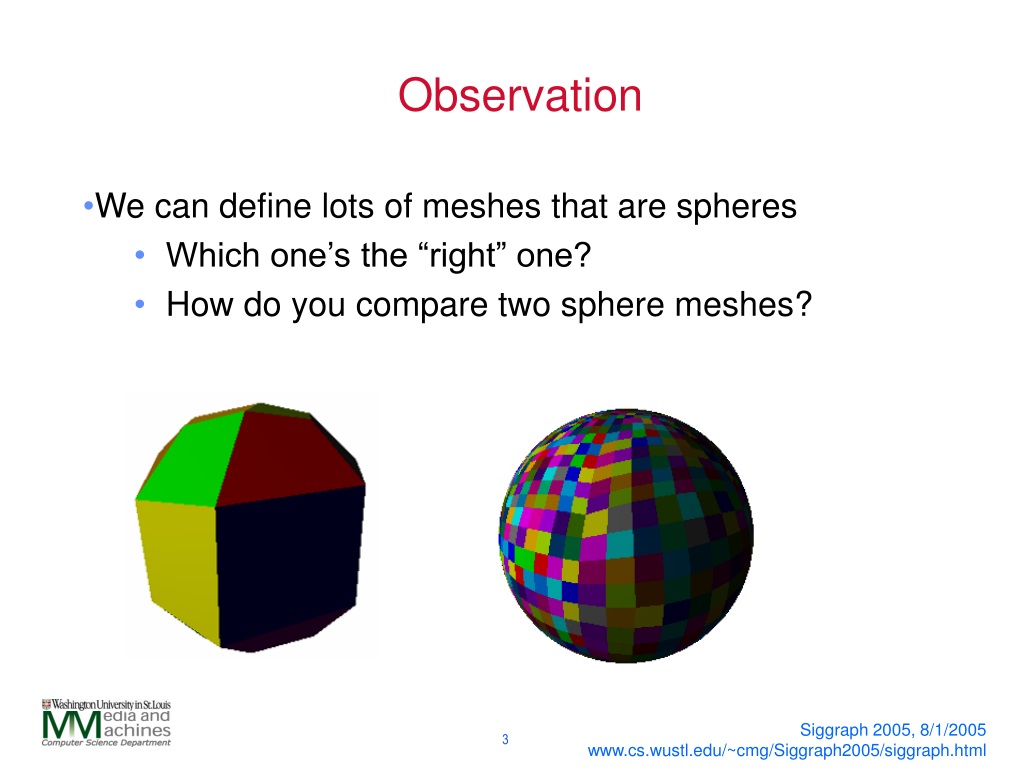
To assume the cow is a sphere for modeling is a fundamental heuristic used in physics and engineering to simplify complex, real-world systems into manageable mathematical problems. By stripping away non-essential details—such as the irregular shape of a cow's limbs or its biological texture—scientists can focus on primary variables like volume, mass, and heat exchange, creating a "zeroth-order approximation" that serves as a necessary starting point for advanced analysis.
The Philosophical Core of Scientific Abstraction
In the realm of theoretical physics, the phrase "assume the cow is a sphere" serves as both a classic joke and a profound methodology. The joke typically involves a dairy farmer seeking help from a university to increase milk production. While the biologists and chemists struggle with the sheer complexity of the animal's metabolism, the physicist returns with a solution that begins with the disclaimer: "First, assume the cow is a sphere..."
While humorous, this metaphor highlights the core of scientific modeling: abstraction. In 2026, despite our immense computational power, the ability to abstract remains the most critical skill in a researcher's toolkit. Every model is a map, and as the famous aphorism by Alfred Korzybski states, "the map is not the territory." If a map were as detailed as the territory itself, it would be uselessly complex. Therefore, the "spherical cow" represents the deliberate choice to ignore irrelevant data to find a solvable equation.
The Necessity of Tractability
The primary reason for assuming a sphere—or any highly symmetrical shape—is mathematical tractability. In geometry, the sphere is the most symmetrical object possible. It has a constant radius, a well-defined surface-area-to-volume ratio, and its properties do not change regardless of how you rotate it. When a physicist attempts to calculate the heat loss of a cow in a cold field, calculating the surface area of a realistic, four-legged, tail-wagging mammal is a nightmare of multivariable calculus. By assuming a sphere, the surface area becomes a simple $4\pi r^2$. This allows for an initial "ballpark" estimate that determines if the problem is even worth pursuing with more complex models.
The Hierarchy of Modeling: From Spheres to Reality
Modeling is rarely a one-step process. Instead, it functions as an iterative hierarchy where complexity is added back only after the simplest version of the problem is understood. In professional research environments, this is often categorized into different "orders" of approximation.
Zeroth-Order Approximation
The "spherical cow" is the quintessential zeroth-order approximation. At this stage, we assume perfect conditions: no friction, a vacuum, perfect spheres, and uniform density. This stage is used to establish the fundamental physical limits of a system. If a "spherical cow" cannot physically produce the amount of milk required by the farmer based on energy conservation laws, then no amount of biological detail will make the goal possible.
First-Order and Higher-Order Perturbations
Once the spherical model provides a baseline, researchers apply "perturbations." This is the process of adding back small complexities. For the cow, this might involve changing the sphere into an ellipsoid to better represent the torso, then adding cylinders for legs. In 2026, we see this in climate modeling; early models treated the Earth as a smooth ball (zeroth-order), while current models include the "perturbations" of mountain ranges, ocean currents, and atmospheric layers.
The Role of Boundary Conditions
Every model requires boundary conditions—rules that define where the model ends and the rest of the universe begins. When we assume a sphere, we are simplifying the boundary. This makes it easier to apply laws of thermodynamics or fluid dynamics. For example, calculating the wind resistance (drag) on a cow-shaped object is incredibly difficult due to turbulent flow around the ears and legs. The drag on a sphere, however, is a solved problem in fluid mechanics, governed by the Reynolds number and clear empirical coefficients.
Practical Applications of Extreme Simplification
The "spherical cow" approach is not limited to livestock or physics jokes. It is the standard operating procedure across multiple high-stakes industries as of 2026.
Astrophysics and Planetary Science
When calculating the orbit of the Earth around the Sun, astronomers do not account for the Himalayas, the depth of the Mariana Trench, or even the fact that the Earth is slightly wider at the equator (an oblate spheroid). For the purpose of orbital mechanics, the Earth is treated as a point mass—an even more extreme simplification than a sphere. The Earth's entire mass is assumed to exist at a single infinitesimal point in space. This "point-mass cow" is what allows us to navigate spacecraft to Mars with centimeter-level precision.
Epidemiology and Public Health
In disease modeling, such as the SIR (Susceptible, Infectious, Recovered) models used by organizations like the World Health Organization, the "spherical cow" is the assumption of a "well-mixed population." This assumes that every person in a city has an equal probability of meeting every other person. While we know humans have specific social circles and movements, the "well-mixed" assumption provides the critical "R-naught" ($R_0$) value that guides global health policy before more granular, agent-based models are developed.
Economics and the "Rational Actor"
Economists often use the "spherical cow" of the Homo Economicus—the perfectly rational actor who always makes decisions to maximize utility. Real humans are emotional, impulsive, and often irrational. However, by assuming a "spherical human" who follows logical rules, economists can build foundational theories of supply and demand that remain remarkably robust even when the "noise" of human emotion is added later.
Comparative Modeling Efficiency in 2026
The following table illustrates the trade-offs between the "spherical" approach and high-fidelity modeling in modern technical workflows.
| Model Type | Geometry/Assumptions | Computational Cost | Accuracy | Primary Use Case |
|---|---|---|---|---|
| Spherical (Zeroth-Order) | Symmetry, Uniformity | Negligible (Manual calc) | 60-80% | Feasibility studies, initial theory |
| Analytical (First-Order) | Spheroids, Linear drag | Low (Standard PC) | 85-90% | Engineering design, prototyping |
| Numerical (CFD/FEA) | CAD-accurate geometry | High (Server clusters) | 95-99% | Safety testing, final optimization |
| Digital Twin (2026) | Real-time sensor data | Extreme (Edge-Cloud) | >99.5% | Live monitoring, predictive maintenance |
The Risks of Over-Simplification
While the spherical cow is a powerful tool, it carries the inherent risk of the "Abstraction Error." This occurs when the simplified model ignores a variable that is actually a "primary driver" of the system's behavior.
When the Model Fails
If a physicist calculates the terminal velocity of a falling cow by assuming it is a sphere, the result will be significantly different from reality. A real cow has a high surface area relative to its mass because of its limbs and flat sides, creating much more air resistance than a dense sphere. If a parachuting system for livestock were designed based on the spherical model, the result would be catastrophic.
In 2026, we see this risk in AI-driven modeling. If an AI is trained on "simplified" data that ignores outlier events (black swans), the model may perform perfectly in simulations but fail spectacularly in the messy, "non-spherical" real world. This is why validation—comparing the model's output to actual empirical data—is the mandatory final step of any modeling process.
Why We Still Use "Spherical Cows" in the Age of AI
With the 2026 advancements in Generative AI and supercomputing, one might ask why we bother with such crude simplifications. The answer lies in explainability and insight.
A high-fidelity simulation involving billions of data points can tell you what will happen, but it often cannot tell you why. Complex simulations are "black boxes." In contrast, a spherical model provides an "analytical solution"—a clean formula that shows the relationship between variables. If you want to understand how doubling the size of a creature affects its ability to stay warm (Bergmann's Rule), a spherical model instantly shows you that volume increases by the cube while surface area only increases by the square. That fundamental insight is more valuable than a million-dollar simulation.
Frequently Asked Questions
Who originated the "Spherical Cow" joke?
While the exact origin is debated, the joke became a staple of physics culture in the mid-20th century. It is widely attributed to the theoretical physics community, particularly those working in areas where biological complexity met hard physical laws, such as biophysics or ecology. The joke gained mainstream fame through the 1988 book Consider a Spherical Cow: A Course in Environmental Problem Solving by John Harte.
Is the "spherical cow" approach scientifically valid?
Yes, it is scientifically valid as a heuristic. It is not intended to be a final answer but a "limiting case." By solving the simplest version of a problem, scientists establish the boundaries of what is possible. If an effect doesn't show up in the spherical model, it is unlikely to be a major factor in the complex model.
How do I know if my model is "too simplified"?
A model is too simplified if it fails to predict the behavior of the system within an acceptable margin of error for its intended use. In engineering, this is measured by the "Residual"—the difference between the model's prediction and the experimental results. If the residual is too high, the researcher must "break the symmetry" of the sphere and add more realistic geometry.
Does this apply to computer science and coding?
Absolutely. In software engineering, the "spherical cow" is often the "Happy Path"—a model of a user who always enters the correct data and never clicks the wrong button. Developers build the "spherical" version of the app first before adding "edge case" handling for the messy, non-spherical reality of human error.
What is the relationship between the spherical cow and Occam's Razor?
Occam's Razor suggests that the simplest explanation is usually the correct one. The spherical cow methodology takes this a step further: it suggests that the simplest model is the best place to start. Both philosophies value the removal of unnecessary complexity to reach the core truth of a phenomenon.
Practical Recommendation for Modelers
When faced with a complex problem in 2026, start by "sphericalizing" your subject. Define the absolute minimum number of variables required to describe the system. If you are modeling urban traffic, start by treating cars as points on a line. If you are modeling a business's growth, start by assuming a constant market.
Once you have a working "zeroth-order" model that produces a result, perform a Sensitivity Analysis. Identify which of your simplifications has the biggest impact on the outcome. If your results change wildly when you change the "sphere" to a "cube," then the shape matters, and you must invest in higher-fidelity modeling. Always remember: start simple to find the truth, then add complexity to find the precision.