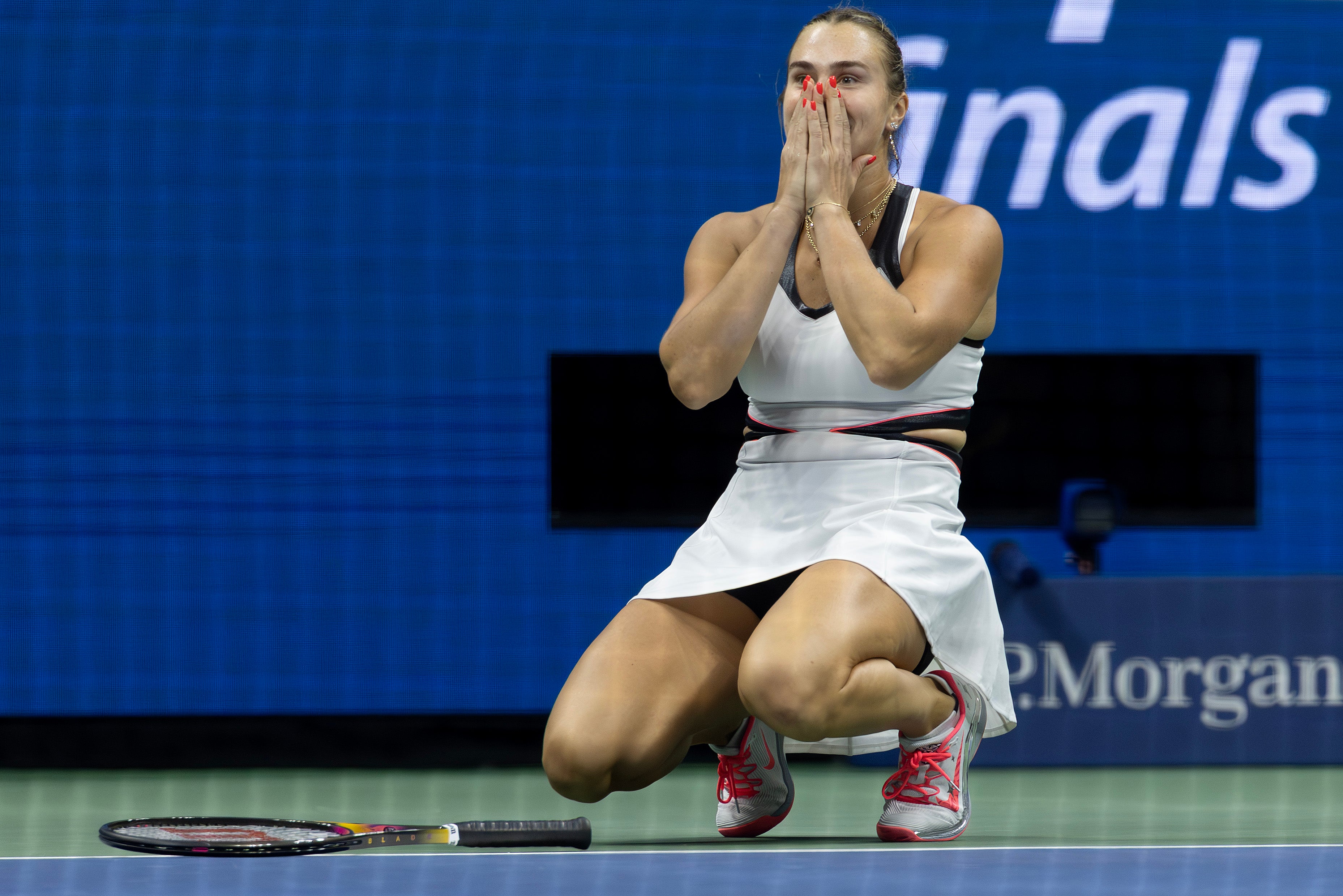
Aryna Sabalenka described her 2024 WTA season as the most transformative, emotionally taxing, and ultimately rewarding year of her professional career. Highlighted by Grand Slam titles at the Australian Open and US Open, a return to the WTA World No. 1 ranking, and overcome severe physical and personal adversity, Sabalenka's post-season reflections emphasized her dramatic evolution in mental discipline, emotional control, and career longevity.
Overview of Sabalenka’s 2024 Season: Key Milestones and Statistics
The 2024 tennis calendar established Aryna Sabalenka as the premier hard-court player in women's tennis and demonstrated her growing versatility across all surfaces. After successfully defending her Australian Open title in January without dropping a single set, Sabalenka endured a tumultuous middle stretch of the year characterized by acute personal grief, illness, and a shoulder injury that forced her to skip Wimbledon.
However, her late-summer resurgence—marked by back-to-back titles at the Cincinnati Open and the US Open, followed by a victory at the Wuhan Open—propelled her back to the top of the WTA rankings. She ultimately clinched the year-end World No. 1 spot at the WTA Finals in Riyadh, capping off a campaign defined as much by resilience as by athletic dominance.
| Tournament / Milestone | Result / Achievement | Primary Surface | Key Seasonal Reflection |
|---|---|---|---|
| Australian Open | Champion (Def. Q. Zheng) | Outdoor Hard | "I proved to myself that I could handle the pressure of defending a title." |
| Madrid & Rome Masters | Finalist (vs. I. Swiatek) | Outdoor Clay | "Playing Iga on clay pushed me to adapt and expand my tactical variety." |
| Roland Garros | Quarterfinalist | Outdoor Clay | "Battling illness taught me to accept physical limitations without anger." |
| Wimbledon | Withdrew (Shoulder injury) | Outdoor Grass | "Listening to my body was the hardest but smartest decision of my life." |
| Cincinnati Open | Champion (Def. J. Pegula) | Outdoor Hard | "The summer hard-court swing brought back my joy and physical freedom." |
| US Open | Champion (Def. J. Pegula) | Outdoor Hard | "Winning in New York erased the heartbreak of 2023 and proved my growth." |
| Wuhan Open | Champion (Def. Q. Zheng) | Outdoor Hard | "Maintaining consistency late in the season proved my baseline endurance." |
| WTA Finals (Riyadh) | Semifinalist / Year-End No. 1 | Indoor Hard | "Ending the year at No. 1 was the dream I fought for every single day." |
Conquering Hard Courts: Australian Open Defense and US Open Redemption
Sabalenka’s 2024 season began with an emphatic statement in Melbourne. Entering the Australian Open as the defending champion, she faced intense media scrutiny regarding her ability to manage title-defense pressure—a hurdle that had historically bothered many first-time Slam champions. Sabalenka dismantled the field, navigating seven matches without losing a set and defeating China’s Zheng Qinwen in a decisive final.
Reflecting on her Melbourne performance later in the year, Sabalenka noted that defending her first major title provided crucial psychological validation. She remarked that winning her first Grand Slam in 2023 felt like a breakthrough, but defending it in 2024 proved to her and her team that she belonged at the elite summit of the sport on a permanent basis.
2024 Hard-Court Slam Performance Summary:
- Australian Open: 7 Matches Won | 0 Sets Lost | Title Champion
- US Open: 7 Matches Won | 1 Set Lost | Title Champion
- Combined Record: 14-0 in Hard-Court Grand Slam Singles Matches
The true emotional benchmark of her season, however, occurred at Flushing Meadows. Having suffered a bitter three-set defeat to Coco Gauff in the 2023 US Open final—a match where emotional volatile play compromised her tactical execution—Sabalenka returned to Arthur Ashe Stadium with a revised approach. Facing American Jessica Pegula in the 2024 final, Sabalenka maintained composure during high-stress baseline exchanges, securing a 7-5, 7-5 victory.
In her post-match interviews and subsequent end-of-year retrospectives, Sabalenka repeatedly referenced the emotional scar tissue from 2023. She highlighted that her victory in New York was not simply about holding another trophy, but about conquering the deep self-doubt that had lingered after her previous year's collapse. She credited her ability to remain calm during key points as the single deciding factor in her transformation into a multi-surface champion.
Adversity, Injury, and Recovery: Navigating Personal and Physical Trials
While Sabalenka's high-water marks in 2024 were extraordinary, the middle months of the year presented unprecedented personal and physical tests that forced her to re-evaluate her approach to professional competition.
In March 2024, ahead of the Miami Open, Sabalenka faced profound grief following the sudden death of her former partner, Konstantin Koltsov. Despite immense emotional strain, she chose to play the tournament, requesting privacy while competing under difficult circumstances. Addressing this period late in the season, Sabalenka reflected on how tennis initially served as a necessary distraction, though she subsequently recognized the heavy emotional toll it exacted on her overall well-being.
2024 Mid-Season Trial Timeline:
- [March] Personal Tragedy in Miami: Competes through extreme emotional stress
- [June] Roland Garros Quarterfinals: Suffers acute stomach illness vs. Andreeva
- [July] Wimbledon Withdrawal: Rare scapular muscle/shoulder injury
- [Aug] Washington / Cincinnati: Strategic reset; rebuilds physical capacity
By late spring and early summer, physical limitations compounding her emotional exhaustion began to surface:
- Roland Garros Stomach Illness: During her quarterfinal loss to teenager Mirra Andreeva, Sabalenka was visibly compromised by a severe gastrointestinal illness. Rather than retiring, she insisted on playing out the match—a choice she later cited as a moment of stubborn pride, but one that taught her important lessons about managing bodily distress.
- Scapular Muscle Injury at Wimbledon: Shortly before her first-round match at the All England Club, Sabalenka suffered a rare injury to her teres major shoulder muscle. The pain prevented her from serving at full speed, forcing her to withdraw from a Grand Slam for the first time in her career.
Sabalenka spoke candidly about her Wimbledon withdrawal, calling it one of the most painful decisions she had ever made as a professional athlete. Historically inclined to play through acute discomfort, she realized that forcing her body onto the grass would risk long-term structural damage. She used the mandatory break in July to rest, step away from the court, and realign her physical conditioning before the North American hard-court swing.
Psychological Evolution: Mindset, Biomechanics, and Emotional Control
To understand Sabalenka’s comments on her 2024 achievements, one must examine the systematic changes she made to her psychological and technical preparation. For years, media analysis focused heavily on Sabalenka’s volatile court temperament and her high double-fault counts, which famously peaked between 2021 and 2022.
By 2024, working closely with fitness coach Jason Stacy, tennis coach Anton Dubrov, and specialized biomechanics professionals, Sabalenka transformed what was once her greatest liability into a primary strength: her mental stability under fire.
Sabalenka's Tactical & Mental Shift (2021 vs. 2024)
- 2021-2022 Archetype
- High double-fault variance
- Reactive emotional outbursts
- Redline power on all shots
- Vulnerable to tactical panic
- 2024 Evolved Archetype
- Stabilized toss & bio-mechanics
- Neutral body language reset
- Controlled margin & spin
- Tactical patience in rallies
When evaluating her evolution during her end-of-year media press conferences, Sabalenka identified three core psychological pillars behind her success:
- Acceptance of Imperfection: She stopped expecting every shot to be a winner, learning to tolerate unforced errors without allowing frustration to derail subsequent points.
- Breathwork and On-Court Micro-Routines: Between points, Sabalenka implemented deliberate visual and respiratory routines—often focusing on her strings or turning toward the back wall—to lower her heart rate before receiving or serving.
- Decoupling Self-Worth from Match Results: She realized that losing a tennis match did not invalidate her hard work or personal growth, which significantly reduced the performance anxiety she previously experienced in Grand Slam finals.
She frequently reiterated that in earlier stages of her career, she believed pure power and aggression were enough to overpower top-tier opponents. In 2024, however, she realized that controlled intensity—knowing when to hit with higher net clearance or target larger target areas—was what ultimately produced consistent tournament victories.
The Battle for World No. 1: Surpassing Iga Swiatek
A central narrative throughout the 2024 season was the high-stakes race for the WTA Year-End World No. 1 ranking between Sabalenka and Poland’s Iga Swiatek. Swiatek had dominated the top spot for much of the previous two years, building a substantial points lead following her dominant clay-court swing, which included titles in Madrid, Rome, and French Open.
Sabalenka's relentless consistency during the autumn Asian swing allowed her to steadily close the ranking gap:
2024 WTA Ranking Points Trajectory (Late Season Push):
- August (Pre-Cincinnati): Swiatek holds ~3,000 point margin over Sabalenka
- September (Post-US Open): Sabalenka closes gap via Slam title & Cincinnati win
- October (Wuhan Open): Sabalenka wins Wuhan; Swiatek skips Asian swing
- Late October: Sabalenka officially overtakes Swiatek for World No. 1
- November (WTA Finals): Sabalenka secures Year-End No. 1 standing in Riyadh
When Sabalenka officially secured the year-end World No. 1 spot during group play at the WTA Finals in Riyadh, she expressed immense pride. Having briefly held the No. 1 ranking for eight weeks following the 2023 US Open before relinquishing it back to Swiatek at the 2023 WTA Finals in Cancún, Sabalenka viewed finishing 2024 atop the rankings as definitive proof of her season-long dominance.
In her comments to the press in Riyadh, she stated that finishing the year at No. 1 felt far more meaningful than her brief stint the previous autumn. Achieving the year-end ranking required sustained excellence over ten months, across multiple continents and surfaces, rather than relying on a short burst of form.
Key Tactical & Analytical Comparison: Sabalenka in 2023 vs. 2024
To appreciate how Sabalenka’s comments reflect her actual evolution, examining key performance metrics reveals measurable structural improvements across her game between 2023 and 2024.
| Performance Metric | 2023 Season Performance | 2024 Season Performance | Tactical Analysis & Significance |
|---|---|---|---|
| Grand Slam Singles Titles | 1 (Australian Open) | 2 (Australian Open, US Open) | Doubled her major efficiency; conquered hard-court Slam double. |
| Top 10 Win Percentage | ~62% | ~75% | Showed increased reliability against upper-echelon tactical opponents. |
| Break Point Conversion Rate | ~43% | ~48% | Better decision-making and composure on crucial baseline points. |
| Average Double Faults/Match | ~4.2 | ~2.8 | Re-engineered toss mechanics provided high reliability under stress. |
| Unforced Error / Winner Ratio | 1.25 : 1 | 0.95 : 1 | Increased net clearance and margins reduced baseline unforced errors. |
Long-Term Career Implications: Lessons Carried Beyond 2024
Looking back on her 2024 campaign, Sabalenka emphasized that the most valuable takeaways extended far beyond ranking points or prize money. The year served as a masterclass in professional workload management, emotional maturity, and career sustainability.
1. Smart Scheduling and Body Maintenance
Having suffered the scapular injury that forced her out of Wimbledon, Sabalenka acknowledged that her past tendency to over-play without adequate rest periods was counterproductive. Moving forward, she committed to structuring her tournament calendar to prioritize peak performance at the Grand Slams and WTA 1000 events, rather than chasing points in secondary events.
2. Deep Trust in Her Support Network
Sabalenka repeatedly highlighted the indispensable role of her team—specifically coach Anton Dubrov and performance trainer Jason Stacy. She noted that their unconditional support during her lowest emotional moments in spring 2024 reinforced her conviction that tennis is fundamentally a team sport played by an individual.
3. Maturation of On-Court Identity
Rather than viewing herself strictly as a heavy hitter, Sabalenka spent 2024 embracing her full athletic capabilities. Her comments throughout the autumn showed a player comfortable using slice drop shots, net approaches, and varying top-spin heights—adding tactical nuance to her established power baseline game.
Frequently Asked Questions
What were Aryna Sabalenka's main comments on winning the 2024 US Open?
Aryna Sabalenka described winning the 2024 US Open as an emotional redemption following her heartbreaking loss in the 2023 final to Coco Gauff. She noted that in 2023 her emotions got the best of her, whereas in 2024 she managed to stay composed during crucial moments against Jessica Pegula, proving to herself that she had achieved true psychological control.
Why did Aryna Sabalenka miss Wimbledon in 2024?
Sabalenka was forced to withdraw from Wimbledon 2024 due to a rare shoulder injury—specifically a tear or acute strain in the teres major muscle. In her press statements, she revealed that trying to serve caused severe pain, and making the decision to withdraw was one of the hardest choices of her career, but essential for preserving her long-term health.
How did Sabalenka regain the WTA World No. 1 ranking in 2024?
Sabalenka reclaimed the World No. 1 spot by compiling an outstanding hard-court campaign in the second half of the season. After winning the Cincinnati Open and the US Open, she followed up with a title at the Wuhan Open while her rival Iga Swiatek was absent from the Asian swing. Sabalenka formally locked up the Year-End World No. 1 ranking at the WTA Finals in Riyadh.
How did Sabalenka change her psychological approach during the 2024 season?
Sabalenka credited her success in 2024 to accepting that unforced errors are a normal part of tennis, utilizing micro-breathwork routines between points, and maintaining emotional detachment from bad calls or missed shots. This approach kept her calm during critical break-point situations throughout the year.
What Grand Slam titles did Aryna Sabalenka win in 2024?
Aryna Sabalenka won two Grand Slam singles titles in 2024: the Australian Open in January (defeating Zheng Qinwen in straight sets) and the US Open in September (defeating Jessica Pegula in straight sets). This made her the first woman since Angelique Kerber in 2016 to win both hard-court Grand Slams in the same calendar year.
Practical Key Takeaways for Athletes and Sports Fans
Sabalenka’s reflections on her 2024 season provide valuable lessons on elite performance, stress management, and athletic resilience:
- Prioritize Recovery Over Pride: Knowing when to step back—as Sabalenka did by missing Wimbledon—can prevent catastrophic long-term injury and lay the groundwork for major future victories.
- Control the Process, Not Just the Result: Emotional stability is built through small, consistent routines between high-stress moments rather than sudden bursts of effort.
- Turn Setbacks into Tactical Data: Sabalenka analyzed her 2023 US Open loss to fix specific technical and mental habits, using past failure directly to construct her 2024 victory.
By transforming personal adversity and court heartbreak into structured growth, Aryna Sabalenka’s 2024 campaign stands as a definitive roadmap for athletic longevity and mental strength in modern high-performance sport.