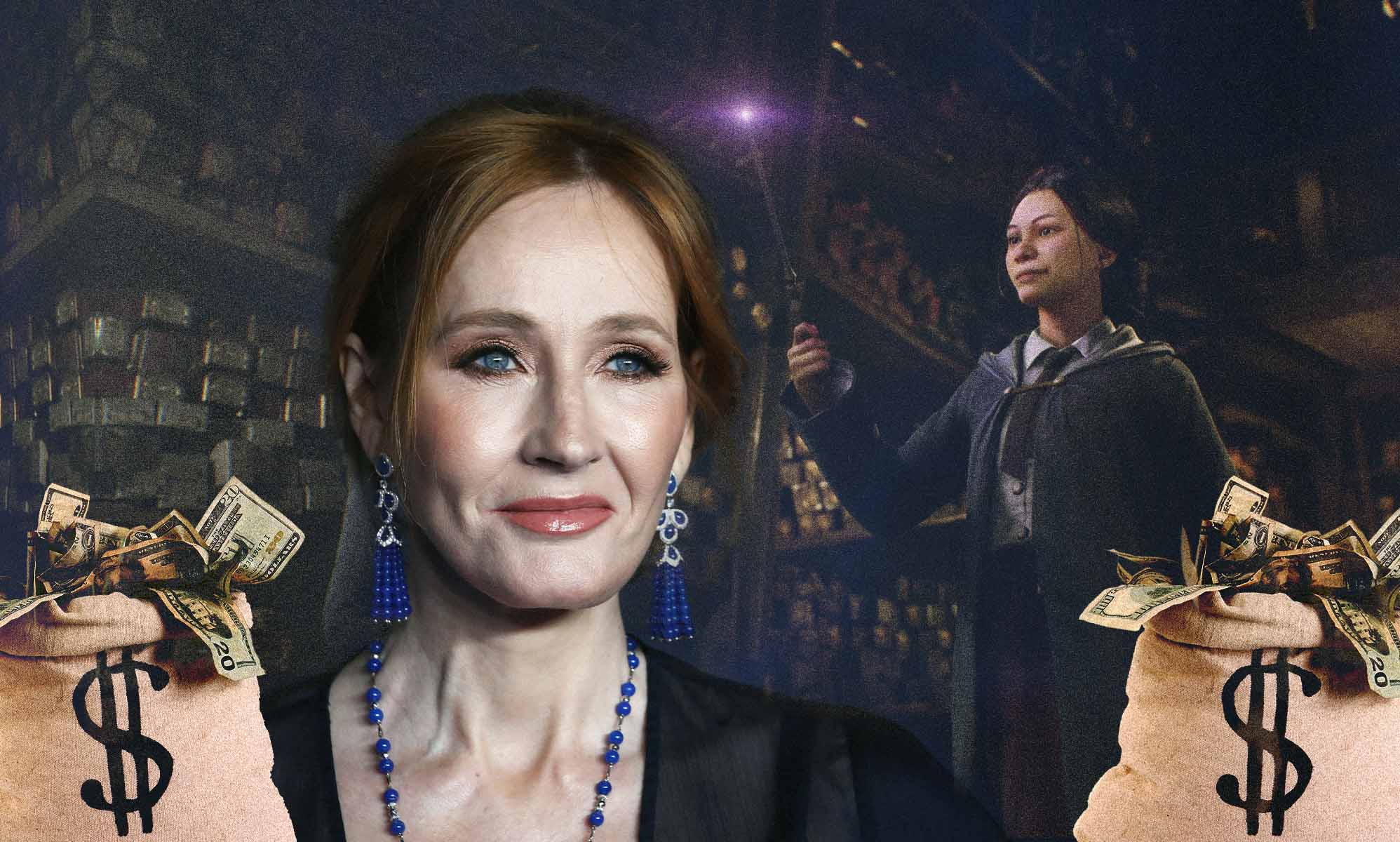
Yes, J.K. Rowling continues to earn tens of millions of dollars annually from the Harry Potter franchise. Her ongoing revenue streams include print and digital book royalties, global merchandise licensing, theme park rights from Universal Studios, film and television residuals, video game licensing, and revenues from stage productions worldwide.
The Financial Architecture of the Wizarding World
To understand why J.K. Rowling remains one of the world's highest-earning authors decades after publishing Harry Potter and the Philosopher’s Stone in 1997, one must look at how her underlying intellectual property (IP) deals were structured. Unlike many authors who sell off their media rights outright early in their careers, Rowling retained an extraordinary degree of control over the copyright, trademark approvals, and secondary exploitation rights of her work.
When initial movie and merchandising deals were forged with Warner Bros. in the late 1990s, Rowling and her management team secured contracts that guaranteed ongoing royalty percentages across multiple media formats rather than simple lump-sum buyouts. This framework ensured that every time the Harry Potter brand expands—whether through a new edition of a book, a theme park attraction, a theatrical production, or a video game release—Rowling receives a cut of the gross revenue.
- J.K. ROWLING MASTER IP HOLDINGS
- PRINT & DIGITAL PUBLISHING
- Print Royalties (Bloomsbury/Scholastic)
- Pottermore / Audiobooks
- MEDIA & EXPERIENTIAL LICENSING
- Universal Theme Parks
- Warner Bros. Film & TV Rights
- Stage & Interactive (Cursed Child/Games)
- PRINT & DIGITAL PUBLISHING
As a result, Rowling's earning potential is not tied to a single source of income or a past achievement. Instead, it functions as a highly diversified corporate matrix operating across global publishing, entertainment, retail, and experiential tourism industries.
Print Publishing Royalties: Books, E-Books, and Audiobooks
Publishing remains the foundational pillar of J.K. Rowling’s financial empire. The Harry Potter book series has sold over 600 million copies worldwide and has been translated into more than 85 languages. Even decades after the release of the final novel, physical book sales generate consistent backlist revenue.
Physical Book Sales
In traditional trade publishing, established authors receive royalty rates ranging between 10% and 15% of the list price for standard hardcover print sales, and between 7.5% and 10% for paperback editions. Given Rowling's leverage, industry estimates place her print royalty rates at the maximum end of publisher standard scales—or higher—with her UK publisher, Bloomsbury, and US publisher, Scholastic.
Backlist sales benefit from constant adoption in school curricula, new illustrated and anniversary editions, boxed sets, and gift bindings. When publishers re-release the series with new cover art, house editions, or interactive elements, these releases stimulate fresh retail sales from both new generations of readers and existing collectors.
E-Books and Audiobooks via Pottermore Publishing
Rowling's most lucrative move in print publishing occurred when she retained the digital rights to the Harry Potter series. When e-books and digital audiobooks emerged as major consumer formats, she did not license these rights to traditional publishers. Instead, she established Pottermore (now operating under Wizarding World Digital and Pottermore Publishing) to control digital distribution.
By managing digital publishing directly, Rowling secured direct net-profit margins on e-books and audiobook distribution rather than receiving a small author percentage from a traditional publisher's net receipts. Pottermore Publishing partners directly with major platforms like Audible, Apple Books, and OverDrive (for library distribution), generating tens of millions of dollars in net annual profits for her publishing arm.
Theme Parks and Experiential Licensing: Universal Studios
One of the most profitable ongoing revenue streams for J.K. Rowling stems from her licensing agreement with Universal Destinations & Experiences (a subsidiary of Comcast Corporation) for The Wizarding World of Harry Potter theme park lands.
Theme Park Licensing Revenue Model:
- Universal Destinations
- Gross Land Revenues & Admissions
- Licensing Agreement
- Rowling Royalty Cut
- Theme Park Merchandise
- Food & Beverage (Butterbeer)
- Land Entry Royalty Pool
- Rowling Royalty Cut
Ticket and Entry Licensing Fees
Universal Studios licensed the rights to build Harry Potter-themed environments across its resorts in Orlando, Hollywood, Japan, and Beijing. The licensing contract requires Universal to pay Rowling both an upfront design-and-licensing fee for each land developed and an ongoing percentage of gross land revenues.
Food, Beverage, and Merchandise Cut
Unlike standard author royalties that apply only to books, Rowling's agreement with Universal covers food, beverage, and physical retail sold within the themed areas. Every sale of:
- Interactive and standard toy wands,
- Hogwarts house robes and apparel,
- Confectionery items (such as Chocolate Frogs and Bertie Bott's Every Flavour Beans),
- Proprietary beverages like Butterbeer,
involves a licensing royalty paid to Rowling. Given the high sales volume of food, drinks, and merchandise at Universal theme parks worldwide, this single agreement yields a steady multi-million-dollar annual payout.
Film, Television, and Streaming Rights: Warner Bros. Discovery
While the eight original Harry Potter feature films and the Fantastic Beasts spinoff trilogy completed their initial theatrical runs, Rowling's financial relationship with Warner Bros. Discovery remains active and lucrative.
Residuals and Cable Syndication
Every time a Harry Potter movie airs on broadcast network television, basic cable (such as TBS or TNT), or international networks, distribution royalties are collected. Rowling's contracts ensure she receives author and creator residual payouts from worldwide television syndication agreements.
Streaming Distribution
In the era of subscription video on demand (SVOD), streaming platforms pay high licensing fees to host high-value franchise catalog content. Warner Bros. Discovery regularly monetizes the Harry Potter film library across its Max streaming platform and through licensing windows to third-party services globally. A percentage of these platform licensing fees flows directly to rights-holders, including Rowling.
The HBO Television Series Adaptation
The announcement of a multi-season Harry Potter television series for Max represents a major new financial development. In this project:
- Executive Producer Fees: Rowling serves as an active executive producer, earning direct production fees per episode.
- Rights Licensing: Warner Bros. Discovery must pay significant new licensing fees to adapt the book materials for a new medium.
- Backend Participation: The contract includes backend profit participation based on global subscriber engagement, international distribution, and secondary syndication.
Video Games and Interactive Entertainment
Interactive entertainment represents a expanding component of Rowling's income. Through Warner Bros. Games and its Portkey Games publishing label, the Harry Potter universe has yielded numerous successful interactive properties.
- Warner Bros. Games (Portkey Games)
- Console / PC Releases
- Hogwarts Legacy
- Harry Potter: Quidditch Champions
- Mobile Titles
- Hogwarts Mystery
- Puzzles & Spells
- Royalty Payments
- J.K. Rowling IP Licensing
- Console / PC Releases
Console Games: Hogwarts Legacy
The release of the open-world action role-playing game Hogwarts Legacy demonstrated the scale of the brand's gaming power. The title sold over 22 million copies in its launch year alone, generating over $1 billion in gross retail revenue.
As the holder of the underlying intellectual property, Rowling receives an IP licensing royalty on gross game sales. Standard intellectual property licensing rates for blockbuster gaming titles typically range between 5% and 15% of wholesale or net digital revenue, translating to tens of millions of dollars from a single video game launch.
Mobile Gaming Revenues
Beyond console games, mobile titles such as Harry Potter: Hogwarts Mystery (developed by Jam City) and Harry Potter: Puzzles & Spells (developed by Zynga) use microtransactions and in-app purchases. These titles generate recurring monthly revenues, a portion of which is paid out to Rowling as ongoing IP maintenance fees.
Stage Productions: Harry Potter and the Cursed Child
The theatrical production Harry Potter and the Cursed Child represents another income stream. Premiering in London's West End before expanding to Broadway, Tokyo, Hamburg, Melbourne, and touring productions, the two-part (and condensed single-part) play has set box-office records for non-musical plays.
Rowling earns from the play in three distinct ways:
- Story Rights and Playwright Royalties: As co-creator of the original story alongside Jack Thorne and John Tiffany, she receives author royalties on weekly gross box office sales (NAGBOR—Net After-Government-Deducted Box Office Receipts).
- Producer Share: Through her involvement in the production entity, she shares in the theatrical profits generated by successful international runs.
- Published Script Sales: The published rehearsal and final scripts of The Cursed Child sold millions of print and digital copies worldwide, functioning under standard publishing royalty arrangements.
Summary of J.K. Rowling's Primary Revenue Streams
The table below outlines the core components of J.K. Rowling’s ongoing Harry Potter financial portfolio:
| Revenue Stream | Key Commercial Partner / Platform | Primary Income Mechanism | Scope of Financial Return |
|---|---|---|---|
| Print Publishing | Bloomsbury, Scholastic | Standard print royalties per copy sold (10–15% list price) | Steady annual backlist earnings from global sales |
| Digital Publishing | Pottermore Publishing, Audible, Apple Books | Net margin profit distribution on e-books & audiobooks | High-margin direct returns; multi-million annual profit |
| Theme Parks | Universal Destinations & Experiences | Entry licensing fees, gross merchandise & food/beverage cut | Recurring royalty percentages across global park locations |
| Film & TV Residuals | Warner Bros. Discovery, Max | Broadcast syndication fees, streaming licensing royalties | Passive global distribution payouts |
| New Screen Adaptations | Max (HBO Original Series) | Rights licensing fees, Executive Producer fees, backend | Major upfront and ongoing production payouts |
| Console & PC Gaming | Warner Bros. Games / Portkey Games | IP master licensing percentage of gross unit sales | Multi-million dollar payouts on major releases |
| Mobile Gaming | Jam City, Zynga | Ongoing microtransaction licensing split | Monthly passive income from free-to-play ecosystems |
| Theatrical Productions | Sonia Friedman Productions, Colin Callender | Gross box office royalties and script publishing | Continuous payouts from global stage runs |
| Consumer Products | Global Retail Partners (Lego, Mattel, etc.) | Master trademark and merchandise licensing fees | Royalties on toys, apparel, home goods, and collectibles |
Why J.K. Rowling’s Income Stream Is Virtually Permanent
The financial engine behind Harry Potter remains durable due to legal frameworks, brand dynamics, and strategic media management.
Copyright Duration
Under copyright laws in the United Kingdom, the United States, and the European Union, copyright protection for literary works created by an individual author lasts for the author's full lifetime plus 70 years after their death. This legal protection ensures that Rowling and her estate retain exclusive monetization rights over the original Harry Potter books, characters, setting, and lore well into the late 21st century.
Copyright Duration Timeline (UK / US / EU Standard):
- Author's Natural Lifetime
- 70 Years Post-Mortem Protection
- Public Domain Entry (No Licensing Royalties Due)
Cross-Generational Appeal and Backlist Dynamics
Unlike media franchises tied to short-term trends, Harry Potter functions as a foundational reading milestone for children worldwide. As parents who grew up with the books introduce them to their children, the backlist experiences a self-sustaining cycle of new consumers. This dynamic guarantees demand for books, entry-level toys, and family theme park vacations without requiring massive new advertising spend.
Dynamic Media Re-Adaptation
By continually re-adapting the core material into new media formats—such as converting original novels into open-world video games, immersive audiobooks, interactive experiences, and long-form television series—the IP maintains its commercial relevance across changing consumer formats.
Common Misconceptions About J.K. Rowling's Financial Status
Misconception 1: "She sold the total rights to Warner Bros."
A common misconception is that Rowling sold the entire Harry Potter franchise to Warner Bros. outright. In reality, Warner Bros. holds specific film, television, and select derivative licensing rights. Rowling retains the master copyright, publishing control, stage rights, and approval power over franchise expansions. Warner Bros. cannot create new major spin-offs or broad commercial activations without her explicit contractual agreement.
Misconception 2: "Public boycotts have eliminated her income."
Despite public controversies and social media boycotts surrounding her political and social commentary in recent years, financial records indicate her total annual earnings remain high. While some individual consumers choose not to buy her products, mainstream demand for theme parks, high-end video games (Hogwarts Legacy), global publishing, and licensed merchandise continues to generate massive revenues worldwide.
Misconception 3: "Authors only earn money when a book is first printed."
Some readers assume an author earns money only during the initial launch window of a book. In professional publishing, authors earn royalties on every new retail unit sold, whether it is printed in the first run or decades later. Furthermore, secondary usage rights—such as foreign translation deals, audio rights, library lending royalties, and school licensing—provide perpetual income long after a book's initial release date.
Key Takeaways for Intellectual Property Strategy
Analyzing J.K. Rowling’s business model provides key insights for creators, brand managers, and financial analysts assessing the value of intellectual property:
- Retain Core Rights: Rowling’s decision to keep digital publishing rights (Pottermore) and refuse absolute rights buyouts enabled long-term financial independence.
- Diversify Monetization Across Sectors: Relying solely on book sales or movie rights leaves revenue vulnerable to industry shifts. Expanding into theme parks, interactive games, and theatrical productions creates a multi-layered financial strategy.
- Negotiate Gross Over Net: Securing royalty structures based on gross revenue or retail list price—rather than publisher or studio "net profits"—protects creators from corporate accounting adjustments that reduce creator payouts.
- Protect Copyright and Approvals: Maintaining approval rights ensures that secondary products align with the core brand, preserving long-term asset value.
Frequently Asked Questions
How much does J.K. Rowling make from Harry Potter every year?
While her exact annual earnings fluctuate based on product launches, independent financial estimates by outlets like Forbes place her annual earnings between $50 million and $100 million in typical years. During years featuring major launches—such as the release of Hogwarts Legacy or a new theme park expansion—her annual income can exceed these estimates.
Does J.K. Rowling get paid every time a Harry Potter book is sold?
Yes. Rowling earns a print royalty on every new copy of a Harry Potter book sold by official publishers worldwide. She also receives direct revenue payouts for every digital e-book downloaded and every audiobook streamed through platforms integrated with Pottermore Publishing.
Does J.K. Rowling earn money from Universal Studios Butterbeer sales?
Yes. Rowling’s master licensing contract with Universal Destinations & Experiences grants her a royalty percentage on all food, beverage, and retail merchandise sold within The Wizarding World of Harry Potter areas. This includes Butterbeer, confectionery, and souvenir items sold inside the parks.
How much did J.K. Rowling make from the video game Hogwarts Legacy?
While exact individual royalty payouts are protected by non-disclosure agreements, Hogwarts Legacy generated over $1 billion in gross retail revenue with more than 22 million units sold. Standard IP licensing rates for major video games range between 5% and 15% of wholesale or net revenues, yielding an estimated payout of tens of millions of dollars for her intellectual property rights.
Will J.K. Rowling make money from the upcoming HBO Harry Potter TV series?
Yes. Rowling will earn substantial revenue from the Max television adaptation. Her income from the project includes upfront IP licensing fees, per-episode Executive Producer compensation, and backend profit participation based on subscriber viewership, international syndication, and home video sales.
Recommended Action for Franchise and IP Analysts
For financial analysts, entertainment lawyers, and intellectual property managers tracking franchise valuations:
- Review Financial Disclosures: Examine public filings from corporate partners—such as Bloomsbury Publishing PLC (annual financial reports), Comcast Corporation (Universal Studios earnings releases), and Warner Bros. Discovery (quarterly report media segments)—to track quarterly fluctuations in consumer demand for licensed fantasy IP.
- Audit Copyright Timelines: Monitor international IP law developments regarding public domain entry periods, trademark extensions, and digital rights management across primary markets in North America, Europe, and Asia.
- Study Rights Retention Models: Analyze the contractual structures of creator-owned franchises (e.g., J.K. Rowling, George R.R. Martin, James Cameron) versus studio-owned assets (e.g., Marvel Studios, Star Wars) to understand how retained approval rights impact long-term corporate licensing negotiations.