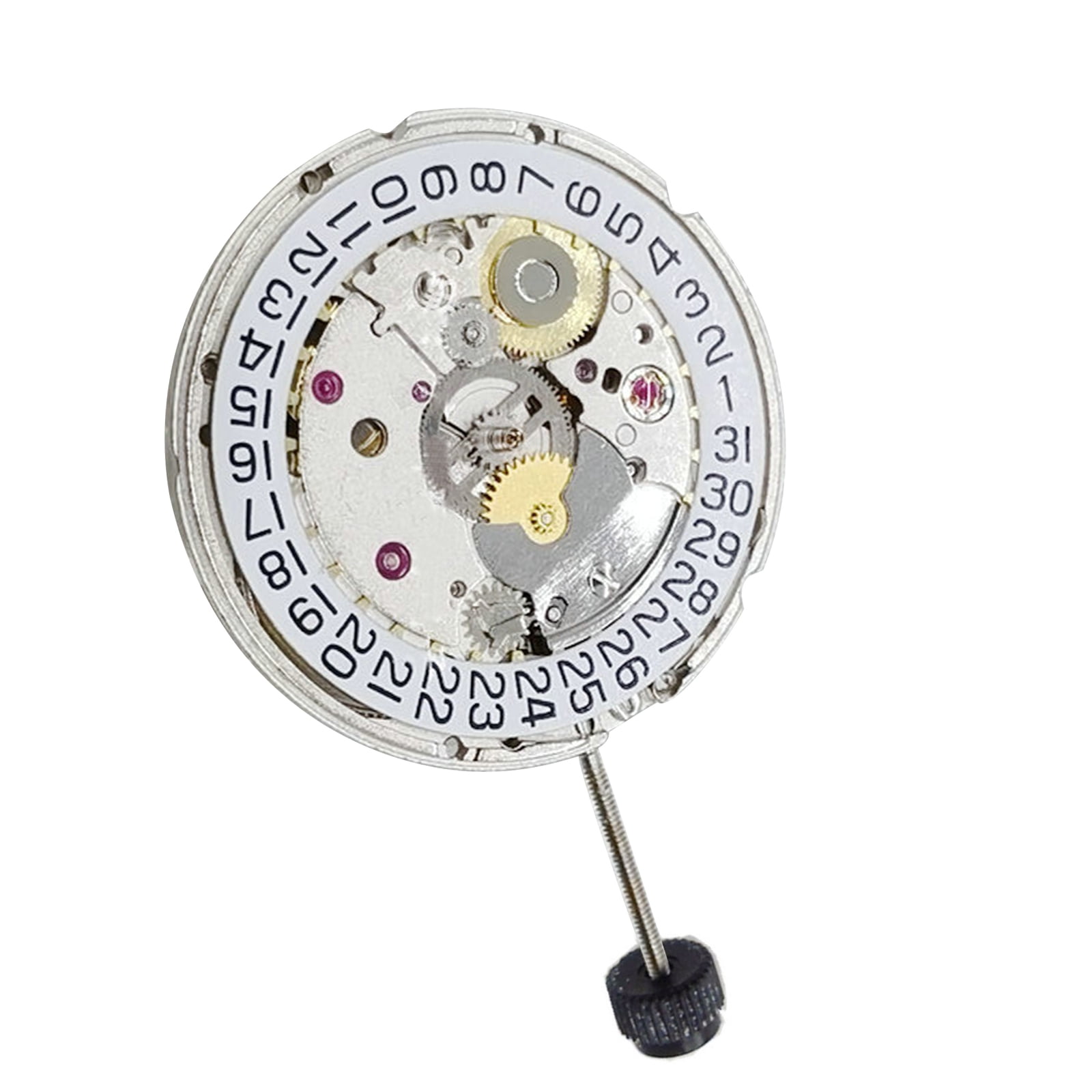
An analog movement—often referred to in horology as a caliber—is the internal engine of a timepiece that measures the passage of time and translates mechanical or electrical energy into physical hand rotation across a dial face. Unlike digital modules that display time via liquid crystal screens or light-emitting diodes, analog movements rely on gear trains, energy storage systems, and regulating mechanisms to drive physical hour, minute, and second hands.
What Is an Analog Movement?
In horology, the movement is the core mechanism inside a clock or watch case responsible for measuring time, maintaining accurate oscillations, and transferring force to indicator hands. The term analog specifies the display interface and transmission method: time is indicated continuously or incrementally along a circular layout using physical hands, rather than as static numerical digits on a digital display.
Every analog movement performs three foundational functions:
- Energy Storage and Supply: Storing potential energy either mechanically (within a tightly wound mainspring) or chemically (within a silver-oxide or lithium battery cell).
- Regulation and Oscillation: Converting continuous energy release into precise, predictable intervals through a regulating organ (such as a mechanical balance wheel or a quartz crystal oscillator).
- Kinetic Transmission: Transferring regulated energy through a series of interlocking gears (the wheel train) to move the center arbor, canon pinion, and dial hands at precise mathematical ratios.
While digital timepieces output binary electronic signals directly to display driver integrated circuits, analog movements maintain a physical link between the power source and the visual indicators. This mechanical continuity requires tight manufacturing tolerances, specialized lubrication, and precise gear geometry to overcome friction and wear.
Core Types of Analog Movements
Analog movements fall into distinct mechanical and electronic classifications based on how they generate energy and control timekeeping accuracy.
- Analog Watch Movements
- Mechanical
- Manual (Hand)
- Automatic
- Quartz Analog
- Standard Battery
- Solar / Kinetic
- Hybrid Movements
- Spring Drive
- Mecha-Quartz
- Mechanical
Manual Mechanical Movements (Hand-Wound)
Manual movements represent the original architecture of watchmaking. Energy is introduced into the system when the wearer manually turns the winding crown. This rotation winds an internal coiled spring—the mainspring—housed inside a mainspring barrel.
- Operational Cycle: As the spring unwinds, it releases rotational force through the drive train to the escapement.
- Winding Frequency: Most manual-wind calibers offer a power reserve ranging from 38 to 72 hours, requiring manual winding every one to three days. Specialized high-capacity movements feature dual or triple mainspring barrels providing up to 8 or 10 days of power.
- User Engagement: Because manual movements omit an automatic winding rotor, they allow for thinner case designs and offer an unobstructed view of the movement bridges, click springs, and balance assembly through transparent sapphire case backs.
Automatic Mechanical Movements (Self-Winding)
Automatic movements operate on the same fundamental mechanical principles as hand-wound calibers, but incorporate an internal kinetic self-winding mechanism.
- Rotor Mechanics: A semi-circular weighted rotor mounted on a central bearing pivots freely in response to the wearer's wrist movement.
- Reversing Wheels: As the rotor turns, a gear assembly (utilizing reversing wheels or unidirectional pawl systems, such as Seiko's Magic Lever system) translates bidirectional rotor movement into single-direction rotation of the mainspring arbor.
- Overwind Prevention: To prevent the mainspring from breaking when fully wound, automatic movements utilize a slip-clutch mechanism (a bridal spring) that slides along the smooth inner wall of the mainspring barrel when peak tension is reached.
Quartz Analog Movements
Introduced commercially in 1969 with the Seiko Quartz Astron, quartz analog movements replaced traditional balance springs with synthetic quartz crystal resonators and micro-electronic circuits.
- Piezoelectric Effect: When an electrical voltage from a button battery is applied to a tiny, tuning-fork-shaped quartz crystal, the crystal vibrates at a standardized high frequency of 32,768 Hz ($2^{15}$ cycles per second).
- Frequency Division: An integrated circuit (IC) counts these oscillations and divides the frequency down through a series of binary logic gates until it produces precisely one electrical pulse per second ($1\text{ Hz}$).
- Lavirac / Step Motor Drive: This pulse is sent to a bidirectional or unidirectional stepping motor (a Lavet-type stepping motor), which creates a magnetic field that advances a rotor by 180 degrees. The rotor is geared directly to the gear train, causing the second hand to tick forward in distinct one-second increments.
Hybrid Movements
Hybrid architectures bridge the gap between traditional mechanical engineering and modern electronic precision.
- Mecha-Quartz Calibers: Commonly used in chronographs, mecha-quartz movements utilize a quartz timekeeping module powered by a battery for primary time display, coupled with a mechanical chronograph module. When the pusher is pressed, the chronograph hands engage via mechanical hammers, levers, and heart-piece cams, providing instant flyback reset and continuous sweeping movement for timing functions.
- Spring Drive Technology: Developed by Seiko, Spring Drive replaces the traditional mechanical escapement with an electro-magnetic regulator called a Tri-Synchro Regulator. The movement uses a traditional mainspring for all motive power, driving a gear train. At the end of the train, a glide wheel rotates eight times per second inside a magnetic field, generating electrical power to activate an IC and a quartz crystal resonator. Electromagnetic brakes then sample the rotation 256 times per second to hold the speed precisely at 8 revolutions per second, producing a smooth, continuous hand glide without ticking or stepping.
Key Components and Mechanical Architecture
Understanding an analog movement requires examining its four major functional sub-assemblies: power delivery, transmission, regulation, and display.
- Energy Source (Mainspring or Battery)
- Gear Train (Great Wheel, Third Wheel, Fourth Wheel)
- Regulating Organ (Balance Wheel & Escapement OR Quartz & Step Motor)
- Motion Work (Canon Pinion, Hour Wheel, Minute Wheel, Hands)
1. The Energy Source
- Mainspring Assembly (Mechanical): A ribbon of spring steel or specialized cobalt-nickel-chromium alloy (such as Nivaflex) coiled within a barrel. Thickness, width, and length dictate both the power reserve and torque curve delivered to the gear train.
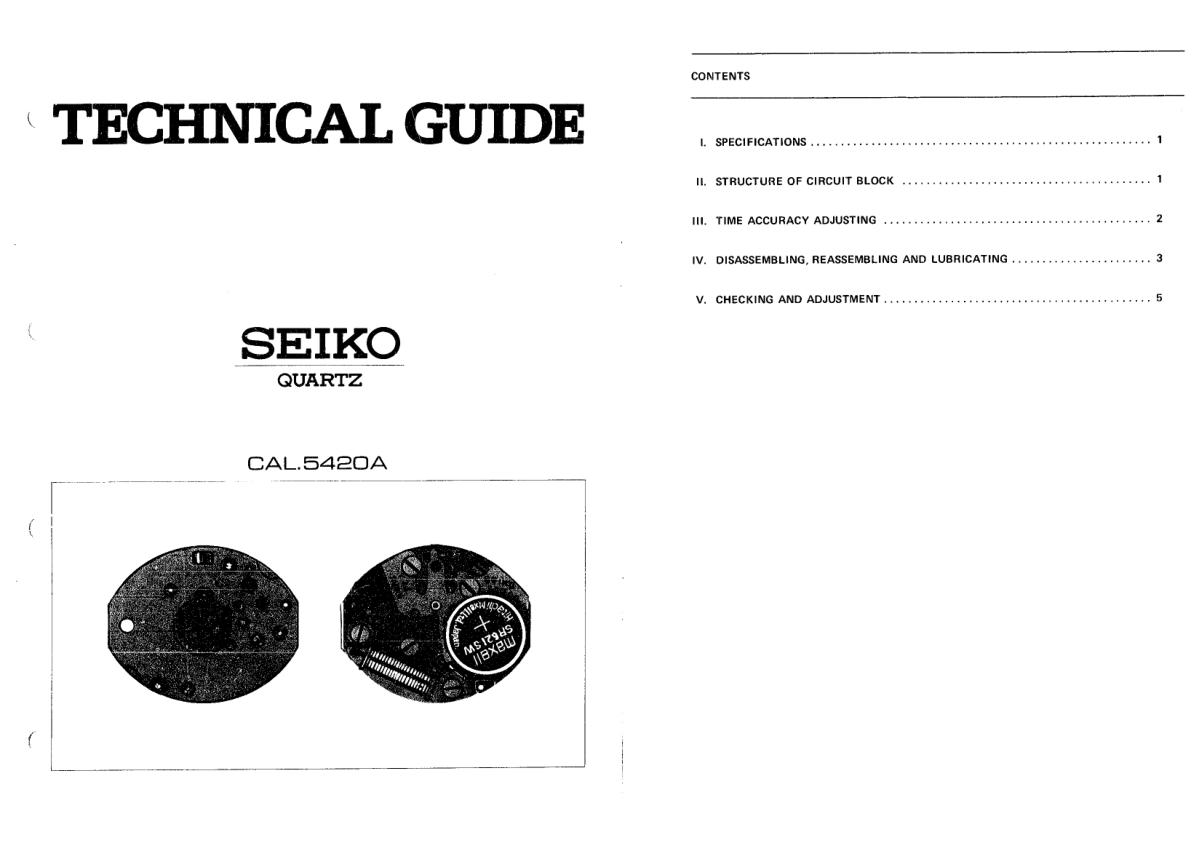
- Cell Battery (Quartz): Typically a 1.55V silver-oxide cell (e.g., SR920SW) or a 3.0V rechargeable lithium-titanium-alloy cell used in solar-powered movements (such as Citizen Eco-Drive or Seiko Solar). Solar variants convert light energy into electrical currents via photovoltaic cells underneath the dial.
2. The Gear Train (Wheel Train)
The gear train increases the rotational speed from the slow-moving power source while decreasing torque. In traditional mechanical watch movements, the sequence consists of:
- Great Wheel (Mainspring Barrel Wheel): Engages directly with the center wheel.
- Center Wheel: Drives the minute hand; completes one revolution per hour.
- Third Wheel: Acts as an intermediate step to bridge ratio requirements.
- Fourth Wheel: Rotates once per minute; in central second configurations, its arbor extends through the dial to carry the second hand.
- Escape Wheel: Features specialized tooth geometry designed to interact with the escapement pallets.
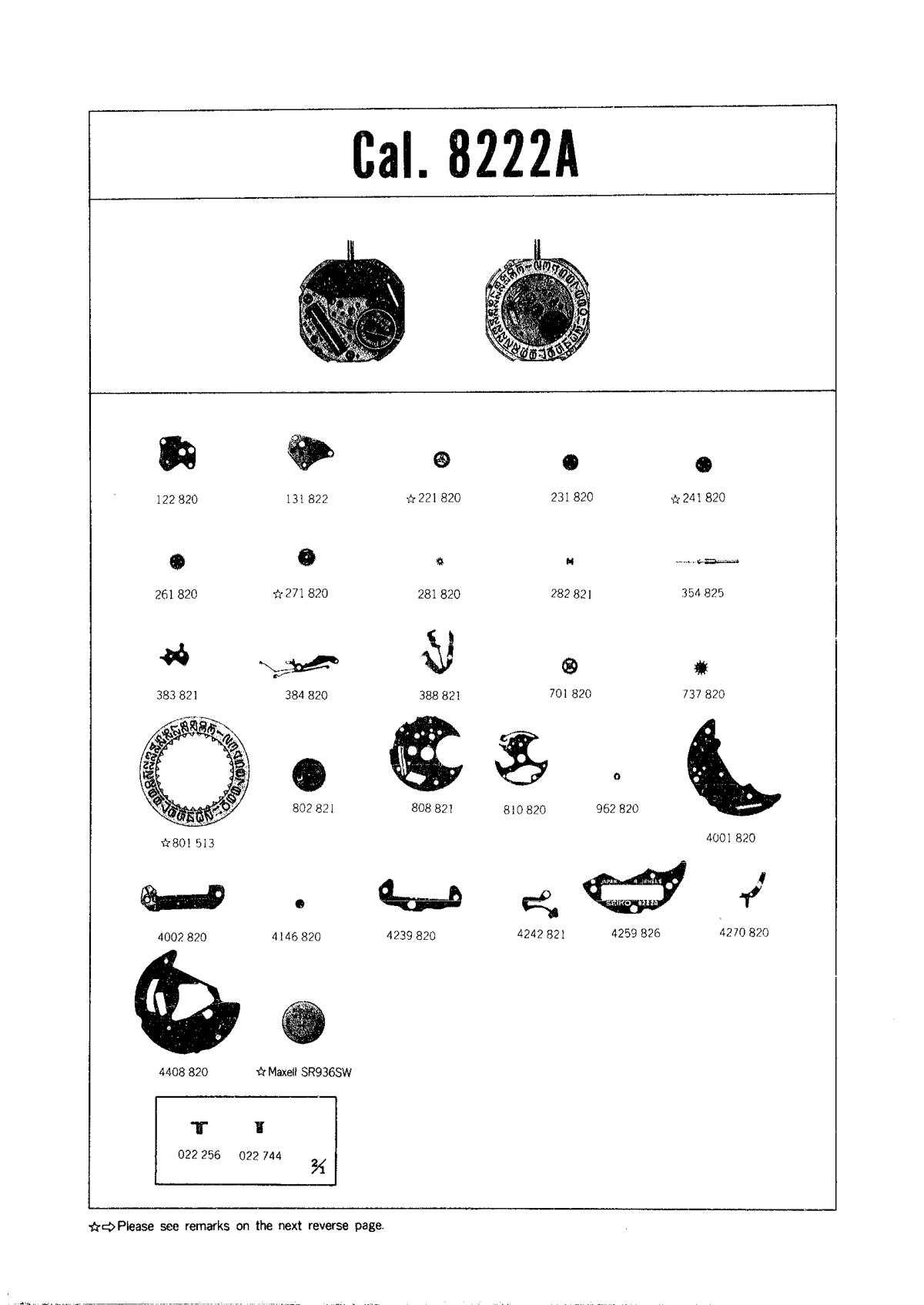
In quartz movements, gear trains require fewer wheels because the step motor converts electrical pulses into fractional rotations at high efficiency, reducing mechanical load and wear.
3. The Regulating Mechanism and Escapement
The regulator controls the rate at which energy escapes the movement.
- Lever Escapement (Swiss Lever): Composed of an escape wheel, pallet fork with synthetic ruby pallets, and an impulse pin on the balance staff. As the balance wheel swings back and forth, the pallet jewels alternately lock and release the escape wheel teeth, transferring a subtle kick (impulse) back to the balance wheel to sustain its swing.
- Balance Assembly: Consists of a balance wheel attached to a delicate, coiled hairspring (balance spring). The hairspring's mass and elasticity determine the oscillation rate, expressed in Hertz (Hz) or Vibrations Per Hour (vph):
- $18,000\text{ vph} = 2.5\text{ Hz}$ (5 beats per second)
- $21,600\text{ vph} = 3.0\text{ Hz}$ (6 beats per second)
- $28,800\text{ vph} = 4.0\text{ Hz}$ (8 beats per second—standard for modern mechanical calibers)
- $36,000\text{ vph} = 5.0\text{ Hz}$ (10 beats per second—high-beat mechanical)
- Quartz Resonator Assembly: In quartz calibers, the micro-machined quartz crystal acts as the balance assembly. Because 32,768 Hz is vastly higher than mechanical frequencies, timing deviation drops dramatically.
4. Motion Work and Hand Drive
The motion work is a reducing gear assembly mounted on the front side of the movement plate (dial side). Because the center wheel turns once per hour, the motion work steps down this rotation by a 12:1 ratio to drive the hour hand once every twelve hours.
- Canon Pinion: A friction-fit sleeve mounted over the center wheel arbor. It carries the minute hand while allowing hands to be set independently of the gear train when the crown is pulled out.
- Minute Wheel and Pinion: Drives the hour wheel.
- Hour Wheel: A hollow pipe wheel that sits over the canon pinion, carrying the hour hand.
Technical Comparison Matrix
The table below contrasts structural, operational, and performance parameters across the primary categories of analog movements.
| Feature / Specification | Manual Mechanical | Automatic Mechanical | Standard Quartz Analog | High-Accuracy Quartz (HAQ) | Hybrid (Spring Drive) |
|---|---|---|---|---|---|
| Primary Energy Source | Coiled Mainspring | Coiled Mainspring (via Rotor) | Silver-Oxide Battery | Lithium / Silver Cell | Coiled Mainspring |
| Regulation Method | Balance Assembly & Hairspring | Balance Assembly & Hairspring | Quartz Crystal Oscillator | Thermo-compensated Quartz | Tri-Synchro Electro-Magnetic |
| Typical Daily Accuracy | $-4\text{ to }+6\text{ sec/day}$ (COSC standard) | $-4\text{ to }+6\text{ sec/day}$ (COSC standard) | $\pm 0.5\text{ sec/day}$ ($\pm 15\text{ sec/month}$) | $\pm 0.01\text{ to }\pm 0.03\text{ sec/day}$ ($\pm 5\text{ to }10\text{ sec/year}$) | $\pm 0.5\text{ sec/day}$ ($\pm 15\text{ sec/month}$) |
| Power Reserve / Lifespan | 38 to 120 hours | 38 to 80 hours | 2 to 5 years per battery | 3 to 7 years per battery | 72 to 120 hours |
| Hand Motion Visual | Sub-stepping (5–10 ticks/sec) | Sub-stepping (5–10 ticks/sec) | Single discrete jump (1 tick/sec) | Single tick or sub-stepping | Smooth continuous glide |
| Jewel Count (Typical) | 17 to 25 jewels | 21 to 35+ jewels | 0 to 7 jewels | 7 to 9 jewels | 30+ jewels |
| Service Interval | 5 to 10 years | 5 to 10 years | 10 to 15 years (Battery checks) | 10 to 15 years | 8 to 10 years |
| Susceptibility to Magnetism | High (unless silicon balance) | High (unless silicon balance) | Low (motor temporary pulse) | Very Low | Low |
Accuracy Standards and Regulatory Testing
The performance of an analog movement is measured against established horological metrics.
Mechanical Chronometer Standards (ISO 3159 / COSC)
The Contrôle Officiel Suisse des Chronomètres (COSC) tests unmounted Swiss mechanical calibers over 15 consecutive days in five static positions and at three temperatures ($8^\circ\text{C}$, $23^\circ\text{C}$, and $38^\circ\text{C}$).
- Mean Daily Rate: Within $-4\text{ to }+6\text{ seconds per day}$ for movement diameters exceeding $20\text{ mm}$.
- Mean Variation in Rates: Must not exceed $2\text{ seconds per day}$.
- Thermal Variation: Rate change per degree Celsius must remain under $\pm 0.6\text{ seconds/day}$.
Brands like Rolex (Superlative Chronometer: $-2/+2\text{ sec/day}$) and METAS / Omega (Master Chronometer: $0/+5\text{ sec/day}$ under exposure to 15,000 Gauss magnetic fields) enforce even stricter internal benchmarks on fully cased watches.
Quartz Chronometer and HAQ Standards
Standard quartz movements drift by roughly $\pm 15\text{ to }\pm 30\text{ seconds per month}$, largely due to temperature shifts affecting the quartz crystal's resonant frequency.
To overcome thermal drift, High-Accuracy Quartz (HAQ) movements utilize thermo-compensation modules. These circuits measure internal temperature continuously and apply micro-adjustments to digital pulse counting or employ dual quartz crystals operating at different frequencies to cancel out temperature curves. COSC quartz certification requires an accuracy within $\pm 0.07\text{ seconds per day}$ at $23^\circ\text{C}$ ($\pm 25.55\text{ seconds per year}$).
Common Issues, Diagnostics, and Maintenance Guidance
Because analog movements contain moving parts under continuous mechanical load, performance can degrade over time.
- Movement Performance Issues
- Magnetization (Fast Running)
- Action: Use Demagnetizer (De-gausser)
- Dried/Degraded Lubricants
- Action: Complete Overhaul (Clean & Relube)
- Quartz Battery Depletion
- Action: Battery Swap & Gasket Inspection
- Magnetization (Fast Running)
1. Magnetization in Mechanical Movements
- Symptom: A mechanical watch suddenly gains minutes or hours per day.
- Cause: Exposure to everyday magnetic sources (smartphones, laptop speakers, induction cooktops, magnetic handbag clasps). Magnetic fields cause coils of the steel balance spring (hairspring) to stick together, shortening its active length and causing the wheel to oscillate much faster.
- Diagnostic & Remedy: Place a basic magnetic compass near the watch face; if the needle deflects sharply, the movement is magnetized. Applying an alternating magnetic field via an electronic demagnetizer (de-gausser) neutralizes residual magnetism without opening the case back. Modern calibers increasingly use silicon (Si) hairsprings or paramagnetic alloys (Nivachron, Parachrom) to prevent this issue.
2. Lubricant Degradation and Friction
- Symptom: Progressive loss of power reserve, sluggish hand movement, or erratic loss of time.
- Cause: Microscopic synthetic watch oils (e.g., Moebius oils applied to jewel cap bearings and pallet tips) dry out, oxidize, or migrate away over 5 to 10 years.
- Remedy: Full movement overhaul (service). A watchmaker strips the movement down to individual components, ultrasonically cleans plates and gears, replaces worn pivots or mainsprings, reassembles the architecture, and applies precise microliter quantities of specialized synthetic lubricants.
3. Battery Depletion and EOL Indicators in Quartz Movements
- Symptom: Second hand stops entirely, or jumps forward in discrete four-second intervals.
- Cause: Depleted cell voltage (typically dropping below $1.35\text{V}$).
- End of Life (EOL) Functionality: Quartz integrated circuits feature an EOL detection program. To preserve remaining power while warning the owner, the IC pauses motor pulses for four seconds, then sends four pulses in rapid succession to advance the hand four steps.
- Preventative Care: Dead silver-oxide batteries should be removed promptly. Exhausted cells can leak corrosive potassium hydroxide electrolyte, dissolving copper circuit traces and damaging gear trains.
Frequently Asked Questions
Why do mechanical analog movements use synthetic ruby jewels?
Synthetic sapphires and rubies serve as ultra-hard, low-friction sleeve bearings and end-stones for gear pivots and balance staffs. Metal pivots spinning directly inside brass movement plates would cause rapid wear and frictional losses. Corundum (ruby/sapphire) scores 9 on the Mohs scale, offering extreme hardness and compatibility with watch lubricants.
How does an automatic watch prevent the mainspring from snapping during continuous wear?
Unlike manual-wind movements, which have a fixed outer hook anchored to the mainspring barrel wall, automatic mainsprings feature a flexible sliding bridle welded to the tail of the mainspring. When full tension is reached, the bridle slips along grease-lubricated internal grooves inside the barrel wall, releasing excess torque while maintaining full power reserve.
Is a quartz analog movement completely mechanical-free?
No. While time counting is handled electronically by an integrated circuit and quartz crystal, the translation of electrical signals to analog hands requires physical mechanical gears. A stepping motor drives a gear train (wheel train) and motion work to turn the physical hands across the dial.
What causes the second hand on a mechanical watch to sweep while a quartz watch ticks once per second?
Mechanical movements sweep because their balance wheel oscillates at high frequencies ($21,600\text{ to }28,800\text{ vph}$). The escapement releases the gear train 6 to 8 times every second, creating the visual illusion of a continuous sweep. Standard quartz movements tick once per second because the integrated circuit deliberately pulses the stepping motor at $1\text{ Hz}$ to minimize battery consumption.
Can magnetic fields damage a quartz analog movement permanently?
Generally, no. Strong magnetic fields can temporarily stop the stepping motor or disrupt rotation, causing the watch to lose time while in the field. However, once removed from the magnetic source, a standard quartz movement typically resumes normal operation without permanent physical damage to the regulating circuit.
Practical Selection and Maintenance Guidance
When selecting or maintaining an analog movement, consider your requirements for operational involvement, precision, and ongoing service:
- For Maximum Precision and Low Maintenance: Choose a solar-powered quartz analog movement or a High-Accuracy Quartz (HAQ) caliber. These offer grab-and-go reliability, require no manual winding, and eliminate routine battery replacements for up to 10–15 years.
- For Craftsmanship and Mechanical Longevity: Opt for an automatic or manual-wind mechanical caliber from an established manufacturer with documented spare-parts availability. While mechanical movements require servicing every 5 to 10 years, a well-maintained mechanical movement can function indefinitely across generations.
- Preventative Care Routine:
- Keep Crown Screwed In: Always verify that setting crowns are pushed in or screwed down tightly to prevent humidity, dust, and microscopic debris from contaminating movement oils.
- Avoid Shock Exposure: Avoid wearing traditional mechanical watches during high-impact sports (golfing, hammering, shooting) unless the movement is explicitly rated with shock protection systems like Incabloc or Paraflex.
- Store Properly: If storing automatic watches long-term, ensure they are periodically wound and run (once per month) to distribute lubricants across gear pivots and jewel bearings.
Editorial Metadata: