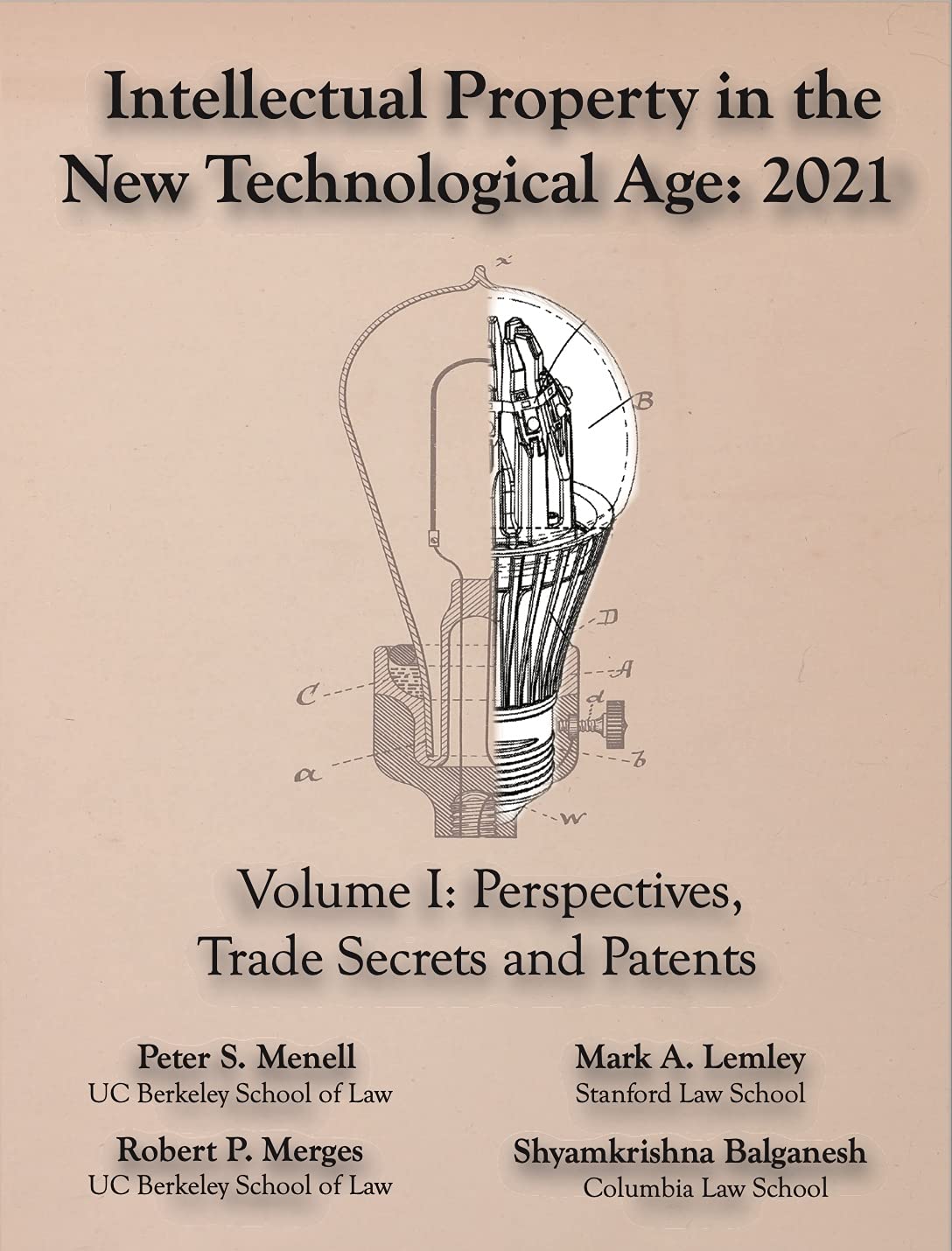
American intellectual property (IP) law serves as the structural backbone for national innovation and creative expression. In 2026, this legal system balances constitutional mandates with the rapid evolution of digital technologies and generative artificial intelligence. Navigating it requires understanding the distinct roles of patents, trademarks, copyrights, and trade secrets in protecting intangible assets within a competitive global economy.
The Constitutional and Statutory Foundations of American IP
The United States intellectual property framework is unique because its roots are explicitly embedded in the U.S. Constitution. Article I, Section 8, Clause 8—often called the "Progress Clause"—grants Congress the power to promote the "Progress of Science and useful Arts, by securing for limited Times to Authors and Inventors the exclusive Right to their respective Writings and Discoveries." This dual focus on public benefit and private incentive remains the guiding principle for the modern legal system.
Over the centuries, this constitutional foundation has been expanded through federal statutes. The Patent Act (Title 35 of the U.S. Code), the Lanham Act (Title 15), and the Copyright Act of 1976 (Title 17) constitute the primary legislative pillars. Additionally, the Defend Trade Secrets Act of 2016 (DTSA) federalized trade secret law, providing a consistent national standard for protecting confidential business information.
In 2026, the legal landscape is characterized by a "harmonization" effort. The U.S. has increasingly aligned its domestic policies with international treaties, such as the TRIPS Agreement and the Madrid Protocol, to ensure that American creators receive reciprocal protection in foreign jurisdictions.
The Four Pillars of Intellectual Property Protection
To effectively navigate the modern legal system, one must distinguish between the four primary forms of IP protection. Each serves a specific purpose, has different eligibility requirements, and offers varying durations of exclusivity.
1. Patents: Protecting Inventions and Processes
Patents protect "useful, new, and non-obvious" inventions. The U.S. Patent and Trademark Office (USPTO) grants these rights following a rigorous examination process. There are three main types of patents recognized today:
- Utility Patents: These cover the functional aspects of an invention, such as a new chemical compound, a mechanical device, or a computer-implemented process.
- Design Patents: These protect the ornamental, non-functional appearance of an item.
- Plant Patents: Granted for the discovery and asexual reproduction of distinct and new varieties of plants.
A critical aspect of patent law in 2026 is the "first-to-file" system established by the Leahy-Smith America Invents Act (AIA). This system prioritizes the inventor who first submits a patent application over the one who can prove they were the first to invent.
2. Trademarks: Protecting Brand Identity
Trademarks are words, phrases, symbols, or designs that identify and distinguish the source of goods or services. Unlike patents or copyrights, trademark rights can last indefinitely as long as the mark is being used in commerce and the owner defends it against infringement. The modern legal system emphasizes "secondary meaning"—the point at which a consumer associates a specific mark with a specific provider.
3. Copyrights: Protecting Original Works of Authorship
Copyright protects original works of authorship fixed in a tangible medium of expression. This includes literature, music, software code, motion pictures, and architectural designs. In 2026, copyright law is at the center of intense debate regarding the "fixation" of digital assets and the role of human authorship in the age of AI.
4. Trade Secrets: Protecting Confidential Information
Trade secrets consist of information that has economic value because it is not generally known and is subject to reasonable efforts to maintain its secrecy. Examples include the Coca-Cola formula or proprietary search algorithms. The DTSA allows companies to sue in federal court for trade secret misappropriation, providing a powerful tool for protecting internal R&D.
Comparing IP Protections in 2026
The following table summarizes the key characteristics of the primary intellectual property types within the current American legal framework.
| IP Type | Subject Matter | Duration of Protection | Regulatory Body | Primary Legal Standard |
|---|---|---|---|---|
| Patent | Inventions, processes, designs | 20 years (Utility); 15 years (Design) | USPTO | Novelty, Non-obviousness |
| Trademark | Brand names, logos, slogans | Indefinite (if used/renewed) | USPTO | Likelihood of Confusion |
| Copyright | Creative works, software | Life + 70 years (Individual) | U.S. Copyright Office | Originality, Fixation |
| Trade Secret | Proprietary data, formulas | Indefinite (if kept secret) | State/Federal Courts | Economic Value, Secrecy |
Modern Challenges: AI, Software, and Digital Rights
As of 2026, the American legal system faces significant friction between traditional IP laws and modern technological realities. Two areas stand out: patent eligibility for software and the copyrightability of AI-generated content.
The "Alice" Test and Patent Eligibility
The Supreme Court's decision in Alice Corp. v. CLS Bank International remains the standard for determining whether an abstract idea implemented on a computer is eligible for a patent. In the 2020s, the USPTO and the Federal Circuit have worked to provide more "predictability" for inventors. For a software-based invention to be patentable in 2026, it must do more than just execute a well-known process on a computer; it must offer a technical improvement to the functioning of the computer itself or another technology.
Artificial Intelligence and Authorship
One of the most consequential legal shifts leading into 2026 involves AI. The U.S. Copyright Office has maintained a "human authorship" requirement, meaning works created solely by an AI algorithm without significant human creative control cannot be copyrighted. Similarly, in patent law, the courts have affirmed that an "inventor" must be a natural person. Legal professionals now focus heavily on documenting the "human in the loop" to ensure that AI-assisted innovations remain eligible for legal protection.
Digital Millennium Copyright Act (DMCA) Evolution
The DMCA remains the primary mechanism for regulating digital content. In 2026, "Safe Harbor" provisions, which protect service providers from liability for user-generated content, are under constant scrutiny. Rights holders increasingly utilize automated "notice and takedown" systems, leading to a complex environment where platforms must balance strict enforcement with users' "fair use" rights.
The Process of Securing and Enforcing IP Rights
Securing IP rights is only the first step; the modern legal system places the burden of enforcement squarely on the owner. The process generally follows a structured path from registration to litigation.
Registration and Examination
For patents and trademarks, the process begins with an application to the USPTO. This involves a "prior art" search to ensure the invention or mark is truly unique. For copyrights, protection exists automatically upon creation, but federal registration is a prerequisite for filing an infringement lawsuit and seeking statutory damages.
Enforcement and Litigation
When IP rights are infringed, the owner typically starts with a "Cease and Desist" letter. If the dispute is not resolved, it may move to federal district court.
- Injunctive Relief: Courts can issue orders to stop the infringing activity immediately.
- Damages: Owners can seek lost profits or, in the case of copyrights, statutory damages that can reach $150,000 per willful infringement.
- ITC Investigations: For imported goods that infringe on U.S. patents, the International Trade Commission (ITC) can issue "exclusion orders" to stop products at the border.
Alternative Dispute Resolution (ADR)
Given the high cost of federal litigation—often reaching millions of dollars for patent cases—many entities in 2026 utilize the Patent Trial and Appeal Board (PTAB) or the Trademark Trial and Appeal Board (TTAB). These administrative bodies provide a faster, more technical venue for challenging the validity of a patent or trademark without a full jury trial.
International Considerations and the Global Market
American intellectual property does not exist in a vacuum. In 2026, businesses must operate with a global strategy. Intellectual property rights are "territorial," meaning a U.S. patent only protects the invention within the United States.
To protect assets abroad, American entities utilize:
- The Patent Cooperation Treaty (PCT): A "unified" procedure for filing patent applications in over 150 member nations.
- The Madrid System: A centralized way to register and manage trademarks worldwide.
- The Berne Convention: Ensuring that U.S. copyrights are automatically recognized in most foreign countries.
The modern legal system also focuses heavily on "Section 301" reports, where the U.S. Trade Representative identifies foreign countries that fail to provide adequate IP protection, using trade pressure to improve global enforcement standards.
Common Pitfalls in Modern IP Management
Despite the robust legal framework, many individuals and businesses lose their IP rights through preventable errors.
- Public Disclosure: In patent law, disclosing an invention publicly before filing can trigger a "bar date," after which the invention is no longer patentable. While the U.S. provides a one-year grace period, many foreign jurisdictions do not.
- Genericity: Trademarks can be lost if they become the common name for a product (e.g., "escalator" or "aspirin"). This process, known as "genericide," requires brand owners to actively monitor and correct improper use of their marks.
- Work-for-Hire Misunderstandings: In copyright, the "author" is generally the creator unless a specific "work-for-hire" agreement exists. Without clear contracts, companies may find they do not actually own the IP created by their contractors.
Frequently Asked Questions
Can I patent a business idea in 2026?
You cannot patent a "pure" business idea or a mental process. However, if that business idea is implemented through a specific, technical method or a novel software application that provides a "technical solution to a technical problem," it may be eligible for a utility patent. The modern legal system requires a high degree of specificity to move beyond the "abstract idea" exclusion.
How does "Fair Use" apply to digital content?
Fair Use is a legal doctrine that permits limited use of copyrighted material without permission for purposes such as criticism, news reporting, teaching, and research. In 2026, courts apply a four-factor test: the purpose of the use, the nature of the work, the amount used, and the effect on the work's market value. Use of content for "transformative" purposes is generally favored.
What is the difference between a trademark and a service mark?
In practical legal terms, they are treated almost identically. A trademark identifies the source of physical goods, while a service mark identifies the source of services (like a law firm or a dry cleaner). Both are registered through the USPTO and receive the same level of federal protection under the Lanham Act.
Is registration mandatory for copyright protection?
No, copyright protection is automatic the moment a work is fixed in a tangible medium (like saved to a hard drive or written on paper). However, in the American legal system, you must register the work with the U.S. Copyright Office before you can file an infringement lawsuit in federal court. Early registration also makes you eligible for statutory damages and attorney's fees.
How long does a trade secret last?
A trade secret lasts as long as it remains a secret and continues to hold economic value. Unlike patents, which expire after 20 years, a trade secret could theoretically last forever. However, if a competitor independently discovers the information or "reverse engineers" your product legally, trade secret law provides no protection.
Strategic Recommendations for 2026
To thrive in the current American legal environment, creators and businesses should adopt a proactive IP strategy. First, conduct a comprehensive IP Audit to identify all intangible assets, including unregistered trademarks and internal trade secrets. Second, establish clear employment and contractor agreements that explicitly address the ownership of intellectual property created during the term of service.
Finally, for those leveraging artificial intelligence, it is essential to maintain detailed logs of human creative input. As the legal system continues to refine the definition of an "author" and "inventor," the ability to prove human oversight will be the difference between a valuable, protected asset and one that falls into the public domain. For specific legal disputes or complex filings, consulting with a qualified intellectual property attorney is essential, as the nuances of federal case law change rapidly.