As of early 2026, American Eagle Outfitters, Inc. (AEO) maintains a market capitalization typically ranging between $4.8 billion and $5.6 billion, depending on daily market fluctuations. From a fundamental accounting perspective, the company’s "net worth"—defined as total shareholders' equity—is approximately $1.85 billion, reflecting its tangible and intangible assets minus its total liabilities.
American Eagle Outfitters is not merely a mall-based clothing store; it is a multi-brand retail powerhouse that has successfully navigated the "retail apocalypse" by diversifying its portfolio and investing heavily in supply chain logistics. To understand the net worth of AEO in 2026, one must look beyond the stock price and examine the intrinsic value of its brands, its physical and digital infrastructure, and its strategic positioning in the global apparel market.
Defining "Net Worth" in a Corporate Context
When discussing the net worth of a publicly traded entity like American Eagle Outfitters, it is essential to distinguish between Market Capitalization and Book Value (Shareholders' Equity). These two metrics offer different lenses through which to view the company's financial health.
Market Capitalization: The Investor's Perspective
Market capitalization represents the total market value of a company’s outstanding shares. It is the "price tag" the stock market places on the business. For AEO, this figure is highly sensitive to consumer spending trends, interest rates, and quarterly earnings reports. In 2026, the market rewards AEO for its consistent dividend payments and the explosive growth of its sub-brand, Aerie.
Book Value: The Accountant's Perspective
The book value, or shareholders' equity, is the value of the company’s assets if it were to be liquidated today, with all debts paid off. This includes cash on hand, inventory, owned real estate, and intellectual property. AEO has maintained a healthy balance sheet by managing debt levels and optimizing inventory through advanced AI-driven forecasting.
The Growth Engine: Aerie and Its Impact on Valuation
The most significant contributor to American Eagle Outfitters’ valuation over the last several years has been Aerie. Once a small sub-brand focused on intimates, Aerie has transformed into a multi-billion-dollar lifestyle brand that champions body positivity and inclusivity.
Market Share and Brand Loyalty
By 2026, Aerie has captured a massive share of the intimates and activewear market, successfully challenging legacy players like Victoria's Secret. Its high "net promoter scores" and intense brand loyalty among Gen Z and Millennial consumers have allowed AEO to command a higher price-to-earnings (P/E) ratio than many of its traditional retail peers.
The OFFL/NE Expansion
The launch and subsequent scaling of OFFL/NE by Aerie—a line focused on activewear and leggings—has further bolstered the company's net worth. By expanding into the "athleisure" space, AEO tapped into a high-margin, high-growth category that remains resilient even during economic downturns.
Financial Performance and Revenue Streams
American Eagle Outfitters generates revenue through a sophisticated omnichannel approach, blending physical retail experiences with a high-performance digital platform.
Annual Revenue and Net Income
In the fiscal years leading up to 2026, AEO has consistently reported annual revenues exceeding $5.2 billion. The company's ability to maintain gross margins in the 38% to 40% range is a testament to its disciplined promotional strategy and "Quiet Platforms" logistics network, which reduces shipping and fulfillment costs.
Digital vs. Physical Sales
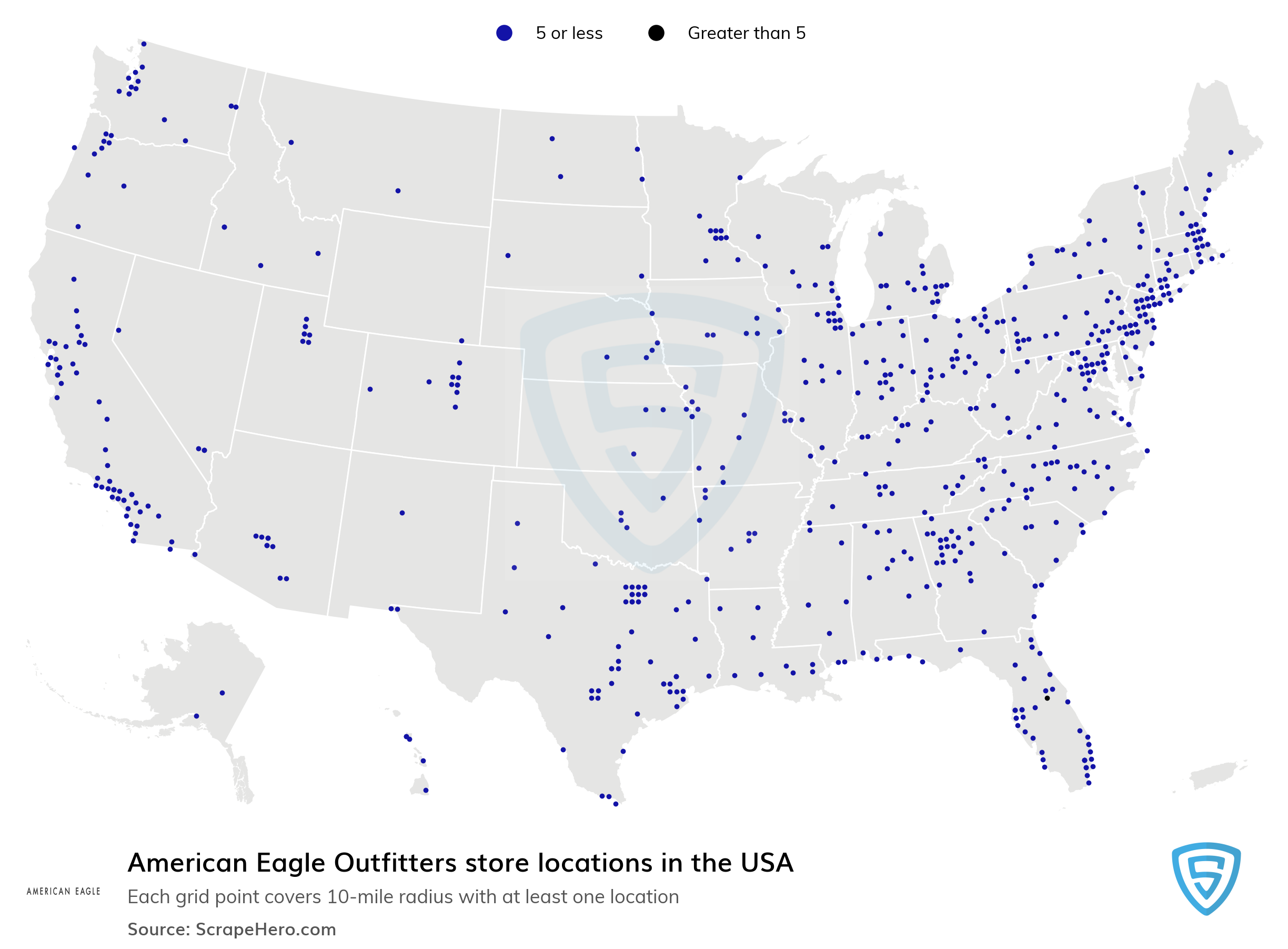
Digital sales now account for nearly 40% of total revenue. However, AEO continues to see the value in its physical footprint. The company has optimized its store fleet, closing underperforming "mall-based" locations while opening high-traffic "street-level" stores and Aerie standalones. This "dual-track" strategy ensures that the company maximizes its reach without overextending its capital expenditures.
Assets, Liabilities, and the Balance Sheet
A deep dive into AEO’s 2026 balance sheet reveals a company with a strong liquidity position.
- Current Assets: This includes significant cash reserves and a lean inventory. AEO’s "real-time" inventory management means they carry less "dead stock" than competitors, preserving capital.
- Property and Equipment: While many retailers lease their spaces, AEO owns a significant portion of its distribution centers, including high-tech hubs that power its third-party logistics (3PL) services.
- Total Debt: AEO has historically managed its debt conservatively. Most of its liabilities consist of operating lease liabilities rather than high-interest long-term debt, providing the company with financial flexibility.
| Financial Metric (Estimated 2026) | Value (USD) |
|---|---|
| Market Capitalization | $5.2 Billion |
| Total Revenue | $5.4 Billion |
| Shareholders' Equity (Net Worth) | $1.85 Billion |
| Cash and Cash Equivalents | $650 Million |
| Dividend Yield | 2.2% - 2.8% |
| Number of Stores (Global) | 1,150+ |
Strategic Initiatives: Quiet Platforms and Logistics
One of the unique factors contributing to AEO’s net worth is its investment in Quiet Platforms. Unlike most apparel retailers that rely on external shipping partners, AEO acquired Quiet Logistics and AirTerra to create an open-access supply chain network.
Logistics as a Revenue Stream
Quiet Platforms does not just serve American Eagle and Aerie; it provides fulfillment services for other retailers. This diversification into "Logistics-as-a-Service" (LaaS) provides AEO with a non-cyclical revenue stream that is not tied to fashion trends, making the company's overall valuation more stable and attractive to long-term investors.
Cost Efficiency
By controlling its own middle-mile and last-mile delivery, AEO has insulated itself from the rising shipping costs that have plagued the retail industry. This operational efficiency directly increases the net income, which in turn bolsters the company’s market valuation.
Competitive Landscape and Market Positioning
In 2026, the specialty retail market is more competitive than ever. AEO competes with giants like Gap Inc., Abercrombie & Fitch, and fast-fashion entities like Shein and Zara.
The Abercrombie Rivalry
The "resurgence" of Abercrombie & Fitch has created a competitive dynamic where both companies are fighting for the same "young adult" demographic. However, AEO’s dominance in the denim category remains a significant moat. American Eagle is consistently ranked as the #1 or #2 jeans brand for teens in the United States, a high-frequency purchase category that ensures consistent foot traffic.
Resilience Against Fast Fashion
While fast-fashion brands offer lower prices, AEO has positioned itself as a "quality-at-value" provider. Their focus on sustainability and durable materials has resonated with the eco-conscious consumer of 2026, protecting their market share from being eroded by ultra-low-cost competitors.
Factors Influencing Future Valuation
Several variables could impact American Eagle Outfitters’ net worth as we move toward the late 2020s:
- International Expansion: While AEO has a presence in Mexico, Canada, and parts of Asia and the Middle East, further penetration into European and South American markets represents a significant growth opportunity.
- Technological Integration: The use of AR (Augmented Reality) for virtual try-ons and AI for personalized styling is expected to increase conversion rates and reduce return rates, directly impacting the bottom line.
- Macroeconomic Conditions: As a discretionary spender, AEO is susceptible to shifts in consumer confidence. However, their diverse price points allow them to capture "trade-down" shoppers during leaner economic times.
FAQ: Understanding AEO's Financial Standing
Is American Eagle Outfitters a profitable company in 2026?
Yes, American Eagle Outfitters remains consistently profitable. The company has successfully balanced the high growth of Aerie with the steady, cash-generative nature of the core American Eagle brand. Their investment in logistics has also helped maintain healthy margins despite inflationary pressures in the global supply chain.
How does AEO's market cap compare to its competitors?
AEO typically trades at a valuation similar to Abercrombie & Fitch but often commands a premium over Gap Inc. due to its superior growth in the intimates and activewear sectors. Its market cap of approximately $5.2 billion reflects its status as a mid-cap leader in the retail space.
Does American Eagle Outfitters pay dividends?
Yes, AEO has a long history of returning value to shareholders through dividends. In 2026, the company continues to offer a competitive dividend yield, making it an attractive option for value investors seeking both growth and income.
What is the biggest risk to American Eagle's net worth?
The primary risk remains the volatility of fashion trends and the high sensitivity of its target demographic (Gen Z and Alpha) to social media influence. Additionally, disruptions in global trade or significant increases in raw material costs (like cotton and synthetic fibers) can squeeze profit margins.
Who owns the majority of American Eagle Outfitters?
AEO is a publicly-traded company (NYSE: AEO). The majority of its shares are held by institutional investors, including major firms like BlackRock, Vanguard, and State Street. The Schottenstein family, long associated with the company’s leadership, also maintains a significant influential stake.
Final Recommendation for Observers
For those tracking "American Eagle Outfitters net worth" for investment or business analysis purposes, the key metric to watch is the Aerie growth rate relative to the American Eagle core brand's stability. As long as Aerie continues to expand its physical footprint and the core brand maintains its dominance in the denim market, AEO's net worth and market valuation are likely to remain on a stable, upward trajectory. Investors should also pay close attention to the scaling of Quiet Platforms, as this represents a high-margin "tech-adjacent" component of the business that is often undervalued by traditional retail analysts.