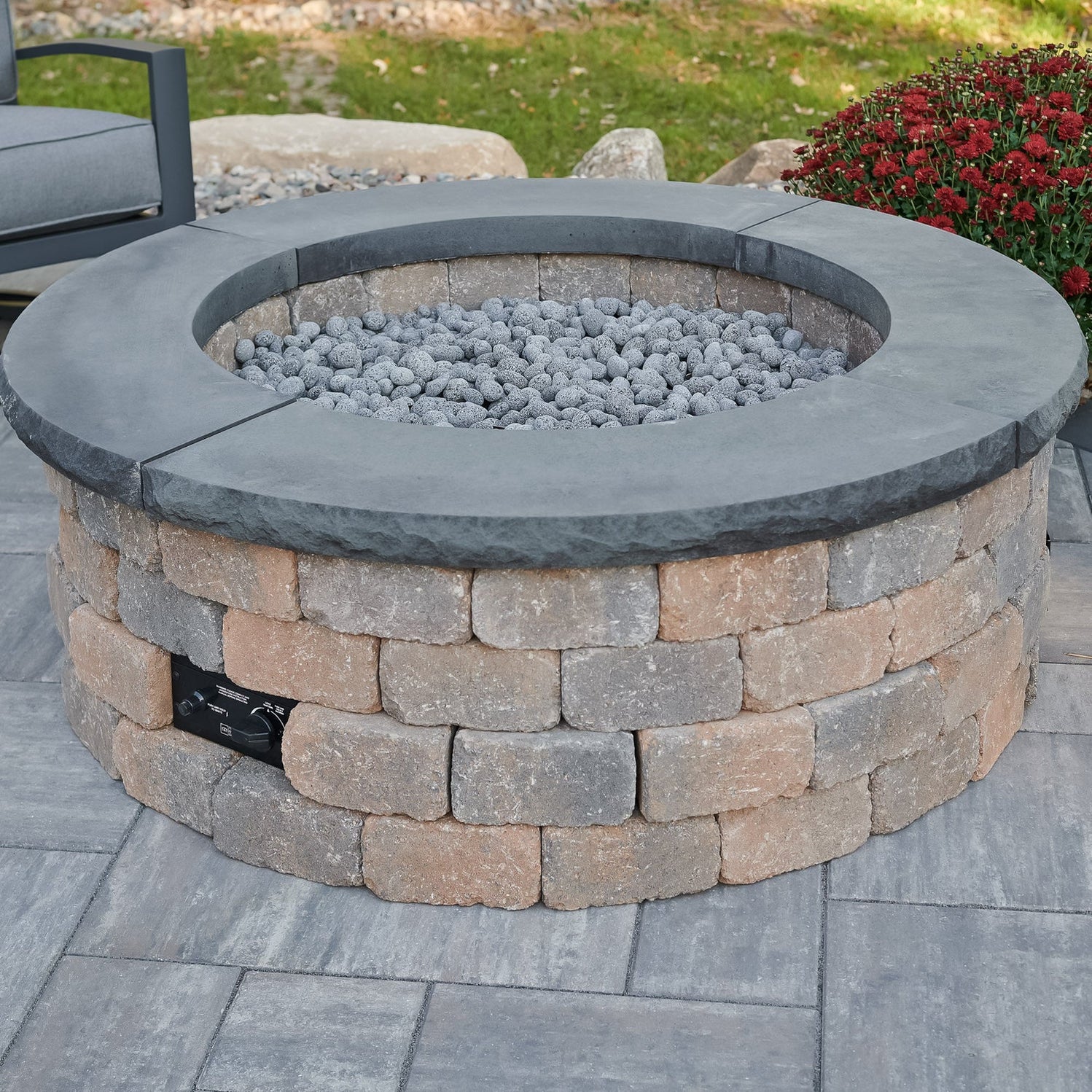
An Amazon fire pit kit typically refers to a packaged set of components—ranging from drop-in gas burner pans and spark-ignition systems to modular steel rings and block-layering templates—purchased online to assemble a custom outdoor fire pit. Choosing the right kit depends on your desired fuel source, available backyard space, structural skill level, and local outdoor heating safety codes.
Understanding Amazon Fire Pit Kits: Types and Designs
Shopping for a fire pit kit on Amazon presents a vast array of options. Because "fire pit kit" can describe entirely different products, it is essential to disaggregate them into structural and operational categories before making a purchase.
Amazon Fire Pit Kit Types:
- DIY Gas Inserts & Burner Pans
- Smokeless Rings & Metal Inserts
- Masonry Block & Retaining Wall
Drop-In Gas Burner & Pan Kits
Drop-in gas burner kits are designed for homeowners who want to construct a stone, brick, or concrete enclosure and insert a clean-burning propane (LP) or natural gas (NG) system.
- Key Components: These kits usually include a 304 stainless steel burner pan (round, square, or linear rectangular), a burner ring or H-burner, a key valve for flame adjustment, a push-button spark igniter, flexible gas lines, and occasionally an air mixer (required for liquid propane).
- Target Application: Ideal for custom hardscape builds where you build the structural outer wall out of paver blocks or poured concrete, leaving an open cavity for the drop-in stainless steel pan.
Smokeless Fire Pit Inserts and Rings
Smokeless fire pit insert kits utilize double-wall secondary combustion technology. Cold air is drawn through bottom intake vents, heated between the walls, and injected through top rim holes to burn off smoke and unburned wood particles before they escape.
- Key Components: Heavy-gauge alloy steel or stainless steel inner and outer sleeves, top deflection rim, ash pan, and bottom grate.
- Target Application: Excellent for DIYers who want a traditional wood-burning fire without smoke blowing into seating areas. These inserts can be used standalone or sunken into a custom stone surround.
Masonry and Retaining Wall Block Kits
Masonry-style kits sold on Amazon often consist of the heavy steel liner ring combined with specialized brick layout patterns or structural brackets. Note that due to shipping weight limits, some Amazon kits provide only the heavy-gauge inner metal fire ring, grate, and assembly blueprints, requiring you to purchase the matching wall blocks separately from a local home improvement retailer.
- Key Components: Heavy-duty steel inner ring (often powder-coated or heat-painted steel), spark screen cover, poker tool, and mounting hardware.
- Target Application: Classic wood-burning fire pits built directly on a gravel or concrete patio base using stacked landscape blocks.
Key Technical Specifications to Evaluate Before Buying
When purchasing an outdoor fire pit kit online, reviewing product listings requires looking past marketing images and examining raw engineering specifications.
1. Steel Grade and Corrosion Resistance
Outdoor fire pits are exposed to extreme temperature variations, moisture, and rain. The grade of metal determines how many seasons the kit will last before rusting or warping:
- 304 Stainless Steel: The gold standard for gas burner pans, rings, and hardware. Contains nickel and chromium to withstand heat and moisture without rusting.
- 430 Stainless Steel: Lower cost than 304, but offers less corrosion resistance over time, especially in humid or coastal environments.
- Heavy-Gauge Carbon Steel / Q235 Steel: Common in wood-burning rings. Must be thick (typically 10-gauge to 14-gauge) and coated with high-temperature heat-resistant paint (rated for at least 1,200°F / 650°C) to prevent rapid oxidation.
2. BTU Output and Gas Compatibility
For gas fire pit kits, Heat Output is measured in British Thermal Units (BTUs) per hour.
- Standard Residential Output: Most Amazon burner kits range from 40,000 BTU to 150,000 BTU.
- Liquid Propane (LP) vs. Natural Gas (NG): Propane requires an air mixer valve installed underneath the pan. Because propane is heavier than air, it requires oxygen injection at the orifice to prevent heavy soot production and pooling gas. Natural gas is lighter than air and does not require an air mixer, but requires larger burner orifice openings due to lower line pressure.
3. Safety Certifications (CSA / UL Listing)
When selecting a gas kit on Amazon, ensure the burner assembly holds an official safety certification such as CSA (Canadian Standards Association) or UL (Underwriters Laboratories). Uncertified gas burner kits may violate local municipal codes, void homeowner's insurance policies, or pose explosion risks if thermo-couple safety shutoff valves are absent.
Comparison of Amazon Fire Pit Kit Categories
The table below compares the four primary categories of fire pit kits available on Amazon based on fuel, structural requirements, technical difficulty, and ventilation needs.
| Fire Pit Kit Category | Primary Fuel Source | Heat Output / BTUs | Skill Level Required | Ventilation Requirements | Key Advantage |
|---|---|---|---|---|---|
| Drop-In Gas Pan Kit | Liquid Propane / Natural Gas | 40,000 – 150,000 BTU | Intermediate to Advanced | High (Vents required in base structure for LP) | Clean flame, instant ignition, no ash cleanup |
| Smokeless Insert Ring | Firewood / Hardwood Logs | Variable (High Radiant Heat) | Beginner to Intermediate | High (Bottom intake vents must remain unobstructed) | Reduces smoke by 70–90% through reburn |
| Heavy Steel Fire Ring Kit | Firewood / Charcoal | Variable | Beginner | Low to Moderate | Inexpensive, highly durable structural liner |
| Tabletop / Small Propane Kit | 20 lb Propane Tank | 30,000 – 50,000 BTU | Beginner | Built-in design | Fast assembly, portable, ideal for small spaces |
How to Install an Amazon Fire Pit Kit: Step-by-Step Guide
Proper assembly ensures structural stability, efficient combustion, and long-term safety. Below are the installation steps for both stone-enclosed wood pits and drop-in gas burner kits.
Fire Pit Installation Steps:
- Base Preparation: Clear area, level gravel/concrete base
- Structure Build: Stack masonry blocks or frame structure
- Venting & Plumbing: Install gas lines & base air vents
- Kit Insertion: Drop in pan or place steel liner
- Media & Testing: Add lava rock/glass, test for leaks
Phase 1: Site Selection and Foundation Preparation
- Clearance Check: Select a level spot at least 10 to 20 feet away from houses, wooden decks, overhanging tree branches, and sheds (check local municipal codes).
- Excavation: Dig down 6 to 8 inches into the soil in a circle or square matching your fire pit footprint.
- Base Layer: Fill the hole with 4 to 6 inches of crushed gravel or crushed limestone (paver base). Compact it thoroughly with a hand tamper to create a stable, self-draining foundation. Never pour solid concrete directly underneath a wood-burning pit floor without thermal protection, as intense heat can cause trapped moisture in concrete to explode.
Phase 2: Building the Masonry Outer Shell
- First Tier Laying: Lay the first course of retaining wall blocks or curved landscape pavers around your perimeter, checking every block with a spirit level.
- Adhesive Application: Apply exterior-grade construction adhesive (such as construction-grade polyurethane stone adhesive) between block layers to bind the structure.
- Air Vents for Gas or Airflow:
- For Propane Gas Pits: Leave at least two opposing 18-square-inch air vents near the very bottom of the masonry enclosure. Propane gas is heavier than air and sinks; without bottom ventilation, unburnt propane can collect inside the hollow structure and ignite unexpectedly.
- For Wood Pits: Leave small gaps between bottom blocks to supply air to the firebed.
Phase 3: Fitting the Amazon Kit Components
Option A: Fitting a Wood-Burning Steel Liner Ring
- Lower the heavy steel insert ring into the center of the stacked block wall.
- Ensure a 1/2-inch to 1-inch expansion gap exists between the metal ring and the masonry blocks to account for thermal expansion of the steel when heated.
Option B: Fitting a Drop-In Gas Burner Pan
- Ledge Support: Ensure your stone wall has an inner lip or ledge built with split-face pavers or top cap stones to hold the lip of the drop-in stainless steel pan.
- Gas Plumbing: Connect the flex lines from the key valve to the burner orifice and air mixer valve (if using LP). Use yellow PTFE pipe thread tape rated for gas connections on all threaded fittings.
- Control Box Mounting: Mount the gas key valve and spark igniter module on an accessible outer wall panel or cut-out block.
- Fire Media Placement: Pour lava rock or fire-rated glass beads into the burner pan. Important: Do not fill fire glass more than 1 inch above the burner ports, as overly dense media can block gas flow and delay ignition, leading to sudden gas flares.
Safety Regulations, Building Codes, and Clearances
Installing an outdoor fire pit involves thermal safety, gas safety, and local environmental compliance.
Minimum Safety Clearances:
- Combustible Structures: Minimum 10 to 20 Feet
- Overhead Vegetation/Roof: Minimum 15 to 20 Feet
Distance Requirements
National Fire Protection Association (NFPA) standard guidelines (specifically NFPA 1 and local fire codes) generally require:
- A minimum clearance of 10 to 20 feet from any combustible structure, wooden fence, or property line.
- Overhead clearance of at least 15 to 20 feet from trees, pergolas, and roof overhangs.
Gas Line Pressure and Installation Requirements
If installing a natural gas fire pit kit connected to your home's main gas line:
- Gas lines should be installed by a licensed plumber or gas technician to ensure correct pipe sizing (typically 1/2-inch or 3/4-inch yellow CSST or black iron pipe underground).
- Gas pressure must be checked using a manometer. Standard natural gas systems operate around 7 inches of water column (W.C.), while Liquid Propane systems operate around 11 inches W.C.
Burn Bans and Spark Arrestors
For wood-burning kits, many municipalities require a removable mesh spark screen with a maximum opening size of 1/4 inch. During dry seasons, local authorities may issue burn bans that apply to all wood-burning units, while certified gas fire pits are often exempted. Always check local fire department ordinances before operation.
Essential Accessories and Upgrades
To maintain safety and extend the life of your Amazon fire pit kit, consider adding these essential accessories:
- Weatherproof Heavy-Duty Cover: Water accumulation inside a fire pit pan causes internal rust, clogs gas burner orifices, and damages spark ignition electrodes. A 600D marine-grade polyester cover prevents rain and debris ingress.
- Thermal Fire Pit Mat or Heat Shield: If installing a portable kit on a wooden or composite deck (such as Trex), place a silicone/fiberglass heat mat underneath to protect the deck material from heat deformation.
- Fire Glass vs. Lava Rock:
- Lava Rock: Naturally porous, excellent heat retention, cost-effective base layer.
- Fire Glass: Tempered glass beads designed to withstand high temperatures without shattering. Used for decorative appeal in gas fire pits. Never use non-tempered decorative glass or river rocks, as moisture trapped inside can cause them to burst under heat.
- Wind Guard (Glass Shield): Clear tempered glass wind guards sit around gas burner pans to prevent breeze from extinguishing the flame or causing uneven heat distribution.
Troubleshooting Common Fire Pit Kit Issues
Even high-quality kits bought on Amazon can experience operational issues over time. Here is how to diagnose and resolve common failure modes.
1. Weak or Yellow Flame on Propane Burner
- Cause: Incorrect or missing air mixer, or low LP tank pressure.
- Solution: Verify that an LP Air Mixer Valve is installed at the burner inlet with the airflow arrow pointing toward the burner pan. Check if the propane tank bypass valve has tripped; reset it by turning off the gas key, disconnecting the tank, waiting 30 seconds, and reconnecting slowly.
2. Spark Igniter Not Clicking or Lighting
- Cause: Corroded AAA battery inside the ignition button, wet electrode tip, or misaligned ground wire.
- Solution: Unscrew the igniter cap to replace the internal battery. Clean the electrode tip with fine-grit sandpaper or a dry cloth to remove carbon build-up or moisture.
3. Wood Pit Produces Excessive Smoke
- Cause: Blocked airflow holes in a smokeless insert ring or damp firewood.
- Solution: Clear ash from the bottom of the fire pit using an ash shovel. Air channels must remain clear for secondary combustion to function. Use seasoned hardwood with moisture content under 20%.
4. Gas Pan Accumulating Rainwater
- Cause: Clogged drain holes in the stainless steel pan.
- Solution: Clear debris, leaves, and lava rock dust from the small drainage holes located at the bottom corners of the drop-in burner pan.
Frequently Asked Questions
Can you put a gas fire pit kit on a wooden deck?
Yes, but only if the kit is elevated, includes an insulated bottom shield, or is placed on a dedicated fire-rated heat barrier pad. Furthermore, ensure proper clearance from wooden railings and home siding according to local fire safety codes.
What is the difference between liquid propane (LP) and natural gas (NG) fire pit kits?
Propane operates at higher pressure (11" W.C.), requires a dedicated air mixer valve to prevent soot, and uses smaller burner ports. Natural gas operates at lower pressure (7" W.C.), requires larger burner orifices, does not need an air mixer valve, and connects directly to a home utility line without requiring tank refills.
How many BTUs do I need for an outdoor fire pit insert?
For moderate ambient warmth on a typical patio, a kit rated between 40,000 BTU and 60,000 BTU is sufficient. For larger open-air patios or colder climates, select a high-output kit rated between 90,000 BTU and 150,000 BTU.
Do Amazon fire pit kits come with stone wall blocks included?
Most kits sold on Amazon do not include heavy concrete wall blocks due to freight shipping costs. Most packages contain the metal burner pan, spark kit, gas lines, or heavy steel inner liner ring, requiring you to purchase structural blocks from a local supplier.
How do you prevent a DIY stone fire pit from cracking from high heat?
Use specialized high-temperature firebrick (refractory brick) and high-temp fire clay mortar inside the inner core, or use a heavy-gauge steel insert liner to insulate ordinary concrete wall blocks from direct flame exposure.
Final Recommendation: Choosing the Right Kit for Your Project
When purchasing an Amazon fire pit kit, match the hardware to your structural project plans:
- For Quick DIY Patio Builds: Select an all-in-one smokeless steel insert ring. It requires zero gas plumbing, minimizes smoke emissions, and can be surrounded with low-cost landscape wall blocks from your local hardware store in an afternoon.
- For Custom Gas Patio Features: Choose a 304 stainless steel drop-in burner pan kit with CSA certification. Ensure you buy the correct fuel configuration (LP vs. NG), install necessary bottom air vents in your stone structure, and hire a licensed gas technician for hardline connections.
By matching metal grade, gas requirements, and clearance rules to your site conditions, your fire pit build will provide a safe, warm, and visually appealing centerpiece for years to come.