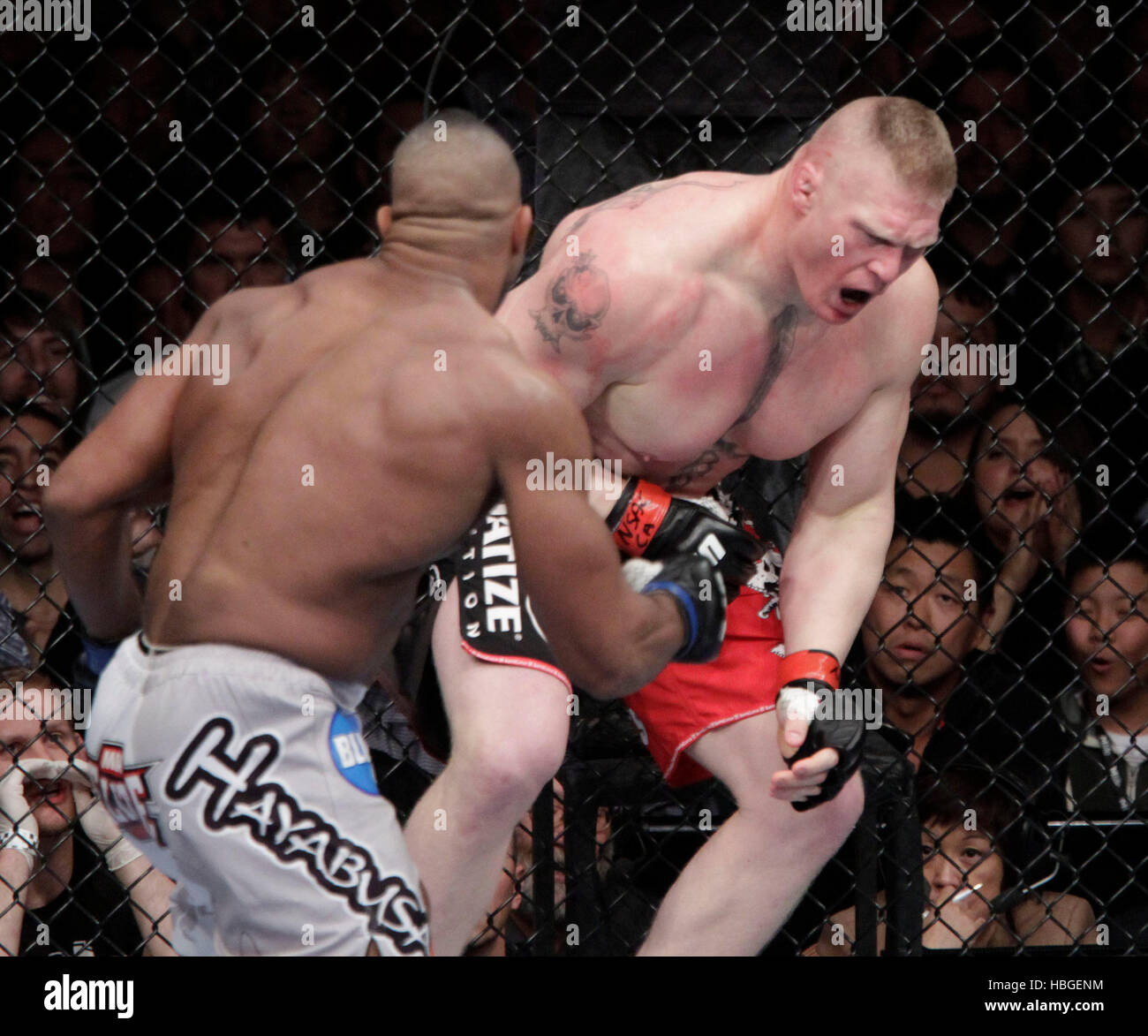
Alistair Overeem defeated Brock Lesnar at UFC 141 on December 30, 2011, via technical knockout (TKO) at 2:26 of the first round. Utilizing his elite K-1 striking, Overeem landed a devastating liver kick that folded Lesnar, leading to a referee stoppage and Lesnar's immediate retirement from mixed martial arts.
The encounter between Alistair Overeem and Brock Lesnar remains one of the most significant "superfights" in the history of the Ultimate Fighting Championship (UFC). Billed as a clash of titans, the main event of UFC 141 pitted the most decorated heavyweight striker in the world against the most physically imposing wrestler the Octagon had ever seen. In 2026, looking back at this pivotal moment, we can see how this single round of combat fundamentally altered the trajectory of the heavyweight division and the careers of two combat sports icons.
The Context: A Collision of Combat Sports Worlds
To understand the magnitude of UFC 141, one must recall the landscape of professional fighting in late 2011. Alistair Overeem was arriving in the UFC as a conquering hero of the international circuit. He was the reigning Strikeforce Heavyweight Champion, the DREAM Heavyweight Champion, and the 2010 K-1 World Grand Prix Champion. He was, quite literally, the most decorated heavyweight on the planet who was not already in the UFC. His signing was the culmination of the Zuffa acquisition of Strikeforce, and fans were eager to see if his "Ubereem" persona—characterized by a massive physique and terrifying striking power—would translate to the Octagon.
Conversely, Brock Lesnar was the UFC’s biggest box-office draw. A former NCAA Division I wrestling champion and WWE superstar, Lesnar had captured the UFC Heavyweight Championship in only his fourth professional fight. However, by the time UFC 141 arrived, Lesnar was a man fighting two battles: one against his opponents and another against his own body. He had been sidelined twice by diverticulitis, a grueling intestinal disease that required major surgery and had sapped him of his legendary explosive power. He was coming off a brutal loss to Cain Velasquez at UFC 121 and needed a win to prove he still belonged at the top of the food chain.
Technical Analysis: Striker vs. Wrestler
The tactical narrative of the fight was clear: Lesnar needed to close the distance and use his wrestling to neutralize Overeem’s striking, while Overeem needed to keep the fight at range or use the clinch to deliver his signature knees.
The Opening Seconds and Range Management
As the fight began at the MGM Grand Garden Arena, the tension was palpable. Lesnar immediately attempted to establish movement, looking for an entry for a double-leg takedown. Overeem, however, showed remarkable composure. Despite the pressure of his UFC debut, he stood tall in a traditional Thai stance, keeping his lead hand active to parry Lesnar’s jabs and measure the distance.
The Thai Clinch and Knee Strikes
The beginning of the end started with Overeem’s clinch work. When Lesnar attempted to move inward, Overeem engaged in the "Thai Plum," a double-collar tie that allowed him to control Lesnar's head. From this position, Overeem began landing thudding knees to the midsection. For a man who had recently undergone surgery to remove part of his colon due to diverticulitis, these strikes were the worst possible scenario. Lesnar’s reaction to the first few knees was telling; he winced and backed away, showing a vulnerability that had rarely been seen in his earlier career.
The Finishing Blow: The Liver Kick
At approximately 2:20 into the round, Overeem stepped forward and threw a thunderous left roundhouse kick to Lesnar’s right side. The kick landed flush on the liver. The physiological impact of a liver shot is immediate and debilitating—it causes a sudden drop in blood pressure and a temporary paralysis of the nervous system. Lesnar, one of the toughest athletes in sports history, buckled instantly. He retreated to the fence, covering up as Overeem followed up with a barrage of punches. Referee Mario Yamasaki stepped in to stop the bout at 2:26 of the first round.
Comparison of Career Stats Heading into UFC 141
The following table outlines the status of both fighters as they entered the Octagon on that historic night in Las Vegas.
| Feature | Alistair Overeem | Brock Lesnar |
|---|---|---|
| Professional Record | 35-11 (1 NC) | 5-2 |
| Height | 6'5" (196 cm) | 6'3" (191 cm) |
| Reach | 80 inches | 81 inches |
| Primary Style | Kickboxing / Muay Thai | Collegiate Wrestling |
| Major Titles Held | Strikeforce, DREAM, K-1 | UFC Heavyweight Champion |
| Weight | 263 lbs | 266 lbs |
| Betting Odds | -140 (Favorite) | +120 (Underdog) |
The Aftermath: Retirement and Career Shifts
The immediate fallout of UFC 141 was as shocking as the fight itself. In the post-fight interview with Joe Rogan, Brock Lesnar officially announced his retirement from mixed martial arts. He cited his ongoing struggle with diverticulitis and stated that he had promised his family he would retire if he did not win this fight. While Lesnar would eventually return for a one-off bout against Mark Hunt at UFC 200 in 2016, the loss to Overeem effectively ended his run as a full-time, elite-level MMA competitor.
For Alistair Overeem, the victory was supposed to be the launchpad to the UFC Heavyweight Championship. He was scheduled to face Junior dos Santos for the title at UFC 146. However, the momentum was halted when Overeem failed a pre-fight drug test, showing an elevated testosterone-to-epitestosterone (T/E) ratio. This led to a suspension and a significant cooling of his "unstoppable" aura. Overeem would go on to have a long and storied UFC career, eventually fighting for the title at UFC 203 in 2016, but he never again appeared as physically invincible as he did on the night he defeated Lesnar.
Historical Significance in the Heavyweight Division
The Overeem vs. Lesnar bout marked the end of the "Giant" era in the UFC heavyweight division. Prior to this, the division was dominated by massive men who relied on sheer size and strength. The technical precision with which Overeem dismantled Lesnar signaled a shift toward more specialized striking and well-rounded athleticism. It also solidified the "Strikeforce" invasion, proving that the fighters coming from outside organizations were every bit as capable as the UFC’s homegrown stars.
Furthermore, this fight served as a cautionary tale regarding the long-term health of athletes. Lesnar’s return from diverticulitis was celebrated as a miracle, but his performance against Overeem highlighted the reality that elite professional sports leave no room for anything less than 100% physical health. Overeem’s focus on Lesnar’s midsection was a calculated tactical move that targeted his opponent’s known medical history, showcasing the cold, analytical nature of high-level MMA.
Common Misconceptions About the Fight
Several myths have persisted regarding this encounter over the years. One common misconception is that Lesnar was "scared" of being hit. While Lesnar did show discomfort with striking in his later fights, the defeat at UFC 141 was more a result of technical mastery and physical trauma than a lack of courage. A liver kick of that magnitude would have stopped almost any human being, regardless of their mental toughness.
Another misconception is that Overeem "cheated" during this specific fight. While Overeem did fail a drug test months later, he passed all required testing for UFC 141. The victory stands as a legitimate, sanctioned win that showcased his peak form as a kickboxer transitioning into the world’s premier MMA organization.
Expert Analysis: Why the Finish Worked
Martial arts analysts often point to Overeem’s stance as the key to the finish. By staying in a southpaw-heavy or squared-up stance, he made it difficult for Lesnar to time a traditional blast double-leg. Every time Lesnar looked to drop levels, he was met with the threat of a knee. This "mental checkmate" forced Lesnar to stand and trade, which was exactly where Overeem wanted him.
The liver kick itself was a masterpiece of timing. Overeem waited for Lesnar to reset his feet, catching him at the moment his abdominal muscles were least prepared to absorb the impact. This level of striking intelligence was rare in the heavyweight division at the time and set a new standard for technical proficiency among the big men of the UFC.
Frequently Asked Questions
Who won the fight between Alistair Overeem and Brock Lesnar?
Alistair Overeem won the fight by technical knockout (TKO) in the first round. The victory came at 2:26 of the round following a series of knees and a definitive kick to the body that sent Lesnar to the canvas.
Why did Brock Lesnar retire after UFC 141?
Lesnar retired due to a combination of his loss to Overeem and his ongoing battle with diverticulitis. He stated in his post-fight interview that the disease had taken a toll on him and that he had made a promise to his family to step away from the sport if he lost.
What was the official result of Overeem vs. Lesnar?
The official result was a TKO (Kicks and Punches) victory for Alistair Overeem at 2:26 of Round 1. The event took place at UFC 141 on December 30, 2011, in Las Vegas, Nevada.
Did Alistair Overeem and Brock Lesnar ever have a rematch?
No, Overeem and Lesnar never fought again. Lesnar returned to professional wrestling shortly after the fight, and though he returned for one fight at UFC 200 against Mark Hunt, a rematch with Overeem was never booked.
Was the fight at UFC 141 a title fight?
No, it was a three-round non-title heavyweight main event. However, it was designated as a "Number One Contender" bout, with the winner scheduled to face then-champion Junior dos Santos for the UFC Heavyweight Championship.
Final Perspective on the Event
In the years since 2011, the heavyweight division has seen many champions and legendary battles, but few matches carried the sheer visceral energy of Alistair Overeem vs. Brock Lesnar. It was a moment where the "baddest man on the planet" met his match in a specialized destroyer. For fans of tactical striking, it remains a clinic on how to dismantle a world-class wrestler using clinch work and body shots. For the sport of MMA, it was the closing of one chapter and the beginning of another, where technical diversity became the requirement for success at the highest level.