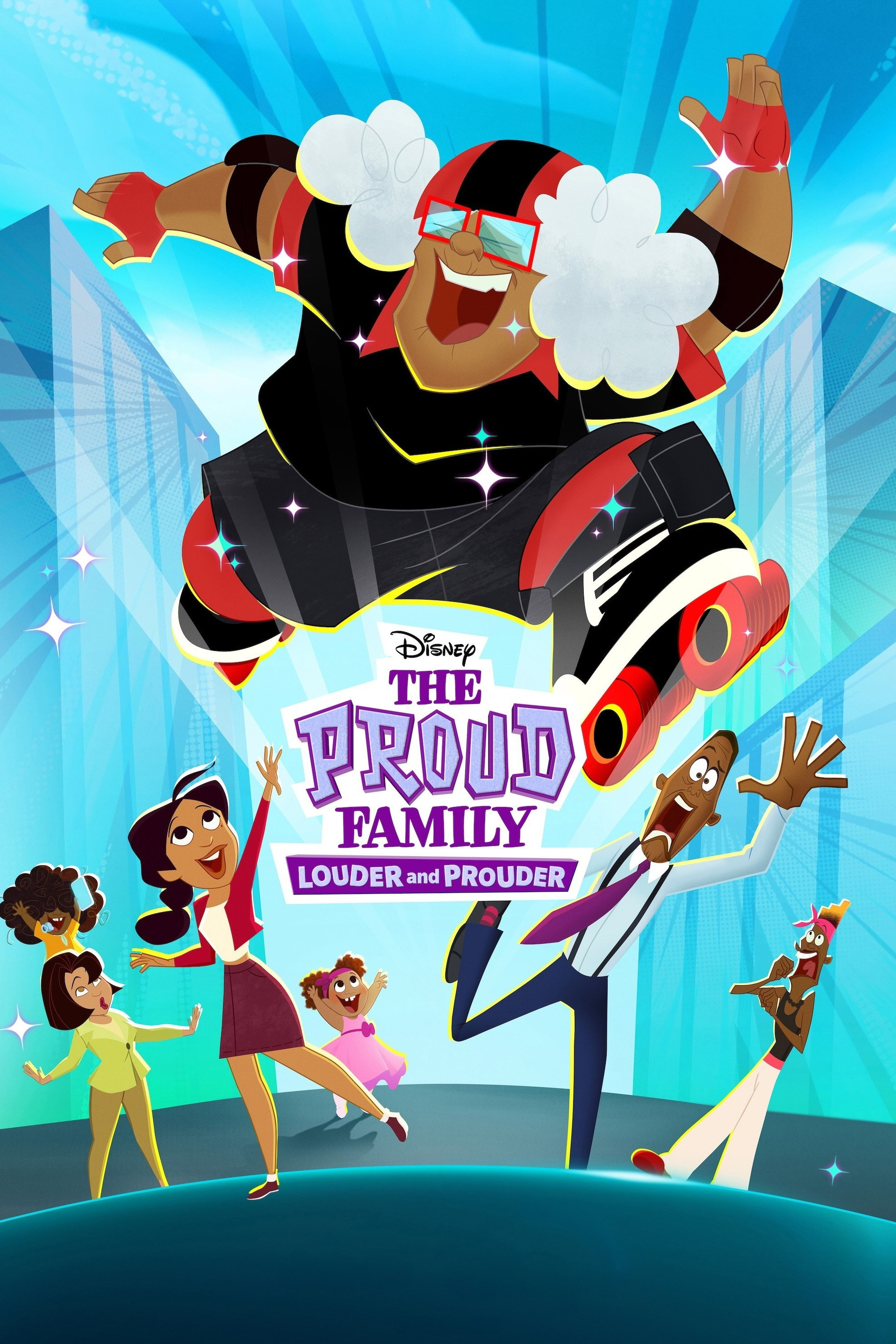
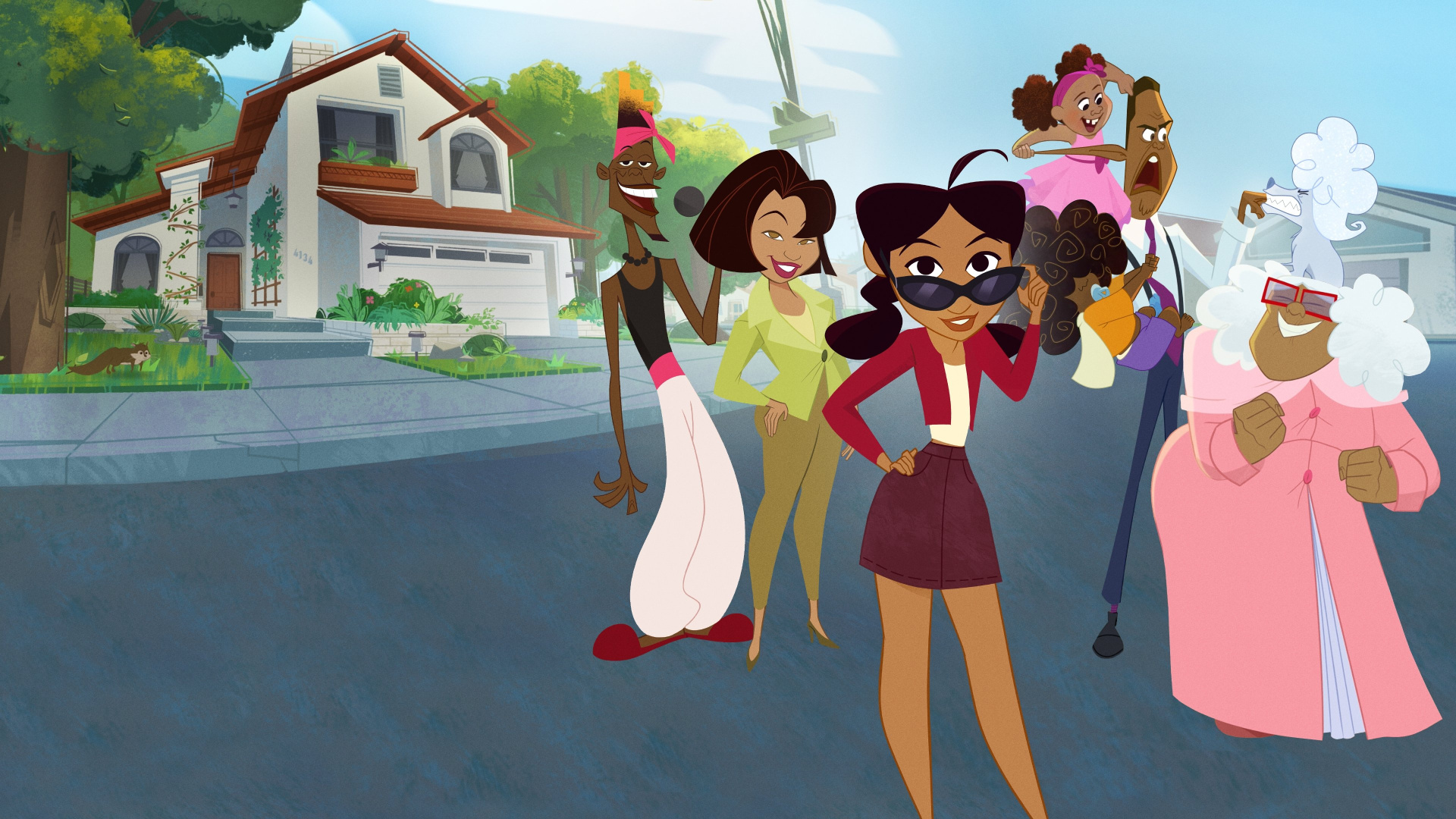
Alicia Keys’ connection to The Proud Family centers on her high-profile guest appearance as an animated version of herself in the original Disney Channel series and a widespread pop-culture myth misattributing the show's iconic theme song to her. While Solange Knowles and Destiny’s Child recorded the theme, Keys brought authentic early-2000s R&B prestige directly into the show’s universe.
The Core Connection: Guest Stardom Meets Cultural Memory
During the golden era of early-2000s Disney Channel animation, The Proud Family stood apart from its peers by immersing itself in contemporary Black culture, hip-hop, and neo-soul. Created by Bruce W. Smith and executive produced by Ralph Farquhar, the series routinely blurred the line between fictional suburban comedy and real-world music royalty.
Alicia Keys entered this landscape at the peak of her early career. fresh off the monumental success of her debut album, Songs in A Minor (2001), and her sophomore release, The Diary of Alicia Keys (2003). Her official credit within the franchise is an animated guest appearance in the original series episode titled "The Campers", where she voiced herself.
Beyond her credited voice role, a second, equally powerful connection exists in the collective memory of millennials and Gen Z viewers. For more than two decades, casual listeners have mistaken Keys for the vocalist behind The Proud Family’s timeless theme song. Examining both the factual voice cameo and the enduring musical mix-up reveals how deeply Alicia Keys’ artistic identity intersected with the aesthetic of the groundbreaking animated show.
The Cameo: Alicia Keys in "The Campers"
In the original run of The Proud Family, celebrity guest stars were not merely passing visual gags; they were woven into the community of Wizville and the lives of Penny Proud and her eccentric circle.
- The Proud Family: "The Campers" (Original Series Run: Season 2/3 Synd.)
- Narrative Arc
- Penny & friends attend summer camp
- Face rivalries and challenges
- Alicia Keys appears as herself
- Cultural Weight
- Legitimacy of Alicia Keys' brand
- Integration of real-world R&B star
- Synergy with Lou Rawls cameo
- Narrative Arc
Episode Context and Narrative Arc
In "The Campers," Penny Proud, Dijonay Jones, Zoey Howzer, and LaCienega Boulevardez venture away from their regular neighborhood routines to spend time at a summer camp. As with many classic episodes, the storyline navigates adolescent rivalries, personal growth, outdoor mishaps, and the comic tension between youthful independence and parental anxiety.
Alicia Keys appears as an animated guest celebrity, interacting with the campers and bringing her calm, grounded demeanor to the screen. Rather than playing a caricatured villain or an aloof celebrity archetype, Keys’ animated counterpart mirrored her public persona: poised, musically gifted, approachable, and cool.
Why the Appearance Mattered for Disney Channel
In 2004, landing an artist of Alicia Keys' caliber was a significant coup for Disney Channel’s animation department. At that moment:
- Keys had already collected multiple Grammy Awards, including Best New Artist and Song of the Year for "Fallin'."
- Her presence elevated the cultural credibility of The Proud Family, signaling to Black audiences and general viewers alike that top-tier Black artists valued the show's storytelling.
- The episode aired alongside guest appearances by legendary soul singer Lou Rawls, bridging classic 1970s soul with the contemporary neo-soul explosion that Keys spearheaded.
Debunking the Myth: Who Actually Sang The Proud Family Theme Song?
One of the most persistent musical urban legends of 2000s television is that Alicia Keys sang the theme song to The Proud Family. Searches pairing Keys with the theme song continue to surge on streaming services and social media platforms.
- The Proud Family Theme Song Attribution
- The Fact
- Primary: Solange
- Backup: Destiny's Child
- Producer: Farquhar
- The Myth
- Incorrect: Alicia Keys
- Reason: Neo-soul style
- Overlapping vocal tone
- The Fact
The Real Artists: Solange Knowles and Destiny’s Child
The iconic opening theme song, officially titled "The Proud Family Theme Song," was performed by Solange Knowles, with background vocals and harmonies provided by Destiny’s Child (featuring Beyoncé Knowles, Kelly Rowland, and Michelle Williams).
The track was written and produced under the supervision of veteran composer and series musical architect Kurt Farquhar. It was designed specifically to establish a vibrant, youthful, and soulful identity that would hook audiences within the first ten seconds of every broadcast.
Why Does Everyone Think It Was Alicia Keys?
Several sonic and historical factors explain why millions of viewers misremember the artist behind the microphone:
- The Neo-Soul Piano Motif: The track opens with crisp, rhythmic piano chords accompanied by an infectious R&B bassline. In 2001, piano-driven R&B on mainstream radio was almost universally associated with Alicia Keys, whose signature instrument defined hits like "Fallin'," "A Woman's Worth," and "If I Ain't Got You."
- Solange’s Early Vocal Texture: In 2001, Solange Knowles was a teenager entering the commercial music space. Her lower-register vocal delivery and soulful cadence on the track shared tonal characteristics with Keys’ trademark warm, textured vocal approach.
- Identical Timelines: The Proud Family premiered on Disney Channel on September 15, 2001. Alicia Keys' breakthrough debut album, Songs in A Minor, was released on June 5, 2001. Both properties dominated youth culture at the exact same historical moment, permanently fusing their aesthetics in the minds of young listeners.
- Broadcast Syndication Habits: In original syndication, Disney Channel rarely aired extensive end-credits crawls with complete liner notes for short-form animated theme songs. Viewers relied on word of mouth or peer-to-peer file-sharing networks (like LimeWire and Kazaa), where music files were notoriously mislabeled. MP3s of the theme song were frequently tagged as
"Alicia_Keys_Proud_Family_Theme.mp3".
Comparing Guest Appearances and Musical Contributions
The Proud Family established a musical universe that rivaled contemporary radio. Below is an analytical breakdown of how Alicia Keys compares to other superstar recording artists featured throughout the franchise's history.
| Artist / Group | Role / Appearance | Media Format | Key Track / Contribution | Common Fan Misconception |
|---|---|---|---|---|
| Alicia Keys | Guest Star (as herself) | Original TV Series ("The Campers") | Voice acting / Guest feature | Believed to have performed the original theme song. |
| Solange Knowles | Lead Theme Performer | Series Theme Song | "The Proud Family Theme Song" | Often confused with Alicia Keys or Beyoncé solo. |
| Destiny's Child | Featured Performers | Series Theme Song | Theme Song Backing Vocals | Mistaken for the sole primary vocalists rather than backing Solange. |
| Lou Rawls | Voice Actor (Guest) | Original TV Series ("The Campers") | Character voice acting | Often overlooked despite co-starring in Keys' featured episode. |
| Ashanti | Guest Star (as herself) | Original TV Series ("Twin Town") | "Dreams" | Occasionally conflated with other contemporary guest vocalists. |
| Ray J | Guest Star / Voice Actor | Original TV Series | Various musical moments | Confused with recurring cast members. |
| Mos Def (Yasiin Bey) | Voice Actor (as himself) | Original TV Series ("I Have a Dream") | Hip-hop spoken performance | Often forgotten by casual viewers outside of core hip-hop fans. |
| Keri Hilson | Performer / Cameo | The Proud Family: Louder and Prouder | Musical arrangement contributions | Believed to have appeared in the original 2000s run. |
The Broader Musical Architecture of The Proud Family
To fully appreciate why Alicia Keys’ presence felt so natural in The Proud Family, one must understand the show’s unique soundscape.
Kurt Farquhar's Direction
Unlike traditional animated series of the late 1990s and early 2000s, which leaned heavily on orchestral slapstick cues or generic pop-rock, The Proud Family hired Kurt Farquhar. Farquhar was already a seasoned television composer responsible for defining the sound of iconic 1990s sitcoms, including Moesha, The Parkers, and Sister, Sister.
Farquhar brought genuine urban contemporary music production to animation:
Real Instruments: Live bass, acoustic drums, and authentic acoustic and electric pianos were prioritized over cheap MIDI synthesizers.
Genre Blending: Episodes incorporated gospel, hip-hop, neo-soul, funk, and go-go music, depending on whether the scene took place at Suga Mama’s house, Penny’s school dance, or Bobby Proud’s band rehearsals.
Cultural Authenticity: The music matched the characters' identities. Bobby Proud (voiced by Tommy Davidson) served as a parody and homage to 1980s R&B legends like Cameo, Prince, and Rick James.
Kurt Farquhar's Musical Landscape in The Proud Family
- Neo-Soul
- Alicia Keys, Solange, Destiny Child harmonies
- Classic R&B/Funk
- Bobby Proud, Lou Rawls, 70s/80s tributes
- Hip-Hop & Gospel
- Mos Def, Church choir sequences
- Neo-Soul
Alicia Keys was the reigning queen of neo-soul in 2004. Inviting her into the recording booth was a natural extension of Farquhar’s creative vision: making an animated series sound as sophisticated as the Billboard Hot 100.
Alicia Keys' Cultural Resonance in Early 2000s Television
Keys’ appearance on The Proud Family was part of a strategic, wider presence across family and youth programming during the early 2000s. Unlike artists whose brands were too adult for daytime television, Keys possessed a rare, multi-generational appeal.
Broad Appeal Across Demographics
Parents appreciated her classical piano training, poetic lyricism, and modest, retro-inspired fashion. At the same time, children and teenagers recognized her as one of the coolest tastemakers in modern music. Disney Channel, Nickelodeon, and major networks frequently built promotional campaigns around her:
- Artistic Authenticity: Keys was celebrated as a real musician who wrote her own lyrics and played her own instruments, fitting The Proud Family's positive messaging around creative expression and hard work.
- Representation: For young Black girls watching Disney Channel in 2004, seeing an animated character rocking Keys’ signature braided hairstyles and beads was validating. Penny Proud herself represented the everyday African-American teenage experience; seeing a superstar who looked like Penny's older sister or idol cemented the series' cultural relevance.
The Legacy of the Episode and the Franchise Today
Decades after its original broadcast, the connection between Alicia Keys and The Proud Family remains a popular conversation piece within streaming communities and pop-culture retrospectives.
Availability on Disney+
With the launch and expansion of the Disney+ catalog, the original run of The Proud Family and its 2005 full-length feature, The Proud Family Movie, became permanently accessible to archival viewers and a new generation.
Viewers streaming "The Campers" today can immediately identify Keys’ early-career voice, unvarnished by overproduction. It serves as an authentic time capsule of early-2000s entertainment synergy, capturing a superstar at an inflection point in her journey to becoming a global icon.
The Revival: Louder and Prouder
In 2022, Disney revived the franchise with The Proud Family: Louder and Prouder. The revival leaned even further into high-profile musical guest stars, featuring contemporary artists such as Lizzo, Lil Nas X, Normani, and Chance the Rapper.
The revival's updated theme song—performed by modern R&B sensation Joyce Wrice—sparked renewed discourse around the original track. This retrospective debate once again brought Alicia Keys back into the cultural conversation, as fans broke down the legacy of the original music, re-debunking the myth while celebrating Keys' historical participation in the series.
Practical Verification: How to Track Down the Appearance and Music
For music historians, animation fans, or curious viewers wanting to verify the facts firsthand, follow these direct steps:
Watch the Episode:
- Navigate to Disney+.
- Search for The Proud Family (the original series, not Louder and Prouder).
- Locate the episode titled "The Campers". (Note: Depending on syndication packaging or regional platform metadata, it is typically listed under Season 2, Episode 25 or Season 3, Episode 10).
- Check the end credits to confirm Alicia Keys’ voice credit as herself.
Verify Theme Song Credits:
- Inspect the official original soundtrack, The Proud Family (released by Walt Disney Records in 2003).
- Track 1: "The Proud Family" – Performed by Solange Knowles featuring Destiny's Child.
- Note the production credits listing Kurt Farquhar and Matthew Knowles.
Explore Alicia Keys' Official Filmography:
- Verify on official filmography databases (such as the American Film Institute or verified entertainment production registries) that Keys holds a credited cameo voice role in the series, distinct from her feature film debuts in Smokin' Aces (2006) and The Secret Life of Bees (2008).
Frequently Asked Questions
Did Alicia Keys write or perform the theme song for The Proud Family?
No. Alicia Keys neither wrote nor performed the theme song. The track was performed by Solange Knowles with background vocals from Destiny's Child and was composed and produced under the direction of series composer Kurt Farquhar. The misconception stems from the song's piano-heavy neo-soul production and Solange's early vocal styling, which matched Keys' popular 2001 sound.
Which character did Alicia Keys play in The Proud Family?
Alicia Keys played herself. She made a celebrity guest appearance in the episode titled "The Campers," where she interacted with Penny Proud and her friends during their summer camp trip, offering an animated reflection of her real-world musical persona.
When did the Alicia Keys Proud Family episode originally air?
"The Campers" originally aired in June 2004 during the third broadcast block of the original series run on Disney Channel. The appearance occurred between the massive commercial releases of Keys' second and third multi-platinum studio projects.
Is Alicia Keys involved in The Proud Family: Louder and Prouder?
Alicia Keys has not voiced a character in the revival series The Proud Family: Louder and Prouder. While the revival features an extensive roster of modern guest stars including Lizzo and Normani, Keys' direct voice participation remains rooted in the original 2001–2005 series.
Who else guest-starred in the episode alongside Alicia Keys?
Legendary soul and jazz vocalist Lou Rawls also provided guest voice work in the episode "The Campers." The pairing of Rawls and Keys allowed the show to pay homage to both 1970s classic soul and 2000s contemporary neo-soul within a single narrative arc.
Final Takeaway and Recommended Next Steps
The connection between Alicia Keys and The Proud Family is a compelling mix of documented television history and shared cultural misunderstanding. While she did not perform the show's world-famous theme song—an honor belonging to Solange Knowles and Destiny’s Child—her guest appearance in "The Campers" validated the show's cultural standing during the early 2000s R&B renaissance.
To explore this musical era further, stream "The Campers" on Disney+ to experience Keys’ original voice cameo, and listen to the remastered 2003 The Proud Family official soundtrack on major streaming platforms to compare the vocal signatures of early Solange, Destiny's Child, and the signature neo-soul arrangements that defined an entire generation of television.