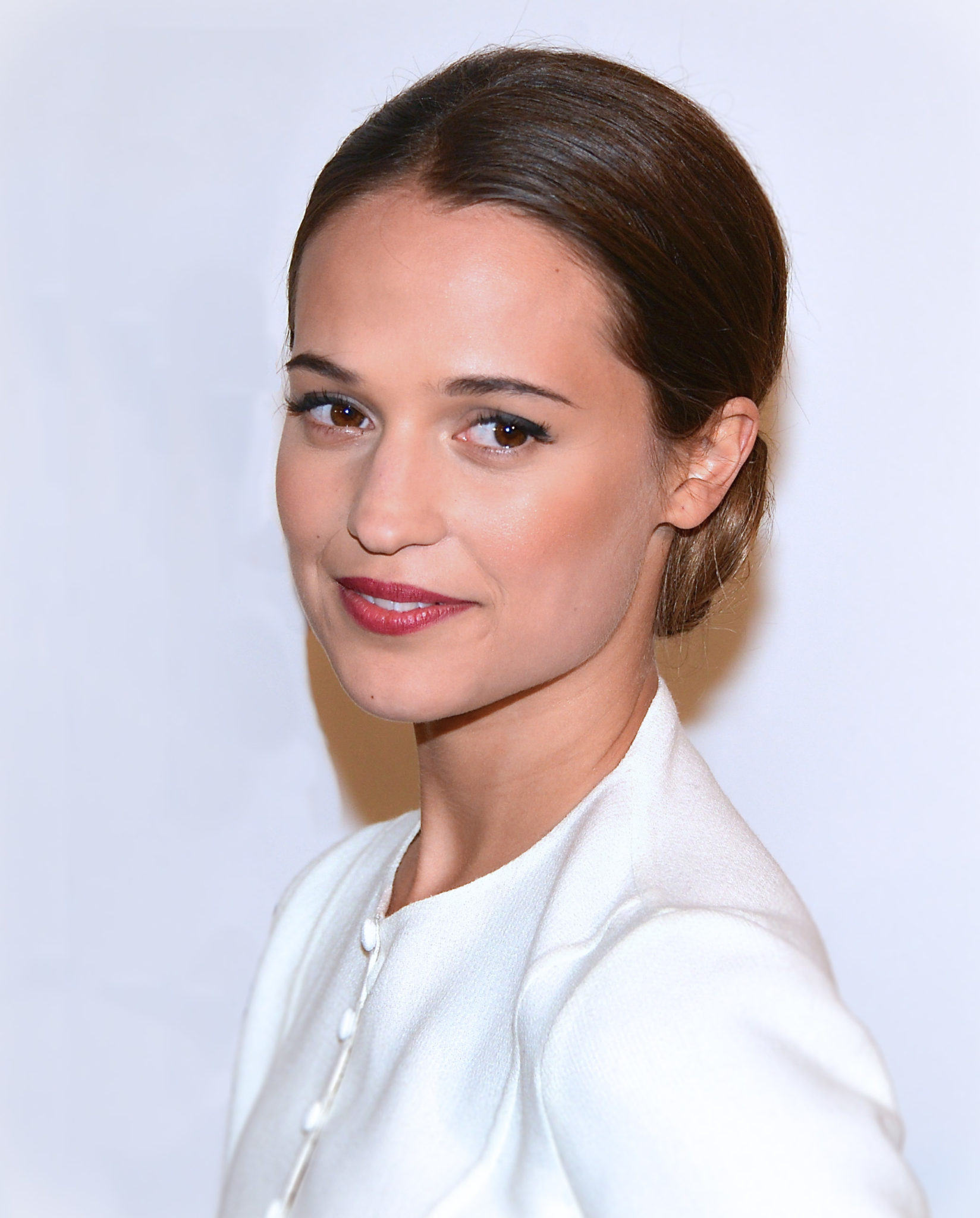
Alicia Amanda Vikander is an Academy Award-winning Swedish actress and producer renowned for her transformative performances in films such as Ex Machina, The Danish Girl, and Tomb Raider. Since her 2012 international breakthrough, she has evolved from a classically trained ballerina into one of the most versatile and physically disciplined leads in global cinema.
The Foundations of a Disciplined Artist
Born on October 3, 1988, in Gothenburg, Sweden, Alicia Amanda Vikander’s entry into the performing arts was influenced significantly by her environment. Her mother, Maria Fahl Vikander, was a stage actress, providing Alicia with early exposure to the rigors of the theater. However, Vikander’s first primary discipline was not acting, but classical ballet.
At age nine, she began training at the Royal Swedish Ballet School in Gothenburg, later moving to Stockholm at age 15 to train with the national program. The discipline required for professional ballet—precision, endurance, and the ability to convey complex emotion through physical movement—became the bedrock of her later acting career. Despite suffering injuries that eventually curtailed a full-time dance career, the "ballet mindset" remains evident in how she approaches the physicality of her roles.
Vikander’s transition to acting began in Swedish television and short films. Her film debut in the 2009 Swedish drama Pure (Till det som är vackert) was a critical revelation. Playing Katarina, a young woman seeking escape from a bleak life through classical music, she won the Guldbagge Award for Best Actress (Sweden's equivalent to the Oscar). This performance signaled the arrival of a major talent capable of navigating intense, internal emotional landscapes.
The International Breakthrough and the "Year of Alicia"
While Pure established her in Scandinavia, the year 2012 marked her entry into English-language cinema. She appeared as Kitty in Joe Wright’s stylized adaptation of Anna Karenina and starred in the Academy Award-nominated Danish historical drama A Royal Affair. These roles demonstrated her ability to hold the screen alongside established stars like Keira Knightley and Mads Mikkelsen, while mastering period-specific mannerisms and languages.
The year 2015 is often cited by film historians and critics as the "Year of Alicia." Within a single twelve-month period, she appeared in several high-profile projects that showcased an almost unprecedented range:
- Ex Machina: Directed by Alex Garland, this sci-fi thriller saw Vikander play Ava, an advanced humanoid AI. Her performance was a masterclass in subtlety; she utilized her ballet training to create a movement style that was almost—but not quite—human.
- The Man from U.N.C.L.E.: Under the direction of Guy Ritchie, she displayed her comedic timing and action sensibilities as Gaby Teller.
- The Danish Girl: This biographical drama earned her the Academy Award for Best Supporting Actress. Playing Gerda Wegener, the wife of transgender pioneer Lili Elbe (Eddie Redmayne), Vikander provided the emotional anchor of the film, portraying a woman navigating deep love, grief, and personal transformation.
Her Oscar win solidified her status as an A-list talent, making her the first Swedish actress to win an Academy Award since Ingrid Bergman. This period established her reputation for "intellectual acting"—performances that are deeply thought out but delivered with raw, accessible emotion.
Redefining the Action Hero: Tomb Raider and Physicality
In 2018, Vikander took on the iconic role of Lara Croft in the reboot of Tomb Raider. This was a significant departure from her dramatic roots and required an immense physical transformation. Eschewing the more stylized, "superhero" aesthetic of previous iterations, Vikander worked with celebrity trainer Magnus Lygdbäck to gain significant muscle mass and learn practical stunts, including MMA, climbing, and archery.
Her portrayal of Croft focused on the character's origin—a vulnerable but resilient young woman pushed to her limits. While the film received mixed reviews, Vikander’s commitment to the physicality of the role was universally praised. It demonstrated her capability to lead a major studio franchise, a feat she balanced by continuing to take roles in independent and arthouse cinema.
This duality—moving between $100 million blockbusters and intimate character studies—has become a hallmark of her career. She often expresses a preference for "characters who are at a crossroads," regardless of the genre or budget of the project.
Vikarious Productions and Industry Advocacy
Beyond her work in front of the camera, Alicia Vikander has taken significant steps to influence the industry as a producer. In 2016, she launched Vikarious Productions alongside her London-based agent, Charles Collier. The company’s first feature, Euphoria (2017), starred Vikander and Eva Green as sisters and featured a predominantly female creative team.
The motivation behind Vikarious Productions was rooted in Vikander’s desire to address the gender imbalance in the film industry. She has been a vocal supporter of the #MeToo and Time’s Up movements, particularly in her native Sweden, where she joined over 400 actresses in signing an open letter against sexual harassment and inequality in the Swedish theater and film industries.
Through her production banner, she seeks out stories that provide complex, non-stereotypical roles for women, focusing on European talent and diverse narratives. This shift into production ensures that her influence on cinema extends beyond her individual performances to the very architecture of how stories are told.
Recent Work and the Path to 2026
As of 2026, Vikander’s filmography reflects a matured artist who chooses projects with high artistic risk. Her recent collaboration with director Olivier Assayas on the HBO limited series Irma Vep (2022) saw her playing a disillusioned American movie star, a meta-commentary on fame and the film industry itself.
In the historical drama Firebrand (2023), she portrayed Katherine Parr, the final wife of Henry VIII (played by Jude Law). The role allowed her to explore the themes of survival and intellectual resistance within a dangerous political court. Furthermore, her involvement in Na Hong-jin’s sci-fi thriller Hope highlights her continued interest in international, multi-lingual cinema, reinforcing her identity as a global rather than strictly "Hollywood" actress.
Alicia Vikander Filmography and Key Milestones
The following table summarizes the pivotal moments and projects that have defined Vikander’s trajectory.
| Year | Title | Role | Notable Recognition |
|---|---|---|---|
| 2009 | Pure (Till det som är vackert) | Katarina | Guldbagge Award for Best Actress |
| 2012 | A Royal Affair | Caroline Mathilde | Nominated: BAFTA Rising Star Award |
| 2012 | Anna Karenina | Kitty | International breakthrough |
| 2015 | Ex Machina | Ava | Nominated: Golden Globe & BAFTA |
| 2015 | The Danish Girl | Gerda Wegener | Winner: Academy Award for Best Supporting Actress |
| 2016 | The Light Between Oceans | Isabel Graysmark | Met future husband Michael Fassbender |
| 2018 | Tomb Raider | Lara Croft | Significant physical transformation role |
| 2022 | Irma Vep (TV Series) | Mira Harberg | Critically acclaimed meta-drama |
| 2023 | Firebrand | Katherine Parr | Exploration of Tudor history |
| 2025 | Hope | Various | Collaboration with Na Hong-jin |
Personal Life and Public Image
Alicia Vikander is known for maintaining a high degree of privacy regarding her personal life. She married Irish-German actor Michael Fassbender in 2017 in a private ceremony in Ibiza. The couple met while filming The Light Between Oceans and have since settled in Lisbon, Portugal.
The choice to live in Lisbon, away from the traditional hubs of London or Los Angeles, reflects Vikander's desire for a balanced life. She has often spoken about the "nomadic" nature of acting and the importance of having a grounded home base. The couple has two children (born in 2021 and 2024), and Vikander has been candid in interviews about the challenges of balancing motherhood with the demanding schedules of international film production.
Unlike many of her peers, Vikander does not maintain a public social media presence. She has stated in multiple interviews, including with Harper’s Bazaar, that she prefers the mystery of the "old school" movie stars and finds that social media can detract from the audience's ability to see her as a character rather than a celebrity personality.
Acting Style and Technical Mastery
Critics often point to Vikander's "unwavering gaze" and "physical economy" as her greatest technical strengths. Because of her dance background, she understands how to use her entire body to tell a story. In The Danish Girl, her performance is characterized by the way she occupies space—initially confident and expansive, then physically manifesting the weight of her husband’s transition.
In Ex Machina, she achieved a "uncanny valley" effect by isolating specific muscle groups, making Ava’s movements look synthesized. This level of technical control allows her to perform in various languages; she is fluent in Swedish and English, and has performed roles requiring Danish and French.
Her approach to research is equally rigorous. For her role as Katherine Parr, she spent months studying the queen's own writings and letters to understand the psychological pressure of being married to a volatile monarch. This dedication to "the work" over "the fame" has made her a favorite among directors like Wim Wenders, Justin Chon, and Alex Garland.
Frequently Asked Questions
Did Alicia Vikander actually do her own stunts in Tomb Raider?
Yes, Vikander performed a significant portion of her own stunts. She underwent intensive training for four months prior to filming, focusing on gaining 12 pounds of muscle and mastering skills like "cycle-stunts," climbing, and underwater sequences. While professional stunt performers were used for high-risk maneuvers, her physical presence in the action sequences was a key selling point for the film's realism.
How many languages does Alicia Vikander speak?
Alicia Vikander is naturally fluent in Swedish and English. However, she has demonstrated a remarkable ear for languages in her professional life. She learned Danish for her role in A Royal Affair and has performed in French for certain projects. Her ability to master accents, such as various British and American dialects, is a cornerstone of her international appeal.
Has Alicia Vikander won an Oscar?
Yes, she won the Academy Award for Best Supporting Actress in 2016 for her role as Gerda Wegener in The Danish Girl. Interestingly, while the Academy classified her as "Supporting," she was often campaigned as a Lead in other award circuits, reflecting the significant screen time and emotional weight she carried in the film.
Where does Alicia Vikander live?
As of 2026, Alicia Vikander and her husband Michael Fassbender reside primarily in Lisbon, Portugal. They moved there in 2017, citing the city's culture, proximity to the ocean, and the ability to live a more "normal" life away from the intense paparazzi culture of Los Angeles or London.
What is Alicia Vikander’s next project?
Following her work in the sci-fi thriller Hope, Vikander is slated to produce and star in several projects under her Vikarious Productions banner. She continues to focus on international collaborations that bridge the gap between European independent cinema and global audiences.
Next Action for Readers: To truly appreciate the technical range of Alicia Vikander, it is recommended to watch Ex Machina followed immediately by The Danish Girl. Observing the contrast between her calculated, robotic movements as Ava and her raw, empathetic vulnerability as Gerda provides the best insight into her capabilities as a world-class performer.