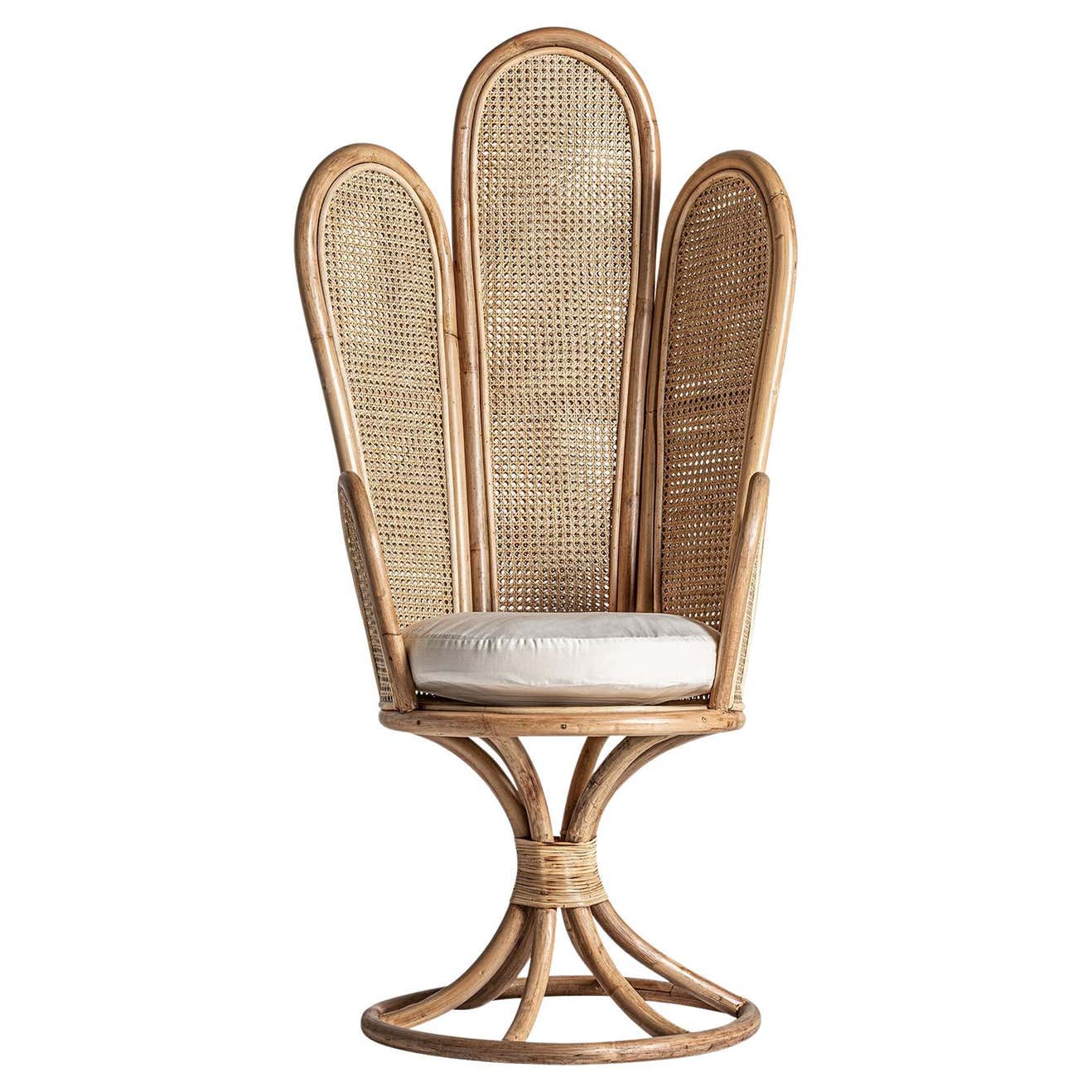
The evolution of alfresco rattan reflects a shift from purely functional, hand-woven jungle crafts to high-performance, weather-resistant designer furniture. By blending traditional weaving techniques with modern synthetic polymers and ergonomic frames, rattan now bridges the gap between artisanal heritage and contemporary durability, offering a sustainable and aesthetically versatile solution for outdoor living spaces in 2026.
The Botanical Origins and Physical Properties of Rattan
To understand the journey of rattan, one must first distinguish the material from the technique. Rattan is a naturally renewable climbing palm belonging to the Calamoideae family, primarily native to the tropical forests of Southeast Asia, specifically Indonesia, Malaysia, and the Philippines. Unlike bamboo, which is hollow, rattan is a solid-core vine. This solid structure provides the unique combination of flexibility and tensile strength that has made it a premier furniture material for centuries.
The anatomical structure of a rattan stalk consists of a hard outer "peel" and a fibrous, porous inner "core." The peel is often stripped and used for "cane" weaving (commonly seen in chair seats), while the core is utilized for structural elements or split into smaller strands for intricate wickerwork. In its natural state, rattan is exceptionally lightweight, making it ideal for transport, yet it possesses a cellular density that resists breaking under significant weight.
In the context of 2026 design standards, the sustainability of natural rattan remains a high-value proposition. Because it grows rapidly—up to 40 meters in a single year in some species—it can be harvested without the clear-cutting associated with hardwoods. This "non-timber forest product" status encourages the preservation of rainforest canopies, as the vines require existing trees to climb.
The Heritage of Traditional Wicker Craftsmanship
The term "wicker" refers to the method of weaving, not the material itself. Traditional wicker craftsmanship dates back to ancient Egypt, where indigenous reeds and swamp grasses were woven into chests and seating. However, the introduction of rattan to the Western world via 17th-century trade routes transformed the craft.
Traditionally, the process of creating rattan furniture is labor-intensive and requires a master’s touch. The preparation involves several key stages:
- Harvesting and Curing: The vines are cut, cleaned of thorns, and dried in the sun to reduce moisture content.
- Smoking and Grading: Traditional artisans often use sulfur smoking to normalize the color and protect the fibers from insects.
- Steam Bending: Because natural rattan is rigid when dry, it is subjected to high-temperature steam. This makes the solid core pliable, allowing craftsmen to bend it into the sweeping curves characteristic of Victorian-era and Mid-Century designs.
- The Weave: This is where the artistry lies. Traditional patterns like the "hexagonal cane weave" or the "herringbone" are not just decorative; they are engineered to distribute weight and tension across the frame.
The Transition to Alfresco: Overcoming the Elements
For most of the 19th and 20th centuries, natural rattan was largely confined to solariums, sunrooms, and covered porches. While beautiful, organic rattan is susceptible to "graying" from UV exposure and structural rot if subjected to persistent moisture. The "alfresco" revolution—the movement of full-scale living and dining spaces to the outdoors—demanded a material that could mimic the aesthetic of rattan while surviving the 2026 climate realities of intense sun and erratic rainfall.
This demand led to the development of Synthetic Rattan, also known as PE Rattan or Polyethylene Wicker. Unlike the cheap PVC plastics used in the early 2000s, modern PE rattan is a high-density polyethylene (HDPE) that is dyed throughout, meaning the color cannot scratch off.
The Science of Modern HDPE Rattan
Contemporary synthetic rattan is engineered at the molecular level to include UV stabilizers and anti-fungal agents. This ensures that the material does not become brittle or fade when exposed to direct sunlight for years. Furthermore, the frames beneath the weave have evolved. While traditional rattan used rattan-pole frames, modern alfresco furniture utilizes powder-coated aluminum. This provides a rust-proof, lightweight skeleton that allows the furniture to remain outdoors year-round without the risk of structural failure.
Modern Design Trends: Minimalist Aesthetics and Ergonomics
In 2026, the design language of rattan has moved away from the overly ornate, "shabby-chic" styles of the past toward Organic Modernism. This trend emphasizes clean lines, matte finishes, and a "low-profile" silhouette that blends into the natural landscape.
1. The Sculptural Influence
Modern designers are treating rattan as a sculptural medium. Using advanced 3D modeling, manufacturers can create ergonomic "bucket" seats and cantilevered loungers that were impossible to produce with traditional hand-bending techniques. The focus is on the "visual weight"—ensuring the furniture looks light and airy, maintaining the "transparency" that defines the wicker aesthetic.
2. Mixed Media Integration
We no longer see rattan in isolation. Modern alfresco sets frequently combine HDPE rattan with Grade-A teak, tempered glass, or powder-coated steel. For instance, a dining table might feature a woven rattan base paired with a slim-profile porcelain top. This juxtaposition of textures—the warmth of the weave against the coldness of stone or metal—defines the 2026 luxury outdoor market.
3. Tactile Realism
Technological advancements in extrusion have allowed for "textured" synthetic fibers. Modern PE rattan often features a slightly roughened surface and variegated color tones to mimic the imperfections of natural vine. This "tactile realism" satisfies the consumer's desire for an organic look while providing the benefits of industrial-grade durability.
Comparing Rattan Materials for 2026 Outdoor Use
Choosing the right material depends on the specific environment and the level of maintenance the user is willing to perform.
| Feature | Natural Rattan | PE (HDPE) Rattan | PVC Rattan |
|---|---|---|---|
| Durability | Moderate (Best indoors) | High (Full outdoor) | Low (Tends to crack) |
| UV Resistance | Low (Fades/Brittles) | Excellent | Poor |
| Maintenance | High (Oiling required) | Low (Soap and water) | Low |
| Eco-Impact | Highly Sustainable | Recyclable | Non-recyclable / Toxic |
| Appearance | Authentic, organic | Highly realistic | Plastic-like / Shiny |
| Weight | Very Light | Light to Moderate | Light |
Engineering the Weave: Technical Styles and Their Benefits
The strength of an alfresco rattan piece is dictated by the density and style of the weave. In 2026, manufacturers utilize several specific patterns to achieve different functional goals:
- The Flat Weave: The most common modern style. It uses flat strands of HDPE, providing a smooth, contemporary surface that is easy to clean. It is highly flexible and conforms well to ergonomic curves.
- The Half-Round Weave: This style uses strands that are flat on one side and rounded on the other. It is significantly heavier and denser than the flat weave, offering a more "premium" feel and increased structural integrity.
- The Full-Round Weave: This is the most expensive and durable option. It utilizes completely circular strands, closely mimicking the look of natural rattan poles. It provides a chunky, robust aesthetic and is virtually indestructible under normal use.
- Open Weave (Cane Style): Often used in backrests to provide airflow. In hot climates, this is a critical functional design choice, preventing the "sticking" sensation associated with solid surfaces.
Maintenance and Preservation in the 2026 Climate
While modern synthetic rattan is "all-weather," its lifespan can be extended significantly through proper care. Natural rattan, if used in a semi-outdoor space (like a covered veranda), requires a more rigorous regimen.
For Synthetic Rattan:
- Cleaning: Use a soft-bristle brush and a solution of mild dish soap and lukewarm water. Avoid pressure washers, as the intense force can loosen the tension of the weave or damage the powder coating on the underlying frame.
- Debris Removal: Organic matter like leaves or bird droppings should be removed immediately to prevent staining or the growth of surface mold in the crevices of the weave.
- Winter Care: While HDPE can withstand freezing temperatures, the expansion and contraction of the aluminum frame can eventually stress the weave. Using breathable furniture covers during the off-season is the most effective way to preserve the factory finish.
For Natural Rattan:
- Humidity Control: Natural rattan needs a baseline of humidity to remain supple. In extremely dry environments, it can become brittle. Occasionally wiping it with a damp cloth helps.
- Linseed Oil: Applying a thin layer of boiled linseed oil once a year helps "feed" the fibers and provides a slight moisture barrier.
- Sun Protection: Natural rattan should never be left in direct, unfiltered sunlight for extended periods. It is best suited for "transitional" spaces where it is shielded by an overhang or UV-treated glass.
The Role of Sustainability in the Rattan Industry
As of 2026, the rattan industry has become a case study in circular economy principles. Major manufacturers are now implementing "take-back" programs where old HDPE furniture is collected, shredded, and pelletized to create new strands.
Furthermore, the social impact of rattan production cannot be ignored. The "Traditional Craft" aspect of the industry supports millions of rural artisans in Southeast Asia. By choosing high-quality, hand-woven pieces over mass-produced plastic injection-molded furniture, consumers contribute to the preservation of an intangible cultural heritage. Modern design houses are increasingly transparent about their supply chains, ensuring that the "Modern Design" of a piece does not come at the cost of fair labor practices for the "Traditional Craft" weavers.
Frequently Asked Questions
Is there a difference between rattan and wicker?
Yes. Rattan is the specific material (a species of climbing palm). Wicker is the weaving process or the style of construction. You can have a "wicker" chair made of rattan, bamboo, willow, or synthetic plastic. In modern retail, "alfresco rattan" almost always refers to synthetic wicker designed to look like the natural plant.
Can synthetic rattan stay outside in the snow?
High-quality HDPE (High-Density Polyethylene) rattan is designed to withstand temperatures ranging from -20°C to +50°C. However, while the material won't crack, the weight of heavy snow can stretch the weave over time. It is recommended to use covers or store cushions indoors during winter months.
How long does modern alfresco rattan last?
A premium PE rattan set with an aluminum frame typically has a lifespan of 10 to 15 years with minimal maintenance. Lower-end PVC versions may only last 2 to 3 years before UV damage causes the plastic to become brittle and snap.
Is rattan furniture comfortable without cushions?
The "give" of a well-tensioned weave provides more natural comfort than solid wood or metal. However, for long-duration seating, cushions are recommended. Modern alfresco rattan is usually paired with "quick-dry" foam and solution-dyed acrylic fabrics (like Sunbrella) to match the weather resistance of the frame.
Why is some rattan furniture much more expensive than others?
The price discrepancy usually comes down to three factors: the frame material (aluminum vs. steel), the type of fiber (HDPE vs. PVC), and the complexity of the weave (Full-round vs. Flat). Hand-woven pieces with intricate patterns require significantly more man-hours to produce, which is reflected in the cost.
Practical Recommendation for Buyers
When selecting alfresco rattan in 2026, prioritize the "hidden" specifications. Look for powder-coated aluminum frames rather than steel to prevent rust streaks on your patio. Ensure the material is HDPE (High-Density Polyethylene) and not PVC for longevity. If you live in a high-wind area, consider "Half-Round" or "Full-Round" weaves, as these are heavier and less likely to be displaced by gusts. Finally, always verify the UV rating of the weave to ensure it is rated for at least 3,000 hours of direct exposure to prevent premature fading.