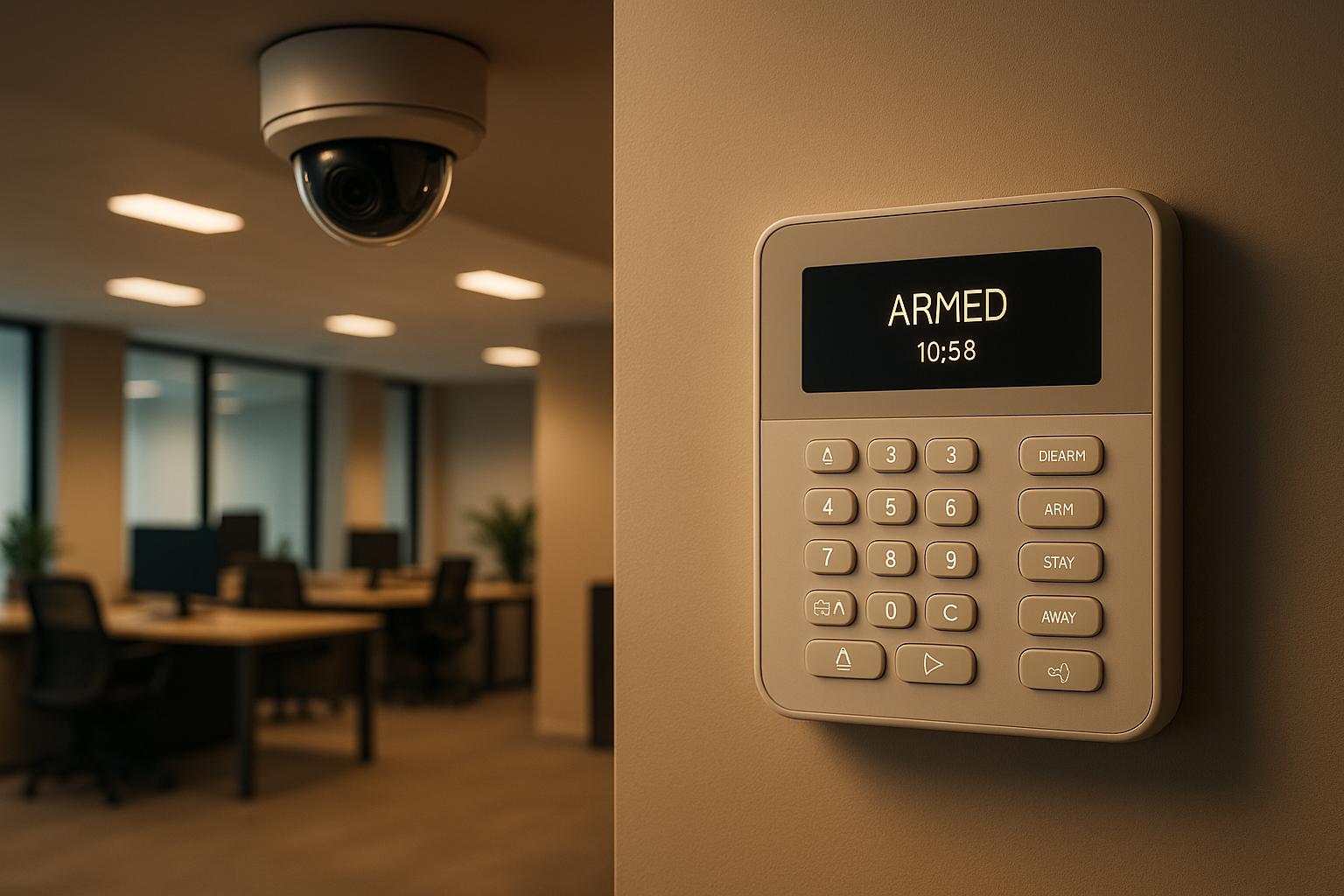
A business alarm system is an integrated network of security components—including sensors, control panels, and monitoring services—designed to protect commercial property from unauthorized entry, theft, fire, and environmental hazards. In 2026, these systems utilize AI-driven verification and cloud-based management to ensure rapid emergency response while significantly reducing the incidence of costly false alarms.
The Evolution of Commercial Security in 2026
The landscape of business security has shifted from reactive measures to proactive, intelligent ecosystems. In 2026, an "alarm for business" is no longer a standalone siren on a wall; it is a critical node in a company’s operational infrastructure. Modern systems leverage high-speed cellular networks and edge computing to process data locally, ensuring that security remains functional even during widespread internet outages.
Businesses today face a diverse array of threats, ranging from physical inventory theft and internal shrinkage to sophisticated digital-physical hybrid attacks. Consequently, the primary goal of a business alarm is to provide a multi-layered defense that protects both tangible assets and human lives. This guide explores the essential components, technical requirements, and strategic considerations for deploying a robust security solution.
Core Components of a Modern Business Alarm System
To understand how to protect a commercial space, one must first break down the hardware and software that constitute a professional-grade system. While residential systems focus on simplicity, business systems prioritize scalability and auditability.
The Control Panel: The Central Intelligence
The control panel is the "brain" of the security system. In 2026, most commercial panels are hybrid, supporting both wired sensors for high-security areas and wireless sensors for flexible deployment in office spaces. These panels communicate with a central monitoring station via encrypted cellular or IP pathways. Advanced panels now feature touch-screen interfaces with biometric authentication, ensuring that only authorized personnel can arm or disarm the system.
Intrusion Detection Sensors
Intrusion detection is the first line of defense. This category includes:
- Door and Window Contacts: Magnetic sensors that trigger an alert when a perimeter entry point is opened.
- Passive Infrared (PIR) Motion Sensors: These detect changes in heat signatures within a room. By 2026, "pet-immune" and "object-aware" AI filters are standard, preventing alarms triggered by small animals or moving shadows.
- Glass Break Detectors: Acoustic sensors tuned to the specific frequency of breaking glass, providing an early warning before an intruder even enters the building.
- Vibration Sensors: Often used on safes or ATM machines to detect drilling or prying attempts.
Life Safety and Environmental Monitoring
A comprehensive business alarm must comply with local fire codes, often governed by NFPA 72 (National Fire Alarm and Signaling Code). This includes smoke detectors, heat sensors, and carbon monoxide monitors. Furthermore, environmental sensors—such as water leak detectors and high/low-temperature sensors—are vital for businesses with server rooms or cold storage, where a mechanical failure can lead to catastrophic financial loss.
Professional Monitoring vs. Self-Monitoring
One of the most critical decisions for a business owner is how the system handles an alert.
UL-Listed Professional Monitoring
For most commercial enterprises, professional monitoring is a non-negotiable requirement for insurance compliance. In this model, the alarm system transmits a signal to a Underwriters Laboratories (UL)-listed central station. Professional dispatchers then verify the alarm and contact local law enforcement or fire departments.
The primary advantage of professional monitoring in 2026 is Video Verification. When a sensor is tripped, the dispatcher can view a short clip from integrated security cameras to confirm a crime is in progress. This "verified" status often grants the call a higher priority from police departments, who are increasingly moving toward "verified response" policies to combat the 95% false alarm rate traditionally associated with unverified systems.
Self-Monitoring and Mobile Management
While self-monitoring (receiving alerts only on a smartphone) is common in small retail setups, it is generally considered a secondary layer for larger businesses. However, the mobile management apps available in 2026 allow managers to remotely lock doors, view live video feeds, and manage user access codes across multiple locations from a single dashboard.
Technical Specifications and Integration
The effectiveness of a business alarm depends heavily on its technical architecture and its ability to integrate with other building systems.
Connectivity and Redundancy
In 2026, reliance on a single communication path is a vulnerability. Top-tier systems use Dual-Path Communication, typically combining a primary high-speed fiber-optic connection with a secondary cellular backup. This ensures that even if an intruder cuts the external wires or the local ISP goes down, the alarm signal still reaches the monitoring station.
Integration with Access Control
Access control—the use of keycards, fobs, or mobile credentials to unlock doors—works hand-in-hand with the alarm system. For example, when the first employee swipes their badge at the front door in the morning, the system can automatically disarm the alarm and turn on the lights. Conversely, if an unauthorized entry is detected after hours, the system can "lock down" specific high-value areas to prevent the intruder from moving deeper into the facility.
Cybersecurity for Physical Security
Because modern alarms are connected to the internet, they are potential targets for hackers. Businesses must ensure their alarm provider uses AES-256 encryption for all data transmissions and requires Two-Factor Authentication (2FA) for all administrative logins. Regular firmware updates are essential to patch vulnerabilities in the control panel and connected IoT devices.
Comparison of Business Alarm Categories
Choosing the right system depends on the size of the facility and the specific risks involved. The following table compares the most common configurations in 2026.
| Feature | Small Retail / Office | Industrial / Warehouse | Enterprise / Multi-Site |
|---|---|---|---|
| Primary Connection | Wireless / Cellular | Wired / Fiber with Cell Backup | Dedicated Private Network / Cloud |
| Sensor Density | Low (5-15 sensors) | High (50-200+ sensors) | Very High (Integrated across sites) |
| Video Verification | Optional | Recommended | Mandatory |
| Compliance Needs | Basic Local Codes | OSHA / High Fire Risk | Global Security Standards (ISO) |
| Cost Basis | Lower Hardware, Monthly Fee | High Hardware, Professional Maint. | Custom Contract / Managed Service |
| Access Control | Keypad / Single Door | Multi-Gate / Loading Docks | Biometric / Global User Database |
Cost Considerations and ROI
The cost of a business alarm system involves more than just the initial purchase price. Business owners must budget for:
- Equipment and Installation: Professional installation ensures that sensors are placed to minimize blind spots and avoid interference. For a 2,000-square-foot office, installation in 2026 typically starts at $1,500–$3,000, depending on the complexity of the sensors.
- Monitoring Fees: Monthly professional monitoring usually ranges from $40 to $150 per month.
- Maintenance and Inspections: Commercial systems require annual or semi-annual testing of batteries, smoke detectors, and communication paths. Neglecting this can lead to equipment failure or fines for code violations.
- Permit Fees: Many jurisdictions require a "Burglar Alarm Permit." Failing to register your system with the local police can result in heavy fines for even a single false alarm.
The Return on Investment (ROI) for these systems is often found in reduced insurance premiums. Many commercial insurers offer discounts of 5% to 20% for businesses that have a professionally monitored alarm and fire system. Furthermore, the prevention of a single burglary can save a business tens of thousands of dollars in stolen inventory and repair costs for forced entry damage.
Common Mistakes to Avoid
Even the most expensive system can fail if poorly planned. Avoid these common pitfalls:
- Inadequate Perimeter Coverage: Many businesses protect the front door but ignore roof hatches, loading docks, or side windows.
- Neglecting Employee Training: A significant number of false alarms are caused by employees who don't know how to use the keypad or who enter the building through the wrong door.
- Using Residential-Grade Hardware: DIY home security systems are often not rugged enough for commercial environments and do not meet the legal requirements for fire monitoring in a place of business.
- Ignoring the "Backup" Battery: Alarm panels include a backup battery for power outages. These batteries typically last 3–5 years; if they aren't replaced, the system will fail during a storm or a deliberate power cut.
Step-by-Step Selection Process
If you are tasked with securing a business in 2026, follow this sequence:
- Conduct a Risk Assessment: Identify your "crown jewels" (cash, sensitive data, expensive machinery) and the most likely entry points for intruders.
- Review Local Codes: Consult with your local fire marshal and your insurance agent to determine mandatory requirements for fire and intrusion protection.
- Request Multiple Quotes: Invite at least three reputable commercial security firms to perform a site walk-through. Be wary of any company that offers a quote without seeing the building.
- Evaluate Scalability: Ensure the system you choose can grow with your business. Can you add more cameras or access control doors next year without replacing the whole panel?
- Verify Monitoring Credentials: Confirm that the monitoring center is UL-listed and that their average response time is within industry standards (typically under 45 seconds).
Frequently Asked Questions
What is the difference between a residential and a business alarm?
A business alarm is built for higher durability and more complex user management. While a residential system might only have one or two user codes, a business system can support hundreds of unique codes, allowing the owner to track exactly who entered and exited the building at what time. Business systems also must adhere to stricter fire and life safety codes (like NFPA) that do not apply to private homes.
Does a business alarm reduce insurance premiums?
Yes, most commercial insurance providers offer discounts for businesses with professionally monitored security systems. To qualify, you usually need to provide a "Certificate of Monitoring" from your security company. The discount often increases if you have integrated fire monitoring and video verification.
What happens if the power or internet goes out?
Professional business alarms include a backup battery that can power the system for 12 to 24 hours. For communication, the system uses a cellular backup (typically on 5G or 6G networks in 2026). This ensures that the alarm signal can still reach the monitoring station even if the building’s main power and hardwired internet are severed.
Are wireless business alarms as secure as wired ones?
In 2026, wireless technology is highly secure, provided it uses Frequency Hopping Spread Spectrum (FHSS) and high-level encryption. While wired systems are still preferred for high-security government or financial facilities due to their immunity to RF jamming, wireless systems are now the standard for most retail and office environments because they are easier to install and more flexible to move.
How do I prevent false alarms?
The most effective way to prevent false alarms is through Video Verification and thorough employee training. Many modern systems also include "cross-zoning," which requires two different sensors to be tripped within a certain timeframe before an alarm is officially triggered, thereby filtering out single-sensor errors caused by things like air vents blowing on a curtain.
Summary and Next Steps
Securing a business in 2026 requires a strategic approach that balances physical hardware with intelligent monitoring. An effective "alarm for business" is one that is invisible during normal operations but highly responsive during an emergency. It must provide clear, actionable data to the business owner while satisfying the rigorous demands of insurers and local law enforcement.
To move forward, perform a thorough audit of your current security posture. If your system is more than five years old, it likely lacks the AI-driven verification and cybersecurity protections necessary to combat modern threats. Contact a licensed security consultant to discuss an upgrade path that prioritizes video verification and mobile management to ensure your enterprise remains protected around the clock.