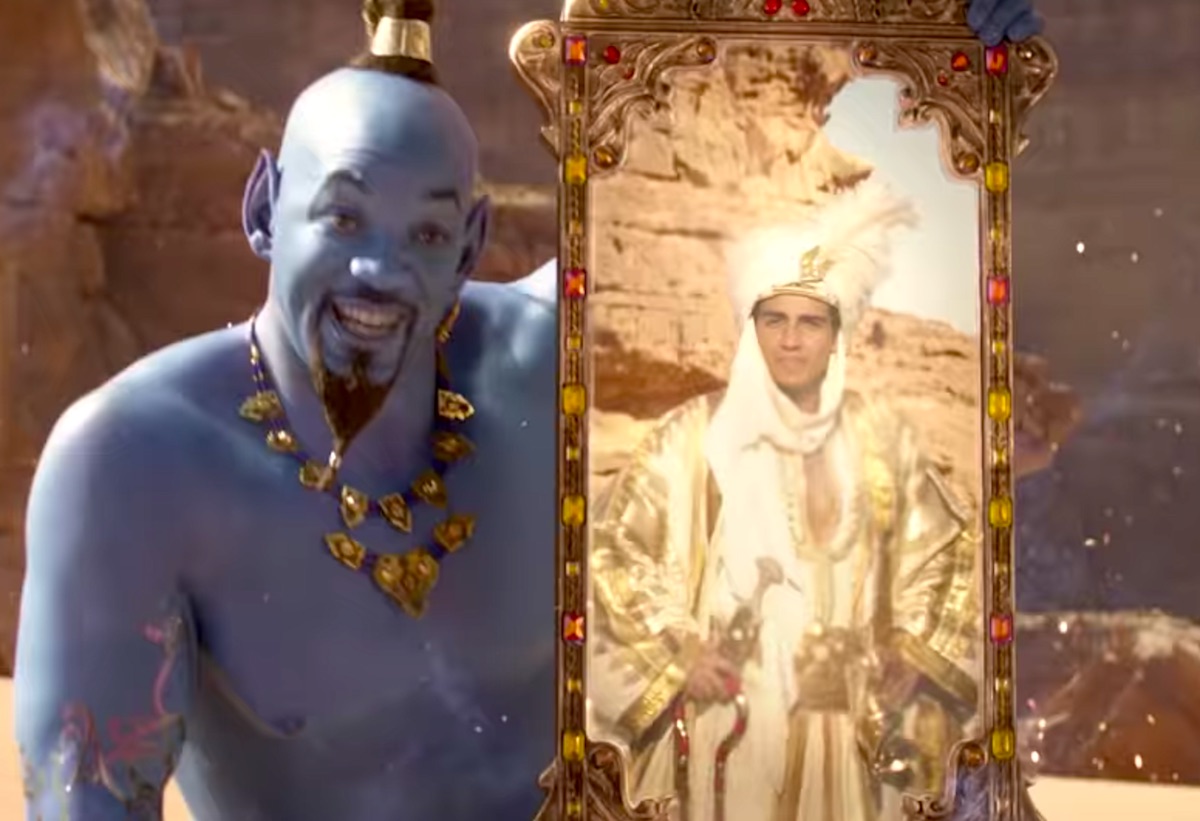
The 2019 theatrical trailer for Walt Disney Pictures' live-action adaptation of Aladdin served as a pivotal promotional milestone that shifted public perception, sparked intense digital debate, and ultimately set box-office expectations for Guy Ritchie’s musical fantasy film.
Introduction to the 2019 Promotional Campaign
When Walt Disney Pictures released the official promotional footage for its live-action Aladdin remake in early 2019, it arrived under immense scrutiny. Directed by Guy Ritchie, the film reimagined the studio's classic 1992 animated masterpiece, transitioning its hand-drawn aesthetics into a lavish, CGI-infused live-action environment. The primary search intent behind queries for the "aladdin trailer 2019" typically centers on revisiting the marketing materials that introduced Will Smith’s portrayal of the Genie, Mena Massoud as Aladdin, and Naomi Scott as Princess Jasmine, alongside evaluating how initial audience reactions contrasted with the final box-office success.
Understanding the rollout of this trailer requires examining the broader landscape of Disney’s live-action remakes during the late 2010s. Disney had successfully translated several animated properties into live-action blockbusters, including Cinderella (2015), The Jungle Book (2016), and Beauty and the Beast (2017). However, each adaptation carried unique technical and cultural challenges. For Aladdin, the transition to live-action involved balancing nostalgia for Robin Williams' iconic vocal performance, capturing the vibrant fantasy of Agrabah, and updating cultural sensitivities for a modern global audience.
Timeline of the 2019 Trailer Releases and Marketing Strategy
The marketing campaign for the 2019 film did not rely on a single video; instead, it unfolded through a carefully orchestrated sequence of teasers and full-length trailers that gradually revealed key elements of the production.
The Teaser Trailer (Late 2018 into Early 2019 Context)
While the foundational teaser debuted late in 2018, the heavy promotional push culminated in the full theatrical trailer released in February 2019 during the Grammy Awards. This trailer was engineered to provide a comprehensive look at the narrative scope of the film, highlighting the bustling streets of Agrabah, the Cave of Wonders, and classic musical sequences such as "Friend Like Me" and "A Whole New World."
The February 2019 Theatrical Trailer Breakdown
The full trailer significantly expanded upon the initial teaser by showcasing narrative stakes and character dynamics. Key elements featured in this release included:
- The Introduction of Agrabah: Sweeping cinematic shots established the scale of the port city, utilizing a mix of practical sets built in Longcross Studios and digital set extensions.
- Action and Adventure Sequences: Quick cuts displayed Aladdin’s parkour-style escapes from palace guards, establishing Mena Massoud’s physical engagement with the role.
- Musical Cues and Visuals: Instrumental motifs of Alan Menken’s classic compositions ("Arabian Nights" and "A Whole New World") grounded the preview in recognizable sonic territory, reassuring long-time fans.
- The Genie Reveal: Following the divisive initial look at Will Smith's blue-CGI form in earlier teasers, the February trailer presented more polished visual effects, offering a clearer picture of the Genie's humor and magical transformations.
Public Reception, Internet Culture, and the "Blue Genie" Debate
Few modern marketing campaigns sparked as much immediate internet discourse as the visual debut of Will Smith's Genie. When the initial teaser dropped, viewers reacted strongly to the character's unpolished CGI appearance, particularly the choice to render the Genie in human proportions with blue skin rather than relying entirely on stylized animation or traditional practical effects.
Analyzing the Internet Response
The design choices ignited a wave of memes, critical commentary, and debates across social media platforms such as Twitter and YouTube. Critics and fans questioned whether adapting certain cartoon aesthetics into three-dimensional CGI inevitably created an unsettling visual uncanny valley.
- The Uncanny Valley Effect: Viewers noted that combining a recognizable human face with smooth, saturated blue skin created a jarring visual signature.
- Comparison to Robin Williams: Because Robin Williams' voice work and shape-shifting animated performance in the 1992 film remain universally beloved touchstones, any modern reimagining faced an extraordinarily high bar for audience acceptance.
- Disney’s Course Correction: In response to the viral critique, visual effects supervisors and studio executives refined the lighting, textures, and post-production rendering. By the time the February 2019 full trailer aired, public reception began to soften, with many commentators acknowledging that the character looked considerably more cohesive within the context of the film's vibrant fantasy palette.
Production Design and Technical Specifications
Beyond the character design debates, the 2019 trailer highlighted the monumental scale of the production design managed by Gemma Jackson and the cinematography directed by Alan Stewart.
Rebuilding Agrabah
The production team constructed a massive, 360-degree practical set representing the fictional city of Agrabah on the backlot of Longcross Studios in Surrey, England. This massive set design allowed actors to interact with physical environments rather than relying entirely on green screens. The trailer emphasized this scale by showcasing crowded marketplaces, elaborate palace courtyards, and detailed architecture influenced by Middle Eastern, South Asian, and North African design traditions.
Costume and Aesthetic Choices
Michael Wilkinson’s costume design played a critical role in the trailer's visual appeal. Princess Jasmine’s wardrobe, in particular, departed from the 1992 animated film’s two-piece blue outfit by incorporating intricate teal and gold garments, embroidered fabrics, and cultural motifs that reflected a more grounded royal aesthetic. These visual details communicated to prospective audiences that the 2019 film was striving for a lavish, cinematic modernization rather than a shot-for-shot carbon copy.
Box Office Impact and Commercial Reality
Trailers function as predictive indicators of commercial performance. The intense curiosity generated by the 2019 promotional materials translated directly into massive audience turnout, despite the pre-release skepticism.
- Global Box Office Performance: Upon its theatrical release in May 2019, Aladdin defied skeptical early predictions to gross over $1.05 billion worldwide, entering the exclusive "Billion-Dollar Club" for Walt Disney Studios.
- The Trailer-to-Ticket Pipeline: The heavy engagement—both positive and negative—on social media platforms kept the film in public discourse, driving high opening weekend numbers and strong multi-week holds in international markets.
| Promotional Phase | Primary Focus | Main Audience Reaction | Box Office Correlation |
|---|---|---|---|
| First Teaser (Late 2018) | Establishing tone, Agrabah setting, and the Cave of Wonders. | Mixed; curiosity about the live-action aesthetic. | Established foundational awareness. |
| Theatrical Trailer (Feb 2019) | Showcasing musical numbers, action set pieces, and refined Genie CGI. | Heightened debate over visual effects; increased interest. | Drove massive pre-sale ticket surges. |
| Final Spot (Spring 2019) | Highlighting comedic moments, romance, and grand spectacle. | Broad acceptance of the film's vibrant style. | Secured strong opening weekend projections. |
Frequently Asked Questions
When was the official theatrical trailer for the 2019 Aladdin movie released?
The full theatrical trailer debuted on February 10, 2019, during the live broadcast of the Grammy Awards, following an earlier teaser released in late 2018.
Why did the initial Genie design in the trailer receive criticism?
Viewers reacted strongly to the CGI rendering of Will Smith as the Genie, noting that the blue skin combined with realistic human facial features created an unsettling visual effect often referred to as the uncanny valley.
Did the negative trailer feedback impact the final movie's release?
While the initial online backlash was severe, it generated massive public awareness and curiosity. Disney utilized the feedback window to refine the visual effects, and the film ultimately grossed over $1.05 billion globally.
Who directed the 2019 live-action Aladdin film?
The film was directed by Guy Ritchie, known for his distinct kinetic pacing and visual style, which he applied to the musical fantasy genre for this project.
How closely did the 2019 film follow the 1992 animated original?
The 2019 adaptation retained the core narrative arc, character names, and beloved musical numbers by Alan Menken, Howard Ashman, and Tim Rice, while expanding character motivations (such as Jasmine's political ambitions) and introducing new original songs.
Conclusion and Final Assessment
The 2019 theatrical trailer for Aladdin remains a fascinating study in modern blockbuster marketing. By balancing the heavy burden of nostalgia against the necessity of modern visual effects, the promotional rollout managed to capture global attention, navigate intense internet scrutiny, and propel a live-action musical fantasy past the billion-dollar milestone at the worldwide box office.