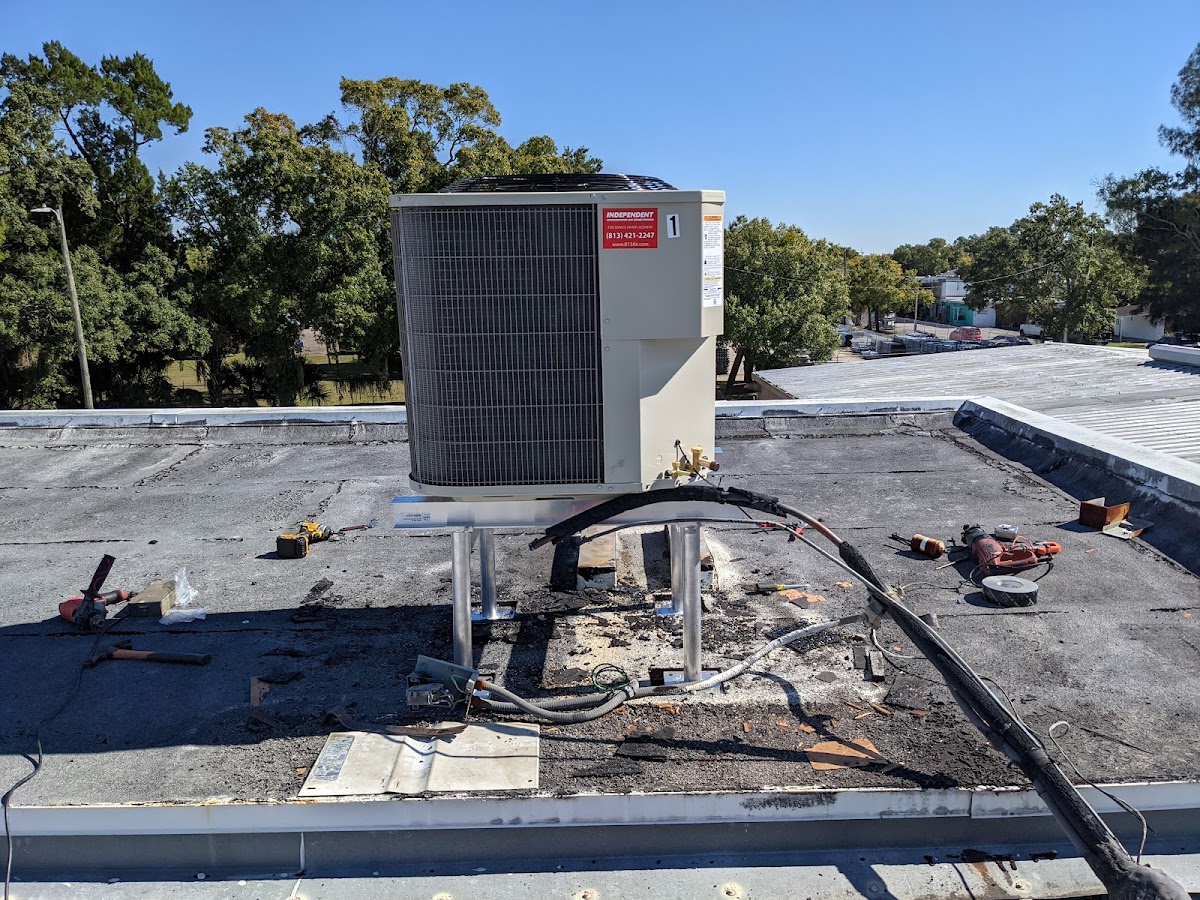
Finding the most reliable air conditioning companies in Tampa requires verifying state-mandated licensing through the Florida Department of Business and Professional Regulation (DBPR), assessing expertise in high-humidity climate solutions, and comparing transparent pricing models. In 2026, top-tier providers focus on SEER2-compliant installations, smart home integration, and preventative maintenance tailored to Florida's coastal environment.
The climate in Tampa, Florida, is uniquely demanding on HVAC systems. With an average of over 240 sunny days per year and relative humidity levels that frequently soar above 70%, your air conditioner is not merely a comfort feature; it is a critical piece of home infrastructure. In 2026, the local market for air conditioning companies is more specialized than ever, driven by evolving energy regulations and the increasing necessity of indoor air quality (IAQ) management. Selecting the right partner for your home’s cooling needs involves a deep dive into technical proficiency, regional experience, and long-term service value.
Understanding the Tampa HVAC Landscape in 2026
Tampa’s geographic location creates a "perfect storm" for mechanical wear and tear. The combination of intense heat, high moisture, and salt-laden air from Old Tampa Bay and the Gulf of Mexico leads to accelerated corrosion and biological growth within cooling systems. Consequently, air conditioning companies in the region have shifted their focus toward "hardened" systems and proactive moisture control.
When searching for a contractor, it is vital to distinguish between general handymen and licensed HVAC professionals. In Florida, air conditioning work is strictly regulated. A reputable company must hold either a Class A or Class B Air Conditioning Contractor license. A Class A license allows the contractor to work on units of any size, while Class B is limited to systems under 20 tons (roughly 500,000 BTU) of cooling capacity. In 2026, most residential leaders in Tampa hold Class A licenses to ensure they can manage complex multi-zone systems and commercial-grade residential installs.
The Significance of SEER2 Ratings in 2026
Since the Department of Energy’s 2023 update to testing procedures, the Seasonal Energy Efficiency Ratio 2 (SEER2) has become the industry standard. For homeowners in Tampa, which falls under the "Southeast" regulatory region, the minimum efficiency for central air conditioning systems remains strictly enforced. By 2026, most air conditioning companies are recommending systems with ratings of 16 to 22 SEER2 to combat rising energy costs in Florida.
High-efficiency systems utilize variable-speed compressors. Unlike traditional single-stage units that are either "on" or "off," variable-speed systems adjust their output to the exact cooling demand. In Tampa’s humid climate, this is revolutionary because longer, lower-speed cycles are far more effective at removing moisture from the air than short, high-power cycles.
Criteria for Evaluating Air Conditioning Companies in Tampa
Not all service providers are created equal. To ensure you receive high-quality service that protects your investment, you should evaluate potential companies based on the following technical and operational benchmarks.
1. NATE Certification and Technician Training
The North American Technician Excellence (NATE) certification is the gold standard for individual technicians. When a Tampa AC company boasts NATE-certified staff, it means their team has passed rigorous exams on installation and service. Given the complexity of 2026 HVAC technology—including inverter-driven compressors and complex communicative thermostats—certified expertise is non-negotiable.
2. Specialized Coastal Protection
If your property is located near the coast (e.g., South Tampa, Westchase, or Town 'n' Country), your AC company should offer specialized corrosion protection. This includes "ocean-front" coatings for condenser coils, such as epoxy or polyurethane treatments, which prevent salt air from eating away at the aluminum fins. Without this, a standard unit’s lifespan in Tampa can be cut in half.
3. Indoor Air Quality (IAQ) Expertise
In 2026, air conditioning companies are as much about "air health" as they are about "air cooling." Tampa’s humidity is a breeding ground for mold and mildew within ductwork. Leading companies should provide options for:
- Whole-Home Dehumidifiers: These work alongside your AC to maintain humidity below 50%, even when the cooling cycle isn't running.
- UV-C Germicidal Lights: Installed near the evaporator coil to kill biological growth.
- HEPA Filtration: Integration of high-efficiency particulate air filters to remove allergens and pollutants common in urban Tampa.
Comprehensive HVAC System Comparison for Tampa Residents
Choosing the right type of system is a collaborative effort between the homeowner and the AC company. The following table compares the most common configurations seen in the Tampa market in 2026.
| System Type | Best Suited For | Key Advantages in Tampa | Typical Lifespan |
|---|---|---|---|
| Central Air (Split System) | Single-family homes with existing ducts | High cooling capacity; proven reliability; integrates well with IAQ tools. | 10–15 Years |
| Ductless Mini-Splits | Older homes, additions, or "Florida Rooms" | Extremely efficient; allows for room-by-room zone control; no duct heat gain. | 12–17 Years |
| Heat Pumps | Modern energy-conscious homes | Provides both cooling and efficient heating for Tampa's occasional cold snaps. | 10–14 Years |
| Variable-Speed Systems | Luxury homes and high-humidity areas | Superior moisture removal; whisper-quiet operation; lowest monthly energy bills. | 15+ Years |
The Financial Aspect: Pricing and Incentives in 2026
Cost is always a primary factor when selecting from air conditioning companies in Tampa. By 2026, the price of a full system replacement typically ranges from $7,500 to $16,000, depending on the tonnage, efficiency rating, and ductwork requirements.
Federal and State Incentives
The legacy of the Inflation Reduction Act continues to influence the 2026 market. Homeowners may still be eligible for significant federal tax credits (under Section 25C) for installing high-efficiency heat pumps or central AC units that meet specific CEE (Consortium for Energy Efficiency) tiers. Additionally, local utilities like Tampa Electric (TECO) often provide rebates for duct sealing and high-efficiency upgrades. A professional AC company should assist you in documenting these upgrades to maximize your return on investment.
Service Agreements and Maintenance Plans
In Tampa, a "set it and forget it" mentality leads to premature system failure. Most reputable companies offer annual or bi-annual maintenance agreements. These typically include:
- Clearing the condensate drain line (essential to prevent "overflow" shut-offs during humid months).
- Cleaning the condenser coils to maintain heat transfer efficiency.
- Checking refrigerant charge levels.
- Inspecting electrical components for signs of "pitting" or heat damage.
Common Pitfalls When Hiring an AC Contractor in Tampa
Avoid the "lowest bidder" trap. In the HVAC industry, a significantly lower price often indicates that the company is cutting corners on permitting, using unlicensed labor, or failing to perform a proper Manual J Load Calculation.
A Manual J calculation is a technical assessment of your home’s cooling needs based on square footage, insulation levels, window orientation, and local climate data. If a company quotes you a system size (tonnage) based solely on your old unit's size without performing a new calculation, they are likely doing you a disservice. An oversized unit will "short-cycle," failing to remove humidity and leaving your home feeling clammy, while an undersized unit will run constantly and expire early.
Local Regulations and Permitting in Hillsborough County
Every major AC installation in Tampa requires a permit from the City of Tampa Construction Services or the Hillsborough County Building Department. This ensures that the installation meets the Florida Building Code, which includes specific requirements for wind-load tie-downs (to protect units during tropical storms/hurricanes) and energy efficiency compliance.
Your chosen air conditioning company should handle the entire permitting process. If a contractor asks you to pull the permit yourself as a "homeowner," this is a major red flag—it often means they are unlicensed or trying to avoid liability for their work.
Questions to Ask Before Signing a Contract
- "Can you provide proof of your Florida CAC or CMC license and workers' compensation insurance?"
- "Will you be performing a Manual J Load Calculation to determine the correct unit size?"
- "What is the labor warranty on top of the manufacturer’s parts warranty?" (Standard is typically 1–2 years for labor; 10 years for parts).
- "How do you handle emergency repairs during July and August?" (Top companies offer 24/7 emergency service for established customers).
- "Are your technicians NATE-certified?"
Technology Trends Shaping Tampa AC Services in 2026
As we move through 2026, "Smart HVAC" has transitioned from a luxury to a standard expectation. Air conditioning companies now routinely install systems with Proactive Monitoring. These systems can send an alert directly to the service provider if a sensor detects a refrigerant leak or a failing capacitor, often before the homeowner even notices a change in temperature.
Furthermore, the shift toward R-454B and R-32 refrigerants is complete by 2026, replacing the older R-410A. These new refrigerants have a much lower Global Warming Potential (GWP). When choosing a company, ensure they are equipped with the specialized tools and training required to handle these mildly flammable (A2L) refrigerants safely according to EPA Section 608 guidelines.
FAQ
What is the average cost of an AC repair in Tampa? In 2026, a standard service call in Tampa typically ranges from $95 to $150 for the initial diagnostic. Common repairs, such as replacing a capacitor or a contactor, generally cost between $250 and $500. Major repairs like an evaporator coil replacement can exceed $2,000 depending on the refrigerant type and labor involved.
How often should I change my AC filter in Florida? Due to the high volume of air processed by Florida HVAC systems, filters should be checked monthly. If you use standard 1-inch pleated filters, they generally require replacement every 30 to 60 days. In homes with pets or high allergy sensitivities, monthly changes are necessary to maintain airflow and prevent coil fouling.
Why is my AC running but not cooling my Tampa home? This is often caused by a "frozen" evaporator coil, a refrigerant leak, or a failed compressor capacitor. In Tampa’s humidity, a clogged condensate drain line can also trigger a float switch that shuts down the cooling function to prevent water damage. You should turn the system off and call a professional immediately to prevent further damage.
Is a heat pump better than a straight-cool AC in Tampa? In 2026, heat pumps are highly recommended for Tampa residents. While Tampa rarely sees freezing temperatures, heat pumps provide a much more energy-efficient way to heat your home during the 20–30 chilly nights per year compared to traditional electric heat strips. The cooling performance is identical to a standard AC.
Can I install an AC unit myself in Florida? No. Florida law requires a licensed HVAC contractor to perform installations and most repairs. This regulation exists to ensure high-voltage electrical safety, proper refrigerant handling (which is federally regulated by the EPA), and compliance with strict hurricane-zone building codes.
Final Recommendation for Tampa Residents
When choosing from the many air conditioning companies in Tampa, prioritize longevity and verified credentials over the lowest price. In a climate where your HVAC system is the primary line of defense against mold and heat exhaustion, the value of a high-quality installation cannot be overstated. Start by verifying a company’s license on the Florida DBPR website, read recent reviews from neighbors in your specific zip code, and always insist on a written estimate that includes a load calculation and a clear breakdown of warranty terms. Taking these steps in 2026 will ensure your home remains a cool, dry sanctuary regardless of the Florida heat.