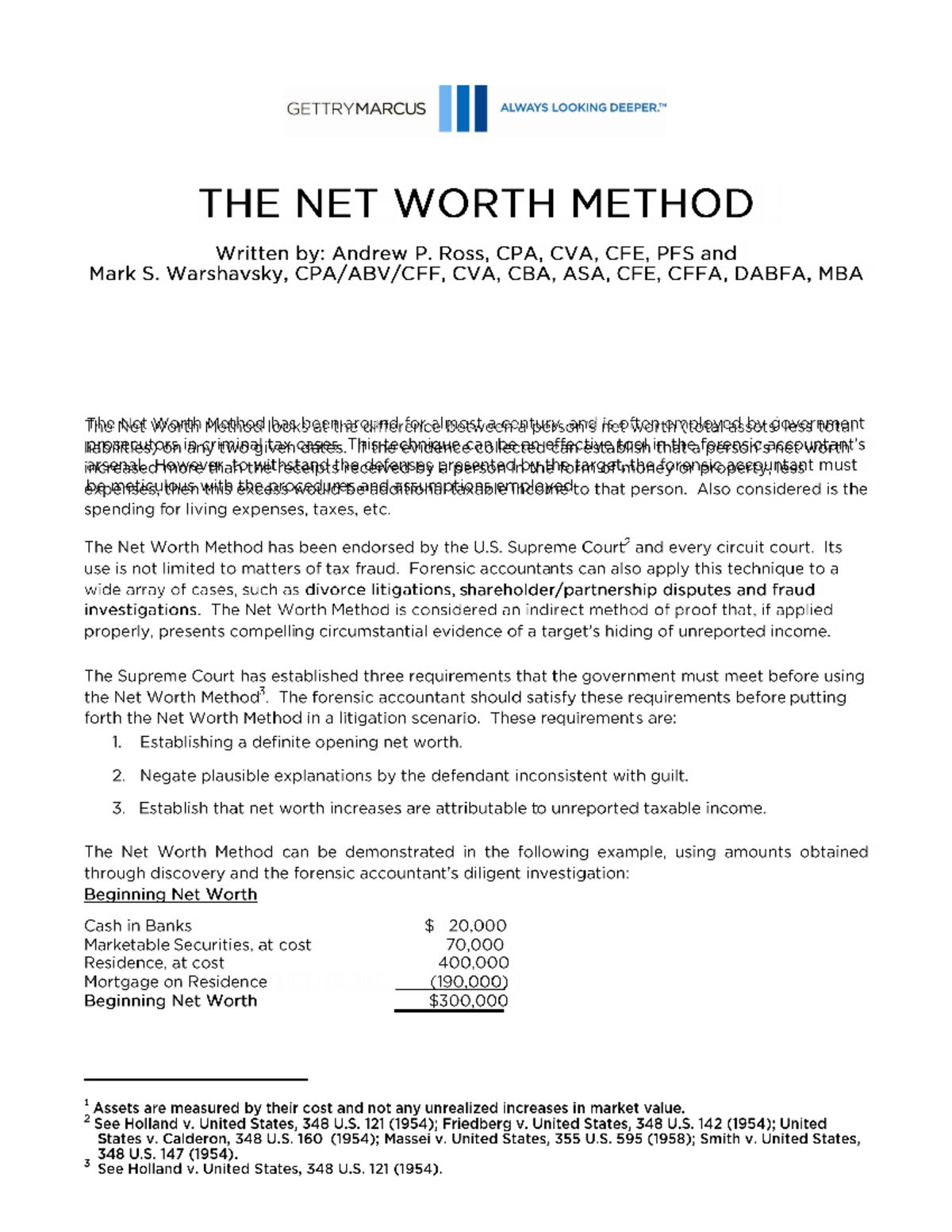
The net worth method of analysis is an indirect accounting technique used to determine an individual's or entity's true financial standing by comparing their total assets and liabilities over a specific period. By calculating the change in net worth and adjusting for known expenditures and non-taxable income, investigators can derive a taxpayer's estimated gross income, often identifying significant discrepancies between reported and actual financial activity.
The Fundamental Logic of the Net Worth Method
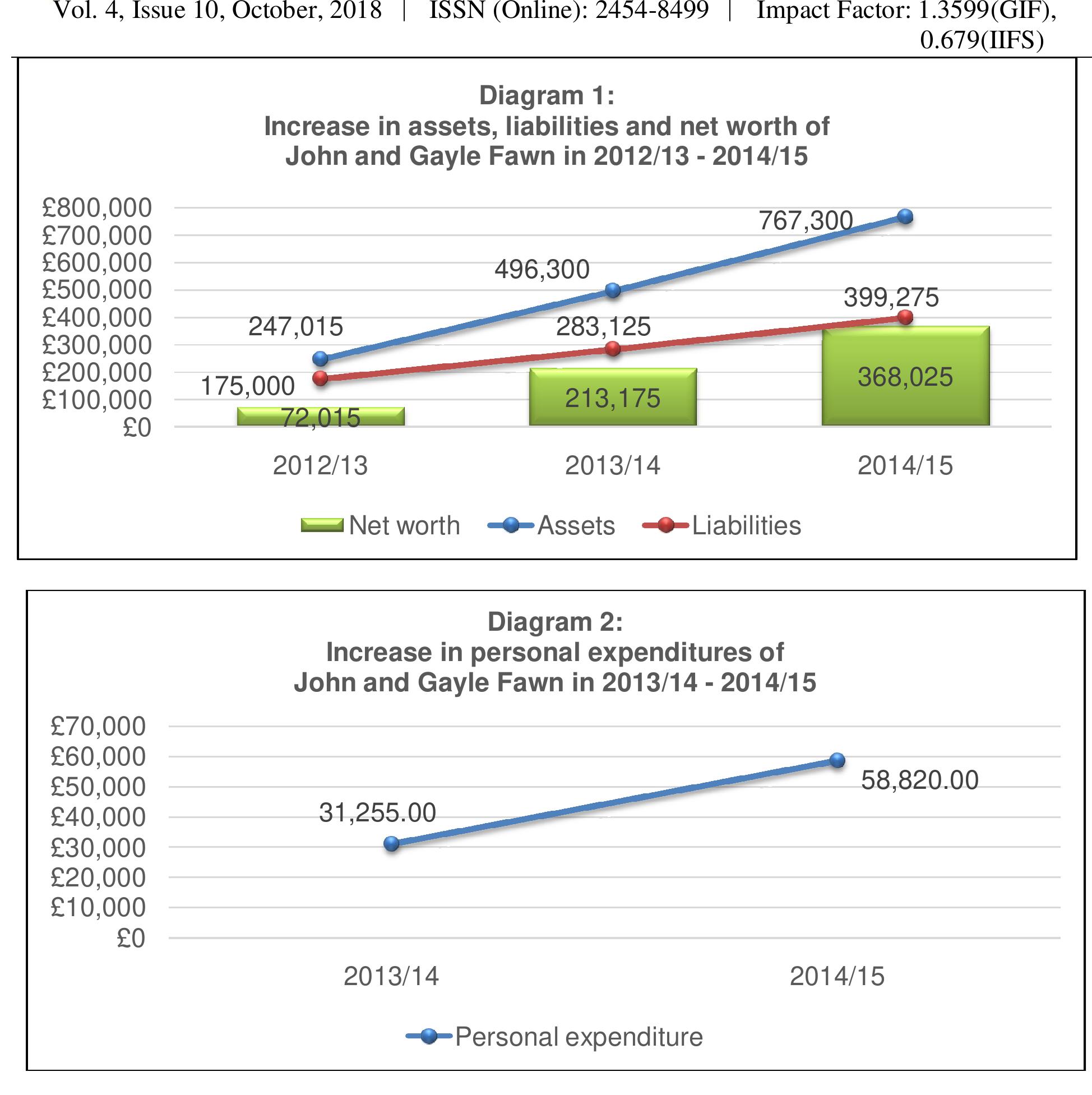
At its core, the net worth method is a circumstantial tool utilized primarily by forensic accountants and tax authorities to uncover unreported income. The logical premise is simple but mathematically rigorous: if a person’s net worth increases during a year by an amount greater than their reported after-tax income plus their non-deductible living expenses, the excess must be attributed to an undisclosed source of funds.
This method operates on the foundational accounting equation: Assets - Liabilities = Net Worth.
To conduct a valid analysis, a practitioner must establish a starting point, known as the "base year." This involves creating an exhaustive list of everything the subject owned and everything they owed at the beginning of the period. By comparing this snapshot to a similar snapshot taken at the end of the year, the examiner identifies the net increase or decrease in wealth. However, the raw change in wealth does not equate to income. To reach an accurate "adjusted gross income" figure, the examiner must add back non-deductible expenditures—such as personal living expenses, luxury purchases, and insurance premiums—that reduced the individual's cash flow but did not technically decrease their "wealth" in terms of asset acquisition.
Prerequisites for a Valid Analysis
For this method to hold up under scrutiny—particularly in legal or tax-audit settings—it must be anchored in verifiable data. The "accurate" component of the net worth method depends entirely on the quality and completeness of the documentation gathered during the discovery phase.
- Opening Net Worth Statement: An accurate valuation of all assets and liabilities at the beginning of the investigation period is essential. If the opening balance is incorrectly stated, the entire calculation for subsequent years will be skewed.
- Asset Identification: This includes cash on hand, bank accounts, real estate, stocks, bonds, business inventories, and personal property (such as vehicles or jewelry).
- Liability Verification: Debts, mortgages, personal loans, and accounts payable must be precisely tallied to ensure they are not being counted as assets.
- Living Expense Documentation: Because the method adds living expenses back into the income total, the examiner must have a reasonable basis for estimating these costs. If receipts are unavailable, analysts often use standardized cost-of-living data, though this is a frequent point of contention in disputes.
Step-by-Step Execution of the Analysis
The process follows a disciplined sequence designed to isolate anomalies in reported income.
- Step 1: Define the Period. Select the tax year or audit cycle. Ensure all documentation matches the exact beginning and end dates of this period.
- Step 2: Establish the Opening Position. Calculate net worth at the start. Ensure all assets are valued at cost or market value consistently, and identify all outstanding debt.
- Step 3: Establish the Closing Position. Repeat the calculation for the end of the period.
- Step 4: Calculate the Increase. Subtract the opening net worth from the closing net worth.
- Step 5: Adjust for Non-Taxable Items. Add back items that do not constitute income, such as inheritance, gifts, or loans, which may have increased net worth without increasing taxable income.
- Step 6: Add Personal Expenditures. Add the estimated costs of personal living expenses (food, travel, entertainment, household maintenance) to the net increase.
- Step 7: Subtract Reported Income. Deduct the income that the individual has already reported to relevant authorities. The remaining balance represents the "unexplained" or "omitted" income.
Comparison of Financial Assessment Methods
While the net worth method is highly effective, it is one of several indirect techniques used in forensic accounting. Understanding how it compares to other methods helps in selecting the right tool for specific scenarios.
| Method | Focus | Primary Use Case |
|---|---|---|
| Net Worth | Asset and liability growth | Detecting long-term unreported income or tax evasion. |
| Bank Deposit | Cash flow through accounts | Identifying income deposited into bank accounts that does not align with tax filings. |
| Expenditure | Outflow of cash | Estimating income based on the subject's lifestyle and spending patterns. |
| Percentage Markup | Business profit margins | Estimating income for businesses that operate primarily in cash (e.g., restaurants). |
Common Challenges and Limitations
The accuracy of the net worth method is frequently challenged in litigation. Because it relies on reconstruction rather than direct evidence (like a W-2 or 1099 form), it is susceptible to "the cash hoard defense." Subjects often claim that an apparent increase in wealth was actually the result of spending down a secret stash of cash accumulated in previous, unrecorded years.
To combat this, investigators must perform a "lead-in" investigation, which involves verifying the subject’s history to prove they lacked the earning capacity in prior years to have accumulated such a hoard. Furthermore, the difficulty of accurately valuing illiquid assets—such as private business interests, rare collectibles, or intellectual property—can introduce significant margins of error. Inaccurate valuations of these assets can lead to an inflated net worth, resulting in a false accusation of underreported income.
Professional Considerations and Legal Limitations
In the United States and many other jurisdictions, the use of the net worth method by the Internal Revenue Service (IRS) is governed by specific judicial precedents, most notably the Holland v. United States decision. The courts have established that the government must establish the opening net worth with "reasonable certainty."
If you are an individual or business owner facing a net worth analysis, you should be aware of the following:
- Burden of Proof: While the examiner carries the burden of establishing the calculation, the subject is often required to provide evidence that any "unexplained" increases were actually derived from non-taxable sources, such as gifts or prior savings.
- Data Integrity: Any discrepancy in the categorization of an asset—for example, misidentifying a business asset as a personal asset—can significantly alter the final income determination.
- Professional Advice: Because this method is almost exclusively used in high-stakes financial investigations, it is strongly recommended to engage a Certified Public Accountant (CPA) or a specialized forensic accountant if you are subject to this analysis. This information is provided for educational purposes and does not constitute formal legal or financial advice.
Troubleshooting the Analysis
When an analysis produces a result that seems inaccurate, the error is usually found in one of three areas:
- Omitted Liabilities: The examiner may have failed to include a debt that was paid off during the year, leading to an artificially high calculation of net worth increase.
- Inconsistent Valuation: Valuing an asset at cost in the opening statement but at market value in the closing statement will create a "paper gain" that does not represent actual income. Consistency in valuation methods is a requirement for accuracy.
- Failure to Account for Transfers: Sometimes, assets are moved between family members or related business entities. If these transfers are not clearly mapped, they can appear as new acquisitions or disappearances of wealth, causing a miscount of total net worth.
Frequently Asked Questions
1. Does the net worth method distinguish between taxable and non-taxable income? No, it does not. The method calculates the total change in wealth. It is the responsibility of the investigator or the taxpayer to manually identify and subtract non-taxable inflows, such as inheritances, insurance payouts, or tax-exempt interest, before arriving at the final income figure.
2. Is the net worth method only used for criminal tax investigations? While most commonly associated with criminal tax evasion, it is also frequently used in civil forensic accounting, such as divorce proceedings involving hidden assets or partnership disputes where one party is suspected of skimming business revenue.
3. What happens if I cannot produce records from years ago to prove an "opening net worth"? Without documentation, you are at a disadvantage. Forensic accountants will look for external evidence, such as property tax records, mortgage applications, or historical bank statements, to corroborate the starting position. A lack of records often forces the investigator to use the most conservative estimates possible, which may still be unfavorable to the subject.
4. Can this method accurately track income for high-net-worth individuals? It is more difficult for high-net-worth individuals because of the complexity of their asset portfolios. Frequent asset revaluations, complex trust structures, and cross-border transactions make the net worth method less reliable for complex global portfolios compared to simpler, cash-based business models.
5. How are personal expenses factored in if they are paid by a corporation? In an accurate analysis, corporate payments for personal expenses (like private jet travel or personal vehicle maintenance) are treated as constructive dividends or additional compensation to the individual. These are added to the subject's net worth calculation to properly reflect the personal benefit received.
Next Steps for Accurate Financial Assessment
If you are currently undergoing a financial review that utilizes the net worth method, your immediate priority should be the creation of a comprehensive "Net Worth Reconciliation Statement." This document should mirror the investigator’s format while identifying every asset and liability as of the start and end of the period, supported by primary documentation such as bank statements, title deeds, and loan agreements.
Should you identify discrepancies in the examiner's work, prepare a schedule of adjustments that clearly explains, with evidence, why specific items should be included or excluded. Engaging a professional early in this process is critical, as the "net worth" figure calculated by an investigator is not a final verdict, but a professional opinion that can be challenged through evidence and logical refutation.