The memorial services, final arrangements, and subsequent family disputes surrounding former New England Patriots tight end Aaron Hernandez involved private viewings in Bristol, Connecticut, cremation, and a widely publicized legal battle over his brain tissue for medical research. These events unfolded in the days following his death by suicide at Souza-Baranowski Correctional Center in April 2017.
The death of Aaron Hernandez in April 2017 brought a complex and turbulent chapter in American sports history to a sudden close. However, the logistical management of his final rites, the public and private nature of his memorial services, and the immediate disputes regarding his estate and scientific examination of his remains became subjects of intense public interest. Understanding the timeline and nature of these events requires examining the intersection of high-profile criminal cases, family grief, legal jurisdiction, and sports-related medical research.
Historical Context and Initial Arrangements
Aaron Hernandez was found dead in his prison cell at the maximum-security Souza-Baranowski Correctional Center in Lancaster, Massachusetts, on April 19, 2017. At the time of his death, he was serving a life sentence without the possibility of parole for the 2013 murder of Odin Lloyd, though he had been acquitted of a separate double homicide just days prior.
Following the official pronouncement of death by the Worcester County District Attorney’s office and the completion of the autopsy by the Office of the Chief Medical Examiner in Massachusetts, the physical custody of Hernandez's body became the immediate responsibility of his legal next of kin. Under standard legal protocols, this authority fell to his fiancée, Shayanna Jenkins-Hernandez, though members of the Hernandez family—including his mother, Terri Hernandez, and brother, D.J. Hernandez—also sought a voice in the proceedings.
The tension surrounding his final arrangements was apparent almost immediately. The family faced the logistical challenge of planning a service that would accommodate mourners while maintaining security and privacy in the wake of a highly scrutinized criminal case.
Funeral and Memorial Services in Bristol, Connecticut
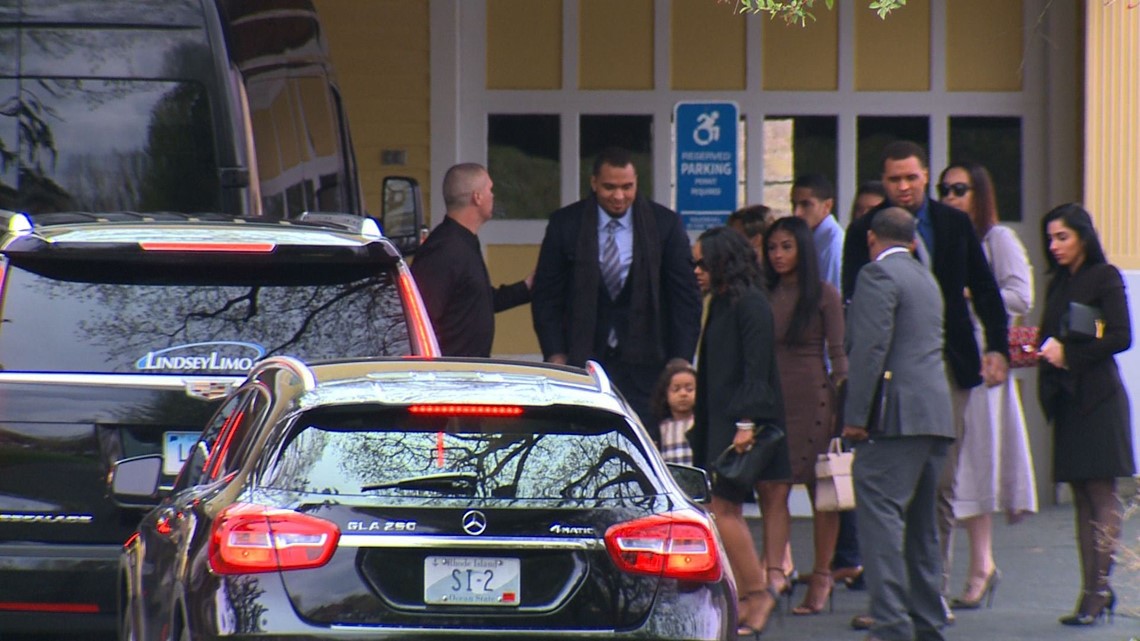
The formal memorial services for Aaron Hernandez took place on Monday, April 24, 2017, in his hometown of Bristol, Connecticut. The choice of Bristol was deliberate, as it was where Hernandez grew up and starred as a high school football standout before attending the University of Florida and entering the National Football League.
Structure of the Services
The arrangements were kept strictly private to manage security concerns and media scrutiny. Key aspects of the services included:
- Location: The wake and funeral services were held at the O'Brien Funeral Home in Bristol, Connecticut.
- Attendance: Attendance was restricted to invited family members, close friends, and select associates. Media personnel were kept outside a designated perimeter, and local law enforcement provided security detail to manage onlookers.
- Casket and Viewing: The service included a private viewing for those closest to Hernandez. Following the conclusion of the visitation and religious rites, the family opted for cremation rather than a traditional ground burial.
The decision to cremate Hernandez was handled discreetly to prevent the gravesite from becoming a focal point for vandalism, morbid tourism, or intense media harassment. The specific location where his ashes were eventually scattered or kept private was not publicly disclosed by the family, aligning with their desire for privacy during a period of acute public notoriety.
Legal and Scientific Disputes: The C.T.E. Controversy and Brain Tissue
While the memorial services in Connecticut marked the physical departure of Hernandez from public view, a significant legal and scientific dispute emerged regarding his physical remains before cremation took place—specifically concerning his brain.
The Request for Medical Examination
Given the violent nature of Hernandez’s crimes, his abrupt behavioral shifts during his adult life, and his history of high-level football participation, medical researchers and legal representatives sought permission to examine his brain for evidence of Chronic Traumatic Encephalopathy (C.T.E.). C.T.E. is a degenerative brain disease found in athletes, military personnel, and others with a history of repetitive brain trauma.
Dr. Ann McKee, a renowned neuropathologist and director of the CTE Center at Boston University, requested access to Hernandez's brain tissue to conduct a comprehensive analysis.
The Legal Standoff
The dispute over the brain tissue involved multiple parties, including the Office of the Chief Medical Examiner, the family's legal counsel, and prison officials:
- Initial Reluctance and Court Intervention: Lawyers representing Hernandez's estate initially clashed regarding the release of the brain tissue to the Boston University researchers, leading to emergency court filings.
- Resolution and Release: Probate Court Judge Christopher Armstrong ultimately ordered the release of the brain to the Boston University researchers, allowing the family’s wishes for scientific study to proceed alongside the arrangements for cremation of the remaining body.
- Scientific Findings: In September 2017, Dr. McKee and her team publicly announced their findings. They determined that Hernandez suffered from Stage 3 C.T.E. (out of a possible four stages). The researchers noted that it was the most severe case of the disease they had ever observed in an individual of his age (27 years old), characterized by extensive damage to the frontal lobes, which regulate decision-making, impulse control, and emotional behavior.
Estate Disputes and Financial Fallout
Beyond the immediate funeral details and the medical examination of his brain, the period immediately following Hernandez's death involved significant legal disputes regarding his estate, financial liabilities, and civil litigation.
These disputes directly impacted the family's ability to navigate the aftermath of his death and added layers of complexity to how his legacy was managed:
- The Abatement "Ab Initio" Rule: Under Massachusetts state law at the time, a long-standing legal principle known as abatement ab initio dictated that when a criminal defendant died before their direct appeal could be heard, the conviction was vacated as if the trial had never happened. Hernandez’s legal team fought to apply this rule to his murder conviction for the killing of Odin Lloyd. While a judge initially vacated the conviction in May 2017, prosecutors successfully appealed, and the conviction was reinstated in 2019 following a change in state legal interpretations regarding the doctrine.
- Civil Lawsuits: The estate faced major civil litigation from the family of Odin Lloyd, as well as from survivors of a 2012 Boston double-shooting incident in which Hernandez was tried and acquitted. These legal challenges meant that any assets associated with Hernandez were tied up in probate court, impacting insurance settlements, remaining NFL pension benefits, and memorabilia.
Summary of Key Events and Post-Death Timeline
To clarify the chronological sequence of events surrounding Aaron Hernandez’s passing, the following table outlines the critical milestones from his death to the publication of medical findings.
| Date / Period | Event / Milestone | Primary Parties Involved | Significance |
|---|---|---|---|
| April 19, 2017 | Death at Correctional Center | Department of Correction, Medical Examiner | Initiated the legal custody transfer of remains. |
| April 24, 2017 | Private Wake and Funeral | O'Brien Funeral Home, Family, Close Friends | Provided a controlled, private memorial in Bristol, Connecticut. |
| Late April 2017 | Cremation and Brain Retention | Family, Boston University CTE Center, Probate Court | Allowed scientific study of brain tissue while preserving privacy via cremation. |
| September 2017 | Release of C.T.E. Findings | Dr. Ann McKee, Boston University | Confirmed severe Stage 3 C.T.E. in the former athlete. |
| 2017–2019 | Estate and Conviction Legal Battles | Legal Estates, Prosecutors, Civil Plaintiffs | Addressed the legal status of his murder conviction and financial liabilities. |
Frequently Asked Questions
Where was Aaron Hernandez buried?
Aaron Hernandez was not buried in a traditional cemetery plot. Following private funeral services at O'Brien Funeral Home in Bristol, Connecticut, on April 24, 2017, his body was cremated. The family chose cremation to maintain privacy and protect the location of his remains from public disruption.
Who controlled the funeral arrangements for Aaron Hernandez?
The legal responsibility and primary decision-making authority for the funeral arrangements rested with his immediate family, specifically his fiancée Shayanna Jenkins-Hernandez and members of his immediate family, coordinating with legal counsel and funeral directors in Connecticut.
Why was there a legal dispute over his brain?
A legal dispute arose regarding whether his brain could be removed and preserved for scientific research. Researchers at Boston University requested the tissue to test for Chronic Traumatic Encephalopathy (C.T.E.), which required judicial authorization before the cremation process could be completed.
What were the results of the C.T.E. examination?
In September 2017, researchers announced that Hernandez had severe Stage 3 C.T.E. Neuropathologists stated it was the most advanced case they had ever observed in a person of his age, noting extensive damage to brain regions associated with impulse control and behavior.
Did the funeral arrangements involve public viewing?
No. The wake and memorial services were strictly private events restricted to invited family members, close friends, and select associates. Law enforcement and funeral home staff maintained a secure perimeter to exclude media and uninvited individuals.
Practical Next Actions and Research Guidance
For researchers, journalists, or legal scholars examining the case of Aaron Hernandez, further inquiry should rely on verified public records from the Massachusetts Trial Court Electronic Case Access system, official statements from the Worcester County District Attorney’s Office, and peer-reviewed medical literature regarding neurodegenerative pathology published by the Boston University CTE Center. Official court documents provide the definitive record regarding probate proceedings and estate litigation, avoiding speculative accounts found in unverified media reports.