AA Action Auto Insurance refers to regional or specialized automotive insurance products and agency services associated with the American Automobile Association (AAA) or independent brokerages operating under similar trade designations. Navigating these coverage options requires understanding standard policy structures, regional club variations, state minimum requirements, and the process of filing claims or managing premiums in 2026.
Understanding AA Action Auto Insurance
When researching vehicle protection policies, drivers frequently encounter regional club offerings, specialized broker programs, and affiliate agencies operating under variations of the AA or Action Auto Insurance banner. Because insurance is regulated at the state level rather than nationally, policy availability, underwriting rules, and carrier partnerships vary significantly by geography.
To evaluate these insurance options effectively, motorists must distinguish between membership-based club insurers and independent brokerages. Many drivers associate roadside assistance and motor club benefits directly with physical policy underwriting. However, major motor clubs often partner with established national underwriters to provide primary liability and collision coverage, while adding proprietary club perks such as extended towing, trip interruption protection, and member-only discounts.
The Role of Independent Agencies Versus Club Underwriters
Independent brokerages and agencies utilizing terms like "Action" in their business names typically act as intermediaries. Rather than underwriting the financial risk themselves, these agencies shop multiple carriers—such as Progressive, Travelers, or Geico—to match drivers with suitable policies. Conversely, club-affiliated insurance exchanges underwrite policies directly through subsidiary corporations.
Understanding this distinction affects how policyholders handle premium adjustments, policy renewals, and customer service inquiries. If an insurance product is secured through an independent agency, rate changes often stem from broader market shifts across multiple underlying carriers. If the policy is held through a dedicated motor club exchange, discounts are frequently tied directly to multi-product bundles, such as combining home, life, and auto coverage with active club membership.
Core Coverage Components and Policy Structures
Regardless of the specific agency branding, standard automotive protection follows established statutory frameworks. State laws mandate minimum liability limits, while lenders require physical damage coverage for financed or leased vehicles.
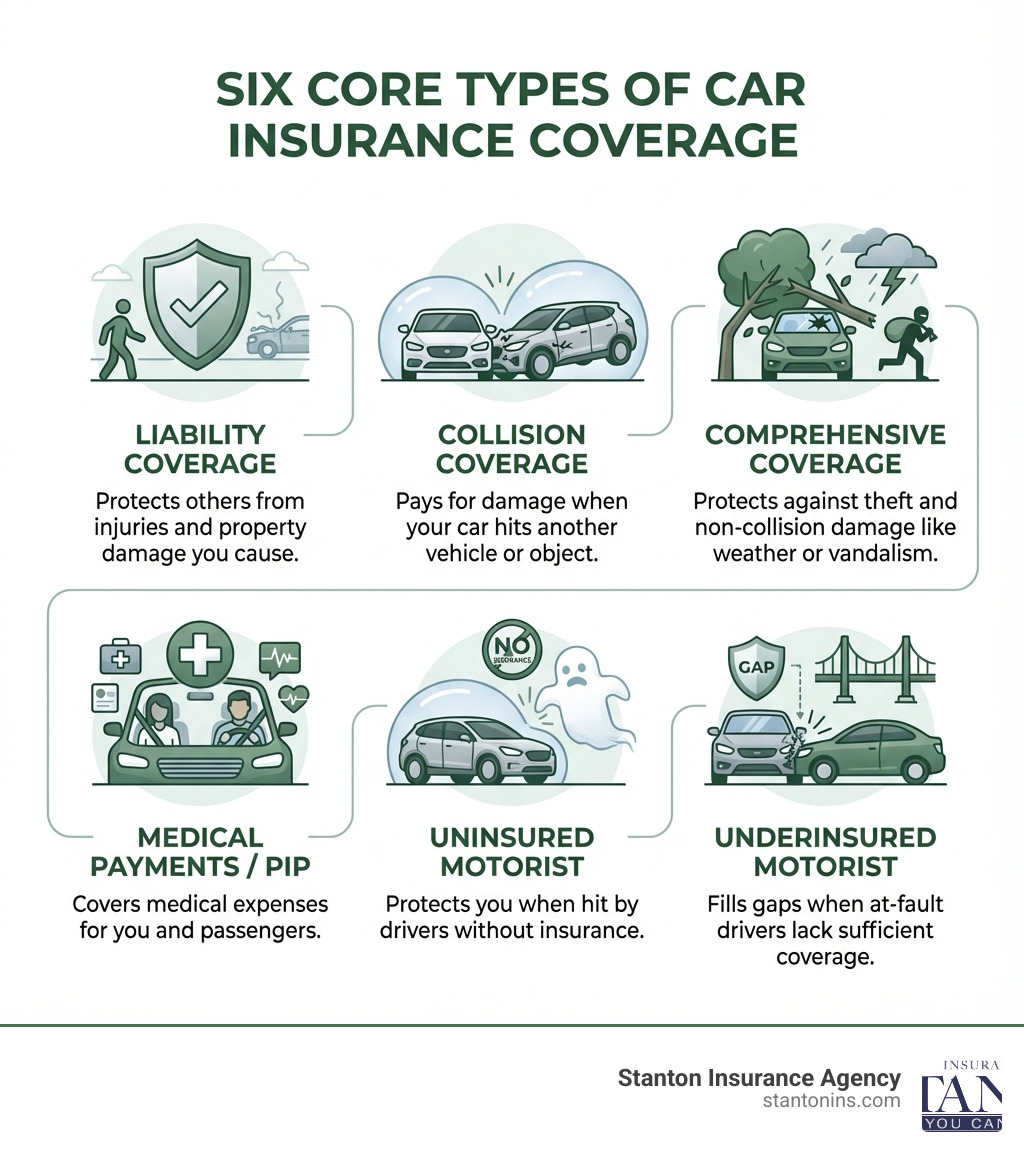
| Coverage Type | Primary Function |
|---|---|
| Liability (BI / PD) | Covers injuries and property damage you cause |
| Collision | Repairs your car after a crash with a vehicle/obj |
| Comprehensive | Covers theft, fire, weather, and animal strikes |
| Personal Injury (PIP) | Pays medical bills and lost wages regardless of fault |
| Uninsured Motorist | Protects you if hit by an underinsured driver |
Liability Protection: Bodily Injury and Property Damage
Liability insurance forms the legal foundation of any valid auto policy. Bodily injury (BI) liability covers medical expenses, rehabilitation, legal fees, and lost income for third parties injured in an accident where the policyholder is at fault. Property damage (PD) liability repairs or replaces other drivers' vehicles, public infrastructure, or private property damaged during a collision.
First-Party Physical Damage: Collision and Comprehensive
Physical damage protection is divided into two primary categories:
- Collision Coverage: Addresses direct impact damage to the insured vehicle, whether striking another car, a guardrail, or rolling over. Payouts are limited to the Actual Cash Value (ACV) of the vehicle minus the selected deductible.
- Comprehensive Coverage: Protects against non-collision incidents. This includes events traditionally classified as "acts of nature" or criminal acts, such as vehicle theft, windshield vandalism, hailstorms, flash floods, falling tree branches, and collisions with wildlife (such as deer).
Medical Payments and Personal Injury Protection (PIP)
Depending on state regulations, policies frequently incorporate medical payments (MedPay) or personal injury protection. In "no-fault" insurance states, PIP is mandatory and covers the policyholder's medical expenses and lost wages regardless of who caused the accident. In traditional tort states, MedPay functions as an optional add-on to assist with immediate emergency room expenses or co-pays.
Eligibility, Requirements, and Underwriting Factors
Insurance carriers evaluate multiple risk variables to determine policy eligibility and calculate annual premiums. When applying for coverage through specialized regional programs or motor club affiliates, underwriters assess both driving history and demographic data.
Key Rating Factors
- Driving Record: Past traffic violations, speeding tickets, at-fault accidents, and major moving violations within the past three to five years heavily influence base rates.
- Vehicle Specifications: Year, make, model, safety ratings, historical theft rates, and average repair costs dictate physical damage premiums. High-performance or luxury vehicles generally command higher premiums due to expensive replacement parts.
- Garaging Location: Zip codes with high rates of uninsured motorists, traffic congestion, or historical property crime result in elevated regional rating factors.
- Credit History: In states where permitted by law, credit-based insurance scores correlate statistically with claims frequency, affecting the final premium quote.
- Annual Mileage: Low-mileage drivers or those utilizing telematics tracking devices often qualify for reduced rates.
Discounts and Cost Optimization Strategies
Securing affordable auto insurance requires leveraging available discounts and structuring deductibles to balance monthly cash flow against out-of-pocket exposure in the event of a claim.
Common Discount Categories
- Multi-Policy Bundling: Combining auto insurance with homeowners, renters, or umbrella policies yields substantial percentage discounts across all accounts.
- Good Driver and Safe Driving Programs: Maintaining a clean driving record for three to five consecutive years unlocks accident forgiveness and preferred tier pricing.
- Telematics and Usage-Based Insurance: Enrolling in smartphone applications or plugging hardware tracking devices into the vehicle's diagnostic port allows insurers to monitor real-time driving habits, such as braking smoothness and speed compliance.
- Affiliation and Membership Discounts: Motor club members often receive exclusive rate reductions, waived administrative fees, or enhanced roadside assistance packages bundled into the policy.
Step-by-Step Guide to Obtaining and Managing a Policy
Navigating the application, binding, and ongoing management of an auto insurance policy involves a structured sequence of administrative steps.
- Gather Documentation: Collect current driver's licenses for all household drivers, vehicle Identification Numbers (VINs), current mileage disclosures, and declarations pages from existing insurance policies.
- Request Quotes: Contact the agency or utilize online comparison portals to input accurate vehicle and driver data. Ensure coverage limits match or exceed state statutory requirements and personal asset protection goals.
- Verify Deductibles and Optional Endorsements: Select appropriate deductibles (typically ranging from $500 to $1,000) and evaluate the necessity of add-ons such as rental car reimbursement, roadside assistance, and gap insurance.
- Complete Underwriting and Bind Coverage: Submit to initial underwriting checks. Upon approval, pay the initial binder fee or first month's premium to legally activate the policy.
- Obtain Proof of Insurance: Print or digitally save insurance cards and submit electronic proof of coverage to the state Department of Motor Vehicles (DMV) or lending institution if required.
Frequently Asked Questions
What is the difference between an auto insurance agency and a direct writer?
An agency or broker works with multiple insurance carriers to shop and compare rates on behalf of the consumer, whereas a direct writer sells policies exclusively from a single insurance company. Independent agencies provide greater flexibility if rates increase with one specific carrier.
Does motor club membership automatically include physical damage insurance?
No. Motor club memberships typically provide roadside assistance, travel discounts, and emergency towing services. Primary liability, collision, and comprehensive insurance must be explicitly purchased as a separate policy, even if the club offers insurance products through a partner company.
How do deductibles affect monthly auto insurance premiums?
A deductible is the out-of-pocket amount you agree to pay before insurance coverage kicks in for a claim. Choosing a higher deductible (e.g., $1,000 instead of $250) lowers your monthly or annual premium because you are assuming more financial risk.
What should I do immediately after an auto accident?
Ensure everyone is safe and move vehicles to a safe location if possible. Contact emergency services if there are injuries or significant property damage. Exchange insurance and contact information with other drivers, document the scene with photographs, and report the claim to your insurance provider as soon as practicable.
Can my auto insurance policy be canceled mid-term?
Yes, insurers can cancel or non-renew a policy mid-term under specific conditions, such as non-payment of premiums, license suspension, or material misrepresentation (fraud) on the initial application. State regulations dictate the required notice period an insurer must provide before cancellation takes effect.
Next Steps for Motorists
Review your current declarations page to verify that liability limits align with your personal net worth and asset protection requirements. If you are exploring regional agency options or club-affiliated programs, request comprehensive quotes from multiple providers to compare premium costs, deductible structures, and bundled member benefits before committing to an annual policy term.