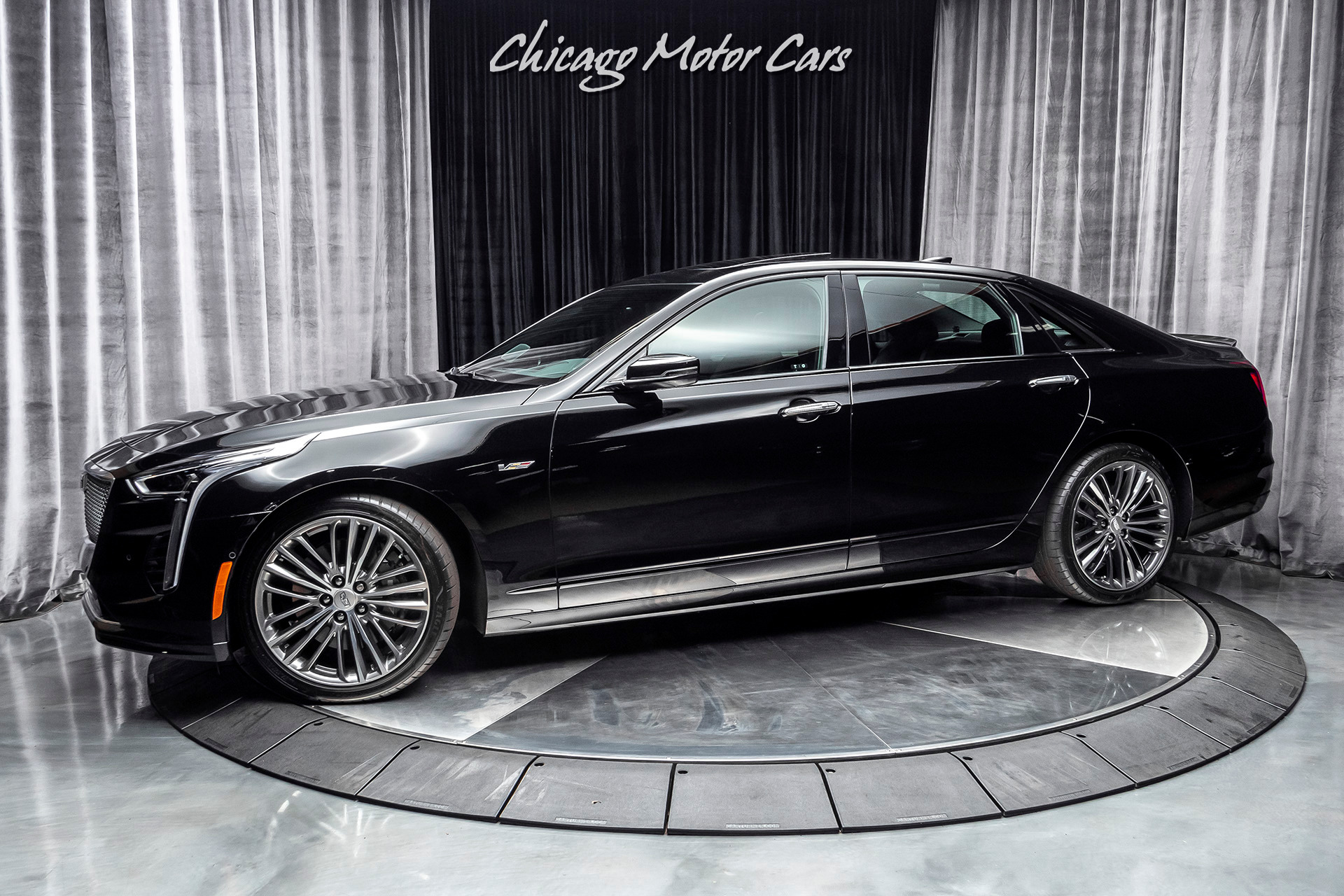
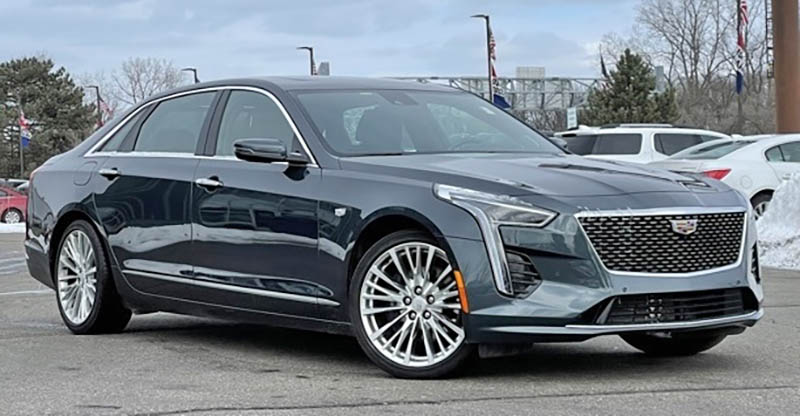
The 550 hp generated by the Cadillac CT6-V Blackwing comes from a hand-built, twin-turbocharged 4.2-liter V8 engine codenamed the LTA. This bespoke powerplant represents a unique high-water mark for American luxury performance, pairing boutique engine architecture with an advanced all-wheel-drive system to deliver effortless acceleration and high-speed stability.
Introduction to the Cadillac CT6-V Blackwing and the LTA V8
The Cadillac CT6-V, introduced for the 2019 model year (and later rebranded simply as the CT6-V after initial production runs), stands as a fascinating chapter in modern automotive engineering. At the heart of this full-size luxury performance sedan lies a massive technological achievement: a clean-sheet, dual-overhead-cam, twin-turbocharged 4.2-liter V8 engine. While general automotive enthusiasts often use the term "Blackwing" to describe the engine, Cadillac originally reserved the Blackwing moniker for this specific V8 architecture before later applying it to the V-Series variants of the CT4 and CT5.
Developing 550 hp at 5,000–5,700 rpm and a prodigious 627 lb-ft of torque from 3,200 to 4,000 rpm, the LTA V8 was designed to punch well above its displacement weight. It transformed a traditionally conservative executive flagship into a genuine sports sedan capable of competing with European heavyweights. Understanding how this engine achieves its 550 horsepower output requires looking closely at its internal layout, forced induction setup, thermal management, and how that power is transferred to the pavement.
Engine Architecture: The "Hot V" Configuration
The foundation of the 550 hp output in the CT6-V Blackwing is its unique mechanical layout. Unlike traditional V8 engines that place their turbochargers on the outside of the cylinder heads near the inner fenders, the LTA engine utilizes a "hot V" configuration.
What is a Hot V Design?
In a hot V setup, the exhaust ports and turbochargers are tucked inside the valley between the two cylinder banks. This layout offers several distinct engineering advantages that directly contribute to the engine's high power density:
- Reduced Turbo Lag: By placing the turbochargers directly adjacent to the exhaust ports, the distance the hot exhaust gases must travel to spin the turbine is drastically minimized. This results in nearly instantaneous boost response, allowing the 550 hp to manifest smoothly across a wide power band.
- Packaging Efficiency: Routing the exhaust internally narrows the overall width of the engine block. This compact footprint allowed Cadillac engineers to fit a massive V8 into the CT6 engine bay alongside all-wheel-drive plumbing without compromising front-end weight distribution.
- Thermal Optimization: Managing heat is critical when forcing massive amounts of air into an engine. The hot V design centralizes extreme temperatures, allowing for dedicated, highly efficient cooling channels to surround the core heat-generating components.
Twin-Turbocharging and Boost Management
Achieving 550 horsepower from a 4.2-liter displacement requires significant forced induction. The LTA V8 relies on dual twin-scroll turbochargers working in tandem to pressurize the intake charge.
Each turbocharger feeds one bank of cylinders, running at a maximum boost pressure of approximately 20 psi. To keep intake air temperatures stable—preventing detonation and power fade during sustained high-load driving—Cadillac incorporated an advanced water-to-air intercooler system. Heat exchangers mounted near the front of the vehicle cool the compressed air before it enters the combustion chambers, ensuring that the engine delivers its peak 550 hp consistently, even in demanding ambient conditions.
Furthermore, the electronic wastegates on the twin turbos allow for precise, computer-controlled boost management. The engine management system continuously monitors throttle position, gear selection, and vehicle speed, tailoring the delivery of torque and horsepower to maximize traction and drivability rather than simply dumping raw power abruptly.
| Engine Specification | Detail |
|---|---|
| Displacement | 4.2 Liters (256 cubic inches) |
| Configuration | 90-degree V8, Dual Overhead Cam (DOHC) |
| Induction | Twin-Turbocharged (Hot V layout) |
| Horsepower | 550 hp @ 5,000–5,700 rpm |
| Torque | 627 lb-ft @ 3,200–4,000 rpm |
| Redline | 5,800 rpm |
| Block / Heads | Aluminum block with cast-in-place iron cylinder liners, aluminum heads |
Powertrain Integration: From 550 HP to the Pavement
Producing 550 horsepower is only half the battle; transferring that energy efficiently to the road requires a sophisticated supporting drivetrain. The CT6-V channels its output through a Hydra-Matic 10L90 10-speed automatic transmission. This transmission features closely spaced gear ratios that keep the LTA engine operating within its optimal power band during aggressive acceleration, while offering tall overdrive gears for refined, efficient highway cruising.
To handle the immense 627 lb-ft of torque without overwhelming the rear tires, the CT6-V utilizes an active all-wheel-drive (AWD) system. Unlike older, reactive AWD setups that only engage when slip is detected, this system features a torque-transfer clutch capable of continuously varying power distribution between the front and rear axles.
Vehicle Dynamics and Ride Control
Managing a heavy luxury sedan with 550 hp requires more than just mechanical grip. The CT6-V Blackwing integrates several chassis technologies to maintain composure:
- Magnetic Ride Control: The industry-standard adaptive damping system reads the road surface up to 1,000 times per second, adjusting shock absorber firmness in milliseconds to balance body roll with ride comfort.
- Active Rear Steering: At low speeds, the rear wheels turn counter to the front wheels to shrink the turning radius; at high speeds, they turn in phase with the front wheels to enhance lane-change stability.
- Mechanical Limited-Slip Differential: Ensures optimal power distribution across the rear axle when exiting corners.
Real-World Performance and Driving Dynamics
On the road, the 550 hp in the CT6-V Blackwing translates into effortless, deceptive acceleration. Despite weighing over 4,000 pounds, the sedan can sprint from 0 to 60 mph in roughly 3.8 to 4.0 seconds, accompanied by a subdued, authoritative exhaust note rather than the raw, raspy roar typical of pushrod V8s.
The driving experience is characterized by linear power delivery. Because peak torque arrives at just 3,200 rpm, the driver does not need to rev the engine to its redline to access meaningful thrust. Passing slower traffic on a two-lane highway requires little more than a slight flex of the ankle, as the twin turbos spool instantly to push the car forward with executive composure.
Maintenance and Long-Term Ownership Considerations
Owning a low-volume, hand-built performance vehicle like the CT6-V involves specific maintenance requirements that differentiate it from standard luxury sedans.
Fuel and Lubrication Requirements
- High-Octane Fuel: To prevent engine knock and achieve the rated 550 hp, the LTA engine strictly requires premium gasoline (91 octane minimum, 93 recommended).
- Synthetic Oil Changes: The tight tolerances of the twin-turbo system and high operating temperatures necessitate frequent oil changes using high-grade synthetic oils specified by the manufacturer. Neglecting fluid changes can lead to premature wear on turbocharger bearings and timing chain components.
Component Complexity
Because the LTA engine was produced in limited quantities exclusively for Cadillac high-performance applications, sourcing specific engine-bay components, turbocharger assemblies, or intercooler parts can present challenges compared to mass-market LS or LT small-block engines. Prospective owners and current caretakers must account for specialized labor rates and potential wait times for niche replacement parts.
Frequently Asked Questions
Is the LTA engine in the CT6-V officially named the "Blackwing"?
Yes and no. While automotive enthusiasts and media outlets universally refer to the 4.2L twin-turbo V8 as the "Blackwing engine," Cadillac originally applied the name to the engine architecture rather than the production cars. However, because the engine was hand-built for the CT6-V (and later briefly offered in the Platinum trim), the name stuck. Cadillac later used "Blackwing" as a sub-brand for the manual-transmission CT4-V and CT5-V performance sedans, though those cars use different supercharged pushrod V8 and turbo V6 engines.
Can the 550 hp output be easily increased through aftermarket tuning?
Yes, because the engine utilizes twin turbochargers, aftermarket tuners can often unlock additional horsepower relatively easily through ECU recalibration, increased boost targets, and upgraded exhaust systems. However, pushing significantly past the factory 550 hp threshold places added stress on the stock 10-speed transmission clutches and fuel delivery components, requiring careful hardware upgrades to maintain long-term reliability.
How does the CT6-V's 550 hp compare to contemporary German luxury sports sedans?
During its production window, the CT6-V competed directly against vehicles like the BMW M760Li and Mercedes-AMG S63. While those German flagships often boasted higher horsepower figures (frequently exceeding 600 hp), the CT6-V offered a lighter, more agile chassis feel combined with a lower price point, making it a uniquely engaging driver's car in the full-size executive class.
Why was the CT6-V discontinued so quickly?
The CT6-V was a casualty of General Motors' broader corporate restructuring. GM decided to phase out production at the Detroit-Hamtramck assembly plant to retool the facility exclusively for electric vehicle manufacturing (now known as Factory ZERO), ending production of the CT6 sedan for the North American market after a brief run.
Does the CT6-V require specialized mechanical service?
While routine maintenance like brake pads and fluid changes can be handled by any qualified technician, complex diagnostics related to the active AWD system, Magnetic Ride Control, or the hot-V twin-turbo configuration are best handled by certified technicians with experience in Cadillac V-Series performance platforms.
Conclusion
The 550 hp delivered by the Cadillac CT6-V Blackwing remains a pinnacle of American engineering ambition. By combining a bespoke, hand-built twin-turbocharged V8 with an advanced hot-V layout, intelligent all-wheel drive, and sophisticated chassis dynamics, Cadillac created a performance sedan that defied expectations. While its production run was brief, the engineering prowess behind its 550 horsepower output ensures it occupies a legendary status among modern luxury performance vehicles.