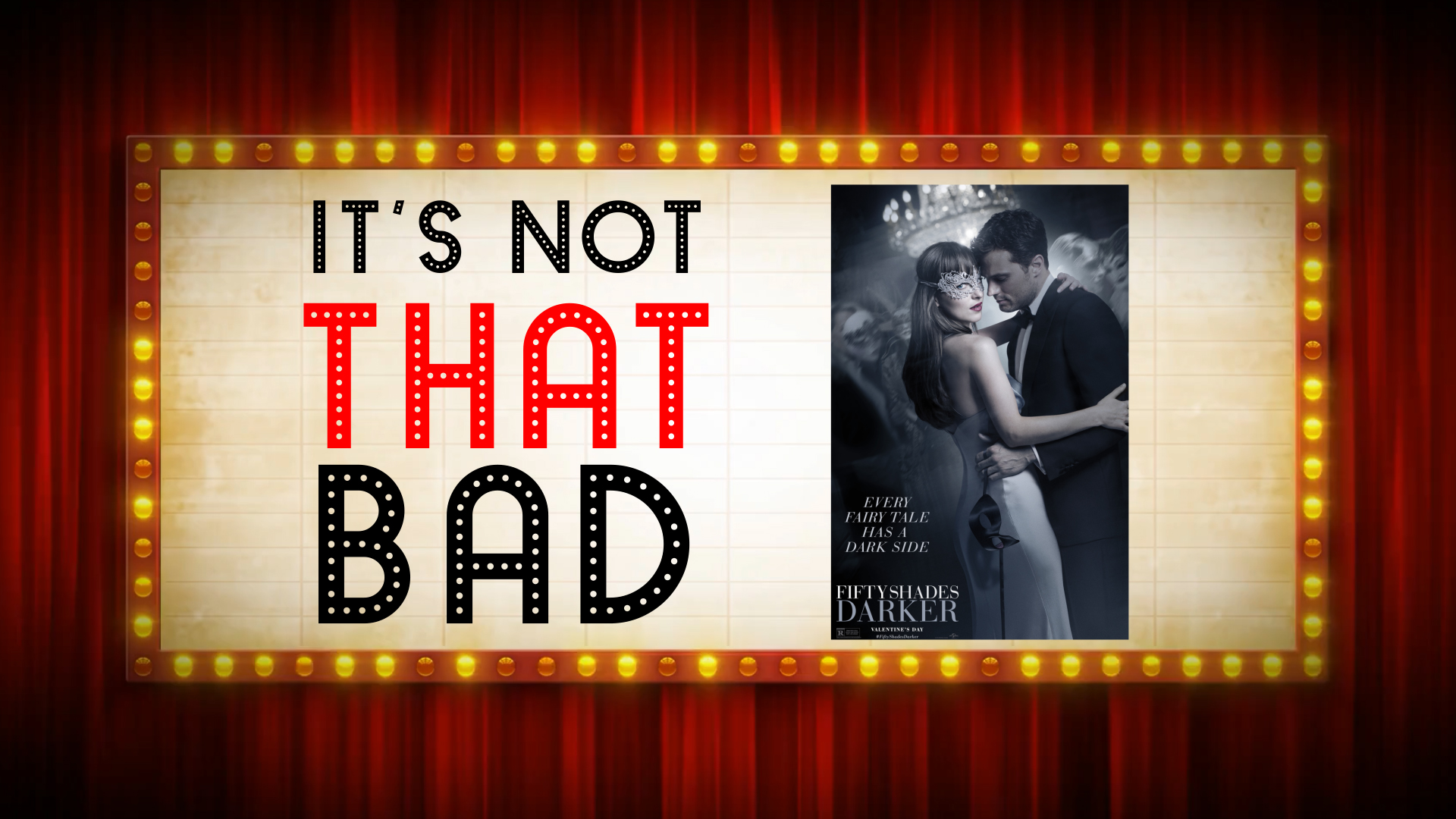
E.L. James’s Fifty Shades of Grey phenomenon stands as one of the most commercially successful publishing events of the twenty-first century, yet it is equally famous for inspiring widespread criticism of its prose. The phrase "50 shades bad writing" captures a long-standing literary debate about the friction between commercial mass-market appeal and traditional standards of literary craft. Beyond the polarizing subject matter, the books became a lightning rod for discussions regarding lexical repetition, clunky dialogue, melodramatic internal monologues, and the distinct stylistic quirks that characterize amateur-to-mainstream crossover fiction in the digital age.
The Origins and Evolution of the Fifty Shades Literary Phenomenon
To understand why the writing style became such a cultural touchstone, it is necessary to examine how the work entered the global marketplace. Originally conceived as Twilight fan fiction titled Master of the Universe and published chapter-by-chapter on fan fiction websites under the pseudonym "Snowqueen's Icedragon," the text retained many hallmarks of unedited serial internet fiction. When a small Australian independent publisher, The Writer's Coffee Shop, picked up the manuscript, it underwent digital re-release as an e-book and print-on-demand paperback before Vintage Books acquired and re-edited the trilogy for a massive global rollout.
Despite subsequent rounds of editorial attention, the core architecture of the narrative and its sentence-level execution remained largely intact. Readers and literary critics alike noted that the transition from a niche online fan community to mainstream traditional publishing happened with minimal structural overhaul. This preservation of raw, unpolished text created a massive cultural divide. Millions of readers found the direct, unpretentious, and emotionally intense pacing deeply compelling, while traditional critics and authors pointed to the prose as a prime example of deficient technical execution, lacking the stylistic variation, subtlety, and syntactic dexterity expected of a multi-million-copy bestseller.
Core Stylistic Criticisms: Lexical Repetition and Vocabulary Constraints
One of the most frequent accusations leveled against the writing in Fifty Shades of Grey is its severe lexical repetition. In professional prose, writers rely on a diverse vocabulary, synonyms, and varied sentence structures to maintain momentum and evoke atmosphere. In contrast, the prose of Fifty Shades frequently cycles through a constrained set of adjectives, adverbs, and physiological reactions.
Certain verbs and modifiers appear with staggering frequency across the trilogy. Words used to describe emotional or physical states—such as "gasp," "murmur," "frown," "scowl," and "chagrin"—recur on almost every page. Similarly, the protagonist’s internal state is repeatedly conveyed through a narrow band of physical responses, such as a "inner goddess" performing various synchronous dances or an "implicit flutter" in the stomach. This lack of lexical range creates a flattening effect, where high-stakes emotional moments and mundane domestic scenes are rendered in nearly identical syntactic tones.
| Stylistic Element | Professional Literary Standard | Fifty Shades Characteristic Approach |
|---|---|---|
| Lexical Variety | Diverse synonyms and context-specific phrasing | Heavy reliance on recurring keywords and tags |
| Internal Monologue | Layered psychological complexity and subtext | Literal, repetitive internal refrains (e.g., "Holy crap") |
| Dialogue Tags | Varied action beats and minimal, clean attribution | Frequent use of adverbs and predictable physical tics |
| Sensory Details | Synesthetic, immersive descriptions tied to plot | Formulaic physical reactions and emotive clichés |
Syntax, Dialogue, and Melodrama in Commercial Romance
Beyond vocabulary choices, critics often highlight the novel's sentence structure and dialogue as key contributors to its reputation for poor writing. Dialogue in popular fiction functions to advance the plot, reveal character dynamics, and sound natural to the ear. In the case of E.L. James's work, dialogue frequently lapses into exposition dumps or stiff, transactional exchanges designed primarily to move characters from one setting to another.
Furthermore, the internal monologue of the protagonist, Anastasia Steele, relies heavily on melodramatic refrains and catchphrases. Expressions like "inner goddess," "Holy crap," and repeated mentions of Christian Grey's "fifty shades of fucked up" become recurring motifs that substitute for dynamic character growth. From a syntactic standpoint, the prose often favors short, declarative sentences strung together with coordinating conjunctions rather than complex or compound-complex structures that build narrative tension organically. While this style contributes to a fast reading pace—allowing readers to consume chapters rapidly—it sacrifices the rhythmic cadence and stylistic nuance valued by literary traditionalists.
The Fan Fiction Roots and the Digital Publishing Shift
The stylistic fingerprint of Fifty Shades cannot be separated from its origins in the digital fan fiction ecosystem. Fan fiction platforms prioritize immediate emotional gratification, direct access to character interiority, and rapid serialization. Authors in these spaces often write under tight personal deadlines without the benefit of a traditional developmental editor, line editor, or copyeditor.
When digital publishing platforms and print-on-demand technologies lowered the barrier to entry, works that bypassed traditional gatekeeping mechanisms began reaching mainstream audiences on an unprecedented scale. Fifty Shades proved that commercial viability does not require adherence to traditional academic or literary standards. This reality sparked intense debates within the literary community regarding the shifting definition of "good writing" in the twenty-first century. For many defenders of the book, traditional literary criticism elitistically dismisses books that provide genuine emotional resonance and escapism to millions of everyday readers, arguing that engagement and accessibility matter more than high-brow stylistic ornamentation.
Reader Reception vs. Critical Consensus: A Divided Landscape
The divergence between professional literary critics and the reading public regarding Fifty Shades highlights a fundamental tension in modern media consumption. Professional reviewers evaluated the work based on established aesthetic criteria: originality of metaphor, precision of language, character depth, and stylistic innovation. By these metrics, the books consistently earned harsh evaluations.
Conversely, the target audience approached the text not as a high-art literary achievement, but as an accessible, emotionally charged romance and erotica vehicle. For these readers, the predictable phrasing, direct emotional transparency, and familiar tropes were features rather than bugs. They provided a comforting, low-friction reading experience where the psychological stakes were clear and the narrative trajectory required little cognitive heavy lifting. This split demonstrates that "bad writing" in a commercial context is often a subjective judgment heavily influenced by the reader's primary goals—whether they seek linguistic artistry or straightforward escapist entertainment.
Frequently Asked Questions
Why is Fifty Shades of Grey often cited as an example of bad writing?
Critics frequently point to its repetitive vocabulary, cliché-ridden dialogue, predictable sentence structures, and heavy reliance on recurring internal catchphrases like the "inner goddess" motif, arguing that it lacks the stylistic sophistication expected of bestsellers.
Did the book undergo professional editing before publication?
Yes. Although it began as unedited online fan fiction, the manuscript was edited by its independent publisher and later by Vintage Books. However, these edits focused primarily on narrative pacing, legal compliance (such as altering identifying fan fiction elements), and basic proofreading rather than a total stylistic rewrite.
How did the book's origins influence its writing style?
Its roots in serial internet fan fiction encouraged rapid drafting, immediate emotional payoff, and direct character interiority, all of which shaped the brisk, unadorned prose style that carried over into the commercially published editions.
Does popular commercial success always correlate with literary quality?
Not necessarily. Commercial success is typically driven by high concept, emotional resonance, marketing momentum, and cultural timing, whereas literary quality is evaluated through formal aesthetic standards, stylistic innovation, and technical mastery.
Conclusion and Final Perspective
The enduring discussion surrounding "50 shades bad writing" serves as a fascinating case study in modern literary sociology. It forces an examination of the boundaries between commercial entertainment and high art, reminding observers that millions of readers often prioritize emotional accessibility and pacing over formal stylistic polish. While the prose may fall short of traditional academic benchmarks, its cultural footprint remains undeniable, proving that formal perfection is not a strict prerequisite for massive global engagement.