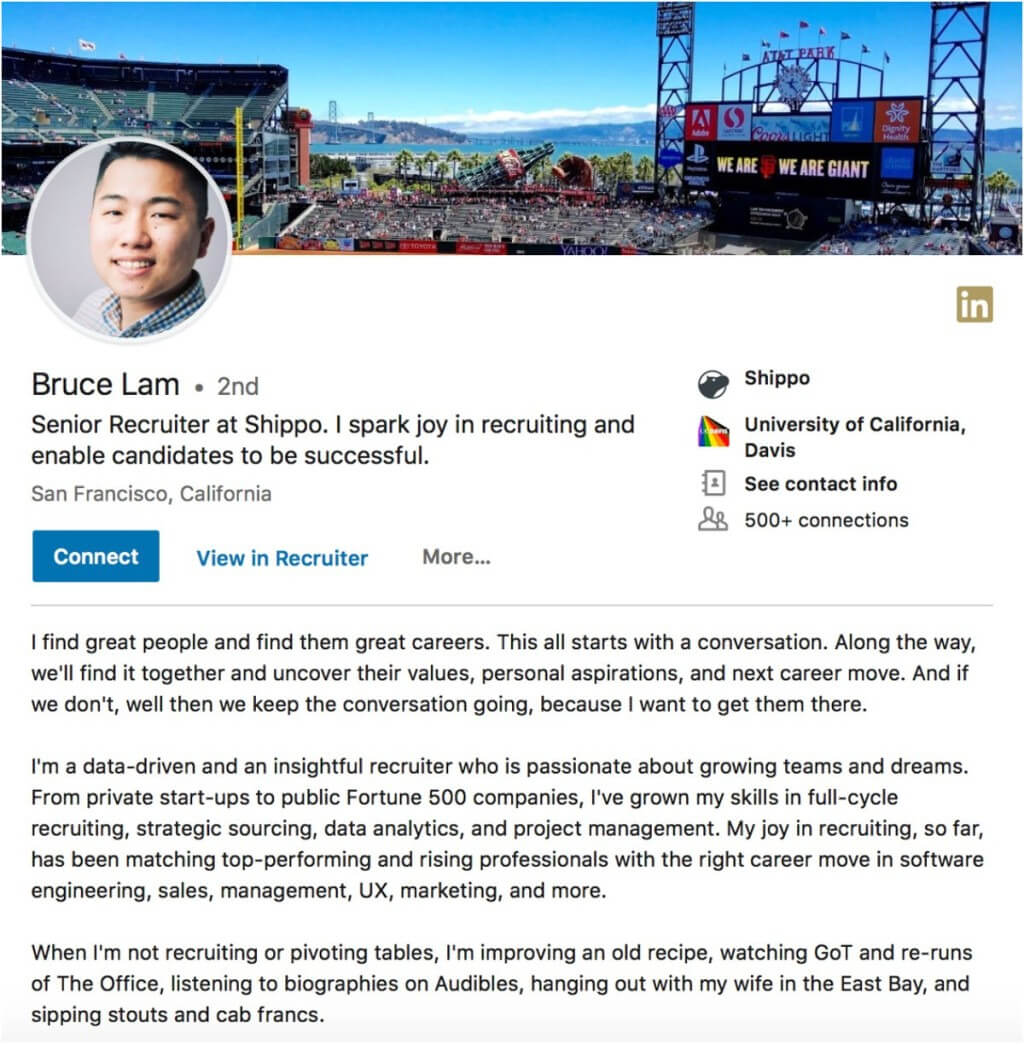
Crafting an effective LinkedIn bio as a student requires balancing your current academic pursuits with your emerging professional identity. Because recruiters and industry professionals often scan profiles in seconds, your summary must immediately convey what you study, what you build or research, and the value you bring to prospective employers.
Below are five distinct LinkedIn bio examples tailored for students across various majors and career stages, accompanied by strategic guidance on how to adapt them to your personal brand.
Understanding the Anatomy of a Great Student LinkedIn Bio
Before looking at specific templates, it helps to understand what makes a student profile stand out on LinkedIn. Unlike seasoned professionals with decades of work history, students must rely on academic projects, internships, leadership roles within student organizations, and specialized technical or soft skills.
A well-structured student bio typically consists of three foundational components:
- The Hook: A clear statement of who you are right now (e.g., an undergraduate, a master's candidate) and your core area of study.
- The Core Competencies: The practical skills, tools, programming languages, methodologies, or frameworks you actively use and master.
- The Call to Action (CTA) or Future Focus: What you are looking for next—such as summer internships, networking opportunities, or entry-level positions—along with an invitation to connect.
Recruiters routinely use LinkedIn Recruiter filters to search for specific hard skills, university affiliations, and graduation years. Integrating keywords relevant to your target industry ensures your profile appears in these searches.
Example 1: The STEM / Tech Student
Technical recruiters look for concrete evidence of coding ability, engineering projects, and problem-solving skills. This bio is ideal for computer science, data science, or engineering students who want to highlight technical proficiencies alongside academic dedication.
Bio Copy:
Junior Computer Science undergraduate at the University of Michigan passionate about scalable software development and cloud architecture. I bridge the gap between theoretical computer science and practical application through hands-on coding projects and hackathons.
Currently building full-stack web applications using React, Node.js, and Python, with a strong focus on clean code and database optimization. Beyond coursework, I serve as the Lead Organizer for campus coding workshops, mentoring peers in algorithms and data structures.
Core Stack & Skills: Python, Java, JavaScript, React, SQL, Git, AWS (Basics).
Let's Connect: I am actively seeking Software Engineering internship opportunities for Summer 2027. Reach out via LinkedIn messaging or at name@email.com.
Why This Works
This example immediately establishes the student's major, university, and target role. By explicitly listing tech stacks and mentioning extracurricular leadership (such as organizing workshops), it shows both technical competence and collaborative ability.
Example 2: The Business & Finance Major
Business students must project commercial awareness, analytical rigor, and professional polish. This template suits finance, accounting, economics, or marketing majors aiming for corporate roles, banking, consulting, or corporate strategy.
Bio Copy:
Senior Finance and Economics double major at NYU Stern, driven by data-backed financial analysis and strategic corporate valuation. I combine academic rigor in quantitative finance with real-world experience gained through case competitions and capital markets research.
Skilled in financial modeling, discounted cash flow (DCF) analysis, and market research utilizing Bloomberg Terminal and Capital IQ. As Vice President of the Undergraduate Finance Society, I manage a simulated equity portfolio and coordinate networking events for over 150 members.
Key Proficiencies: Financial Modeling, Excel, Valuation, Data Analysis, Tableau.
Next Steps: Open to full-time Analyst positions in Investment Banking and Corporate Finance starting Fall 2026. Always open to discussing market trends and connecting with industry professionals.
Why This Works
The tone is formal, direct, and results-oriented. It highlights institutional affiliation (NYU Stern), leadership responsibility (Vice President of the Finance Society), and specific technical tools (Bloomberg Terminal, Excel) that finance recruiters screen for.
Example 3: The Creative & Liberal Arts Major
Liberal arts, communications, and design students often face the challenge of translating "soft skills" into tangible professional value. This bio focuses on storytelling, content strategy, writing, and creative project management.
Bio Copy:
English and Digital Media senior at UCLA with a passion for digital storytelling, brand messaging, and audience engagement. I help organizations translate complex ideas into compelling narratives that resonate across digital platforms.
Experienced in content creation, copywriting, SEO optimization, and social media analytics gained through editorial internships and managing the university’s premier literary magazine. I thrive at the intersection of creative writing and data-driven marketing strategies.
Core Competencies: Content Strategy, Copywriting, SEO, Adobe Creative Suite, Social Media Marketing.
Let's Connect: Seeking entry-level roles in Content Marketing, Copywriting, or Digital Communications. Feel free to reach out to collaborate or share industry insights.
Why This Works
It reframes traditional humanities skills into marketable corporate assets like content strategy, SEO, and analytics. It demonstrates that the student understands how creative output drives measurable engagement.
Example 4: The Research & Science Student
Pre-med, biology, chemistry, and research-focused undergraduate or graduate students need to highlight laboratory techniques, scientific inquiry, and analytical discipline.
Bio Copy:
Molecular and Cellular Biology senior at Johns Hopkins University dedicated to translational biomedical research and genetic analysis. Fascinated by the molecular mechanisms of disease and the potential of biotechnology to transform modern healthcare.
Active undergraduate researcher in the university’s Genetics Lab, where I assist in PCR amplification, gel electrophoresis, cell culture maintenance, and data analysis using R and Prism. Co-authored an abstract presented at the 2025 Undergraduate Research Symposium.
Lab Techniques & Tools: PCR, Microscopy, Cell Culture, R, Statistical Analysis, Scientific Writing.
Future Outlook: Preparing for graduate studies (MS/PhD) in Biomedical Sciences while exploring biotechnology research internships and laboratory technician roles. Let's connect!
Why This Works
Scientific roles require rigorous verification of technical lab skills. This profile lists specific protocols (PCR, cell culture) and computational tools (R), proving active, hands-on scientific contribution rather than passive classroom learning.
Example 5: The Career Pivot / Non-Traditional Student
Many students return to school later in life, transition from a completely different industry, or complete intensive bootcamps. This bio frames past life experience as a unique professional asset rather than a gap.
Bio Copy:
Transitioning project manager pursuing a degree in Information Technology at Western Governors University, combining 4 years of client-facing operational experience with modern IT systems administration.
I leverage my background in stakeholder communication and workflow optimization to solve complex technical bottlenecks. Currently deepening my expertise in network security, cloud computing, and IT infrastructure management while earning industry certifications.
Certifications & Skills: CompTIA Security+, ITIL v4, Linux, Network Administration, Agile Methodologies.
Next Steps: Actively seeking IT Support Specialist or Junior Systems Administrator roles. I welcome connections with IT leaders and hiring managers.
Why This Works
Instead of hiding a career pivot, this bio weaponizes past professional experience. It combines mature soft skills (stakeholder communication, operations) with fresh technical certifications (Security+), making the candidate highly attractive to employers seeking mature, ready-to-work talent.
Comparison of Student LinkedIn Bio Strategies
| Bio Archetype | Primary Target Audience | Key Elements to Emphasize | Ideal Call to Action |
|---|---|---|---|
| STEM / Tech | Software Engineering Managers, Tech Recruiters | Programming languages, hackathons, open-source projects | Summer internships, junior developer roles |
| Business & Finance | Investment Bankers, Consultants, Corporate Recruiters | Financial modeling, case competitions, student society leadership | Full-time analyst programs, networking calls |
| Creative & Arts | Marketing Directors, Editorial Heads, Creative Agencies | Portfolio work, SEO, content tools, editorial experience | Entry-level marketing, copywriting, or PR roles |
| Research & Science | Principal Investigators, Biotech HR, Graduate Admissions | Lab protocols, publications, analytical software | Research assistantships, lab tech roles, grad school |
| Career Pivot | Hiring Managers, IT Directors, Operations Leads | Transferable skills, past experience, new technical certifications | IT support, junior administration, operations roles |
Step-by-Step Guide to Optimizing Your Student Profile
Writing the bio text is only half the battle. To ensure recruiters actually read your summary, configure your entire profile using these foundational steps:
1. Headline Optimization
Do not leave your headline as just "Student at [University Name]." Recruiters search by job titles and skills, not generic student statuses.
- Weak: Student at Boston University
- Strong: Economics Undergraduate @ Boston University | Aspiring Financial Analyst | Python & Financial Modeling
2. Leverage the Featured Section
Your bio tells your story; the Featured section proves it. Pin your best work to this section:
- A link to your GitHub repository or personal portfolio website.
- A PDF of a research paper or case competition deck.
- A certificate for a major credential or bootcamp completion.
3. Populate the Skills Section
LinkedIn allows you to pin up to three top skills. Choose hard skills directly aligned with your target job description rather than generic soft skills like "Hardworking" or "Teamwork."
Frequently Asked Questions
What should I write in my LinkedIn bio if I have zero work experience?
Focus entirely on academic projects, major coursework, capstone assignments, volunteer work, and student organization involvement. Every student has completed projects that demonstrate problem-solving, research, or collaboration; frame these academic outputs as professional project experience.
Should I write my LinkedIn bio in the first person or third person?
Always write in the first person ("I," "my"). LinkedIn is a professional social network meant for human-to-human networking. Third-person bios sound overly formal, corporate, and robotic, often resembling an awkward resume summary rather than a conversational introduction.
How long should a student LinkedIn bio be?
Aim for 150 to 300 words. It should be long enough to include essential keywords and context, but short enough to be read in under 45 seconds. Use short paragraphs and bullet points to maximize readability on mobile devices.
Can I include my GPA in my LinkedIn bio?
You should only include your GPA if it is exceptionally high (typically 3.5 or above on a 4.0 scale) and you are applying to highly competitive entry-level programs in finance, consulting, or engineering where GPA screening is standard practice. Otherwise, leave it off and let your projects and skills speak for themselves.
How often should I update my student LinkedIn profile?
Update your profile at the end of every semester or whenever you complete a significant milestone, such as finishing an internship, earning a certification, winning a hackathon, or starting a new leadership role in a campus club.
Next Actions to Take Right Now
- Audit your current headline: Replace generic student titles with a keyword-optimized headline reflecting your target industry.
- Draft your summary: Select one of the five templates above that best matches your major, fill in your specific details, and keep it under 250 words.
- Add visual proof: Upload at least one portfolio piece, project link, or certification to your Featured section to validate your claims.