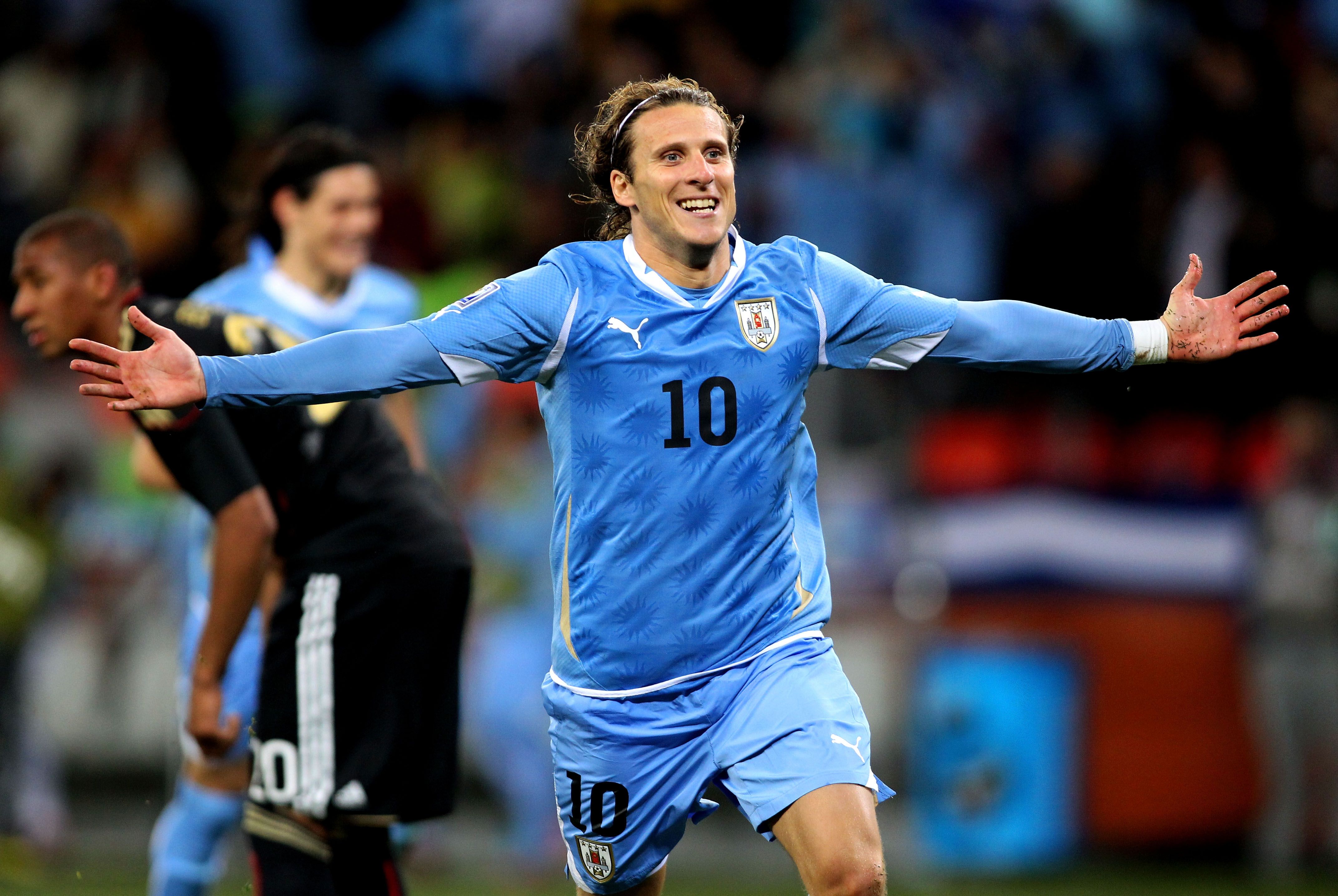
Diego Forlán’s remarkable performance during the 2010 FIFA World Cup in South Africa stands as one of the defining individual achievements in modern football history. Scoring five goals across seven matches, the Uruguayan talisman carried his national team to a historic fourth-place finish and earned the tournament's prestigious Golden Ball award as the best player. This comprehensive breakdown traces every strike, tactical shift, and decisive moment of his unforgettable tournament timeline.
Contextualizing Uruguay and Diego Forlán in the 2010 World Cup
Heading into the 2010 FIFA World Cup, Uruguay was viewed as a proud footballing nation with a glorious past, but few analysts predicted a deep run into the tournament's final stages. La Celeste had scraped through the grueling CONMEBOL qualification process, ultimately securing their spot via an inter-confederation playoff against Costa Rica. At the heart of coach Oscar Tabárez’s tactical blueprint was Diego Forlán, then playing his club football for Atlético Madrid. Fresh off a stellar season where he scored the decisive goals in the UEFA Europa League final, Forlán arrived in South Africa at the absolute peak of his technical powers.
Tabárez deployed Forlán not as a traditional isolated central striker, but as a dynamic second striker operating just behind target man Luis Suárez or Edinson Cavani. This hybrid role allowed Forlán to roam freely, dropping deep to collect possession, dictate the tempo, and exploit spaces between opposing midfields and defenses. Furthermore, the tournament was defined by the notorious Jabulani match ball, a sphere criticized by goalkeepers and outfield players alike for its unpredictable aerodynamics. While many struggled to master its trajectory, Forlán intuitively harnessed its erratic flight path, utilizing his exceptional striking technique to devastating effect throughout the competition.
The Group Stage: Laying the Foundation
Uruguay was drawn into Group A alongside hosts South Africa, powerhouse France, and Mexico. This initial phase tested the structural integrity of Tabárez's squad and provided Forlán with the platform to announce his scoring intentions to the world stage.
Match 1: Uruguay vs. France (June 11, 2010)
The opening match at Cape Town's Green Point Stadium pitted Uruguay against a turbulent French squad. The game ended in a tense, scoreless stalemate. However, Forlán orchestrated much of Uruguay's attacking play, proving that the South Americans could match European heavyweights physically and tactically. While he did not find the back of the net, this gritty defensive and transitional performance laid the psychological groundwork for Uruguay's group dominance.
Match 2: South Africa vs. Uruguay (June 16, 2010) — Goal 1
Uruguay’s second group fixture against the host nation in Pretoria proved to be Forlán's breakout moment of the tournament. In the 24th minute, Forlán received a pass around 30 yards from goal, surveyed the defense, and unleashed a trademark right-footed drive. Thanks to the Jabulani's movement and Forlán's swerving knuckle-shot technique, the ball dipped viciously over goalkeeper Itumeleng Khune’s outstretched hands and into the roof of the net.
Later in the second half, Forlán added a second goal from the penalty spot after goalkeeper Khune was sent off for fouling Luis Suárez. Uruguay cruised to a 3-0 victory, firmly establishing themselves at the top of the group and marking Forlán's arrival as a Golden Boot contender.
Match 3: Mexico vs. Uruguay (June 22, 2010)
In their final group match in Rustenburg, Uruguay faced a slick Mexican side. While Forlán did not score in this encounter, his industrious work rate and precise delivery from set-pieces troubled El Tri throughout the match. A lone header from forward Álvaro Pereira secured a 1-0 victory, propelling Uruguay to the top of Group A with seven points and clean sheets intact across all three group matches.
The Knockout Rounds: Heroics and Drama
Winning Group A sent Uruguay into the Round of 16 against South Korea, setting off a sequence of dramatic knockout matches where Forlán's leadership and goalscoring prowess became indispensable.
Round of 16: Uruguay vs. South Korea (June 26, 2010)
Port Elizabeth played host to a tense tactical battle between Uruguay and an energetic South Korean team. While Luis Suárez stole the headlines with two brilliant goals—including a stunning curling winner—Forlán acted as the orchestrator. His vision, defensive tracking, and precise dead-ball deliveries enabled Uruguay to weather intense periods of Korean pressure and secure a 2-1 win, advancing the nation to its first World Cup quarterfinal since 1970.
Quarterfinal: Uruguay vs. Ghana (July 2, 2010) — Goal 2
The quarterfinal clash against Ghana in Johannesburg remains one of the most dramatic matches in World Cup history. Ghana took the lead just before halftime through Sulley Muntari. As Uruguay desperately sought an equalizer early in the second half, they earned a free-kick some 30 yards out on the left flank.
In the 55th minute, Forlán stepped up and executed a masterclass with the Jabulani. He struck the ball with ferocious pace and spin, curling it over the defensive wall and dipping it sharply beneath the crossbar, leaving Ghanaian goalkeeper Richard Kingson rooted to the spot. This brilliant equalizer shifted momentum back to Uruguay. The match eventually drifted through extra time, featured Luis Suárez’s infamous goal-line handball, and was decided by a penalty shootout where Forlán successfully converted his spot-kick, helping Uruguay win 4-2 on penalties.
| Match Stage | Opponent | Date | Goal Details & Impact |
|---|---|---|---|
| Group Stage | South Africa | June 16, 2010 | Scored two goals (one long-range swerving strike, one penalty) in a 3-0 win. |
| Quarterfinal | Ghana | July 2, 2010 | Scored a 30-yard curling free-kick equalizer in a 1-1 draw (4-2 on penalties). |
| Semifinal | Netherlands | July 6, 2010 | Scored a blistering long-range left-footed equalizer in a hard-fought 3-2 defeat. |
| Third-Place Playoff | Germany | July 10, 2010 | Scored a stunning volley off an Arévalo Ríos cross in a narrow 3-2 defeat. |
The Final Stretch: Semifinals and Third-Place Playoff
With a spot in the semifinals secured, Uruguay faced European powerhouses, testing the physical and emotional limits of the squad.
Semifinal: Uruguay vs. Netherlands (July 6, 2010) — Goal 3
In Cape Town, Uruguay squared off against a formidable Dutch side featuring Wesley Sneijder and Arjen Robben. Giovanni van Bronckhorst opened the scoring for the Netherlands with a historic long-range strike, but Forlán responded in kind just before halftime.
Receiving a pass a few yards outside the Dutch penalty arc in the 41st minute, Forlán shifted the ball onto his favored right foot and unleashed an unstoppable, dipping drive past Maarten Stekelenburg. The goal brought Uruguay level at 1-1 and underscored Forlán's unique ability to score from distance against elite opposition. Ultimately, defensive lapses in the second half allowed the Netherlands to secure a 3-2 victory, consigning Uruguay to the third-place playoff.
Third-Place Playoff: Uruguay vs. Germany (July 10, 2010) — Goal 5
The playoff for third place in Port Elizabeth pitted Uruguay against a vibrant young German team in an entertaining, end-to-end encounter. Germany led early, but Uruguay fought back brilliantly. Edinson Cavani equalized before Forlán delivered his final masterpiece of the tournament in the 51st minute.
Egidio Arévalo Ríos lofted a cross toward the edge of the penalty area. Without breaking stride, Forlán met the dropping ball with a spectacular, perfectly timed volley that bounced into the turf and looped over Hans-Jörg Butt into the net. It was his fifth goal of the tournament, briefly making him the joint-leading scorer alongside David Villa and Wesley Sneijder. Although Germany scored a late winner to claim third place 3-2, Forlán's strike cemented his legendary status.
Legacy and the Golden Ball Award
Diego Forlán’s contributions to the 2010 World Cup extended far beyond his individual goal tally. Following the conclusion of the tournament, FIFA’s Technical Study Group awarded Forlán the Golden Ball as the best player of the World Cup, garnering 23.4% of the media vote to edge out Wesley Sneijder and David Villa. He also finished joint-winner of the Bronze Boot, trailing Thomas Müller and David Villa only on assists.
Forlán's campaign redefined the role of the modern second striker. His tactical intelligence, tireless defensive work rate, and peerless ball-striking capability proved that an individual brilliance could elevate an underdog nation to the global elite. The 2010 timeline remains a masterclass in tournament consistency, leadership, and technical adaptation under the brightest spotlight in international sports.
Frequently Asked Questions
How many total goals did Diego Forlán score in the 2010 World Cup?
Diego Forlán scored exactly five goals during the 2010 FIFA World Cup. He scored against South Africa (2), Ghana (1), the Netherlands (1), and Germany (1), finishing as one of the tournament's top scorers.
Why was Diego Forlán awarded the Golden Ball in 2010?
Forlán won the Golden Ball because he was voted the best overall player of the tournament. Beyond his five goals, he served as Uruguay’s tactical catalyst, captain, and creative engine, driving his team to an improbable fourth-place finish.
Which match featured Forlán's most famous goal of the tournament?
While his long-range strike against South Africa showcased his knuckle-shot technique, his curling 30-yard free-kick against Ghana in the quarterfinals remains his most iconic and crucial goal of the campaign.
Did Diego Forlán win the Golden Boot in 2010?
No, Forlán did not win the Golden Boot outright. Thomas Müller of Germany won the award because, although he also scored five goals, Müller provided more assists during the tournament. Forlán finished with one assist.
How did the Jabulani ball affect Forlán's performance?
The official match ball, the Adidas Jabulani, was widely criticized for its unpredictable movement in the air. However, Forlán spent extra hours practicing with it before and during the tournament, allowing him to master its swerving trajectory and score remarkable long-range goals.
Final Recommendation
When studying tactical execution and individual brilliance in international football, reviewing full match recordings of Uruguay's 2010 knockout fixtures provides invaluable insight. Pay particular attention to Forlán's positioning between opposing defensive lines and his biomechanical approach to long-range shooting with difficult match balls.