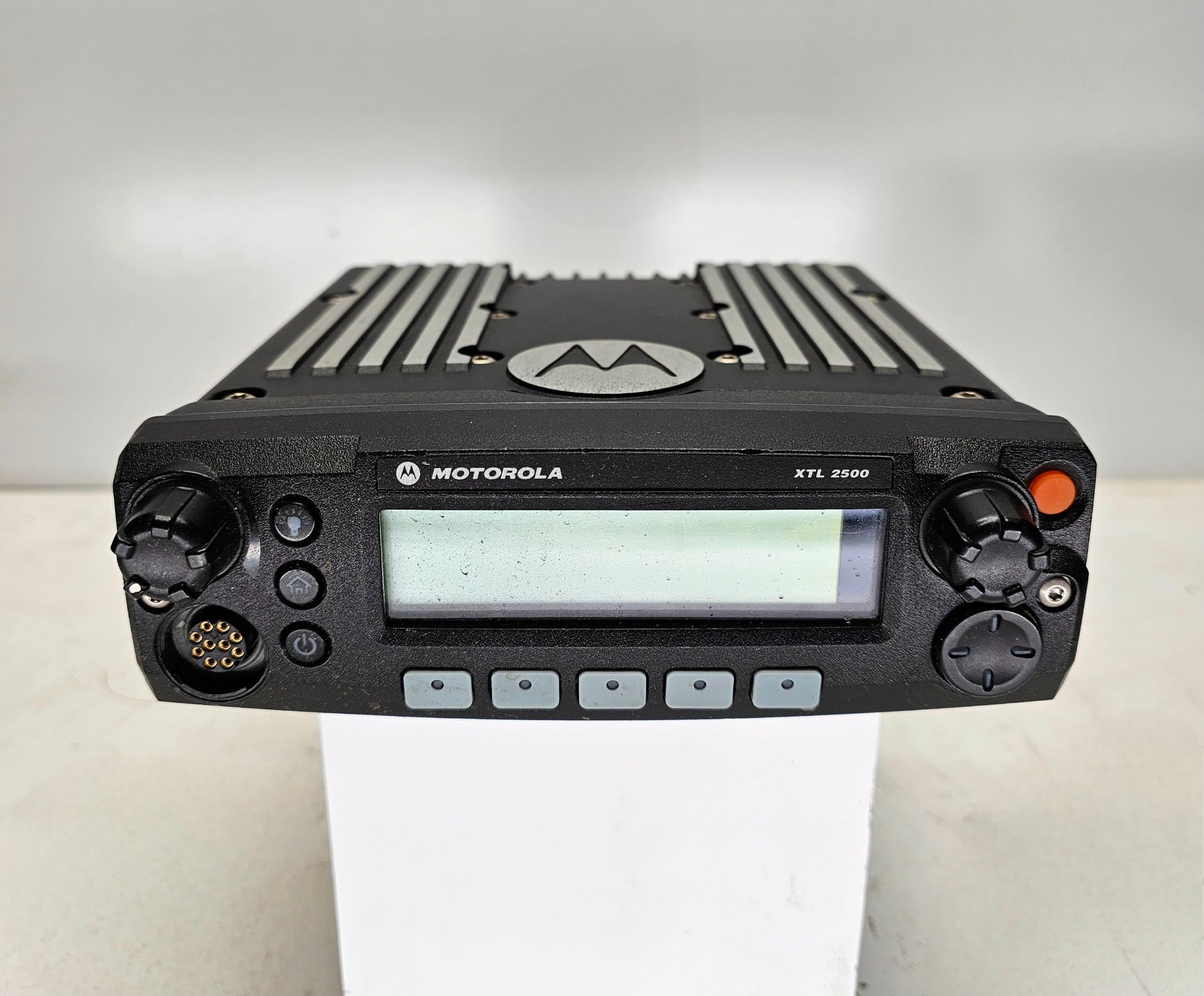
Project 25, commonly referred to as P25 or APCO-25, represents the global standard for digital mobile radio communications designed for public safety, law enforcement, and emergency response organizations. These systems utilize a suite of digital protocols to ensure interoperability between different manufacturers, enabling seamless communication across multi-agency jurisdictions, even when hardware from various vendors is deployed within the same network infrastructure.
The Foundation of Project 25 Communications
The P25 standard was developed through the joint efforts of the Association of Public-Safety Communications Officials (APCO), the National Association of State Technology Directors (NASTD), and federal agencies in the United States. Its primary objective is to replace disparate, incompatible analog systems with a unified digital architecture that offers clearer voice quality, improved spectrum efficiency, and advanced security features.
Unlike traditional analog radios, which transmit continuous waveforms, P25 digital radios convert voice signals into data packets. This transition allows for high-level error correction, which helps eliminate the "static" commonly found in analog transmissions. Even in fringe signal areas, a P25 radio will often provide clear, intelligible audio until the signal becomes too weak to reconstruct, at which point the audio drops off entirely rather than degrading into background noise.
Core Technical Specifications and Standards
The P25 standard is divided into two primary phases, each addressing specific spectral efficiency requirements. Understanding the distinction between these phases is critical for any organization planning to implement or upgrade a radio system in 2026.
P25 Phase 1: The FDMA Standard
Phase 1 utilizes Frequency Division Multiple Access (FDMA) technology. Operating within a 12.5 kHz channel bandwidth, it effectively halves the bandwidth requirements compared to older 25 kHz analog systems. Phase 1 radios are highly common and offer backward compatibility with analog FM systems, which is often a requirement during the transition period of a system migration.
P25 Phase 2: The TDMA Standard
Phase 2 employs Time Division Multiple Access (TDMA) to achieve even greater efficiency. By splitting a 12.5 kHz channel into two distinct time slots, Phase 2 doubles the voice capacity of a single channel. This is essential for large urban areas or wide-area networks where frequency availability is limited. A key requirement of the P25 standard is that all Phase 2 base station infrastructure must also be capable of supporting Phase 1 subscriber units, ensuring that agencies can upgrade their infrastructure without immediately replacing every individual handset.
Key Components of a P25 Radio System
A functional P25 system is more than just a handheld radio; it is a complex network of components working in concert.
- Subscriber Units: These are the handheld portable radios and mobile vehicle-mounted units used by personnel. They must be P25-compliant to register with the network.
- Base Stations/Repeaters: These serve as the localized infrastructure that receives and retransmits signals, extending the range of the portable units.
- Core/Controller: This is the "brain" of the system. It handles user authentication, call routing, and management of talkgroups. In large systems, this is often a sophisticated digital switch.
- Conventional vs. Trunked Systems:
- Conventional: Each radio channel is dedicated to a specific function or group. If that channel is in use, no one else can use it.
- Trunked: A pool of channels is shared dynamically by all users. The system controller automatically assigns an available channel to a user when they press the push-to-talk (PTT) button, significantly increasing system capacity.
Comparison of P25 Digital Radio Features
| Feature | P25 Conventional | P25 Trunked (Phase 2) | Analog FM |
|---|---|---|---|
| Spectral Efficiency | Moderate | High | Low |
| Audio Quality | High (Digital) | High (Digital) | Variable (Noise-prone) |
| Channel Access | Dedicated | Shared/Dynamic | Dedicated |
| Interop Capability | High (Open Standard) | High (Open Standard) | Limited |
| Complexity | Low | High | Very Low |
Operational Benefits for Public Safety Agencies
The adoption of P25 is driven by operational necessity. Beyond the clarity of voice communication, the P25 standard includes robust encryption standards—specifically the Advanced Encryption Standard (AES)—to protect sensitive communications from eavesdropping.
Furthermore, P25 radios support advanced data services. Agencies can transmit GPS coordinates, short text messages, and status updates directly over the radio channel without tying up a voice channel for extended periods. This improves situational awareness for command staff who can track the movement of personnel in real-time on digital maps.
Managing System Migration and Interoperability
One of the most significant challenges for agencies is the "migration" process—moving from an existing analog or proprietary digital system to a P25-compliant network.
Prerequisites for Migration:
- Frequency Licensing: Agencies must ensure their current radio licenses allow for digital emissions in the designated frequency bands (typically VHF, UHF, or 700/800 MHz).
- Site Survey and Coverage Analysis: Digital signals behave differently than analog ones. A professional RF (Radio Frequency) analysis is necessary to determine if existing tower locations provide sufficient coverage for the new digital system.
- Interoperability Agreements: Because P25 is an open standard, multiple agencies can operate on the same system. Defining talkgroup structures and authority hierarchies before the system goes live is critical for multi-agency cooperation.
Troubleshooting Common Issues in P25 Systems
Even with the advancements in digital technology, P25 systems are not immune to failure. Troubleshooting typically requires specialized test equipment, such as a radio communications analyzer.
- Registration Failures: If a radio cannot join a trunked system, the issue is often a mismatch in the System ID or WACN (Wide Area Communication Network) ID. These unique identifiers act as a digital "handshake" between the radio and the infrastructure.
- "Digital Noise" or Garbled Audio: While digital radio eliminates analog static, it can introduce "vocoder" artifacts if the signal quality drops below a certain threshold. If a user is experiencing choppy audio, the issue is usually related to insufficient signal strength (RSSI) rather than a hardware fault.
- Encryption Mismatches: If a user can see the radio is transmitting but hears no audio, check the encryption keys. If the "Key ID" stored in the radio does not match the key on the network controller, the audio will be suppressed to protect security.
Frequently Asked Questions
1. Is a P25 radio compatible with standard amateur (ham) radios? Generally, no. P25 is a complex digital protocol, whereas most amateur radios operate on analog FM or different digital modes like DMR or D-STAR. While some high-end multi-mode radios exist, they are distinct from the professional-grade P25 hardware used by public safety.
2. Can I use a P25 radio to listen to encrypted police channels? No. Encryption is designed to prevent unauthorized reception. Even with a P25-capable receiver, the hardware cannot decrypt the signal without the specific cryptographic key assigned to that network, which is restricted to authorized agency personnel.
3. What is the difference between P25 and DMR? Both are digital protocols, but P25 is specifically engineered for high-stakes public safety use, emphasizing interoperability and strict compliance standards. DMR (Digital Mobile Radio) is a commercial-grade protocol often used in business, industrial, and recreational settings.
4. Does P25 require a license? Yes. Any transmission on the radio spectrum, including P25 digital transmissions, requires an FCC-issued license (in the United States) for the specific frequencies, power levels, and operational areas intended.
5. Can P25 radios operate in analog mode? Most modern P25 subscriber units are "dual-mode," meaning they can be programmed to operate in both P25 digital and standard analog FM modes. This is vital for agencies that need to communicate with older equipment during a multi-phase system transition.
Conclusion and Next Steps
Implementing or maintaining a P25 digital radio system requires careful planning, adherence to strict technical standards, and a focus on long-term interoperability. For agencies looking to update their communications infrastructure in 2026, the first step is to conduct a thorough audit of existing spectrum assets and engage with a qualified radio communications engineer. Ensure that any hardware procurement specifically references P25 Compliance Assessment Program (CAP) testing to guarantee that the equipment will work as intended within your specific network environment.