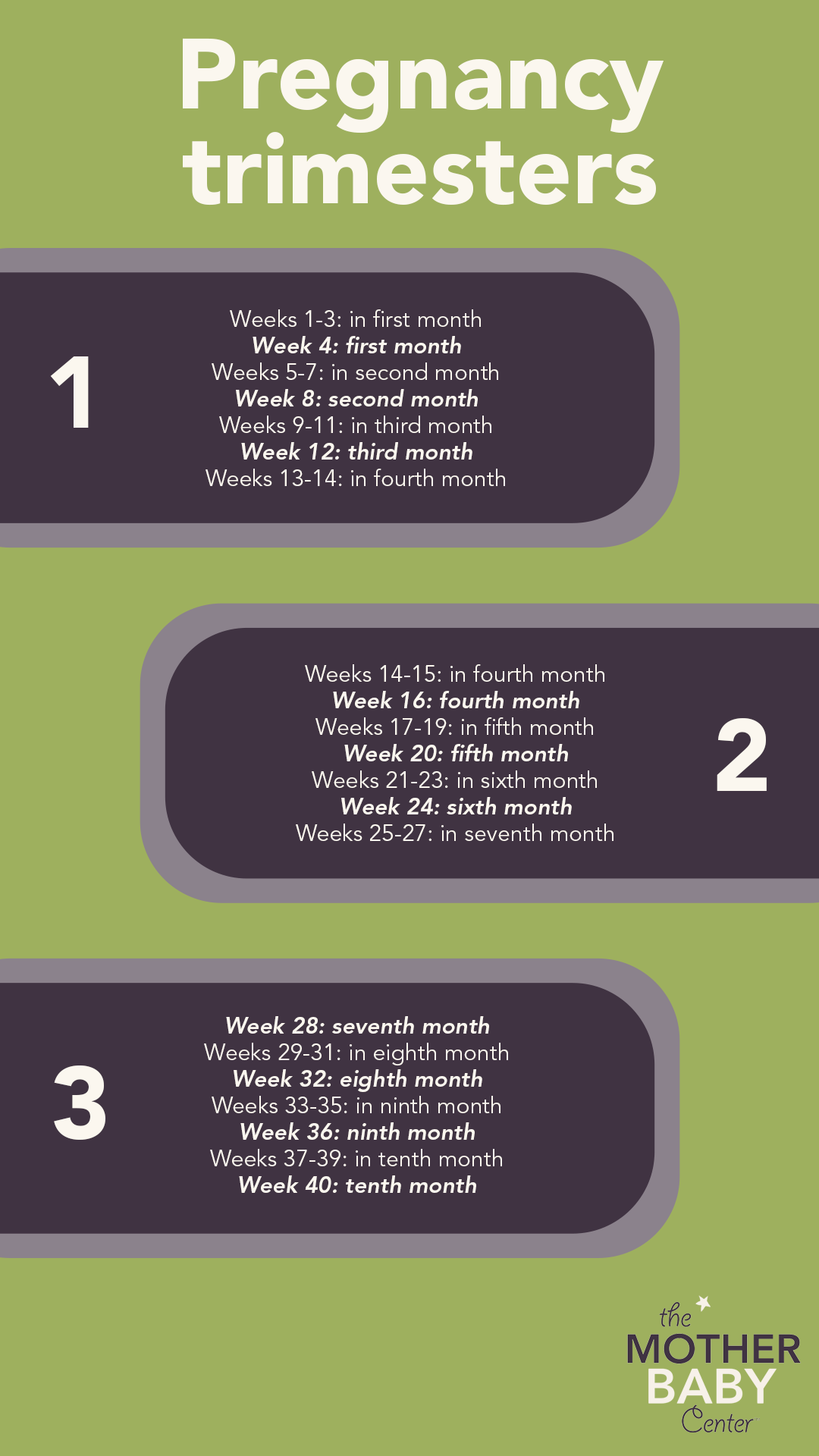
Converting 22 weeks into months requires understanding that months do not have an exact, uniform number of weeks, meaning the result depends on whether you use average calendar calculations or specific month-by-month tracking. Roughly speaking, 22 weeks is equal to about 5.06 months, or just over 5 months.
Calculating time units across weeks and months is a common requirement in various fields, ranging from project planning and financial forecasting to tracking human gestation and developmental milestones. Because the Gregorian calendar divides the year into 12 months of varying lengths—ranging from 28 to 31 days—converting a specific number of weeks like 22 into months is not as straightforward as applying a single multiplier. To achieve an accurate conversion, it is necessary to examine the mathematical averages, recognize contextual differences, and understand how time blocks function in everyday practice. This guide provides a comprehensive breakdown of the approximate conversion of 22 weeks into months, exploring the underlying formulas, real-world applications, and common mathematical nuances.
The Mathematical Foundation of Time Conversions
To understand how 22 weeks translates into months, one must first look at the mathematical relationship between days, weeks, and months. A standard week consists of exactly 7 days. Therefore, 22 weeks represents a total of 154 days ($22 \times 7 = 154$).
Months, however, do not contain a fixed number of days. The Gregorian calendar features months with 28, 29 (in a leap year), 30, or 31 days. Consequently, time-conversion specialists and mathematicians rely on standardized averages to bridge the gap between weeks and months.
The Standard Monthly Average Method
The most common and widely accepted method for converting weeks to months is utilizing the average number of weeks in a month over the course of a standard year.
- Calculate the average days in a month: A standard non-leap year has 365 days, and a leap year has 366. Averaging this out over a 4-year cycle gives 365.25 days per year. Dividing 365.25 days by 12 months yields approximately 30.4375 days per month.
- Determine weeks per month: Dividing the average days per month (30.4375) by the number of days in a week (7) gives approximately 4.345 weeks per month.
- Apply the formula: To convert 22 weeks into months, divide 22 by 4.345, which results in approximately 5.06 months.
Alternatively, many professionals use the simplified rule of thumb that 4 weeks equal 1 month. While quick and easy for mental math, this rough approximation becomes less accurate over longer periods because it assumes a year has 13 months (52 weeks divided by 4 equals 13). When applied strictly to 22 weeks, a "4 weeks per month" estimation yields 5.5 months, which overshoots the true calendar progression.
Comparing Conversion Methods for 22 Weeks
Different contexts—such as financial amortizations, project management schedules, or biological tracking—utilize different conversion baselines. Reviewing these approaches highlights why a single "exact" month conversion does not exist.
| Conversion Method | Mathematical Basis | Result for 22 Weeks | Best Used For |
|---|---|---|---|
| Standard Calendar Average | 30.4375 days/month (4.345 weeks) | ~5.06 Months | General estimates, financial planning, statistics |
| Four-Week Month Rule | Exactly 4.0 weeks per month | 5.50 Months | Quick mental estimates, rough scheduling |
| Calendar Month Progression | Exact day counting from a start date | Varies (approx. 5 months) | Project deadlines, specific date mapping |
| Lunar/Obstetric Month Rule | Exactly 4.0 weeks per lunar month | 5.50 Lunar Months | Medical tracking, pregnancy milestones |
Contextual Variations: Why the Definition of a Month Matters
When translating 22 weeks into months, the chosen context dictates the most appropriate calculation method. Time management across distinct industries treats the relationship between weeks and months differently.
Project Management and Business Planning
In project management, schedules are frequently broken down into weekly sprints or monthly milestones. Project managers often prefer working in exact days or weeks rather than months because months introduce variability in working days (weekends, holidays, and varying month lengths). When a stakeholder asks how many months a 22-week project will take, stating "about 5 months" is standard practice. However, project software will calculate deadlines using exact calendar days (154 days) rather than a generalized monthly multiplier to ensure precision in resource allocation and invoicing.
Financial Calculations and Amortization
In finance, calculations involving interest, billing cycles, and recurring payments rarely rely on vague monthly averages of weeks. Lenders and financial institutions typically use exact day counts or standard 30-day month conventions (the 30/360 day-count convention) rather than converting weeks to months mid-calculation. For instance, a 22-week financial obligation spans 154 days. When translating this into monthly billing cycles, financial software evaluates the specific calendar dates involved to ensure accurate interest accrual.
Pregnancy and Medical Tracking
One of the most common real-world applications of converting weeks to months occurs during pregnancy tracking. Medical professionals track gestation strictly in weeks rather than months because it provides the precision required to monitor fetal development.
Pregnancy is conventionally calculated as 40 weeks from the Last Menstrual Period (LMP). Patients frequently want to know what this translates to in calendar months. Because pregnancy is measured in 4-week blocks known as "lunar months," 22 weeks of pregnancy places an expectant parent deeply into the fifth month, approaching the transition into the sixth calendar month.
Relying on standard calendar months versus lunar months often causes confusion during pregnancy. While 22 weeks equals roughly 5.06 standard months, in obstetric terms, it is often referenced as being in the middle of the fifth month (or entering the sixth month of gestational development).
Step-by-Step Guide to Calculating Custom Conversions
If you need to calculate time spans similar to 22 weeks for precise calendar dates, applying a standardized conversion formula ensures accuracy. Follow these steps to map out any weekly duration into calendar equivalents:
- Identify the Total Number of Days: Multiply your total weeks by 7. For 22 weeks, this is $22 \times 7 = 154$ days.
- Determine the Start Date: Establish the exact calendar date when the timeframe begins (e.g., January 1st).
- Add Days Sequentially: Instead of relying on a static monthly divisor, add the 154 days directly to your start date using a standard Gregorian calendar. This accounts for the actual varying lengths of intervening months (such as February, July, or December).
- Calculate Fractional Months: If a rough decimal conversion is sufficient for your report, divide the number of weeks by 4.345 to find the precise fractional month count.
Common Mistakes to Avoid
When performing time conversions involving weeks and months, several pitfalls frequently lead to inaccurate results:
- Assuming All Months Are Equal: Treating every month as having exactly 4 weeks creates a cumulative error over time. Over a 52-week year, this assumption results in 13 months instead of 12.
- Ignoring Leap Years: When calculating exact calendar endpoints for multi-month spans that cross February, failing to account for leap years shifts deadlines by a full day.
- Mixing Up Lunar and Calendar Months: In health and medical contexts, mixing up a 4-week lunar month with a standard 30- or 31-day calendar month can misalign expectations by a week or more.
Frequently Asked Questions
Is 22 weeks considered 5 months or 5 and a half months?
Mathematically, 22 weeks is approximately 5.06 standard calendar months. While some people loosely estimate a month as 4 weeks (which would make 22 weeks equal to 5.5 months), the presence of months with 30 and 31 days means that a true calendar conversion results in just over 5 months.
How many days are in 22 weeks?
There are exactly 154 days in 22 weeks. This is calculated by multiplying 22 weeks by 7 days per week.
How many working days are in 22 weeks?
A standard work week consists of 5 days (Monday through Friday). Across 22 weeks, this equals 110 standard working days, not accounting for public holidays, paid time off, or weekend shift schedules.
How does 22 weeks translate in pregnancy terms?
In pregnancy tracking, 22 weeks means you are in your second trimester, roughly halfway through a standard 40-week term. While this equates to about 5 calendar months, obstetricians continue to measure progress in weeks because it offers greater clinical precision.
Can I use a simple calculator for week-to-month conversions?
Yes. To convert any number of weeks into months accurately, divide the number of weeks by 4.345 (the average number of weeks in a month). For a quick, rough estimate, you can divide by 4, keeping in mind that the result will skew slightly higher than actual calendar time.
Conclusion and Next Actions
Converting 22 weeks into months comes down to choosing the right level of precision for your specific need. For general planning, recognizing that 22 weeks is roughly 5 months (or 5.06 months mathematically) provides an accurate baseline. If you are managing a strict project timeline, planning a financial schedule, or tracking medical milestones, always verify dates using exact day counts rather than relying on generalized monthly averages to prevent scheduling errors.