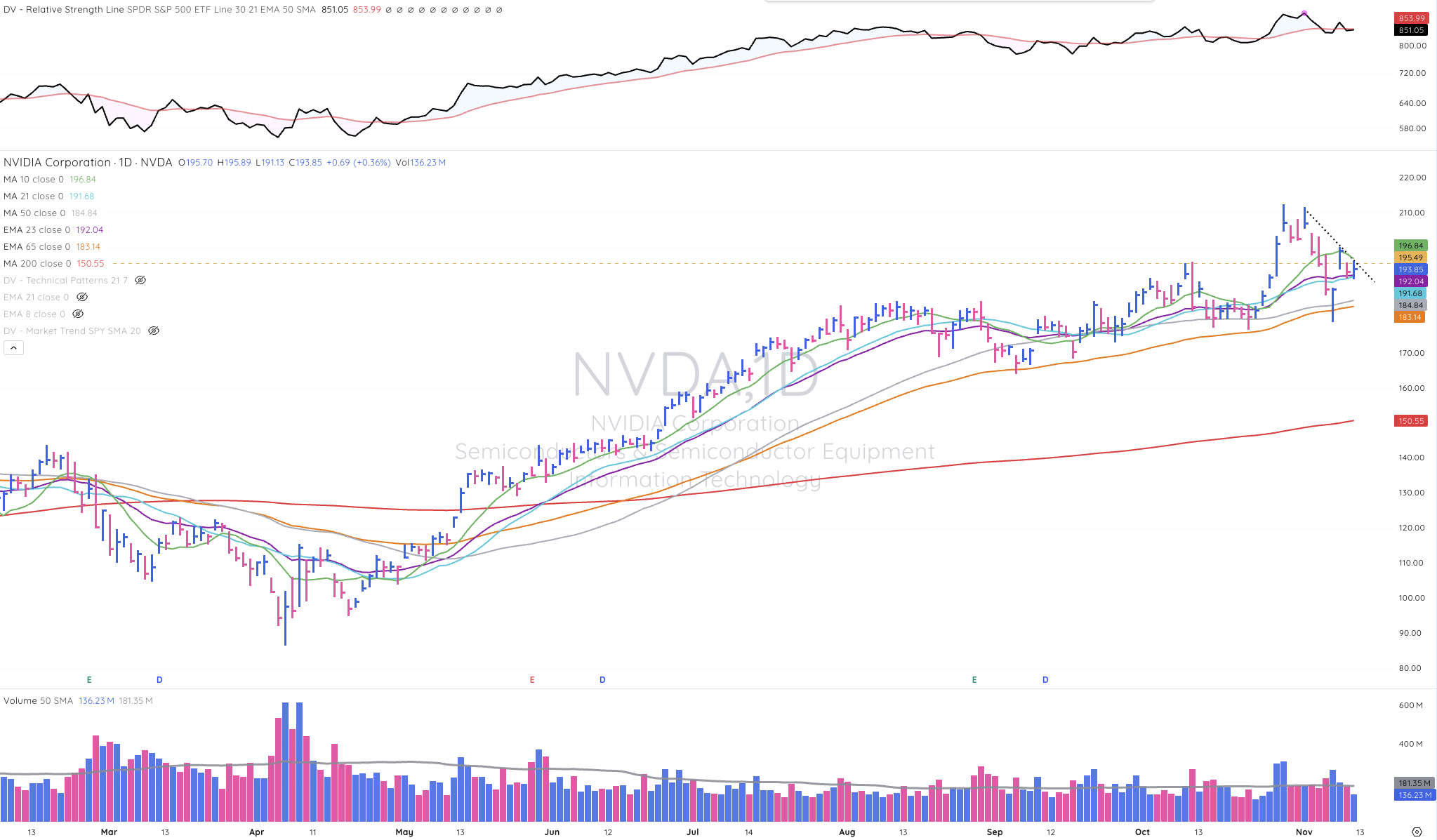
The 2025 NVIDIA (NVDA) university research reports are specialized equity analyses produced by student-managed investment funds (SMIFs), academic finance labs, and graduate-level researchers. These reports provide a rigorous, non-commercial evaluation of NVIDIA’s valuation, technical moats, and market positioning, often serving as a primary resource for institutional-grade fundamental analysis and academic study.
The Significance of University-Produced Equity Research
University research reports, particularly those focusing on a high-alpha stock like NVIDIA (NVDA), differ significantly from traditional "sell-side" research provided by major investment banks. In the context of 2025, these reports became vital for investors seeking an objective view of the semiconductor industry's rapid evolution. Unlike commercial analysts who may have underlying incentives to maintain relationships with corporate management, university research groups—such as those at Wharton, NYU Stern, Stanford, and the Ivey Business School—operate with a focus on academic rigor and pedagogical accuracy.
The 2025 reports were particularly noteworthy because they captured the transition of NVIDIA from a GPU provider to a full-stack "AI foundry" company. Students and academic researchers utilize these reports to demonstrate their mastery of complex financial modeling, including three-statement models and discounted cash flow (DCF) analyses that often span 10-year projections. Because these reports are frequently used as "pitch books" for national competitions or as part of a university’s endowment management, the depth of technical due diligence often rivals or exceeds that of boutique research firms.
Core Themes in 2025 NVDA University Reports
Looking back at the reports published throughout 2025, several dominant themes emerged that defined the academic consensus on NVIDIA’s trajectory. These reports were written during a period of massive infrastructure builds, where the "Blackwell" architecture was transitioning from a new release to the industry standard.
The Blackwell Architecture and Supply Chain Dynamics
Most 2025 reports focused heavily on the rollout of the Blackwell platform (B100, B200, and GB200). Academic researchers performed "bottom-up" analysis of the supply chain, often citing data from packaging partners like TSMC (CoWoS capacity) and HBM (High Bandwidth Memory) suppliers like SK Hynix. The reports aimed to answer whether NVIDIA could maintain its gross margins above 75% as the complexity of liquid-cooled rack systems increased.
The CUDA Software Moat
A recurring section in almost every 2025 university report was the qualitative analysis of CUDA (Compute Unified Device Architecture). While commercial reports often focus on quarterly revenue beats, university reports in 2025 delved into the "developer lock-in" effect. They analyzed the millions of lines of code built into academic and industrial libraries that make switching to AMD or Intel hardware computationally expensive. This "software-defined hardware" narrative was a cornerstone of the long-term "Buy" recommendations found in many SMIF portfolios.
Sovereign AI and Enterprise Expansion
By 2025, the narrative shifted from "Hyperscaler" spending (AWS, Google, Microsoft) to "Sovereign AI." University reports tracked how nation-states were building localized AI clouds. Researchers analyzed the geopolitical implications of export controls and how NVIDIA’s "H20" and subsequent compliant chips influenced the company's Chinese market share.
Methodology: How Universities Valued NVDA in 2025
The technical depth of a 2025 university research report is best seen in its valuation methodology. Academic reports generally avoid the "price target" obsession of Wall Street and instead focus on a range of intrinsic values based on various economic scenarios.
Discounted Cash Flow (DCF) Modeling
The DCF models found in these reports were notoriously complex in 2025. Because NVIDIA’s growth was so non-linear, students often used a two-stage or three-stage DCF.
- Stage 1 (Hyper-growth): Usually covering 2025–2028, reflecting the initial build-out of AGI (Artificial General Intelligence) infrastructure.
- Stage 2 (Transition): 2029–2032, where growth slows as the market reaches "inference saturation."
- Stage 3 (Terminal Value): A conservative growth rate (often 2–3%) reflecting NVIDIA’s role as a mature utility-like provider for global compute.
Comparable Analysis (Comps)
University reports frequently struggled with "Comps" in 2025 because NVIDIA lacked a direct peer with a similar growth-to-margin profile. Analysts typically used a "Sum of the Parts" (SOTP) approach, valuing the Data Center, Gaming, Professional Visualization, and Automotive segments separately. They often compared NVIDIA’s Data Center segment to high-margin software-as-a-service (SaaS) companies rather than traditional hardware manufacturers.
| Metric Analyzed | 2025 University Consensus (Avg) | Reasoning |
|---|---|---|
| Revenue Growth (FY26) | 35% - 45% | Transition from training to inference-heavy workloads. |
| Gross Margin Target | 74% - 78% | Pricing power of Blackwell systems vs. component costs. |
| WACC (Discount Rate) | 9.0% - 11.5% | Reflecting the high beta and equity risk premium of tech. |
| Terminal Growth Rate | 2.5% | Standard academic conservative long-term outlook. |
Where to Access 2025 University Research Reports
Finding these reports requires knowing where academic finance groups publish their work. Unlike retail investment sites, these are often hosted on departmental servers or specialized publishing platforms.
- Ivey Business School (Ivey Publishing): Known for the "Ivey Cases," they often publish student-written research that has been vetted by faculty for use in MBA classrooms.
- Student Managed Investment Fund (SMIF) Websites: Many top-tier universities (e.g., University of Virginia’s McIntire School of Commerce, University of Michigan’s Ross School of Business) maintain public websites for their funds. They often upload annual or semi-annual "Pitch Books" for their holdings, including NVDA.
- Social Science Research Network (SSRN): For more academic, peer-reviewed papers regarding NVIDIA’s impact on the semiconductor cycle or AI economics, SSRN is a primary repository.
- National Investment Competitions: Reports written for the CFA Institute Research Challenge are among the highest quality. Searching for "CFA Research Challenge NVDA 2025" will often yield the winning regional or global reports.
Risk Assessments and Counter-Arguments in 2025
A hallmark of high-quality university research is the "Bear Case." In 2025, while many were bullish on AI, university reports provided a sober look at the risks that could derail NVIDIA's valuation.
- Capital Expenditure (CapEx) Fatigue: A major concern was whether Microsoft, Meta, and Alphabet would continue to see a Return on Invested Capital (ROIC) from their AI investments. University reports explored the "AI Winter" scenario where the lack of consumer-facing AI profitability leads to a sudden pause in chip orders.
- Technological Displacement: Researchers examined the rise of ASIC (Application-Specific Integrated Circuit) chips developed by the Hyperscalers themselves (e.g., Google’s TPU, AWS Trainium). The reports asked: "At what point is a custom chip more efficient than a general-purpose NVIDIA GPU?"
- Geopolitical and Regulatory Risk: 2025 reports extensively analyzed the risk of a conflict in the Taiwan Strait, given NVIDIA’s absolute dependence on TSMC. They also looked at anti-trust investigations by the DOJ and EU regarding NVIDIA’s bundled software and networking sales (Mellanox integration).
Practical Guidance for Using University Reports
When reading a 2025 university research report from our current 2026 perspective, it is important to treat it as a "snapshot in time" of the fundamental logic that drove the market.
- Check the Date of the WACC Calculation: Because interest rates fluctuated throughout 2025, the discount rate used in the report can significantly swing the "Fair Value" estimate.
- Look for the Sensitivity Analysis: High-quality reports include a "tornado chart" or sensitivity table showing how the valuation changes if revenue growth misses by 5% or if margins contract. This is more useful than the final price target.
- Verify the Revenue Segments: In 2025, NVIDIA began reclassifying some networking revenue. Ensure the report distinguishes between "Compute" (GPUs) and "Networking" (InfiniBand/Ethernet) to get an accurate picture of their competitive dominance.
Frequently Asked Questions
Why are university reports on NVDA considered more reliable than some retail blogs?
University reports are generally subject to a "peer review" process within the student fund or by a faculty advisor. They must adhere to strict formatting and ethical guidelines. Students are graded or evaluated on the logic of their arguments rather than the "popularity" of their pick, which encourages a more balanced view of risks and downsides.
Can I find 2025 NVDA reports for free?
Many SMIFs publish their reports for free as a way to gain exposure for their students. However, premium academic case studies (like those from Harvard or Ivey) usually require a purchase or institutional access through a university library.
What was the biggest "blind spot" in 2025 university reports for NVIDIA?
Historically, many 2025 reports underestimated the speed of "Sovereign AI" adoption. While they focused heavily on US Big Tech, the pace at which governments in the Middle East and Southeast Asia began purchasing thousands of H200 and Blackwell units often exceeded the "Base Case" projections in student models.
Did these reports predict the 2026 market conditions for NVIDIA?
Most 2025 reports were focused on the multi-year "build" phase of AI. Their 2026 projections were largely based on the transition from "training" (building models) to "inference" (running models). Reports that accurately predicted the rise in inference demand have proven to be the most resilient and useful for current 2026 strategies.
How do I cite a 2025 university research report in my own analysis?
You should treat it as an unpublished or limited-circulation corporate report. Include the name of the Student Managed Investment Fund, the University, the Title (e.g., "Equity Research: NVIDIA Corp (NVDA)"), and the date of publication.
Final Recommendation for Researchers and Investors
When evaluating the 2025 NVDA research report at university level, focus your attention on the Assumptions section rather than the Conclusion. The value of these academic documents lies in the granularity of their data—such as the breakdown of "H100 vs. B200" unit shipments and the calculated "cost per token" for various GPU clusters.
For those looking to build a robust investment thesis in 2026, comparing three different university reports from 2025 is an excellent way to identify the "consensus" and, more importantly, find the "variant perception" that others might have missed. If you are an educator or a student, these reports serve as the gold standard for how to combine deep-tech understanding with sophisticated financial engineering.