In 2024, the personal watercraft (PWC) industry reached a significant milestone with the introduction of the 325-horsepower Rotax engine, pushing the boundaries of factory performance. While most flagship models from Sea-Doo, Yamaha, and Kawasaki remain electronically limited to a top speed of approximately 67–70 mph to comply with US Coast Guard "gentleman’s agreements," the 2024 lineup saw unprecedented improvements in acceleration, power-to-weight ratios, and hull stability.
The 2024 model year was defined by a fierce "horsepower war," primarily between Sea-Doo’s new 325-hp platform and Yamaha’s refined SVHO (Super Vortex High Output) engine. Although the top speed numbers on paper look similar due to electronic governors, the way these machines reach those speeds and how they handle rough water varies significantly between brands. As we evaluate these watercraft from the perspective of 2026, the 2024 models remain the benchmark for high-output internal combustion engineering in the PWC space.
The Landscape of 2024 Performance Personal Watercraft
To understand the 2024 top speed comparison, one must first recognize that "top speed" is a multifaceted metric in the marine environment. Unlike land vehicles, a PWC faces constant hydrodynamic resistance, meaning horsepower is often secondary to pump efficiency and hull design once a certain speed threshold is reached.
In 2024, three primary manufacturers dominated the high-performance segment: Sea-Doo (BRP), Yamaha, and Kawasaki. Each brand took a distinct approach to achieving the 67-mph-plus limit. Sea-Doo focused on extreme power and lightweight materials; Yamaha prioritized engine displacement and hull agility; and Kawasaki maintained its reputation for heavy-duty, supercharged stability.
The primary objective for manufacturers in 2024 was not just hitting a higher number on the GPS, but reducing the 0-60 mph acceleration time. For the elite models, this meant reaching top speed in under four seconds, a feat that requires immense traction from the jet pump and precise electronic throttle control to prevent cavitation—the phenomenon where air bubbles form around the impeller, causing a loss of thrust.
Sea-Doo’s 2024 Power Surge: The 325 HP Rotax Engine
The headline of the 2024 season was undoubtedly the Sea-Doo RXP-X 325 and RXT-X 325. By updating the 1630 ACE (Advanced Combustion Efficiency) engine, Sea-Doo reclaimed the title for the highest horsepower in a production PWC. The jump from 300 hp to 325 hp was achieved through a total redesign of the supercharger, which now spins at higher RPMs with reduced friction.
Engineering the RXP-X 325
The RXP-X 325 was designed as the ultimate "closed-course" racer. It utilizes the T3-R hull, which features a deep-V design with a "shark gill" texture on the running surface. This texture breaks the surface tension of the water, allowing the hull to stay "glued" to the surface during aggressive high-speed turns.
In terms of top speed, the RXP-X 325 reaches the 67-mph electronic limit faster than almost any other craft on the water. In ideal conditions—flat water, cool air, and a quarter-tank of fuel—many riders reported "GPS-verified" speeds of 68-69 mph before the limiter kicks in. The 325-hp engine also allows the craft to maintain its top speed even when carrying more weight or battling slight chop, where lower-horsepower models might drop to 63-64 mph.
The RXT-X 325 and GTR-X 300
While the RXP-X is a single-rider-focused craft, the RXT-X 325 utilizes the larger ST3 hull. This hull is more stable in offshore conditions, making it the preferred choice for high-speed coastal touring. Despite the extra weight, the 325-hp engine ensures it matches the top-end speed of its smaller sibling.
Sea-Doo also introduced the GTR-X 300 in 2024, which brought 300-hp performance to a more affordable, lightweight Polytec hull. While not as fast in rough water as the "X" models, its high power-to-weight ratio makes it a formidable competitor in flat-water drag races.
Yamaha’s High-Output Evolution: The GP and FX Series
Yamaha’s 2024 strategy centered on the refinement of the 1.8-liter Super Vortex High Output (SVHO) engine. While Yamaha did not match Sea-Doo’s 325-hp figure—instead remaining in the 250-260 hp range—the sheer displacement of the 1,812cc engine provides a torque curve that many professional racers prefer for its reliability and "punch" off the line.
The GP1900R SVHO (GP Series)
The GP series has long been the "gold standard" for PWC racing. In 2024, the GP1900R SVHO benefited from Yamaha’s NanoXcel2 hull material, which is significantly lighter than traditional fiberglass without sacrificing structural integrity.
Because the Yamaha SVHO engine has more displacement (1.8L vs Sea-Doo’s 1.6L), it produces massive amounts of low-end torque. In top speed comparisons, the Yamaha GP often trades blows with the Sea-Doo RXP-X. While the Sea-Doo has more peak horsepower, the Yamaha’s pump design is exceptionally efficient at staying "hooked up" in various water conditions. The 2024 GP models routinely hit 67-69 mph on GPS, with the "Auto Trim" feature assisting in keeping the bow at the optimal angle for maximum velocity.
The FX SVHO Series
The FX SVHO is Yamaha’s flagship luxury-performance model. It is heavier and larger than the GP, designed for comfort and long-distance speed. In 2024, the FX SVHO utilized the same engine as the GP but in a hull designed to crush waves. While it reaches the same 67-68 mph top speed, it does so with a sense of stability and luxury that the more "twitchy" race-inspired models lack.
Kawasaki’s Heavyweight Contender: The Ultra 310 Series
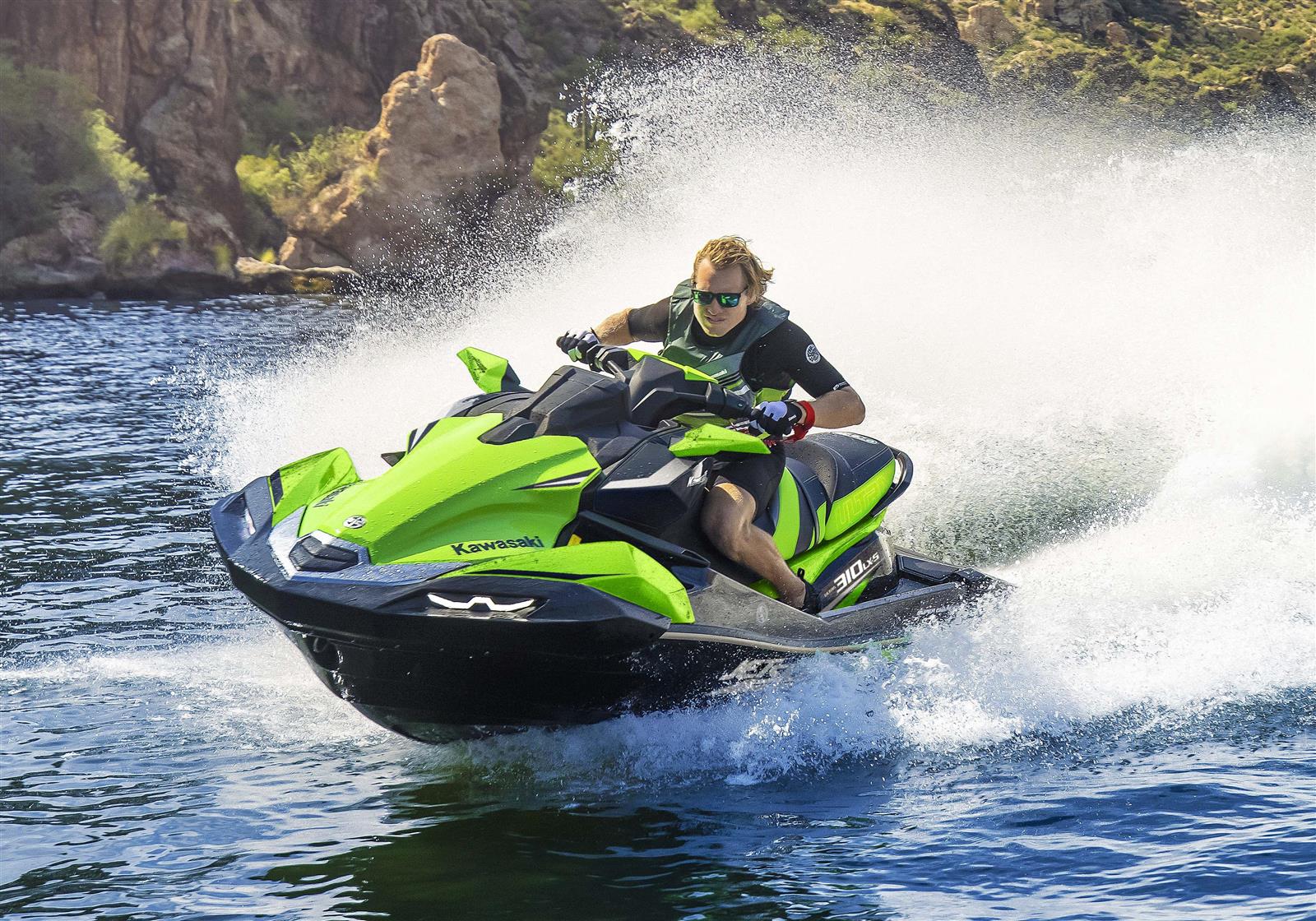
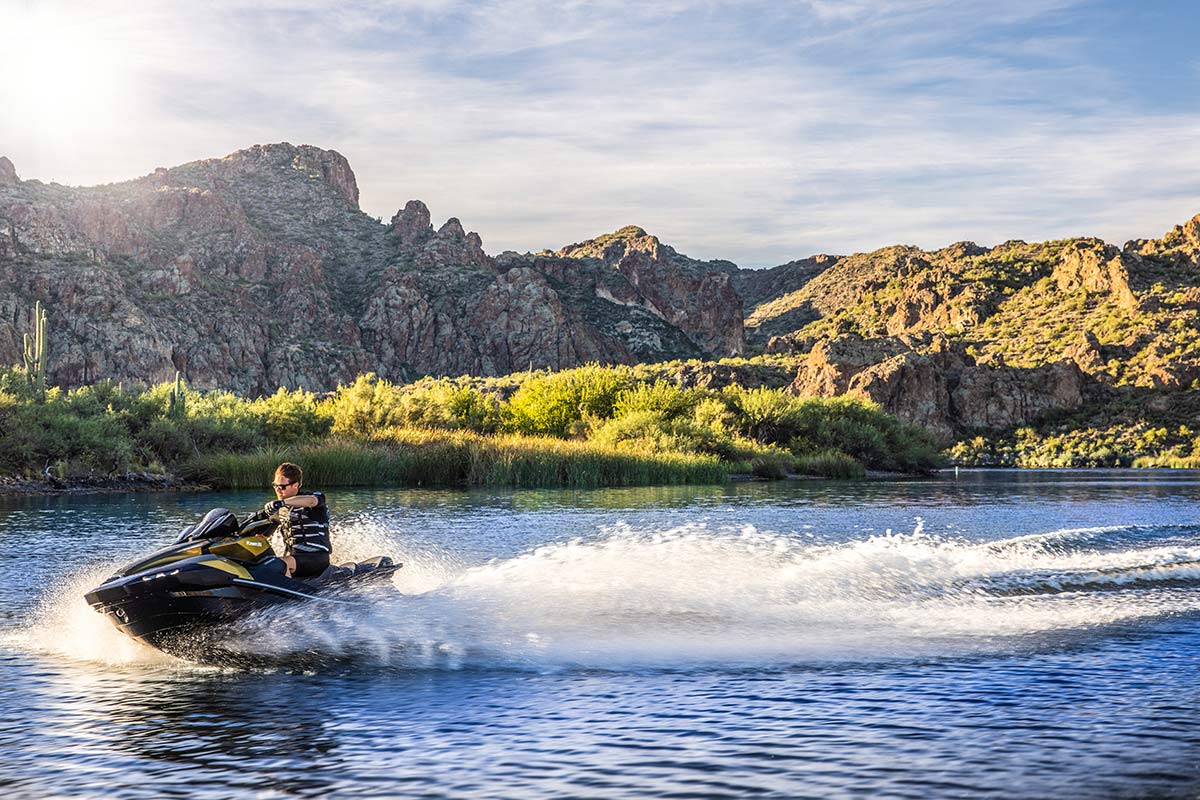
Kawasaki has historically been the king of "big water" top speed. The 2024 Ultra 310LX and 310X models continued this legacy. Using a 1,498cc inline four-cylinder engine equipped with an Eaton Twin Vortices Series (TVS) supercharger, the Ultra 310 produces a constant, linear power delivery.
The Kawasaki Ultra 310 series is heavy, often weighing over 1,000 lbs. While weight is usually the enemy of speed, in the world of jet skis, weight equals momentum and stability. In a 2024 top speed comparison conducted in "real world" (choppy) conditions, the Kawasaki often wins because its mass allows it to maintain 67 mph through waves that would force a Sea-Doo or Yamaha rider to throttle back.
However, in a flat-water sprint, the Kawasaki generally trails the Sea-Doo 325 in acceleration. Its top speed is strictly governed to 67 mph, and due to its weight, it requires the most fuel to maintain those speeds.
Technical Comparison of 2024 Performance Models
The following table compares the primary specifications that contribute to the top-end performance of the 2024 flagship models. Note that "Top Speed" refers to factory-limited GPS speeds.
| Model | Engine Type | Displacement | Horsepower | Hull Material | Dry Weight |
|---|---|---|---|---|---|
| Sea-Doo RXP-X 325 | Rotax 1630 ACE | 1,630cc | 325 hp | CM-Tech (Fiberglass) | 780 lbs |
| Yamaha GP1900R SVHO | 1.8L SVHO | 1,812cc | ~250-260 hp | NanoXcel2 | 772 lbs |
| Kawasaki Ultra 310X | Inline-4 Supercharged | 1,498cc | 310 hp | Heat-Treated Plastic/FRP | 933 lbs |
| Sea-Doo RXT-X 325 | Rotax 1630 ACE | 1,630cc | 325 hp | ST3 (Fiberglass) | 843 lbs |
| Yamaha FX SVHO | 1.8L SVHO | 1,812cc | ~250-260 hp | NanoXcel2 | 873 lbs |
The "Gentleman’s Agreement" and Electronic Limiters
A common question among PWC enthusiasts is why machines with 325 horsepower have the same top speed as those with 250 horsepower. This is due to a voluntary agreement between PWC manufacturers and the U.S. Coast Guard, which was established in the late 1990s to limit factory speeds to approximately 65-67 mph for safety reasons.
In 2024, these limiters are more sophisticated than ever. They monitor GPS data and engine RPM to ensure the craft does not exceed the agreed-upon threshold. However, this has shifted the competitive focus from Top Speed to Acceleration and Recovery.
- Acceleration: How fast the craft goes from 0 to 60 mph.
- Recovery: How quickly the craft regains its top speed after a sharp turn or after "unhooking" from the water in a wave.
For the 2024 Sea-Doo 325 models, the extra horsepower provides a significant advantage in recovery. When a jet ski jumps a wave and the pump loses water, the engine hits the rev limiter instantly. Once the pump re-enters the water, the 325 hp forces the craft back to 67 mph almost instantaneously, whereas a lower-powered craft might take several seconds to "climb" back up the power band.
Factors Influencing Real-World Top Speed
While manufacturers provide "factory" speeds, an owner’s actual experience in 2024 was influenced by several environmental and physical factors.
Water Temperature and Density
Jet engines (and the superchargers that feed them) love cold, dense air. A 2024 Yamaha GP1900R SVHO might hit 69 mph on a 50°F morning in fresh water, but struggle to reach 65 mph on a 95°F afternoon in salt water. Salt water is denser than fresh water, which technically provides more lift and can slightly increase top speed, but the heat of tropical saltwater environments often negates this by reducing engine efficiency.
Fuel Quality and Weight
All 2024 high-performance models require 91 octane (premium) fuel. Using lower-grade fuel triggers the knock sensor, which causes the ECU (Electronic Control Unit) to retard ignition timing, significantly reducing horsepower and top speed. Additionally, fuel is heavy (approx. 6 lbs per gallon). A Sea-Doo RXT-X with a full 18.5-gallon tank is carrying over 110 lbs of extra weight, which can shave 1–2 mph off the top end compared to a craft with only 5 gallons in the tank.
Impeller Condition and Wear Ring
The gap between the impeller and the wear ring (the sacrificial liner in the pump) is measured in millimeters. In 2024 models, even a small scratch or a slightly bent impeller blade from sucking up sand or a pebble can cause "cavitation." This prevents the jet ski from reaching its maximum potential speed, even if the engine is producing full power.
Maintenance and Longevity of 2024 Performance Models
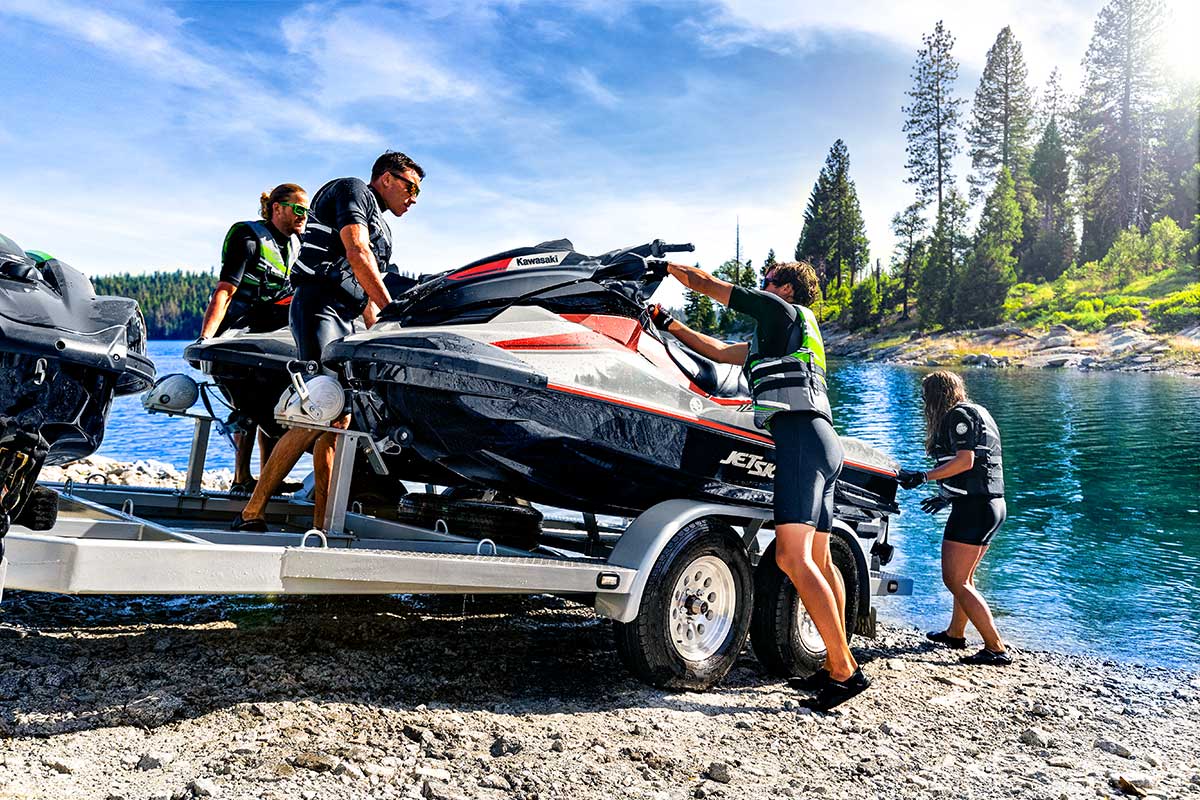
Looking at these machines from 2026, the long-term maintenance of the 2024 high-speed units has become a key topic for owners. High-horsepower supercharged engines require more frequent care than naturally aspirated units.
- Supercharger Service: Sea-Doo's 2024 325-hp engine featured a new maintenance-free supercharger design (relative to older models that required rebuilds every 100 hours), but periodic inspection of the drive gears remains critical.
- Intercooler Health: Both Yamaha and Kawasaki rely on external intercoolers to cool the compressed air before it enters the engine. If these are not flushed properly after salt-water use, corrosion can lead to "intercooler leak," which introduces water into the combustion chamber—a catastrophic failure for a high-performance engine.
- Pump Seals: At speeds nearing 70 mph, any air leak in the pump seal will cause the jet ski to lose "bite" on the water, significantly hampering acceleration.
FAQs
Which 2024 jet ski has the highest top speed?
Technically, all 2024 flagship models from Sea-Doo, Yamaha, and Kawasaki are limited to approximately 67–69 mph. However, the Sea-Doo RXP-X 325 is widely considered the fastest in terms of acceleration and its ability to reach that top speed in the shortest amount of time and distance.
Can you remove the speed limiter on a 2024 jet ski?
Yes, many owners use aftermarket ECU "refills" or modules to bypass the electronic speed limiter. When the limiter is removed, a 2024 Sea-Doo RXP-X 325 can often reach speeds of 75–80 mph with no other mechanical modifications. However, this usually voids the manufacturer's warranty and can increase the risk of mechanical failure.
Is the Yamaha GP1900R SVHO faster than the Sea-Doo 325?
In a strictly top-speed GPS battle on flat water, the Sea-Doo 325 generally has a slight edge due to its higher horsepower. However, the Yamaha GP is often faster "around the buoys" or in racing conditions because of its nimble handling and the massive torque provided by its 1.8-liter engine.
Does the Kawasaki Ultra 310LX handle better at high speeds?
The Kawasaki Ultra 310LX is widely regarded as the best-handling craft for rough, open-ocean conditions. Its heavy hull acts like a "plow," cutting through chop that would cause the lighter Sea-Doo or Yamaha models to bounce. If your goal is to maintain 65+ mph in wavy conditions, the Kawasaki is the most stable choice.
What is the 0-60 mph time for the 2024 Sea-Doo 325?
Under ideal conditions, the 2024 Sea-Doo RXP-X 325 can achieve 0-60 mph in approximately 3.4 seconds. This makes it one of the fastest-accelerating production vehicles in the world, matching the performance of many high-end supercars.
Final Recommendation for Performance Buyers
If your primary goal is the absolute peak of 2024 performance technology, the Sea-Doo RXP-X 325 is the definitive choice for its unmatched power-to-weight ratio and acceleration. For those who prioritize a balance of racing agility and legendary engine reliability, the Yamaha GP1900R SVHO remains the preferred platform. Finally, if you frequently ride in rough, offshore environments and want a "tank" that can maintain high speeds comfortably, the Kawasaki Ultra 310LX is the most capable machine in the 2024 lineup. Regardless of the choice, ensuring the use of premium fuel and maintaining the integrity of the jet pump are the two most critical factors in preserving these machines' top-speed capabilities.